Skip to content
May 3:British Recapture of Rangoon: The Burma Campaign Ends81yr ago

The M1 Abrams in Desert Storm: The Tank Battle That Shocked the World

Marcus Webb · · 14 min read
Save
Share:
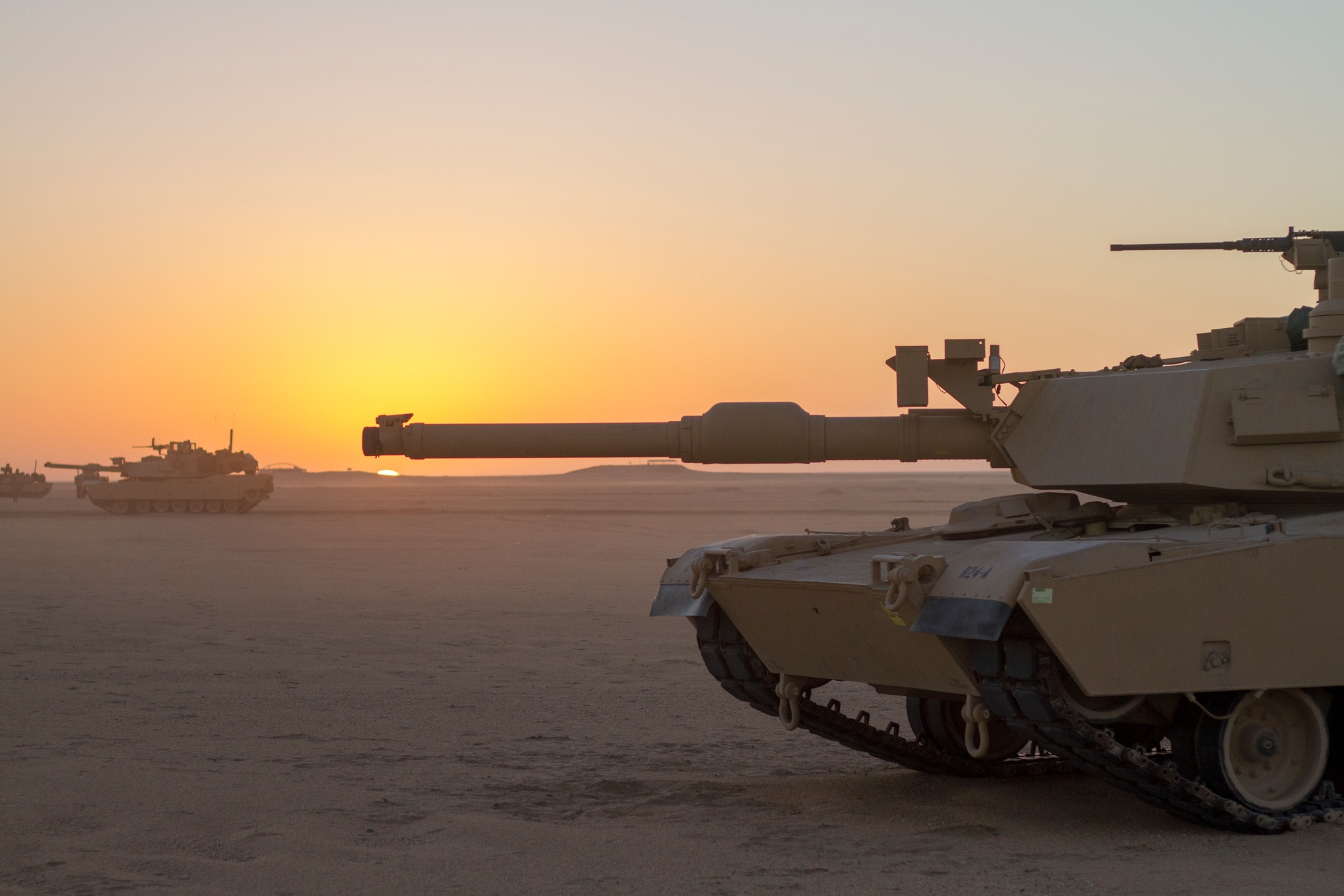
M1A1 Abrams tanks advancing across the desert during Operation Desert Storm in February 1991
Marcus Webb
Marcus Webb

Military Vehicles & Ground Systems Contributor

Marcus Webb writes about military ground vehicles, armored platforms, and the logistics of land warfare. His work covers everything from MRAPs and infantry carriers to the training pipelines that keep ground forces operational in contested environments.

The M1 Abrams had never been to war. For over a decade after entering service in 1980, it existed as a Cold War deterrent, a tank designed to stop Soviet armor columns pouring through the Fulda Gap in Germany. Critics called it too heavy, too thirsty, and too expensive. The gas turbine engine drank fuel at rates that gave logisticians nightmares. The complex fire control systems and composite armor were unproven outside of training ranges. Then, in February 1991, the ground war phase of Operation Desert Storm began, and the M1A1 Abrams answered every question anyone had ever asked about it.

What happened across those 100 hours of ground combat in Iraq and Kuwait was not a close fight. It was a demonstration of what happens when a generation of tank technology separates two opposing forces. American tankers, many of whom had spent years training for a war in Europe that never came, found themselves engaging Iraqi armor at ranges where their opponents could not even see them. The thermal imaging sights that allowed M1A1 crews to fight through sandstorms, darkness, and oil-well smoke turned every engagement into something closer to an ambush. The Iraqis never had a chance to fight the battle they had prepared for.

This is the story of how the M1 Abrams proved itself, told from the perspective of the machine and the crews who rode inside it.

The Machine: M1A1 Abrams Specifications

The tanks that rolled into Iraq in 1991 were primarily M1A1 Abrams variants, a significant upgrade over the original M1 that had entered service in 1980. Understanding what the crews had to work with explains why the engagements played out the way they did.

The M1A1's main armament was the M256 120mm smoothbore cannon, a licensed version of the Rheinmetall L/44 used on the German Leopard 2. According to General Dynamics Land Systems specifications, this gun fired M829 armor-piercing fin-stabilized discarding sabot (APFSDS) rounds, tungsten penetrators that could defeat any armor in Iraq's inventory at distances exceeding 3,000 meters. The gun was stabilized, meaning the crew could fire accurately while the tank moved at full speed across rough terrain. That mattered more than most people realize. Iraqi tankers had to stop to have any hope of hitting a target. Abrams crews did not.

The armor was equally decisive. The M1A1 Heavy Armor variant deployed to Desert Storm featured Chobham composite armor supplemented with depleted uranium mesh in the turret front. The exact protection levels remain classified, but the battlefield results spoke for themselves. According to the Army's official Desert Storm after-action report, Iraqi T-72s scored direct hits on M1A1s during the war, and their rounds did not penetrate. In one documented incident, an M1A1 took a hit from a T-72's 125mm gun at close range. The round gouged the armor but failed to get through. The Abrams crew traversed the turret and destroyed the T-72 with a single shot.

The Honeywell AGT1500 gas turbine engine produced 1,500 horsepower, giving the 67-ton tank a top speed of approximately 42 miles per hour on roads and impressive cross-country mobility. The turbine's acceleration was immediately noticeable to tankers who had spent their careers on diesel-powered M60 Pattons. When crews needed to move, the Abrams responded without hesitation. The tradeoff was fuel consumption: roughly 0.6 miles per gallon at combat speed, which meant logistics convoys had to keep up with the advance. In the open desert, that was a planning challenge rather than a showstopper.

But the real advantage, the one that turned engagements from fights into walkovers, was the thermal imaging system. The AN/VAS-3 thermal sight on the gunner's station and the commander's independent thermal viewer allowed crews to detect and identify targets through darkness, sandstorms, fog, and the thick smoke pouring from Kuwait's oil wells. When Iraqi tankers looked out into the desert, they saw haze, dust, and nothing. When American tankers looked through their thermals, they saw the heat signatures of enemy vehicles rendered in sharp contrast against the cooler desert floor. Every Iraqi tank, every BMP, every truck glowed like a lantern.

The Iraqi Armor: What They Were Fighting With

The Iraqi Army in 1991 was not a ragtag militia. It was one of the largest armies in the world, battle-hardened from eight years of war with Iran. According to the Government Accountability Office's assessment of the Gulf War, Iraq fielded approximately 4,200 tanks at the start of the conflict, including a significant number of T-72M models in the Republican Guard divisions. Understanding the Iraqi equipment explains the gap in capability that decided the outcome.

The T-72M was an export variant of the Soviet T-72, downgraded from the versions the Soviets kept for themselves. Per the Army's Armor Center at Fort Knox, the export model lacked the composite armor inserts of the Soviet T-72A and T-72B, relying instead on conventional steel armor. Its 125mm 2A46 smoothbore gun was a capable weapon, but Iraqi ammunition quality was inconsistent, and the fire control system was a generation behind the Abrams. Effective engagement range for Iraqi T-72M crews was roughly 1,500 to 2,000 meters under good conditions, and conditions in the desert were rarely good.

The majority of Iraqi tanks were not even T-72s. Most frontline units fielded T-55s and Type 69s, 1950s-era designs that were completely outmatched. These older tanks had no thermal sights, limited rangefinding capability, and armor that the Abrams' 120mm sabot rounds could penetrate at virtually any combat range. Their crews, many of them conscripts in the regular army, had limited training and lower morale after weeks of coalition air strikes.

The Republican Guard divisions, including the Tawakalna and Medina Divisions, had the best equipment, the most experienced crews, and orders to fight. They did fight. It was not enough.

The Battle of 73 Easting: 23 Minutes

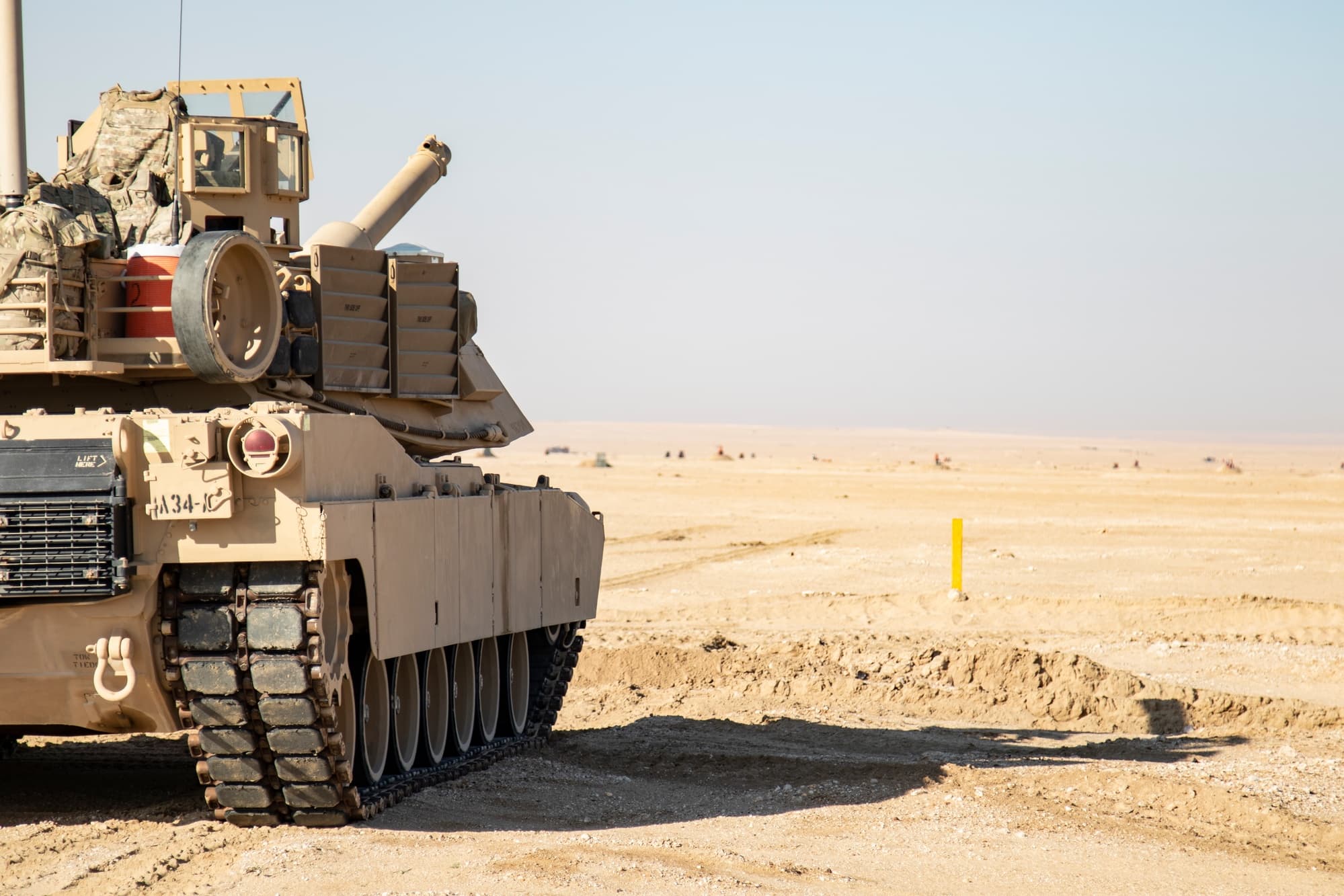
M1A1 Abrams tank in the desert terrain of southern Iraq during the Battle of 73 Easting in February 1991
The Battle of 73 Easting on February 26, 1991, became the defining tank engagement of Operation Desert Storm. Eagle Troop's M1A1 Abrams tanks destroyed an Iraqi Republican Guard brigade in under 23 minutes. (U.S. Army photo)

On February 26, 1991, two days into the ground offensive, Eagle Troop of the 2nd Armored Cavalry Regiment was screening ahead of VII Corps as it advanced into Iraq. The troop was commanded by Captain H.R. McMaster, a 28-year-old West Pointer who would later become a three-star general and National Security Advisor. As McMaster recounted in his own after-action account, his force consisted of nine M1A1 Abrams tanks and twelve M3 Bradley fighting vehicles, roughly 140 soldiers in total.

Eagle Troop was advancing east through a sandstorm, navigating by GPS coordinates along a grid line known as 73 Easting. Visibility was severely limited. The crews relied almost entirely on their thermal sights to read the terrain ahead. At approximately 16:22 local time, the lead elements crested a low rise and the thermals painted a picture no one expected.

Directly ahead, dug into prepared defensive positions, was a brigade-sized element of the Tawakalna Division, one of the Republican Guard's best armored units. The Iraqi positions included T-72 tanks in hull-down fighting positions, BMP-1 infantry fighting vehicles, trucks, and supporting infantry. The Iraqis had chosen their ground well. Under normal conditions, with both sides having comparable sensors, it would have been a dangerous fight. But conditions were not normal.

The sandstorm that blinded Iraqi gunners was irrelevant to American thermal sights. McMaster's tanks could see the heat signatures of the Iraqi vehicles clearly at ranges exceeding 2,000 meters. The Iraqis could not see the Abrams at all.

McMaster made the decision to attack immediately rather than halt and call for artillery support. He ordered Eagle Troop to charge directly into the Iraqi positions, firing on the move. His own tank destroyed the first T-72 at roughly 1,500 meters. Within minutes, the troop was engaged along its entire front, with Abrams tanks and Bradleys firing simultaneously at targets across the Iraqi defensive line.

The engagement was devastating. Iraqi T-72s attempted to return fire, but they could not see their targets through the storm. Some fired blindly toward the sound of engines. Others traversed their turrets searching for muzzle flashes. A few scored hits on the advancing Abrams, but their rounds failed to penetrate the American armor. The Abrams crews, meanwhile, were landing shots at ranges and in conditions where the Iraqis could not effectively fight back.

According to Army records from the 2nd Armored Cavalry Regiment, Eagle Troop destroyed over 30 Iraqi tanks, roughly 20 armored personnel carriers, and approximately 30 trucks and other vehicles within about 23 minutes. The troop suffered zero fatalities and lost no vehicles. One Bradley was lightly damaged. The engagement continued as other troops of the 2nd ACR joined the battle along the 73 Easting line, ultimately destroying the equivalent of an Iraqi brigade.

McMaster would later say that the battle validated the Army's training programs as much as its equipment. His crews had spent years at the National Training Center at Fort Irwin, California, practicing exactly this kind of engagement. When the real thing happened, they executed their drills with the precision that thousands of training rounds had built into muscle memory.

The Thermal Advantage: Seeing When the Enemy Cannot

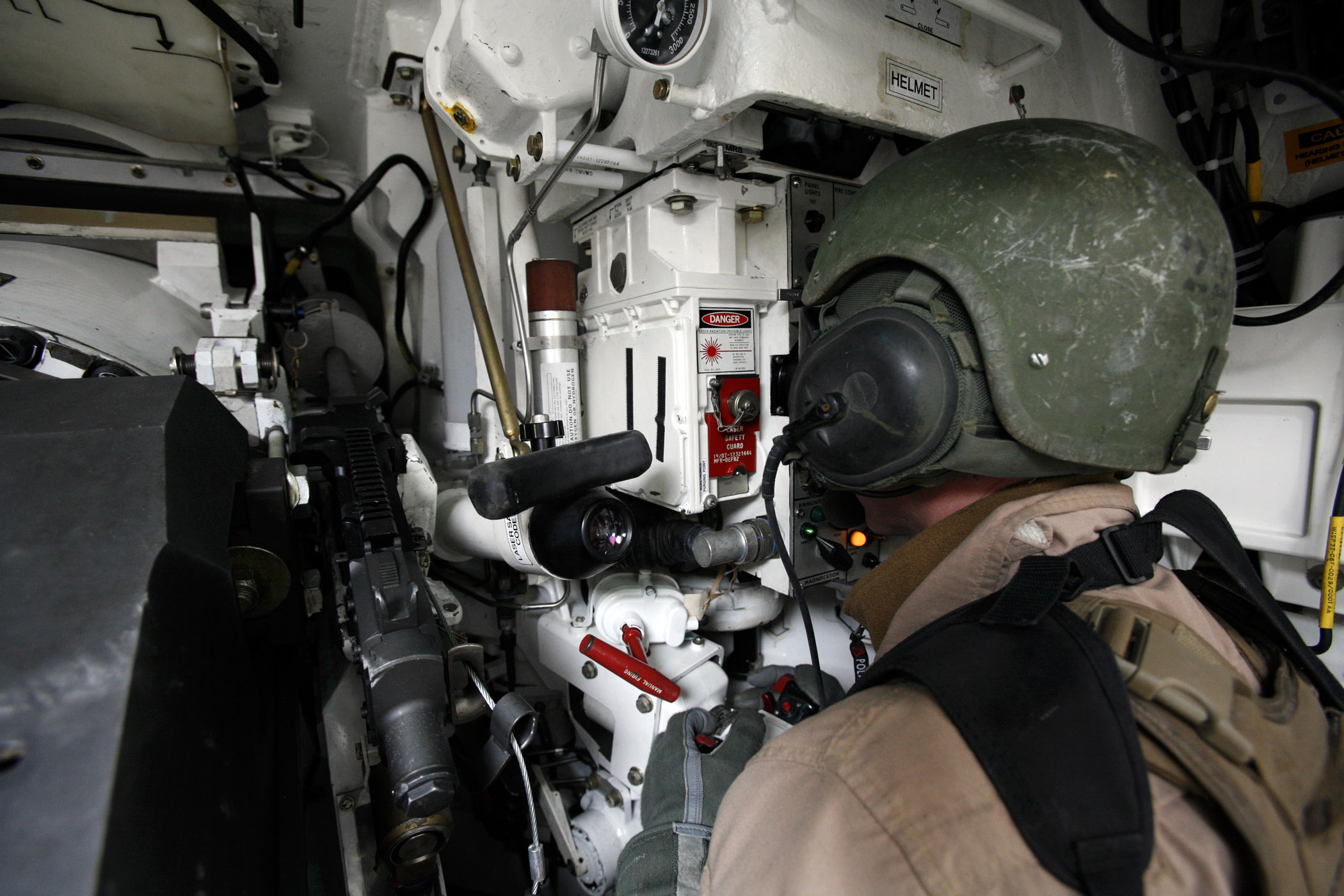
M1A1 Abrams tank commander scanning through thermal sights during desert operations
The M1A1's thermal imaging system gave American tankers the ability to detect and engage Iraqi vehicles through sandstorms, darkness, and oil-well smoke that rendered Iraqi optics useless. (U.S. Army photo)

Tankers who served in Desert Storm consistently identify the thermal sights as the single most important advantage they had. Not the gun. Not the armor. The ability to see.

The Abrams' thermal imaging system detected infrared radiation emitted by objects based on their temperature. In the desert, vehicles, personnel, and running engines produced heat signatures that stood out sharply against the ambient background, especially at night when the desert surface cooled. The system worked through visual obscurants that defeated normal optics: sand, smoke, dust, fog, and darkness.

During the ground war, conditions heavily favored the thermal-equipped force. The Kuwaiti oil well fires that Saddam Hussein's forces had ignited produced a thick pall of smoke across the battlefield. Sand kicked up by hundreds of moving vehicles created persistent dust clouds. Night engagements, which coalition commanders deliberately sought, eliminated whatever marginal optical capability the Iraqis had.

Per the Center for Army Lessons Learned, multiple after-action reports describe the same scenario: Abrams crews engaging Iraqi tanks that clearly did not know they were being targeted. Crews watched through their thermals as Iraqi tanks sat stationary in defensive positions, turrets oriented in the wrong direction, crews apparently unaware that American armor was already within firing range. In some cases, the first indication an Iraqi crew had that they were under attack was the impact of a 120mm sabot round.

For tankers, this was the doctrinal ideal. Armor warfare theory has always held that the side that acquires and engages first holds an overwhelming advantage. The M1A1's thermal system turned that theory into operational reality on a scale that surprised even its operators. Crews reported a sense of unreality during night engagements, watching enemy vehicles through green-tinted thermal displays, lasing targets, firing, and watching the targets disappear, all without ever seeing the enemy with their naked eyes.

Armor Under Fire: What Happened When the Iraqis Hit Back

The Iraqis did fight back. The Republican Guard units in particular had orders to hold their positions and engaged coalition forces with determination. Iraqi T-72 crews scored direct hits on M1A1 Abrams tanks during the campaign. The results confirmed what the Army had hoped and the critics had doubted: the Abrams' armor worked.

Tom Clancy and Gen. Fred Franks documented in Into the Storm that multiple M1A1s took hits from T-72 125mm rounds during Desert Storm. In each case they examined, the depleted uranium-enhanced composite armor stopped the round. The projectiles gouged, cratered, and scarred the turret faces but did not achieve full penetration. Crews inside reported feeling the impact, described as a violent jolt, but continued fighting without loss of capability.

In one widely cited incident, an M1A1 became stuck in a mud-filled ditch during the advance. Unable to free the tank, the crew had to abandon it. To prevent capture, American forces attempted to destroy the disabled Abrams. They hit it with thermite grenades, fired Hellfire missiles at it from an Apache helicopter, and struck it with sabot rounds from another Abrams. Even after all of that, the hull and turret armor remained largely intact, although the interior was gutted. The episode circulated widely through the armor community as proof of just how much punishment the design could absorb.

No M1A1 Abrams was destroyed by enemy fire during the entire Gulf War. That statement needs qualification. According to the Army's official Desert Storm after-action report, several M1A1s were damaged by enemy fire, some seriously enough to require depot-level repair. The distinction is between damage and destruction. Iraqi weapons could hurt the Abrams, particularly if they hit less-protected areas like the engine deck, tracks, or rear hull. But no Iraqi weapon achieved a catastrophic kill on an M1A1, the kind of penetration that destroys the vehicle and kills the crew.

The M1A1 Heavy Armor variant's turret protection was simply beyond what Iraqi ammunition could defeat. The depleted uranium armor package, classified and not publicly acknowledged until after the war, provided protection levels that exceeded what the Soviet export-grade ammunition in Iraqi stockpiles was designed to penetrate.

The 100-Hour Ground War: By the Numbers

The ground phase of Operation Desert Storm began on February 24, 1991, and ended with a ceasefire on February 28, lasting approximately 100 hours. In that time, coalition ground forces advanced deep into Iraq and Kuwait, encircling and destroying the Iraqi military's fighting capability as an organized force.

Column of M1A1 Abrams tanks advancing through the desert during the 100-hour ground war of Operation Desert Storm
A column of M1A1 Abrams tanks during the ground offensive. Coalition forces destroyed thousands of Iraqi armored vehicles in the 100-hour ground war. (U.S. Army photo)

The scale of armored destruction was staggering. The Government Accountability Office's Gulf War report tallied approximately 3,300 Iraqi tanks destroyed, over 2,100 armored personnel carriers, and roughly 2,200 artillery pieces lost during the campaign. Much of this destruction came from air power during the preceding 39 days of aerial bombardment, but the ground war's armored engagements were where the Abrams built its reputation.

Major engagements involving M1A1 Abrams tanks included the Battle of 73 Easting (2nd Armored Cavalry Regiment), the Battle of Norfolk (1st Infantry Division and 1st Armored Division versus the Tawakalna Division), and the Battle of Medina Ridge (1st Armored Division versus the Medina Division of the Republican Guard). In each case, the pattern held: American thermal sights detected Iraqi positions first, Abrams guns engaged at ranges where Iraqi fire was inaccurate or ineffective, and the American composite armor absorbed whatever return fire the Iraqis managed.

The Battle of Medina Ridge on February 27, 1991, was the largest tank engagement of the war. Army records from VII Corps show that approximately 348 Abrams and Bradleys of the 1st Armored Division attacked the Medina Division's 2nd Brigade, which had dug in along a ridge line with T-72s and T-55s. The engagement lasted roughly 40 minutes. The 1st Armored Division destroyed approximately 186 Iraqi armored vehicles while suffering four Abrams damaged (none destroyed) and one soldier killed. The disparity in losses was unlike anything seen in armored warfare since the introduction of the tank.

Losses: The Full Picture

According to the Army's official Gulf War tallies, the United States lost 18 M1A1 Abrams tanks during the conflict. Not one of those losses was caused by enemy fire penetrating the tank's armor. The breakdown tells an important story about the realities of armored combat.

Nine Abrams were destroyed by friendly fire, primarily from other American vehicles. In the confusion of fast-moving desert warfare, with multiple units advancing simultaneously through dust and smoke, fratricide was a persistent problem throughout the campaign. Several Abrams were hit by sabot rounds or Maverick missiles from coalition aircraft. Gen. H. Norman Schwarzkopf addressed these losses in his memoir, calling them one of the most painful aspects of the entire operation, a reminder that the fog of war affects even the most technologically advanced force.

The remaining nine Abrams were deliberately destroyed by American forces to prevent their capture after becoming disabled or stuck. These tanks had been immobilized by mechanical failure, mines, or terrain, not by enemy weapons. Standard procedure required destroying any vehicle that could not be recovered, to prevent its technology from falling into enemy hands. The depleted uranium armor was classified, and the Army was not willing to leave examples for foreign intelligence to study.

Coalition tank crews did suffer casualties. Twenty American soldiers were killed in Abrams-related incidents during the war, with the majority resulting from friendly fire. The losses, while relatively low compared to the scale of the operation, represent real cost that should not be minimized.

M1A1 Abrams vs. T-72M: Comparison Table

Category M1A1 Abrams (Heavy Armor) T-72M (Iraqi Export) Why It Mattered
Main Gun 120mm M256 smoothbore 125mm 2A46 smoothbore Similar caliber, but Abrams had superior ammunition and fire control
Effective Range 3,000+ meters ~1,500-2,000 meters Abrams crews engaged well before Iraqi tankers could return accurate fire
Fire on the Move Stabilized gun, accurate while moving Had to stop or slow significantly Abrams could shoot and maneuver simultaneously; Iraqis had to choose one
Thermal Sights Gunner and commander thermal viewers No thermal sights (infrared searchlight only) Abrams saw through sandstorms, smoke, and darkness; T-72M crews could not
Armor (Turret Front) Chobham composite + depleted uranium mesh Conventional steel (export downgrade) Iraqi 125mm rounds failed to penetrate Abrams; Abrams rounds easily penetrated T-72M
Crew 4 (commander, gunner, loader, driver) 3 (autoloader replaces loader) Fourth crew member provided extra situational awareness and faster sustained rate of fire
Ammo Storage Bustle rack with blowout panels Carousel autoloader beneath turret floor T-72 ammo location caused catastrophic turret ejections when penetrated
Engine 1,500 hp Honeywell AGT1500 gas turbine 780 hp V-46 diesel Nearly double the horsepower gave the Abrams superior acceleration and tactical mobility
Weight ~67 tons ~41 tons Abrams was heavier but its power-to-weight ratio still surpassed the T-72M
Crew Training Extensive NTC rotations, years of practice Variable; conscript crews in many units American crews executed trained drills under fire; many Iraqi crews did not

What the Crews Actually Experienced

The statistics and specifications tell one story. The tankers who were inside the vehicles during those engagements tell another, one that is both more mundane and more visceral than the numbers suggest.

The inside of an M1A1 during a desert advance was loud, hot, and cramped. The turbine engine produced a constant high-pitched whine that dominated the crew compartment even through communications headsets. Sand infiltrated everything. Crews wore goggles and wrapped cloth around their faces when hatches were open. When buttoned up for combat, the interior temperature could exceed 120 degrees Fahrenheit despite the environmental control system.

During engagements, the crew compartment became a controlled storm of activity. The commander scanned for targets through his independent sight, calling out bearings and ranges. The gunner slewed the turret to acquire the designated target, lased it for range, and announced "identified." The loader hauled 50-pound sabot rounds from the ammunition rack and slammed them into the breech, yelling "up" to signal readiness. The driver kept the tank moving over terrain, responding to the commander's directions without being able to see what the rest of the crew was engaging. A well-drilled crew could identify, load, and fire in under six seconds.

After-action interviews collected by the Center for Army Lessons Learned reveal a common thread: the engagements happened faster than crews expected. Training had prepared them for the mechanics of gunnery, but the pace of real combat, with multiple targets appearing simultaneously and the pressure of knowing the next round had to hit, was something else entirely. Several crews described a period of intense, almost automatic performance where training took over and conscious thought narrowed to the next target, the next round, the next command.

The thermal displays that provided such an advantage also presented images that stayed with crews long after the war. Tankers described watching T-72 turrets blow off their hulls in the green-white glow of the thermal display as the ammunition carousel beneath the turret detonated when an Abrams round penetrated the hull. The T-72's design placed its ammunition in a ring around the base of the turret, directly exposed to any penetration. When that ammunition cooked off, the result was a catastrophic explosion that launched the turret vertically into the air, a phenomenon American tankers called a "jack-in-the-box." It was effective, grim proof of the Abrams' own ammunition separation philosophy, where blowout panels directed any explosion away from the crew.

The Logistics Reality

For all the focus on tank-on-tank engagements, Desert Storm's ground war was equally a logistics achievement. Per Army sustainment records, the M1A1's gas turbine engine consumed approximately 300 gallons of JP-8 fuel in eight hours of combat operations. A typical tank company of 14 vehicles needed roughly 4,200 gallons to operate for a single eight-hour period. Multiply that across the hundreds of Abrams in theater, and the fuel requirements were enormous.

The Army's logisticians made it work, but not without strain. Fuel convoys had to keep pace with the armored advance, and they did, thanks to careful planning and the relatively flat, open terrain of the Iraqi desert. Several tank units reported anxious moments when fuel levels dropped low enough that commanders had to make choices about which vehicles to refuel first. The advance never stopped due to fuel shortages, but it came closer than most accounts acknowledge. Tom Clancy and Gen. Fred Franks described in Into the Storm how VII Corps' fuel consumption repeatedly threatened to outpace its supply lines.

Maintenance was the other constant challenge. Sand destroyed filters, clogged intakes, and accelerated wear on tracks and road wheels. The turbine engine, while powerful, ingested sand that eroded turbine blades. Field maintenance crews worked around the clock replacing filters and components to keep tanks operational. The Abrams' modular design helped. The entire power pack, engine and transmission together, could be swapped in under an hour by a trained crew with the right equipment. Several tanks that broke down during the advance were repaired and returned to their units within hours.

Legacy: What Desert Storm Proved

Desert Storm did not prove that the M1 Abrams was invincible. No tank is. What it proved was that a well-designed, well-maintained tank operated by thoroughly trained crews, supported by competent logistics and integrated into a combined-arms force, could dominate a battlefield in ways that shocked observers around the world.

The war validated specific design decisions. The composite armor with depleted uranium worked as designed. The thermal imaging systems provided the situational awareness advantage that their designers had promised. The 120mm gun delivered the lethality and accuracy that gunnery tables predicted. The stabilization system allowed fire on the move that training had rehearsed. Each subsystem performed as specified, and the combination of all of them created an overwhelming advantage.

The war also validated training. The National Training Center at Fort Irwin, where American tank crews had spent years practicing against opposing force units equipped with Soviet-style tactics, had prepared them for exactly what they encountered. Crews reported that real combat felt less chaotic than their most demanding NTC rotations. The investment in realistic training paid returns that no amount of technological superiority alone could have produced.

For the global defense community, Desert Storm reordered priorities. Nations that had been developing armor without thermal sights rushed to acquire them. Countries operating export-model Soviet tanks reassessed their capabilities. The gap between first-world and second-tier armor forces, theoretical before February 1991, was now quantified in destroyed vehicles and lopsided casualty ratios. For a deeper comparison of the two tanks that defined this gap, see our M1 Abrams vs T-72 comparison.

The Abrams itself continued to evolve. The M1A2, which began fielding in 1992, added a commander's independent thermal viewer, an improved navigation system, and a digital inter-vehicular information system. The lessons of Desert Storm, about the importance of situational awareness, crew integration, and network-enabled operations, shaped every subsequent upgrade. Today's M1E3 Abrams traces a direct line back to what the 2nd Armored Cavalry Regiment proved at 73 Easting.

The M1 Abrams had entered Desert Storm as an unproven platform with vocal critics. It left as one of the most validated weapons systems in American military history. Not because it was perfect, but because it did exactly what it was designed to do, and the crews inside it were ready to use every advantage it gave them. Explore why the Abrams remains one of the most feared tanks on the planet, or learn the story behind its name.


Frequently Asked Questions

Were any M1 Abrams tanks destroyed by enemy fire in Desert Storm?

No M1A1 Abrams was destroyed by enemy fire during the Gulf War. Several were damaged by Iraqi weapons, including direct hits from T-72 125mm rounds, but none suffered a catastrophic penetration of the crew compartment. The 18 Abrams lost during the war were attributed to friendly fire (9 vehicles) and deliberate destruction by U.S. forces to prevent capture of disabled tanks (9 vehicles).

How long did the Battle of 73 Easting last?

The primary engagement involving Eagle Troop of the 2nd Armored Cavalry Regiment lasted approximately 23 minutes on February 26, 1991. During that time, Captain H.R. McMaster's force of nine M1A1 Abrams tanks and twelve M3 Bradleys destroyed over 30 Iraqi tanks, roughly 20 armored personnel carriers, and approximately 30 other vehicles from the Tawakalna Division of the Republican Guard. The broader battle along the 73 Easting grid line continued as additional troops engaged.

Why couldn't Iraqi T-72s penetrate the Abrams' armor?

The M1A1 Heavy Armor variant deployed to Desert Storm featured Chobham composite armor supplemented with depleted uranium mesh in the turret front. This armor package was designed to defeat the most advanced Soviet ammunition of the era. The Iraqi T-72M export models fired downgraded ammunition that was less capable than what the Soviets used in their own forces. The combination of superior armor and inferior enemy ammunition meant Iraqi rounds could damage but not penetrate the Abrams' primary protection zones.

What gave the M1A1 Abrams its biggest advantage over Iraqi tanks?

American tankers who served in Desert Storm overwhelmingly identify the thermal imaging system as the most decisive advantage. The AN/VAS-3 thermal sights allowed Abrams crews to detect and engage Iraqi vehicles through sandstorms, oil-well smoke, and complete darkness at ranges exceeding 3,000 meters. Iraqi tanks lacked thermal sights entirely, relying on optical systems and infrared searchlights that were ineffective in the conditions that prevailed during the ground war. This sensor gap turned every engagement into an ambush.

How many Iraqi tanks were destroyed during the 100-hour ground war?

Coalition forces destroyed approximately 3,300 Iraqi tanks during the Gulf War, along with over 2,100 armored personnel carriers and roughly 2,200 artillery pieces. A significant portion of these were destroyed by air power during the 39-day air campaign that preceded the ground war. The ground phase, lasting approximately 100 hours from February 24 to February 28, 1991, accounted for a substantial share of the armored vehicle losses through direct engagements between coalition and Iraqi ground forces.

Did the M1 Abrams have any weaknesses exposed during Desert Storm?

The Abrams' primary vulnerability was its fuel consumption. The AGT1500 gas turbine engine consumed approximately 300 gallons of JP-8 fuel in eight hours of combat operations, creating significant logistical demands. Sand ingestion also accelerated wear on the turbine engine and required frequent filter changes. Additionally, the 18 Abrams losses from friendly fire and immobilization highlighted that even the best-protected tank is vulnerable to getting stuck in terrain and to the confusion inherent in fast-moving combined-arms operations. The tank's weight (roughly 67 tons) occasionally caused mobility problems in soft ground.

Share this article

Share:

Recommended

Ace of The Skies: Can You Identify These Military Aircraft Throughout The Years?
Test Yourself

Ace of The Skies: Can You Identify These Military Aircraft Throughout The Years?

Can you identify these aircraft?

Take the Quiz

On This Day in Military History

March 4

The Overnight Miracle at Dorchester Heights (1776)

In one of the most audacious operations of the American Revolution, General Washington's troops fortified Dorchester Heights overlooking Boston Harbor in a single night, using cannons hauled 300 miles from Fort Ticonderoga. When dawn broke, the British found a fortress above them. Unable to dislodge the Americans, they evacuated Boston, the first major strategic victory of the Revolution.

1776, Fortification of Dorchester Heights

1861, Lincoln Inaugurated on the Brink of Civil War

1865, Lincoln's Second Inaugural: "With Malice Toward None"

See all 10 events on March 4

Get Military News & History in Your Inbox

Join thousands of readers receiving our weekly digest of military technology, history, and analysis.

Test Your Knowledge