


Why Bigger Militaries Don't Automatically Win Wars
Why military size doesn't guarantee victory in modern warfare.
james-holloway··32 min read
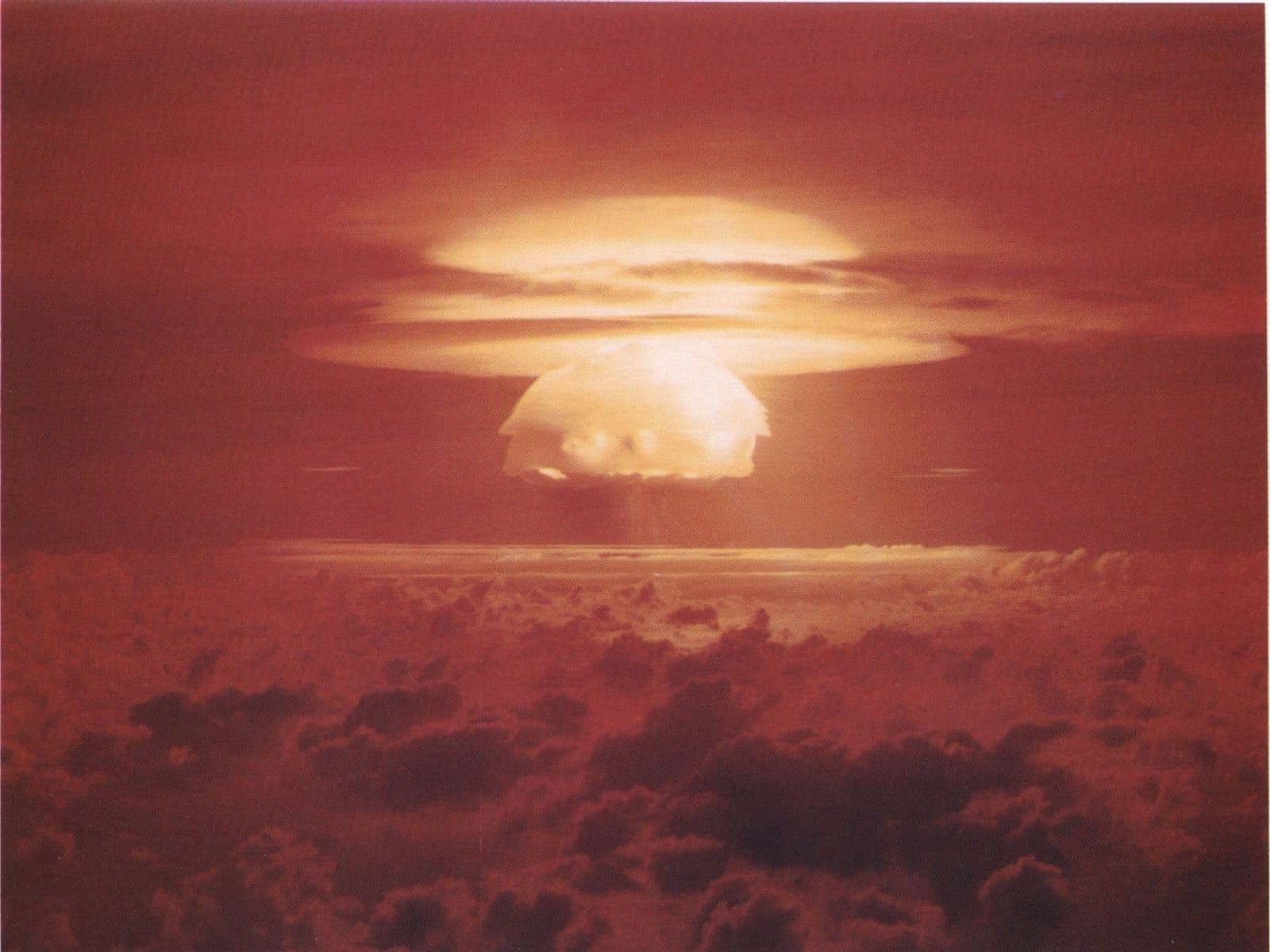
The United States detonated Castle Bravo, a 15-megaton hydrogen bomb at Bikini Atoll, 2.5 times more powerful than predicted. The blast caused the worst radioactive contamination ever produced by the U.S. and irradiated the crew of the Japanese fishing vessel Daigo Fukuryu Maru. The test accelerated the global movement to ban atmospheric nuclear testing.
Related articleThe Continental Congress formally adopted the Articles of Confederation after Maryland's ratification completed the process, creating the first governing document of the United States during the Revolutionary War. The Articles gave the fledgling nation a legal framework for prosecuting the war and conducting foreign affairs, and served as the authority under which the Continental Army operated through the end of the war.
Delegates from 57 Texas communities convened at Washington-on-the-Brazos to deliberate independence from Mexico while the siege of the Alamo raged 150 miles to the southwest. The following day they declared Texas independence, setting the stage for the revolution's decisive military campaigns and eventual U.S. annexation.
President John Tyler signed a congressional joint resolution authorizing the annexation of the Republic of Texas, one of the last acts of his presidency. The annexation directly contributed to the outbreak of the Mexican-American War in 1846, as Mexico considered it an act of aggression and disputed the Texas-Mexico border.
Union cavalry under Brigadier General Judson Kilpatrick and Colonel Ulric Dahlgren launched a daring raid on the Confederate capital of Richmond to free Union prisoners at Belle Isle and Libby Prison. The raid failed militarily, and papers found on Dahlgren's body suggesting a plan to assassinate Jefferson Davis caused a firestorm of controversy that may have influenced the conspiracy leading to Lincoln's assassination.
An Ethiopian army of 100,000 under Emperor Menelik II decisively defeated a 17,000-strong Italian invasion force at the Battle of Adwa, ending the First Italo-Ethiopian War. The victory made Ethiopia the only African nation to successfully resist European colonization during the Scramble for Africa and reshaped European perceptions of African military capability.
Related articleCaptain Albert Berry made the first successful parachute jump from an airplane at Jefferson Barracks, Missouri, leaping from a Benoist biplane at 1,500 feet with a 36-foot parachute stored in a metal canister beneath the aircraft. The demonstration proved the viability of parachutes for military aviation, though decades passed before they became standard equipment.
The U.S. government released the decrypted Zimmermann Telegram to newspapers, revealing Germany's proposal that Mexico ally against the United States in exchange for Texas, New Mexico, and Arizona. Public outrage was a decisive factor in swinging American opinion toward entering World War I, the U.S. declared war five weeks later.
Related articleBulgaria formally joined the Axis powers by signing the Tripartite Pact, allowing German forces to stage through Bulgarian territory for the invasion of Yugoslavia and Greece. Bulgaria's strategic position in the Balkans gave Germany a critical advantage in its southeastern European campaigns.
Related articleJapanese forces landed on Java at multiple points, overwhelming the remnants of the Allied ABDA fleet. Three cruisers and four destroyers were lost in the Sunda Strait fighting rearguard actions. Java fell within a week, completing Japan's conquest of the Dutch East Indies and securing its vast oil resources.
Related articleThe American Volunteer Group (Flying Tigers) relocated to an RAF base after their remarkable air defense of Rangoon, Burma. The AVG's defense inflicted heavy losses on Japanese air forces and demonstrated the effectiveness of Claire Chennault's innovative combat tactics against numerically superior Japanese formations.
Related articleAllied aircraft located a Japanese convoy of 16 ships carrying reinforcements to New Guinea. Over the next three days, U.S. and Australian aircraft using skip-bombing techniques destroyed eight transports and four destroyers, killing an estimated 3,000 Japanese troops. The battle was one of the most devastating aerial attacks on naval shipping in the war.
Related articleAmerican forces on Los Negros eliminated Japanese units that had infiltrated their lines overnight. The Admiralty Islands campaign was one of MacArthur's boldest moves, a reconnaissance in force that evolved into a full seizure, isolating the major Japanese base at Rabaul.
The war raged across multiple theaters: the U.S. 9th Army captured Munchen-Gladbach advancing toward the Rhine, the 1st Army pushed toward Cologne, and the 3rd Army operated near the Kyll River. On Iwo Jima, Marines held both the first and second airfields. In Manila, Japanese resistance was confined to a few city blocks.
Related articleGerman-born British physicist Klaus Fuchs was convicted and sentenced to 14 years for passing atomic bomb secrets to the Soviet Union during the Manhattan Project. His espionage significantly accelerated the Soviet nuclear weapons program, and his confession led investigators to other Soviet spies including Julius and Ethel Rosenberg.
Four armed Puerto Rican nationalists opened fire from the visitors' gallery of the U.S. House of Representatives, firing more than 30 shots and wounding five congressmen. All five recovered. The attack, protesting Puerto Rico's new constitution, was one of the most dramatic acts of political violence in the history of the U.S. Capitol.
The United States conducted the "Tesla" shot at the Nevada Test Site, the second detonation in the Operation Teapot series. The device was a remarkably small nuclear system, only 10 inches wide, that produced a 7-kiloton yield, advancing the development of smaller, more versatile nuclear weapons.
Related articleU.S. Ambassador Maxwell Taylor informed South Vietnamese Premier Quat that the United States was preparing to send 3,500 Marines to protect the Da Nang airbase, marking the beginning of direct U.S. ground combat commitment in Vietnam. The deployment would ultimately grow to over 500,000 American troops.
Related articleAn effort led by Senator Wayne Morse to repeal the Gulf of Tonkin Resolution failed 92 to 5, demonstrating overwhelming Congressional support for the war at this stage. The resolution, passed in 1964, had given President Johnson broad authority to escalate military involvement in Vietnam.
Clark Clifford replaced Robert McNamara amid the upheaval of the Tet Offensive. After an intensive review, Clifford concluded there was "no concept or plan for achieving victory" in Vietnam and advised President Johnson against further escalation, contributing to Johnson's decision not to seek reelection.
PFC Daniel D. Bruce of 3rd Battalion, 5th Marines caught an enemy explosive charge thrown at his position at Fire Support Base Tomahawk in Quang Nam Province. Realizing the danger to two adjacent Marines, he held the device to his body and attempted to carry it away. The charge killed him but saved three fellow Marines. He was posthumously awarded the Medal of Honor.
A bomb planted by the Weather Underground exploded in the U.S. Capitol building, causing $300,000 in damage but no injuries. The bombing protested the U.S.-supported invasion of Laos and was part of a broader campaign of domestic terrorism during the Vietnam era.
North Vietnam launched Campaign 275, the all-out invasion of South Vietnam's Central Highlands that proved to be the beginning of the end. Within two weeks, President Thieu ordered the Highlands abandoned, triggering a catastrophic military collapse. Saigon fell less than two months later.
The Pentagon officially accepted that a large-scale nuclear war would block the sun and cause "nuclear winter," threatening human civilization globally. This acknowledgment influenced U.S. nuclear strategy and arms control negotiations during the final decade of the Cold War.
Related articleIn the wake of Iraq's defeat in the Gulf War, uprisings against Saddam Hussein erupted across southern and northern Iraq, initially encouraged by President Bush's calls to overthrow the regime. The revolts were brutally crushed by the Republican Guard, killing more than 25,000 people. The U.S. decision not to intervene remains one of the war's most controversial legacies.
Related articleU.S. military specialists surveyed and detonated a bunker at Kamisiyah, a declared chemical weapons storage site. It was later acknowledged that more than 15,000 troops may have been exposed to nerve gas from the detonation. The incident became central to the Gulf War Syndrome controversy.
Related articleAmerican warplanes dropped over 30 laser-guided bombs on military targets in northern Iraq as part of the ongoing enforcement of no-fly zones. These operations maintained constant military pressure on the Saddam Hussein regime throughout the 1990s.
Related articleU.S. forces, CIA paramilitary officers, and allied Afghan militias launched Operation Anaconda in the Shah-i-Kot Valley, the first large-scale conventional battle of the War in Afghanistan. Approximately 1,700 U.S. troops engaged 500-1,000 entrenched al-Qaeda and Taliban fighters in a 16-day operation that tested combined joint operations in rugged mountain terrain.
Related articleA joint CIA-Pakistani intelligence raid in Rawalpindi led to the capture of Khalid Sheikh Mohammed, the self-described mastermind of the September 11 attacks. Seized documents revealed al-Qaeda's biochemical weapons program was more advanced than previously known. His capture was one of the most significant counterterrorism successes of the post-9/11 era.
Related articleThe Coast Guard, Customs Service, and Secret Service formally transferred to the newly created Department of Homeland Security, the largest reorganization of the U.S. government since the creation of the Department of Defense in 1947, consolidating 22 federal agencies in response to 9/11.
The Turkish parliament voted narrowly against allowing 62,000 U.S. troops to use Turkey as a staging ground for a northern invasion of Iraq. This forced the U.S. to abandon its two-front strategy and attack solely from the south through Kuwait, significantly altering the Operation Iraqi Freedom invasion plan.
Related articleAutomatic spending cuts under the Budget Control Act took effect, slashing approximately $42 billion in defense outlays for fiscal year 2013. The cuts forced military furloughs, reduced training, and deferred maintenance, with senior leaders warning of significantly degraded readiness across all branches.
Related article
General, U.S. Air Force
Served as the 15th Chairman of the Joint Chiefs of Staff from 2001 to 2005, overseeing U.S. military operations in Afghanistan and Iraq during the critical early years of the Global War on Terror.

Major, U.S. Army Air Forces
Disbanded his enormously successful orchestra to volunteer for military service. As commander of the Army Air Forces Band, he revolutionized troop morale with over 800 concerts. Disappeared over the English Channel on December 15, 1944. Posthumously awarded the Bronze Star.

Lieutenant Colonel, British Army
One of the few major Hollywood stars to serve in combat during WWII. He left his film career to enlist in the Rifle Brigade and Commandos, participated in the Normandy invasion on D-Day, and earned the American Legion of Merit.

Chief of the General Staff, Israel Defense Forces
As IDF Chief of Staff, led Israel to victory in the Six-Day War of 1967, one of the most decisive military campaigns in modern history. Later served as Prime Minister and won the Nobel Peace Prize for the Oslo Accords before being assassinated in 1995.

Lieutenant Commander, Royal Navy
Led the suicidal torpedo attack against the Scharnhorst and Gneisenau during the Channel Dash. All six Swordfish aircraft were shot down. Posthumously awarded the Victoria Cross.

Private First Class, U.S. Marine Corps
Received the Medal of Honor posthumously for absorbing the blast of an enemy explosive charge to save three fellow Marines at Fire Support Base Tomahawk, Vietnam. He grabbed a satchel charge thrown into his position, clutched it to his body, and ran away from his comrades before it detonated.

President and Commander-in-Chief of Paraguay
Killed at the Battle of Cerro Cora, the final engagement of the War of the Triple Alliance, the deadliest conflict in South American history. His last words: "I die with my fatherland."
Wear the Timeline
33 military events occurred on March 1, spanning multiple centuries. Key events include: Articles of Confederation Ratified (1781), Battle of Adwa: Ethiopia Defeats Italy (1896), Zimmermann Telegram Published in American Newspapers (1917), Battle of the Bismarck Sea Begins (1943), Operation Anaconda Begins in Afghanistan (2002).
The most significant military event on March 1 is Castle Bravo: America's Largest Nuclear Detonation (1954). The United States detonated Castle Bravo, a 15-megaton hydrogen bomb at Bikini Atoll, 2.5 times more powerful than predicted. The blast caused the worst radioactive contamination ever produced by the U.S. and irradiated the crew of the Japanese fishing vessel Daigo Fukuryu Maru. The test accelerated the global movement to ban atmospheric nuclear testing.
Notable military figures born on March 1 include General Richard B. Myers (1942–present), Glenn Miller (1904–1944), David Niven (1910–1983), Yitzhak Rabin (1922–1995), Lt. Eugene Esmonde (1909–1942).
Events on March 1 span the Colonial & Revolutionary era, the Civil War, the Interwar Period, World War I, World War II, the Cold War, the Vietnam War, the Modern Era, covering 33 events across 4 centuries of military history.
Events on March 1 involve 7 branches of the U.S. and allied armed forces, reflecting the global scope of military operations throughout history.
Explore military history from the day you were born.
June 6
The Allied invasion of Normandy, the largest amphibious assault in history.
December 7
Japan attacks the U.S. Pacific Fleet, bringing America into World War II.
September 11
The deadliest terrorist attack in history transforms U.S. national security.
August 6
The first atomic bomb is dropped on a city, ushering in the nuclear age.
May 8
Nazi Germany surrenders unconditionally, ending World War II in Europe.
November 11
Armistice Day marks the end of World War I and honors all who served.
June 4
The turning point of the Pacific War as the U.S. Navy destroys four Japanese carriers.
July 4
The Declaration of Independence is adopted, sparking the American Revolution.
Why military size doesn't guarantee victory in modern warfare.

From wrong turns to unlocked gates - real mistakes that shaped the course of history.
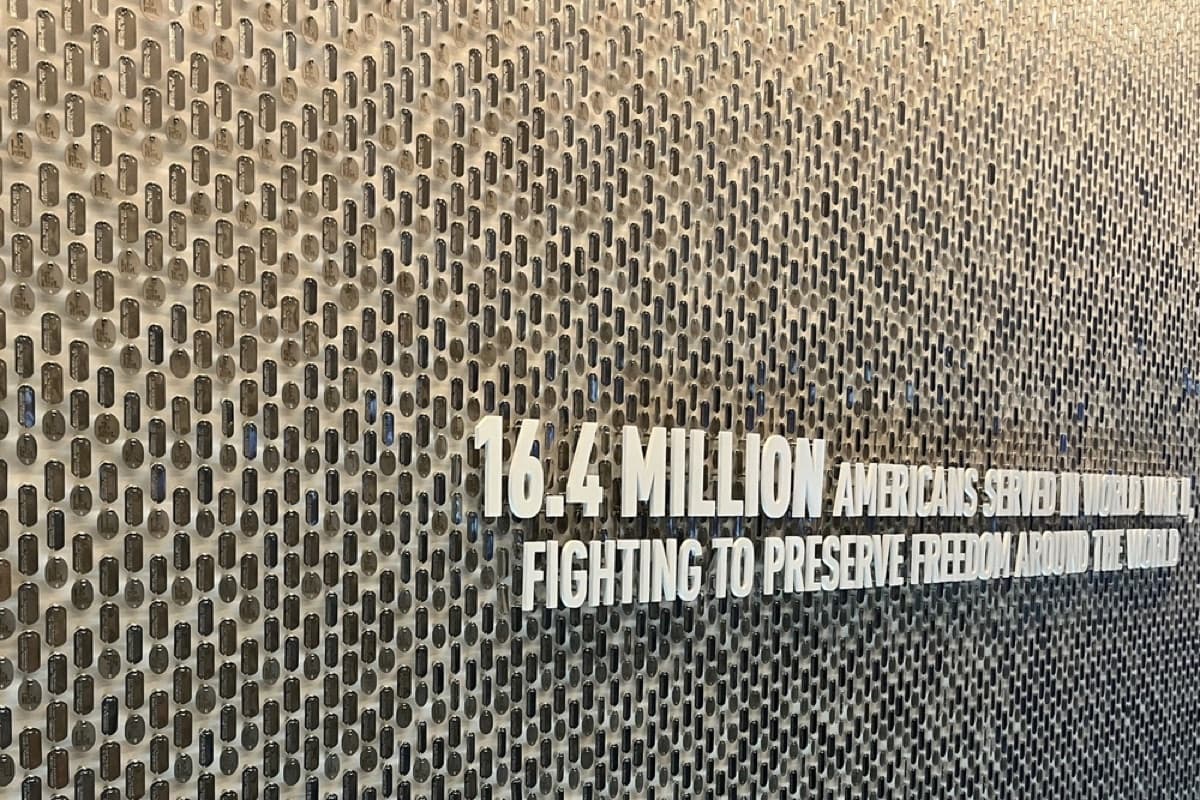
Calvin Graham Was Youngest Decorated US Soldier at 12 Pearl Harbor Visitors Bureau “Green Boys” was a term given to soldiers who…

The Virginia Block V just completed its pressure hull. Australia committed billions to AUKUS submarines. Japan's Taigei-class introduced lithium-ion batteries. And South Korea built a diesel sub with cruise missile VLS tubes. The attack submarine rankings needed rewriting.