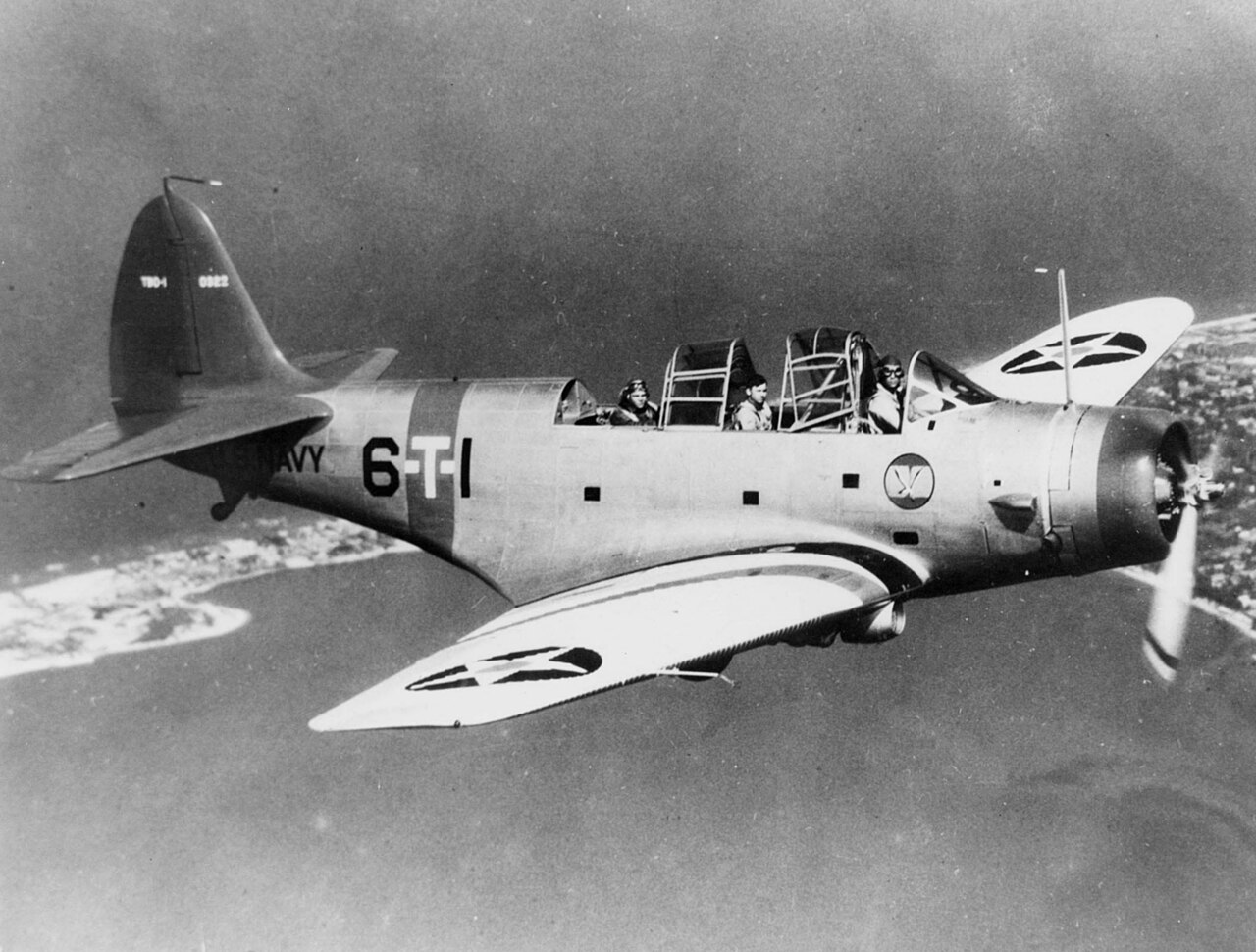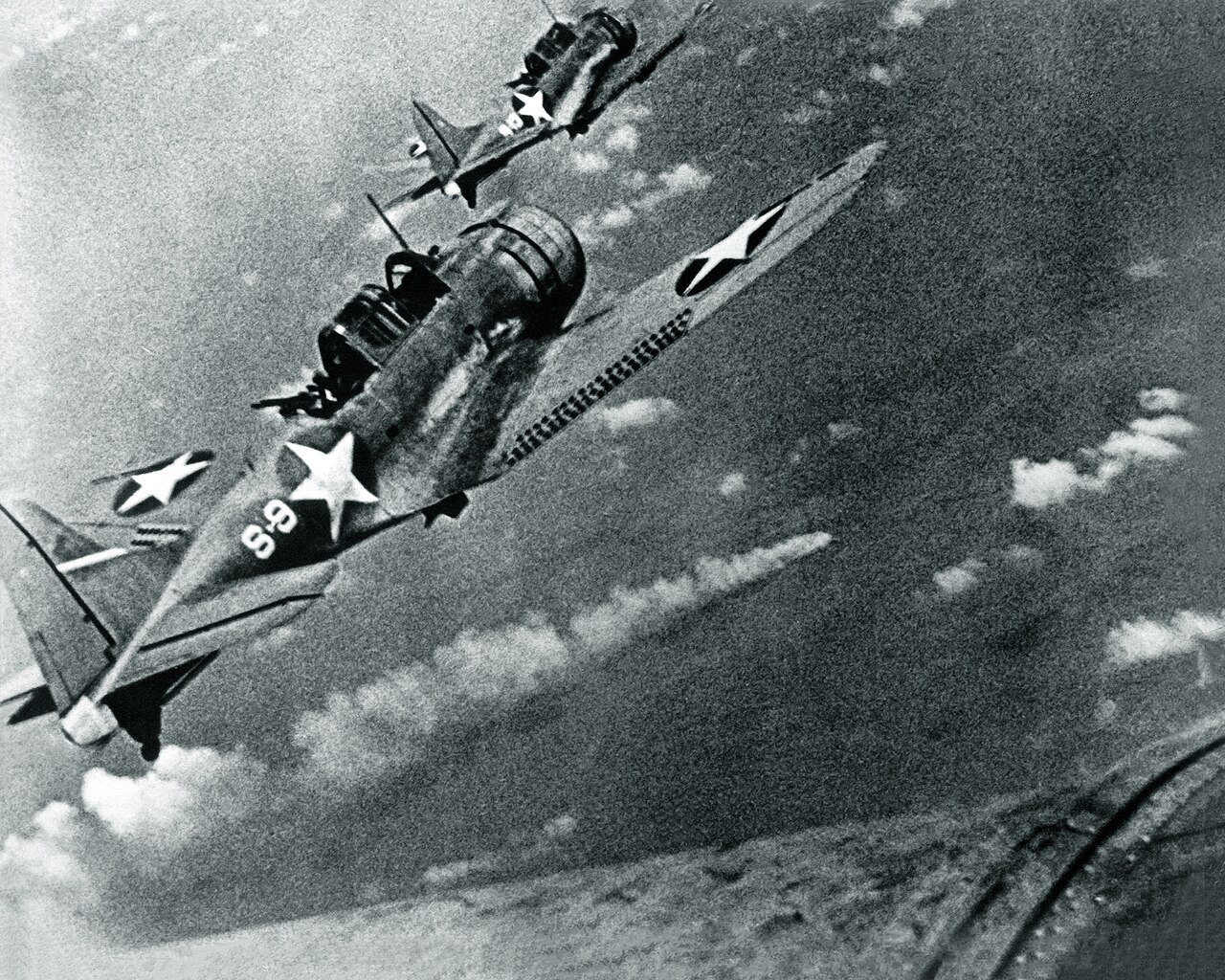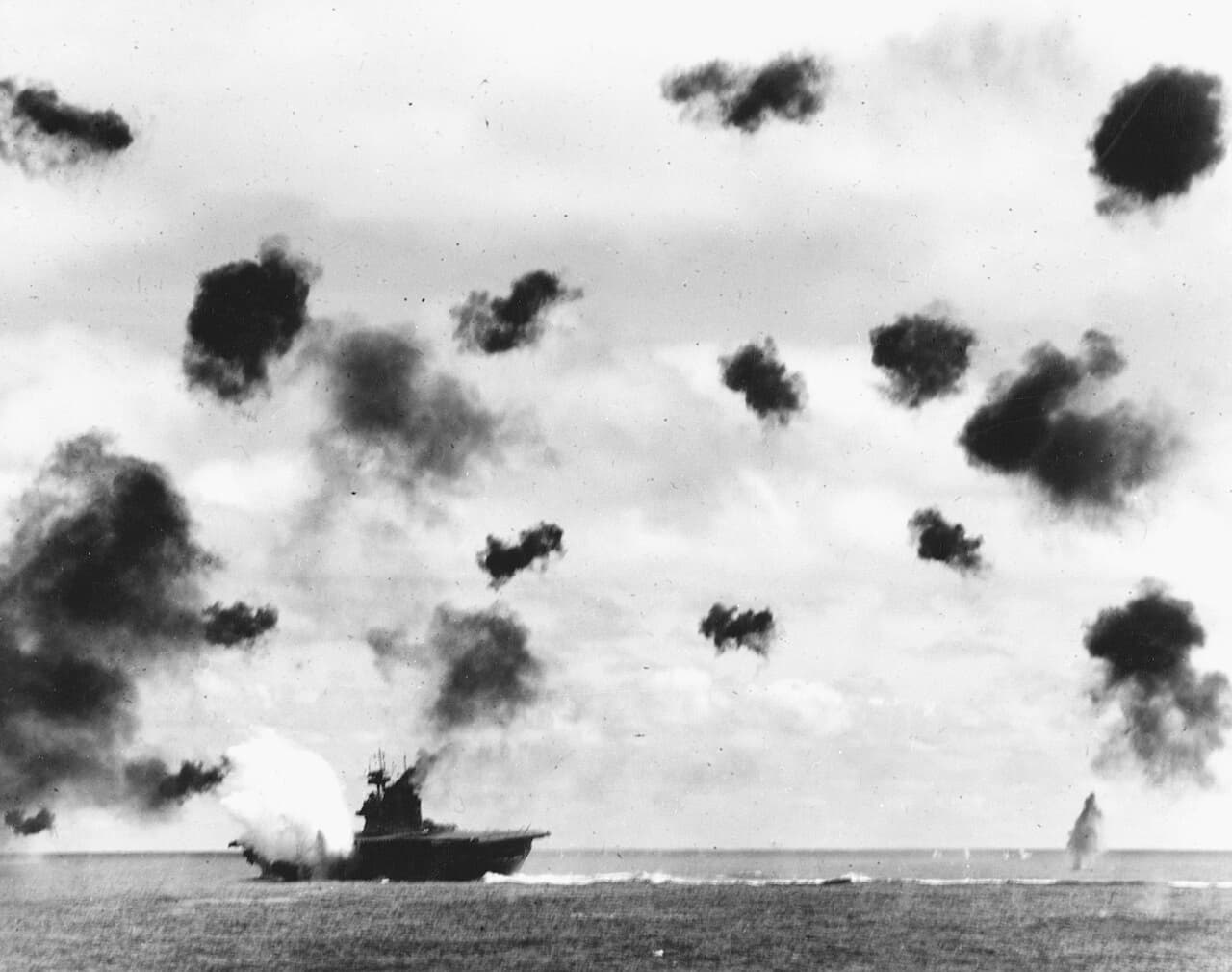

At approximately 10:22 on the morning of June 4, 1942, Lieutenant Commander Wade McClusky's dive bombers pushed over into their attack runs above the Japanese carrier striking force. Below them, on the flight decks of the Akagi, Kaga, and Soryu, armed and fueled aircraft were lined up wingtip to wingtip, loaded with bombs and torpedoes intended for a second strike on Midway Atoll. Fuel hoses snaked across the decks. Ordnance carts sat in the open. The Japanese combat air patrol, the Zeros that should have been flying high cover, had been drawn down to sea level, chasing a wave of American torpedo bombers that had attacked minutes earlier. Almost none of those torpedo bombers survived. But they had done something extraordinary. They had ripped open a window. And through that window, thirty-seven SBD Dauntless dive bombers fell like hammers.
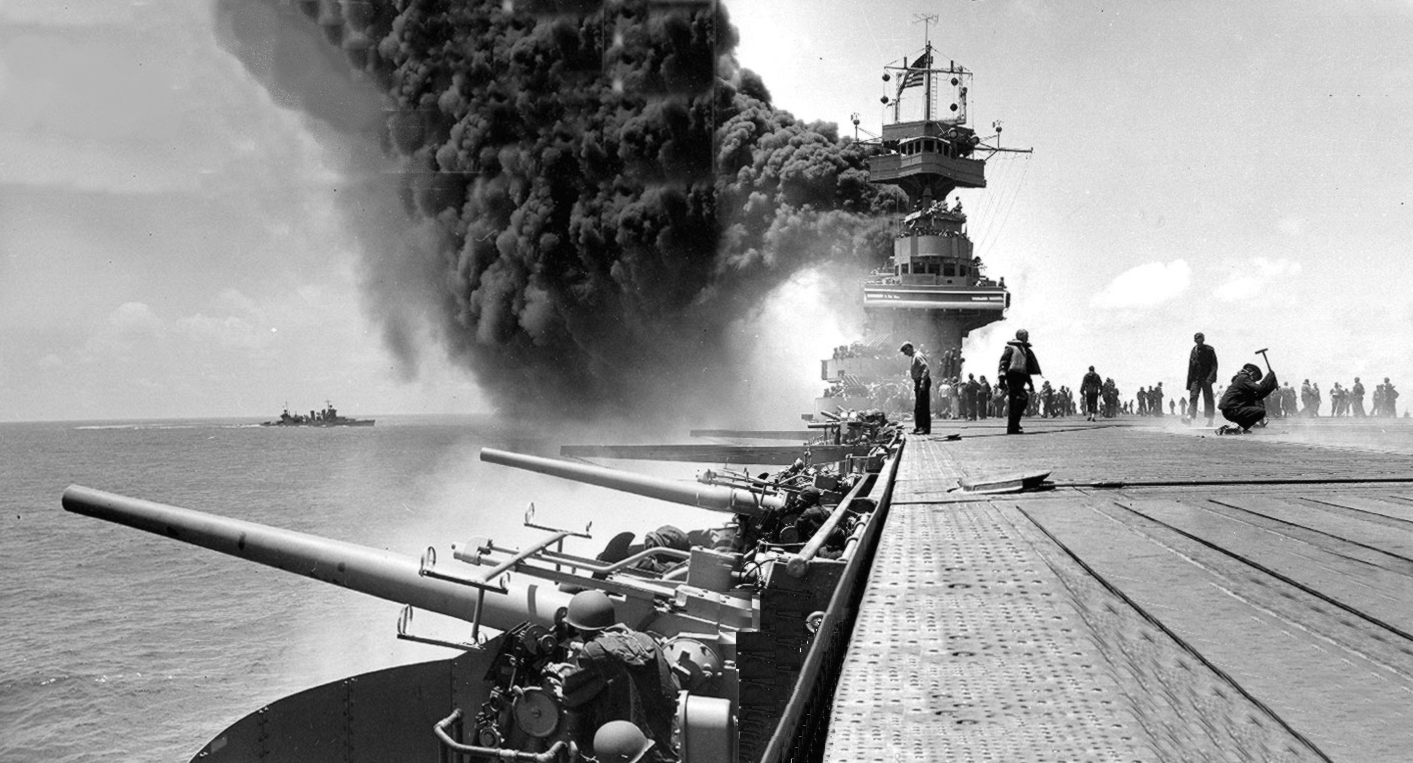
Within roughly five minutes, three of the four carriers in Vice Admiral Chuichi Nagumo's First Air Fleet were mortally wounded, engulfed in fires that no damage control effort could contain. By the end of the following day, the fourth carrier, Hiryu, would join them on the ocean floor. According to official Navy casualty records, Japan lost four fleet carriers, a heavy cruiser, 248 aircraft, and approximately 3,057 men. The Imperial Japanese Navy would never recover. The six months of unchecked Japanese expansion that had followed Pearl Harbor ended 1,300 miles northwest of Honolulu, in waters that tasted like burning oil.
This is the story of how it happened, and why those five minutes mattered more than almost any other five minutes in the Second World War.
The Japanese Gamble
By the spring of 1942, Admiral Isoroku Yamamoto, commander of the Combined Fleet and the architect of the Pearl Harbor attack, faced a strategic problem he had predicted before the war even started. As historian Jonathan Parshall and Anthony Tully documented in Shattered Sword, Japan's early conquests had been spectacularly successful: the Philippines, Malaya, the Dutch East Indies, Burma, Wake Island, Guam, and dozens of other territories had fallen in a blitzkrieg across the western Pacific. But Yamamoto understood better than most that Japan could not win a prolonged war against the United States. American industrial capacity was simply too vast. The clock was ticking.