Daniel Mercer writes about military history with a focus on the 20th century, including World War II, the Cold War, and Vietnam. His work looks at how decisions made decades ago still influence doctrine, planning, and assumptions today.
On a muddy field somewhere in France in the summer of 1944, a group of American soldiers wrestled a 93-pound rubber M4 Sherman tank off the back of a truck. They hooked up an air compressor, and within minutes, a full-sized tank materialized from nothing, indistinguishable from the real thing at a few hundred yards. One soldier, an art student from New York, stood back and critiqued the paint job. Another, who would later become one of America's most famous fashion designers, adjusted his fake unit patches before heading into a nearby town to gossip loudly about fictitious troop movements. Overhead, a German reconnaissance plane snapped photographs of what appeared to be an entire armored division massing for attack.
None of it was real. The tanks were rubber. The soldiers were actors. And the entire performance was the work of the 23rd Headquarters Special Troops, better known as the Ghost Army, the most unusual military unit in American history.
An Army of Artists, Architects, and Designers
As detailed in The Ghost Army of World War II by Rick Beyer and Elizabeth Sayles, the Ghost Army was activated on January 20, 1944, at Camp Forrest, Tennessee. It was the first mobile, multimedia, tactical deception unit in U.S. Army history. Its authorized strength was 82 officers and 1,023 enlisted men, roughly 1,100 soldiers total, under the command of Colonel Harry L. Reeder. Their mission was extraordinary: make the German army believe that large Allied formations were positioned where they weren't. Draw enemy attention, firepower, and reserves away from actual operations. Win battles by fighting with illusion instead of firepower.
What made the Ghost Army truly unusual wasn't the mission. Military deception is as old as warfare itself. What made them unique was who they recruited to do it.
The amphibious Volkswagen, the most mass-produced amphibious car in history at over 15,000 built. 320 reviews at 4.8 stars, one of the highest-rated kits in this entire guide. Around 80 parts.
Many Ghost Army soldiers were recruited from art schools and creative programs. They sketched, painted, and designed between deception operations. (National Archives)
The Army deliberately recruited from art schools, advertising agencies, architecture firms, and design programs. According to declassified Army records, they wanted people who understood visual illusion, who could think creatively under pressure, and who had the technical skills to make fake things look real. The roster reads like a future who's-who of American art and design.
As Jonathan Gawne documented in Ghosts of the ETO, his detailed history of the unit's personnel, Bill Blass, who served as a private in the 603rd Camouflage Engineers, would go on to become one of the most celebrated fashion designers in American history, a name synonymous with elegance for decades. Ellsworth Kelly, another member of the unit, became one of the most important painters of the 20th century, a pioneer of hard-edge painting and minimalism whose works hang in every major museum in the world. Art Kane, who served in the unit's signal company, later became a legendary photographer best known for his iconic 1958 Esquire photograph "A Great Day in Harlem." Arthur Singer, the renowned wildlife illustrator whose Birds of North America paintings remain definitive, also served with the Ghost Army.
These weren't soldiers who happened to be artistic. They were artists who were recruited because they were artistic. The Army looked at the problem of battlefield deception and concluded that the people best equipped to create convincing illusions weren't combat veterans. They were painters, sculptors, and set designers. It might be the most creative personnel decision in military history.
The Four Pillars of Deception
The Ghost Army's genius was that it didn't rely on a single trick. Per the declassified official unit history held at the National Archives, the 23rd employed four distinct types of deception, layered on top of each other so that no matter how the Germans gathered intelligence (aerial reconnaissance, radio intercepts, front-line observation, or reports from local civilians) they encountered the same consistent fiction.
1. Visual Deception: The Inflatable Army
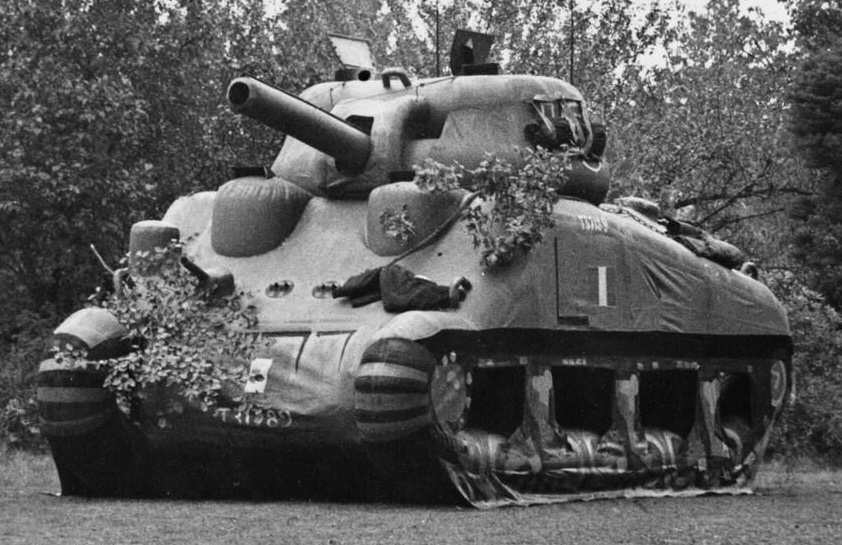
An inflatable M4 Sherman tank decoy weighing just 93 pounds. From the air, these were indistinguishable from 30-ton real tanks. (National Archives)
The 603rd Camouflage Engineers were responsible for the visual component, and it was the most visually spectacular part of the operation. According to Army Signal Corps records, their primary tools were inflatable decoys: rubber tanks, trucks, artillery pieces, jeeps, and aircraft manufactured by U.S. Rubber and Goodyear. Each decoy consisted of a skeleton of inflatable tubes covered with rubberized canvas, an ingenious design that meant a single piece of shrapnel couldn't instantly deflate the entire dummy.
An inflatable M4 Sherman weighed just 93 pounds. A real Sherman weighed over 30 tons. Yet from several hundred yards away, and especially from the air, the two were virtually indistinguishable. Soldiers inflated them with gasoline-powered air compressors, then painted them with unit markings and weathered details authentic enough to fool German aerial reconnaissance. A crew of four men could inflate and position a tank decoy in minutes.
But inflatable tanks alone wouldn't have worked. The 603rd understood that deception is about creating a complete picture, not just placing props. They added all the details that make a real encampment look real: fake laundry hung on lines, tire tracks pressed into mud by dragging weighted objects behind jeeps, smoke from dummy kitchens, and lights visible at night from tent positions. They even positioned the decoys imperfectly, because a formation that looked too neat would have raised suspicion. German photo analysts were trained to spot decoys, so the Ghost Army's artists had to create illusions that could survive expert scrutiny.
2. Sonic Deception: The Sound of Thirty Thousand Men
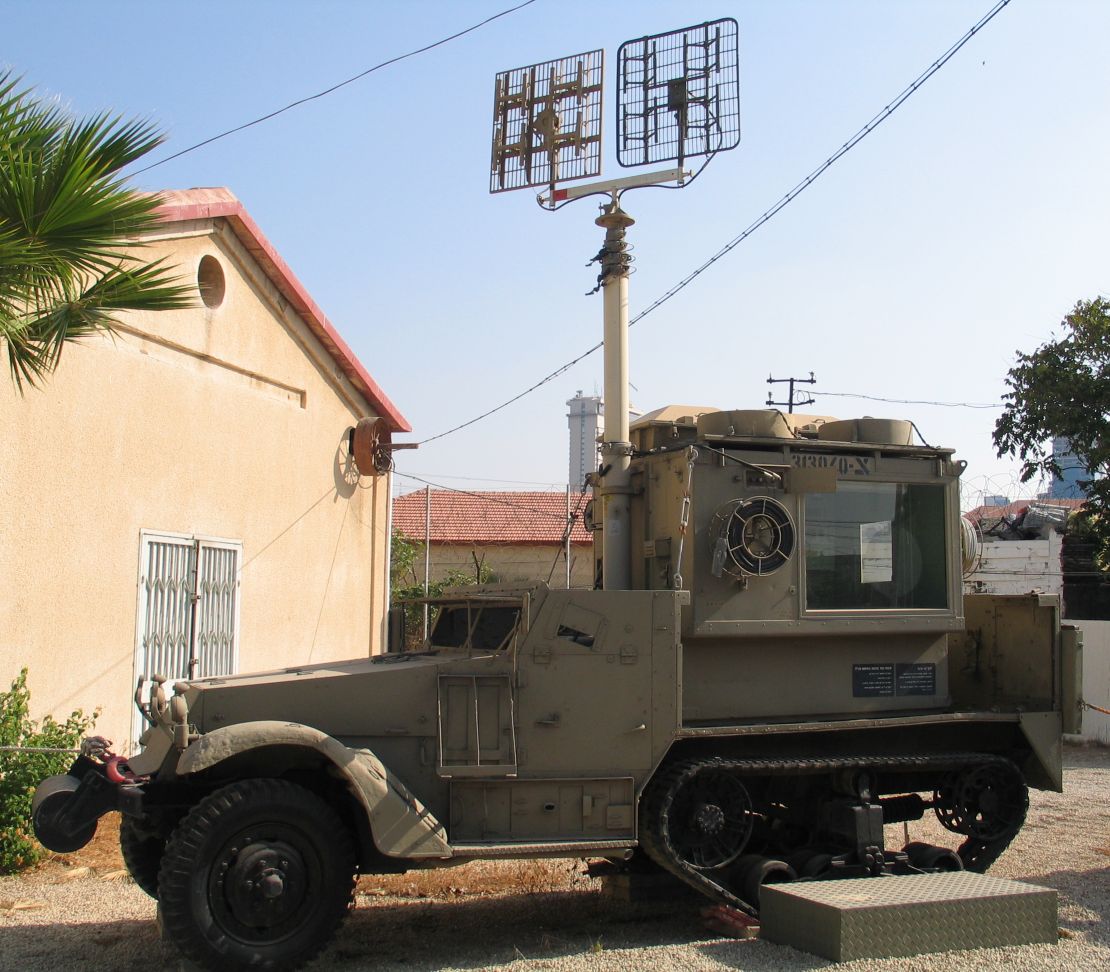
The 3132 Signal Service Company used M3A1 half-tracks mounted with 500-watt speakers capable of projecting battlefield sounds up to 15 miles. (National Archives)
The 3132 Signal Service Company, just 145 men, handled the sonic dimension. Their weapon was sound itself. Rick Beyer's documentary The Ghost Army revealed how engineers from Bell Laboratories aided the team, traveling to Fort Knox to record the sounds of real armored and infantry units: tanks rumbling, trucks grinding through gears, troops marching, bridges being constructed, artillery pieces being positioned, officers shouting orders. They captured everything an enemy listening post might expect to hear from a division on the move.
Smithsonian Magazine's coverage of the unit detailed how the recordings were made using state-of-the-art wire recorders, devices that used a .0006-inch steel wire as the recording medium, running at five feet per second on two-mile spools that provided 30 minutes of continuous playback. These recordings were then edited into carefully sequenced "soundscapes," programs designed to tell a specific story. A program might begin with the distant sound of approaching vehicles, build to the noise of an armored column arriving, shift to the clanking of bridge construction, and continue through the night with the ambient sounds of an encamped division.
The playback system was mounted on M3A1 half-tracks: 500-watt speakers that could project sound up to 15 miles. That's not a misprint. Fifteen miles. On a still night, German listening posts miles from the Ghost Army's position would hear what sounded exactly like an armored division moving into position. The speakers were designed to stow down inside the half-track bed when not in use, making the vehicles look like any of the thousands of other half-tracks in the European theater.
3. Radio Deception: Fake Traffic, Real Patterns
The Signal Company Special handled what might have been the most technically demanding component. German signals intelligence units monitored Allied radio traffic constantly, analyzing transmission patterns, call signs, frequencies, and even the distinctive "fist," the unique rhythmic pattern of individual radio operators. The Ghost Army's radio operators had to mimic all of it.
When the Ghost Army impersonated a real division, their radio team first studied the actual division's communications patterns: how often they transmitted, what call signs they used, what kind of traffic they generated, and what their operators sounded like on the air. Then they replicated it. Declassified after-action reports preserved at the National Archives documented how they would generate hours of fake radio traffic that sounded exactly like what a division headquarters would produce, from movement orders and supply requests to situation reports and the casual chatter that fills military radio networks.
The goal wasn't just to put signals on the air. It was to create a radio signature that German analysts would recognize as belonging to a specific, real unit. If the Germans intercepted transmissions that matched the known patterns of the 30th Infantry Division, they would mark that division's location on their maps, exactly where the Ghost Army wanted them to.
4. Atmosphere: Playing the Part
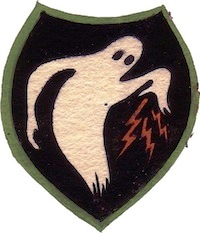
The fourth pillar was what the Army called "atmosphere," and it was the most human element of the deception. Ghost Army soldiers would sew on the shoulder patches and paint the vehicle markings of whatever unit they were impersonating. Then they'd fan out into local towns, visiting cafes, talking to civilians, complaining about their officers, and generally behaving like soldiers from a much larger formation passing through.
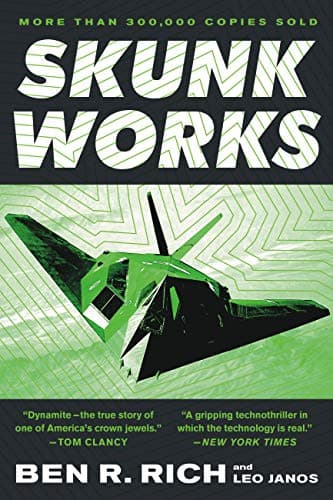
The inside story of Lockheed's Skunk Works division, told by Kelly Johnson's successor Ben Rich. Covers the development of the U-2, SR-71, and F-117 stealth fighter from inside the most secretive engineering operation in aviation history.
The reasoning was simple: German intelligence gathered information from every source available, including reports from sympathizers, paid informants, and casual conversations overheard in French and Belgian towns. If a dozen soldiers wearing 75th Infantry Division patches showed up in a village, word would eventually reach German ears. Combined with inflatable tanks visible from the air, convincing radio traffic, and the sounds of an armored column arriving at night, the picture became overwhelming.
This is what made the Ghost Army's approach so effective. Each individual element could potentially be detected as fake. But layered together (visual, sonic, radio, and human) they created a deception so consistent across every intelligence channel that questioning any single element meant questioning all of them. The fiction became self-reinforcing.
Twenty-Two Missions Across Europe
The Ghost Army arrived in England in May 1944, shortly before D-Day. Between June 1944 and the end of the war in 1945, they staged 22 battlefield deception operations across France, Belgium, Luxembourg, and Germany. Army Historical Foundation records confirm that a sister unit, the 3133rd Signal Company Special, carried out additional deceptions in Italy. In total, across all units, the deception program conducted at least 25 operations.
They operated dangerously close to the front lines, often within artillery range of the enemy, with nothing between them and the German army but rubber and canvas. The irony was brutal: the soldiers whose entire job was to avoid real combat were routinely positioned in some of the most exposed locations on the Western Front. Per the 2022 Congressional Gold Medal citation, three Ghost Army soldiers were killed and dozens were wounded during the war.
Their operations ranged from small diversions to elaborate, multi-day theatrical productions involving hundreds of decoys and coordinated sonic programs running through the night. They impersonated real divisions, simulated the presence of forces that didn't exist, and created phantom threat axes that forced the German army to spread its defenses thin.
Operation Viersen: The Masterpiece
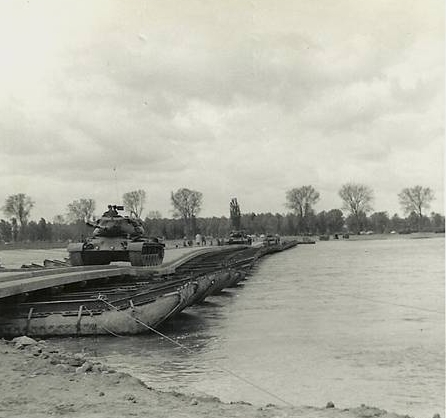
American troops crossing the Rhine River in March 1945. The Ghost Army's Operation Viersen diverted German attention from the actual crossing point. (National Archives)
The Ghost Army's most elaborate and important deception came in March 1945, as the Allies prepared for one of the most critical operations of the entire war: crossing the Rhine River into the heart of Germany. The Rhine was the last major natural barrier protecting the German homeland, and the Nazis knew the crossing was coming. They had fortified the eastern bank and positioned forces to contest any attempt.
The U.S. Ninth Army planned to cross at a specific point. The Ghost Army's job was to make the Germans believe the crossing would happen somewhere else entirely.
Tamiya's 1/35 Panther Ausf. G is a traditional styrene kit with excellent fit and clear instructions. At this scale, the finished model is roughly 25cm long with good surface detail and working suspension.
Operation Viersen ran from March 18 to March 24, 1945, and it was the Ghost Army's magnum opus. According to the National WWII Museum, they positioned themselves approximately 10 miles south of the actual crossing point and proceeded to impersonate not one but two full infantry divisions, the 30th and the 79th, plus additional support units, simulating a force of roughly 40,000 troops.
The scale was staggering. They deployed more than 600 inflatable decoys. Their sonic trucks ran through the night, blasting recorded sounds of pontoon bridge construction, artillery positioning, and troop movements. The radio team generated a blizzard of fake traffic that perfectly matched the communications patterns of the real 30th and 79th Divisions. Meanwhile, Ghost Army soldiers wearing the correct division patches flooded nearby towns, loudly discussing crossing preparations and complaining about the cold water.
The deception worked. German defenders shifted forces to counter the phantom crossing, weakening their positions at the actual crossing point. When the real assault came, it encountered lighter resistance than expected. The Ninth Army got across the Rhine with fewer casualties than planners had feared.
Operation Viersen is considered one of the most successful tactical deceptions of the entire war. It demonstrated what the Ghost Army had proven in smaller operations across France and Belgium: that a thousand soldiers with rubber tanks and speakers could have more impact on a battle than an actual armored division, by being in the right place, telling the right lie, at the right time.
The People Behind the Deception
What makes the Ghost Army's story endure isn't just the audacity of the mission. It's the people. These weren't hardened combat troops. They were art students, set designers, advertising men, and architects who happened to be at war. Between operations, they sketched and painted. They drew portraits of French civilians and landscapes of the countryside they were liberating. The Ghost Army Legacy Project has cataloged hundreds of their wartime artworks that survive today, offering a visual record of the war seen through the eyes of trained artists.
Bill Blass, who served as a private in the 603rd Camouflage Engineers, returned home and built one of the most iconic fashion houses in American history. He rarely talked about his wartime service, because for decades, he wasn't allowed to. Ellsworth Kelly, whose wartime experience with camouflage and visual perception influenced his later abstract work, became one of the defining artists of the 20th century. Art Kane, who served in the signal company, went on to revolutionize portrait photography.
But fame wasn't the point. Most Ghost Army soldiers returned to quiet civilian lives as teachers, engineers, commercial artists, and designers. They raised families and built careers and never told anyone what they'd done during the war. They couldn't. Their entire service record was classified.
The Pulitzer Prize-winning first volume of Atkinson's Liberation Trilogy, covering the Allied invasion of North Africa in 1942-1943. Shows how a green American army learned to fight through costly mistakes in Tunisia and Algeria.
The Ghost Army's story was classified as top secret at the end of the war. For more than half a century, the men who served in the 23rd Headquarters Special Troops couldn't tell their wives, their children, or their friends what they'd actually done during the war. When someone asked, "What did you do in the service?" they'd change the subject or give a vague answer. The specifics were locked away in government archives.
The records were finally declassified in 1996. By then, many of the unit's 1,100 members had already died, taking their stories with them. Those who survived were in their 70s and 80s, finally able to tell their families what they'd been doing all those years ago in France and Belgium and Germany. Jack Masey, a Ghost Army veteran, recalled the strange relief of finally being able to share the secret, even though the story was so improbable that his own family didn't quite believe him at first.
Filmmaker Rick Beyer spent years tracking down surviving members and produced a documentary, The Ghost Army, that aired on PBS in 2013 and brought the story to national attention. He also co-authored a book with Elizabeth Sayles, The Ghost Army of World War II, that remains the definitive popular account.
Finally Recognized
In February 2022, President Biden signed legislation awarding the Congressional Gold Medal, the highest civilian honor Congress can bestow, to the soldiers of the Ghost Army. The actual ceremony took place on March 21, 2024, at the U.S. Capitol.
Of the 1,100 men who served in the 23rd Headquarters Special Troops, only seven were still alive to attend. They sat in the Capitol, men in their late 90s and past 100, finally receiving recognition for a mission they'd kept secret for most of their lives. According to the National WWII Museum, the military estimates that the Ghost Army's deceptions saved between 15,000 and 30,000 American lives over the course of the war.
That number is worth sitting with. Fifteen to thirty thousand soldiers who came home because a thousand artists and engineers made the Germans look in the wrong direction. The Ghost Army didn't fire the shots that won the war. They made sure the enemy wasted theirs.
Why the Ghost Army Matters Today
The Ghost Army's story resonates because it upends our assumptions about warfare. We imagine World War II as a conflict decided by brute force: massive naval battles, armored blitzkriegs, and industrial production. And it was. But it was also a war won by ingenuity, creativity, and the willingness to try ideas that sounded absurd on paper.
Inflatable tanks. Speakers on half-tracks. Artists recruited specifically for their ability to create illusions. Every part of the Ghost Army's concept sounds like a movie pitch that would get rejected for being too unrealistic. But it worked. It worked because the people who designed and executed these deceptions understood something fundamental about warfare: the enemy acts on what they believe is true, not what is true. Control the information, and you control the battlefield.
That principle is, if anything, more relevant now than it was in 1944. Modern military doctrine devotes enormous resources to information warfare, electronic deception, and shaping adversary perceptions. The tools have changed (cyber operations, electromagnetic warfare, AI-generated content) but the core idea is the same one that a thousand artists proved on the battlefields of Europe eight decades ago.
The Ghost Army was never the biggest, the strongest, or the best-armed unit in the U.S. military. They were the most creative. And sometimes, that matters more.
Frequently Asked Questions
What was the Ghost Army of WWII?
The Ghost Army was the nickname for the 23rd Headquarters Special Troops, a U.S. Army tactical deception unit activated in January 1944. Approximately 1,100 soldiers used inflatable decoy vehicles, recorded sound effects, fake radio traffic, and theatrical techniques to make the German army believe large Allied formations were positioned where they weren't. They conducted 22 deception operations across Europe.
How did the Ghost Army's inflatable tanks work?
The inflatable decoys were manufactured by U.S. Rubber and Goodyear. Each consisted of a skeleton of inflatable tubes covered with rubberized canvas. An inflatable M4 Sherman tank weighed only 93 pounds but was indistinguishable from a real 30-ton tank at several hundred yards. Crews of four could inflate them in minutes using gasoline-powered air compressors, then add authentic unit markings and weathering details.
How far away could the Ghost Army's speakers be heard?
The 3132 Signal Service Company used 500-watt speakers mounted on M3A1 half-tracks that could project battlefield sounds up to 15 miles. Engineers from Bell Laboratories helped record the sounds at Fort Knox, capturing the noise of tanks, trucks, troops, bridge construction, and other military activity that was then edited into convincing soundscapes.
Which famous people served in the Ghost Army?
Several Ghost Army members went on to notable post-war careers. Fashion designer Bill Blass served in the 603rd Camouflage Engineers. Painter Ellsworth Kelly became one of the most important abstract artists of the 20th century. Photographer Art Kane created the legendary 1958 "A Great Day in Harlem" photograph. Wildlife illustrator Arthur Singer produced the iconic Birds of North America paintings.
What was Operation Viersen?
Operation Viersen (March 18-24, 1945) was the Ghost Army's largest and most important deception. As the U.S. Ninth Army prepared to cross the Rhine River, the Ghost Army positioned itself 10 miles south of the actual crossing point, deploying over 600 inflatable decoys and impersonating the 30th and 79th Infantry Divisions to simulate a force of roughly 40,000 troops. The deception drew German defenders away from the real crossing.
How many lives did the Ghost Army save?
The U.S. military estimates that the Ghost Army's deception operations saved between 15,000 and 30,000 American lives over the course of World War II. By diverting German forces and attention from actual Allied operations, the Ghost Army reduced casualties at critical points throughout the campaign in Western Europe.
When was the Ghost Army declassified?
The Ghost Army's records were declassified in 1996, more than 50 years after the end of World War II. Until then, the unit's members were unable to discuss their wartime service. Many had already passed away by the time the story became public. In 2022, Congress authorized the Congressional Gold Medal for the unit, with the ceremony taking place in March 2024.
Where can I learn more about the Ghost Army?
The National WWII Museum in New Orleans has featured a traveling exhibit called "Ghost Army: The Combat Con Artists of World War II." The PBS documentary The Ghost Army (2013), directed by Rick Beyer, includes interviews with surviving members. The book The Ghost Army of World War II by Rick Beyer and Elizabeth Sayles is the definitive popular account. The Ghost Army Legacy Project (ghostarmy.org) maintains an extensive online archive.