Ryan Caldwell writes about military decision-making, failed programs, and the tradeoffs behind major defense choices. His work is focused on understanding why systems succeed or fail beyond headlines, promises, and initial expectations.
Military history has a mythology problem. Certain claims get repeated so often, in documentaries, video games, online forums, and even classrooms, that they harden into accepted truth. The Tiger tank was invincible. The Maginot Line was useless. Stealth planes are invisible. These statements feel authoritative because everyone says them. But feeling true and being true are different things.
The real stories behind these myths are more interesting than the legends. They involve engineering trade-offs, tactical ingenuity, and the messy realities that Hollywood prefers to skip. None of these myths are completely wrong, and that's what makes them sticky. Each contains a grain of truth that got inflated through decades of retelling until the nuance disappeared entirely.
This isn't about trashing legendary equipment or dismissing genuine achievements. The Tiger tank was a formidable weapon. The Maginot Line was an engineering marvel. Stealth technology changed air combat forever. But understanding what these systems actually did (and didn't do) matters more than repeating comfortable legends. The trade-offs and limitations are where the real lessons live.
Here are five military myths that refuse to die, and the more compelling truths they've been hiding.
A rattle-can primer that gives paint something to grip. Gray is the most versatile color for military subjects, and the 180ml can will prime 8-10 models in 1/72 or 3-4 in 1/48 scale.
The Myth: The Tiger I was a battlefield juggernaut that Allied tanks couldn't hope to defeat. Its 88mm gun and thick armor made it nearly invincible, and Allied crews lived in terror of encountering one.
The Reality: The Tiger I was a genuinely impressive weapon system with a genuinely terrible strategic record. As armor historian Thomas Jentz documented in Germany's Tiger Tanks: Tiger I and II, Germany produced approximately 1,347 Tiger I tanks between August 1942 and August 1944. During that same period, American factories alone churned out over 49,000 M4 Shermans. That production ratio, roughly 36 to 1, tells a story that no amount of thick armor can overcome.
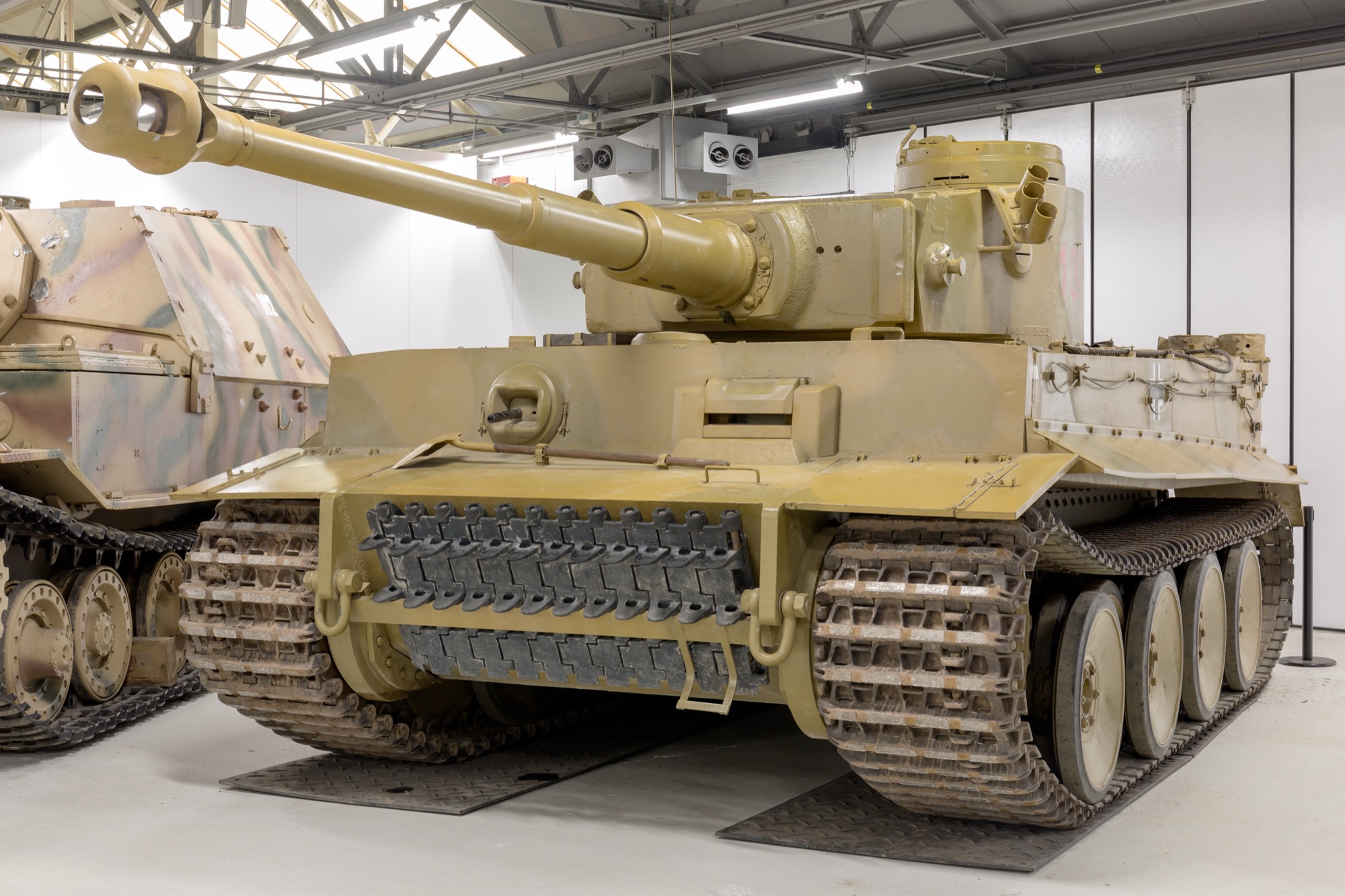
A surviving Tiger I on museum display. Fewer than 10 intact examples remain today -- a reflection of both limited production and high attrition rates during the war.
The Tiger weighed 54 tonnes, which created cascading problems that its designers never fully solved. According to maintenance logs compiled by Jentz and Hilary Doyle in Tiger I Heavy Tank 1942–45, the Maybach HL 230 engine was perpetually overstressed, driving a tank that was 12 tonnes heavier than what the powerplant was designed to handle. The result was chronic transmission and final drive failures. German field reports indicate that final drives lasted an average of just 150 kilometers before requiring replacement. The Tiger's complex interleaved road wheel system, designed to distribute weight across soft ground, became a maintenance nightmare. Wheels had to be removed in sequence to access inner wheels for repair, a process that could take an entire crew hours. On the Eastern Front, mud and ice would freeze between the overlapping wheels overnight, sometimes immobilizing the tank completely until crews chipped the ice free. Veterans of the schwere Panzer-Abteilungen reported spending more time on repairs than on actual combat operations.
Fuel consumption was staggering. Quartermaster records from Tiger battalions show the tank burned through roughly 540 liters of gasoline per 100 kilometers on roads, and far worse cross-country. At a time when Germany was already facing critical fuel shortages, every Tiger battalion was a logistics burden that rippled through the entire supply chain. Many Tigers were abandoned not because they were knocked out by enemy fire, but because they broke down and couldn't be recovered. The Tiger was too heavy for most bridges and required specialized rail cars for transport. Crews frequently had to remove the outer road wheels and fit narrower transport tracks just to fit on European rail gauges, then reassemble everything at the railhead, a process that consumed hours of labor before the tank ever saw the front.
None of this means the Tiger was a bad tank in a head-to-head engagement. Its 88mm KwK 36 gun could destroy any Allied tank at ranges where return fire was ineffective, and its frontal armor resisted most Allied anti-tank weapons until 1944. Tiger aces like Michael Wittmann compiled impressive kill tallies. But as historian Steven Zaloga argues in Armored Champion, wars aren't won by individual kill ratios. They're won by the side that can sustain operations, replace losses, and maintain strategic mobility. On every one of those measures, the Tiger failed.
The real story of the Tiger is a case study in how tactical excellence can coexist with strategic futility. Germany built a tank that could win almost any single engagement and still lose the war partly because of the resources it consumed. The Sherman wasn't better in a duel, but it was better at winning a war: reliable, mass-producible, transportable, and good enough. That trade-off is far more instructive than the myth of invincibility.
Myth 2: The Maginot Line Was a Useless Waste
The Myth: France built a massively expensive fortification line that Germany simply walked around in 1940, making the entire project a colossal, laughable failure. The Maginot Line is shorthand for futile defensive thinking.
The Reality: The Maginot Line worked exactly as designed. The problem was never the fortifications themselves. It was the strategic assumptions about what would happen on the flanks.
Dry pigment palettes applied with the included sponge applicator. No thinners, no mixing, almost impossible to overdo. Set A covers sand and mud effects, which are the most commonly needed weathering effects for armor models.
The Maginot Line was an engineering marvel on a staggering scale. Completed between 1930 and 1936 at a cost of roughly 3 billion francs (equivalent to several billion modern dollars), the system stretched along France's border with Germany and included over 100 major fortifications called ouvrages, each a self-contained underground fortress. The largest, like Schoenenbourg and Hackenberg, extended several stories underground and housed garrisons of over 1,000 men. They featured retractable steel turrets with artillery and anti-tank guns, underground railways for moving ammunition, filtered ventilation systems to counter gas attacks, barracks, hospitals, and enough supplies to sustain the garrison for months without resupply.
And the critical point most people miss: Germany never broke through the Maginot Line. Not once. Where German forces directly engaged the fortifications in June 1940, the ouvrages held. The garrison at Schoenenbourg absorbed over 160 direct hits from dive bombers and artillery, including 420mm shells, and continued fighting. Several Maginot forts were still operational and undefeated when France signed the armistice on June 22, 1940. Their garrisons were among the last French forces to surrender, and they did so only on orders from the new Vichy government.
The French high command never intended the Line to cover the entire border. The Ardennes forest to the north was considered impassable for armored formations, a catastrophic miscalculation, but a strategic one not an engineering one. The Line's explicit purpose was to force any German invasion northward through Belgium, where French and British forces could meet it on favorable terms. That is precisely what happened. The failure was that the Allied response in Belgium collapsed, not that the fortifications didn't work.
As historian Robert Doughty documented in The Breaking Point, the Maginot Line actually accomplished its primary military objective: it freed up roughly 15 divisions that would otherwise have been needed to garrison the Franco-German border. Those divisions were available for mobile operations elsewhere. The line also denied Germany the option of a repeat of the 1914 Schlieffen Plan, forcing the Wehrmacht to develop the risky Ardennes gamble that could easily have failed if French reconnaissance and response had been faster.
The real lesson of the Maginot Line isn't that fixed defenses are useless. It's that even the best-engineered system fails if the broader strategy around it is flawed. The fortifications themselves were brilliantly designed machines of war. The generals who assumed the Ardennes was impassable were the actual failure point.
Myth 3: Stealth Aircraft Are Invisible to Radar
The Myth: Stealth aircraft like the F-117 Nighthawk, B-2 Spirit, and F-22 Raptor are completely invisible to radar. They fly through defended airspace undetected, and air defense systems simply cannot see them.
The Reality: Stealth technology reduces an aircraft's radar cross section. It does not eliminate it. The distinction matters enormously, and one Serbian colonel proved it with a missile system older than most of the pilots he was shooting at.
Every stealth aircraft has a radar cross section, the measure of how detectable an object is to radar. The goal of stealth design is to reduce that cross section to the point where detection becomes extremely difficult at operationally relevant ranges. As Ben Rich, head of Lockheed's Skunk Works, explained in his memoir Skunk Works, the F-117's radar cross section was designed to be comparable to that of a marble or a small ball bearing. That's remarkable, but a marble still reflects radar energy. Under the right conditions, with the right equipment, and critically with the right tactics, that tiny return can be detected.
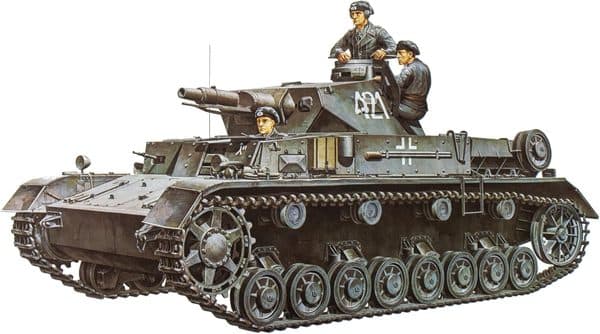
The Panzer IV was the workhorse of the German armored divisions, and Tamiya's 1/35 kit captures the Ausf. H variant with its characteristic Schurzen side skirts and long-barrel 75mm gun.
On the night of March 27, 1999, Colonel Zoltan Dani of the Serbian 250th Air Defense Missile Brigade demonstrated exactly that. His battery of Soviet-era SA-3 Neva missiles, a system designed in the 1950s, shot down an F-117A Nighthawk during Operation Allied Force over Yugoslavia. It was, and remains, the only stealth aircraft ever shot down in combat.
Dani didn't accomplish this through luck. According to his own postwar interviews with journalists and later with the Smithsonian Channel, he employed a combination of disciplined tactics and technical adaptations. His crews operated their radar for extremely brief intervals, sometimes as short as 17 seconds, to avoid being targeted by NATO anti-radiation missiles. He positioned his battery based on intelligence about likely flight corridors and relied on observers to provide early warning. As Benjamin Lambeth documented in NATO's Air War for Kosovo, Dani modified his engagement radar to operate at longer wavelengths, which are inherently better at detecting stealth aircraft because stealth shaping is optimized against the shorter wavelengths used by most fire-control radars. There are also reports that the F-117's bomb bay doors were open at the moment of detection, temporarily increasing its radar cross section.
The shootdown didn't invalidate stealth technology. It demonstrated its actual nature. Stealth is not a cloak of invisibility. It's a tool that shifts the odds dramatically in favor of the attacker by reducing detection ranges, compressing an adversary's decision timeline, and forcing defenders to rely on degraded information. Against a disciplined, adaptive defender who understands those limitations, stealth alone is not enough. That's why modern stealth operations combine low-observable airframes with electronic warfare, careful mission planning, suppression of enemy air defenses, and strict operational security about flight routes.
The ongoing development of low-frequency radars, passive detection systems, and networked sensor arrays means that the stealth-versus-detection competition continues to evolve. Understanding what stealth actually provides, and what it doesn't, is essential for anyone trying to understand modern air warfare. The real story is far more interesting than "invisible plane."
Myth 4: Submarines Can't Be Detected
The Myth: Once a submarine dives beneath the surface, it becomes essentially undetectable. The ocean is too vast and too deep for surface ships or aircraft to find a submerged submarine that doesn't want to be found.
The Reality: Modern submarines are extraordinarily difficult to detect. Some of the quietest, like the U.S. Navy's Virginia-class or the Royal Navy's Astute-class, produce less noise than the ambient ocean around them. But "extraordinarily difficult" is not the same as "impossible," and the world's navies spend billions of dollars annually on anti-submarine warfare for a reason: because it works, under the right conditions, with enough resources dedicated to the task.
The methods for hunting submarines are more varied and more capable than most people realize. As naval historian Norman Polmar described in Cold War Submarines, the United States deployed SOSUS (the Sound Surveillance System), a vast network of hydrophone arrays fixed to the ocean floor at strategic chokepoints across the Atlantic and Pacific. Declassified Navy records show SOSUS could detect Soviet submarines at ranges of hundreds of miles by listening for the distinctive acoustic signatures of their reactor coolant pumps, propulsion systems, and hull vibrations. The system was so effective that it shaped Soviet submarine design philosophy for decades, driving a relentless effort to reduce radiated noise.
Modern anti-submarine warfare extends well beyond fixed arrays. Maritime patrol aircraft like the P-8A Poseidon carry sonobuoys, expendable listening devices dropped in patterns across suspected submarine operating areas. These can be passive (listening only) or active (emitting a sonar pulse and listening for the return echo). A single P-8A sortie can deploy dozens of sonobuoys across a wide search area, creating a temporary acoustic net. The aircraft's onboard systems process the returns in real time, allowing operators to refine the search pattern as data comes in.
Magnetic Anomaly Detection, or MAD, exploits the fact that a submarine's steel hull distorts the Earth's magnetic field. MAD-equipped aircraft flying at low altitude can detect this distortion, though the effective range is limited, typically requiring the aircraft to pass almost directly over the submarine. MAD is most useful for confirming a contact already localized by other means rather than as a primary search tool.
Surface ships and submarines themselves carry sophisticated towed sonar arrays: long cables packed with hydrophones that are streamed behind the vessel at depth. These arrays, isolated from the towing ship's own noise, can detect extremely faint acoustic signatures at considerable distances. Attack submarines hunting other submarines rely heavily on these passive systems, engaging in a high-stakes game of detection and evasion where the first side to establish a firing solution usually wins.
Emerging detection methods may shift the balance further. According to a 2019 RAND Corporation study on undersea warfare, research into satellite-based detection of submarine wakes, bioluminescence disturbances, and thermal scarring is ongoing across multiple nations. Non-acoustic detection, which tracks the subtle changes a submarine creates in its environment rather than listening for noise, could eventually threaten even the quietest boats.
The ocean does provide enormous advantages to the submarine. Thermoclines, salinity layers, ambient noise, and sheer volume make detection genuinely difficult. A well-handled submarine operating in favorable acoustic conditions with a competent crew can evade detection for extended periods. But the notion that submarines are undetectable flatly ignores the sophisticated, multi-layered systems that navies have developed over decades specifically to find them. The cat-and-mouse dynamic between submarine stealth and anti-submarine detection is one of the most technically fascinating competitions in military history, and both sides keep scoring points.
Myth 5: Medieval Knights Couldn't Stand Up in Their Armor
The Myth: Plate armor was so heavy that knights had to be lifted onto their horses by cranes. If they fell off, they floundered on the ground like upended turtles, helpless until a squire hauled them upright. Armor was essentially a metal prison.
The Reality: This myth has been debunked so thoroughly, by so many sources, that its persistence is itself a case study in how misinformation survives. As Tobias Capwell, Curator of Arms and Armour at the Wallace Collection in London, has repeatedly demonstrated in public lectures and publications, a full harness of 15th-century plate armor weighed between 45 and 55 pounds (20–25 kg), distributed across the entire body: shoulders, torso, arms, legs, and feet. That weight distribution is the critical detail the myth ignores.
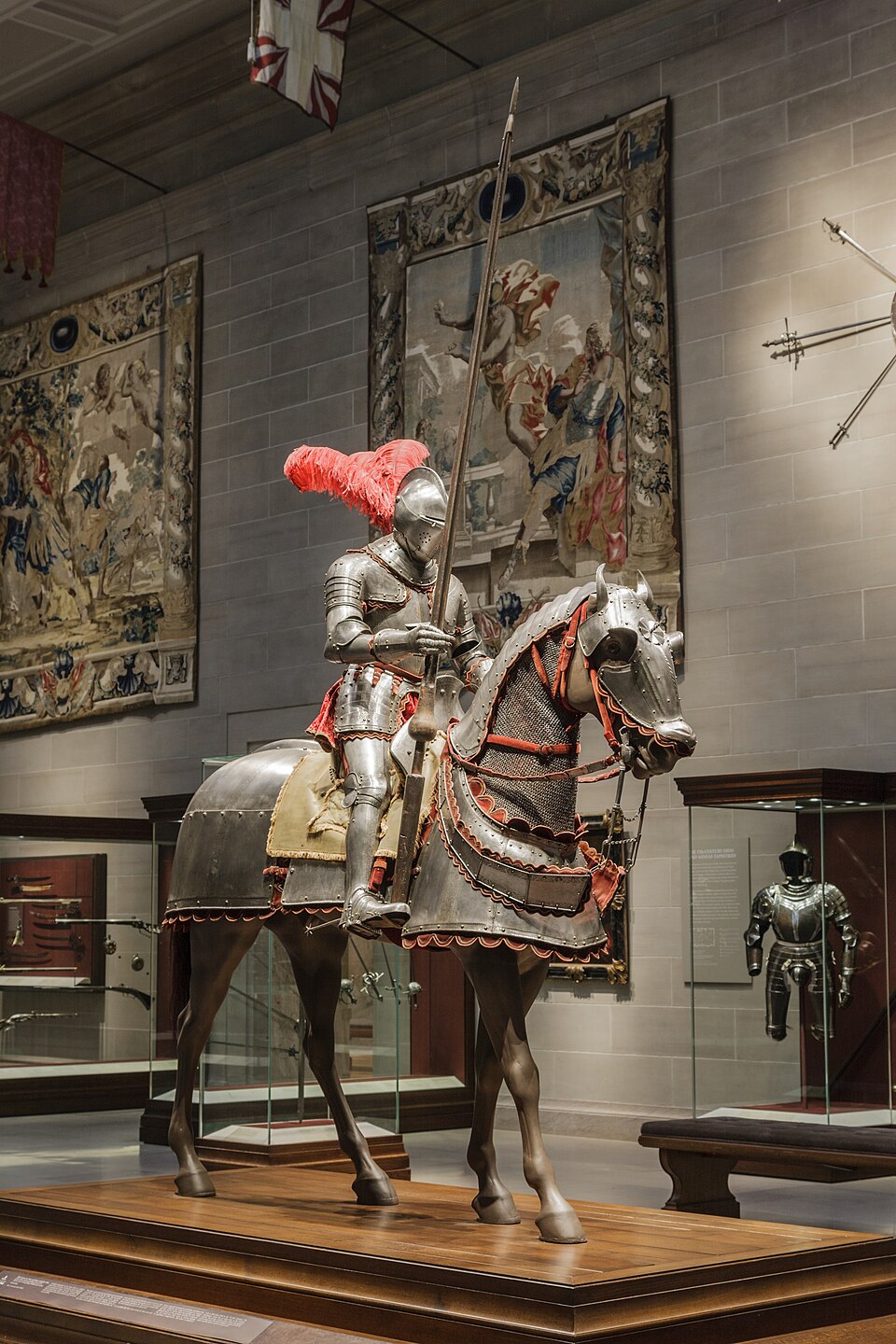
A complete 15th-century plate harness. The articulated joints at the elbows, knees, and shoulders allowed a surprisingly full range of motion despite the armor's protective coverage.
For comparison, a modern U.S. infantry soldier in full combat loadout regularly carries 60 to over 100 pounds, and the bulk of that weight sits on the torso and shoulders via body armor and a rucksack. A CNA Military Advisory Board study on infantry load carriage found that the average combat load in Afghanistan exceeded 90 pounds. A medieval knight's 50 pounds spread across his entire frame was, pound for pound, a lighter burden than what we ask 21-year-old infantrymen to carry today. The knight's armor was also custom-fitted by skilled armorers who understood that a fighting man needs to move, breathe, and swing a weapon. Plate armor was articulated at every major joint, with carefully designed overlapping plates, pivots, and sliding rivets that permitted a remarkable range of motion.
In 2011, researchers at the University of Leeds published a landmark study in the Proceedings of the Royal Society B that put actual volunteers in replica 15th-century plate armor and measured their energy expenditure on a treadmill. The results confirmed what medievalists had argued for years: wearing plate armor increased the energy cost of locomotion by about 2.3 times compared to unloaded movement, primarily because the leg armor added weight to the extremities, which costs more energy to swing than torso weight. The subjects breathed harder and fatigued faster. But they walked, ran, and moved. They were not immobilized.
Medieval combat manuals tell an even clearer story. Fiore dei Liberi's Fior di Battaglia (The Flower of Battle), written around 1409, contains extensive sections on armored combat that include wrestling throws, ground fighting techniques, and methods for dispatching a fallen opponent through gaps in his armor. You don't write a wrestling manual for people who can't stand up. German master Hans Talhoffer's 15th-century manuals depict armored combatants performing acrobatic techniques, mounting horses unassisted, and fighting in close quarters. As medieval arms scholar Ewart Oakeshott noted in A Knight and His Weapons, these weren't theoretical. They were training documents used by professional fighters who staked their lives on what the pages taught.
The crane myth appears to originate from a combination of sources: satirical medieval artwork, the genuinely unwieldy tournament armor of the late 16th century (which was purpose-built to be heavier for jousting and was never worn in battle), and Victorian-era misunderstandings of medieval life. The National WWII Museum's educational materials on military evolution note that tournament armor could weigh 80 pounds or more, but it was designed for a very specific activity (absorbing the impact of a lance at closing speeds of 40+ mph) and was never intended for battlefield use. Conflating tournament armor with battlefield armor is like comparing a NASCAR roll cage to a Honda Civic and concluding that no one can drive a car.
The truth is that armored knights were professional athletes who trained from childhood in the physical demands of mounted and dismounted combat. Their armor was sophisticated, purpose-built protective equipment that balanced protection with mobility. They could mount and dismount horses, fight on foot, wrestle, and yes, stand up when knocked down. The real story, of skilled craftsmen building articulated protective systems for elite warriors, is far more impressive than the cartoon version.
Why These Myths Won't Die
These five myths share common DNA. Each starts with a kernel of truth: the Tiger was formidable, the AK is reliable, stealth reduces detection, submarines are hard to find, and armor was heavy. The truth then gets simplified, exaggerated through retelling, and amplified by media that rewards dramatic claims over nuanced reality. "Stealth planes are harder to detect" doesn't make as compelling a documentary title as "invisible to radar."
There's also a psychological dimension. As military historian Max Hastings wrote in Inferno, people prefer clean narratives to messy trade-offs. A world where one tank is invincible is easier to understand than one where tank design involves constant compromises between protection, mobility, firepower, reliability, and cost. A rifle that "never jams" is a simpler story than one whose reliability emerges from deliberate engineering sacrifices in other areas.
Video games and movies bear some responsibility. When a Tiger tank absorbs dozens of hits in a game without consequence, the myth of invincibility gets reinforced through experience, even though that experience is fiction. When stealth aircraft appear as blinking dots on radar screens only after dramatic reveals, the "invisible" narrative embeds itself further.
But the biggest reason these myths persist is that the real stories require more effort to understand. Trade-offs, engineering constraints, and tactical context aren't as immediately satisfying as absolute statements. The reality of how military technology actually works demands engagement with complexity. The myths offer simplicity. In a world of shrinking attention spans, simplicity usually wins.
That's a shame, because the real stories are better. A conscript rifle designed to function in the hands of millions of minimally trained soldiers across every climate on Earth is a more impressive achievement than a magical weapon that defies physics. A Serbian colonel outsmarting a stealth aircraft with 1950s technology and disciplined tactics is a better story than "invisible plane flies through without opposition." The compromises, failures, and adaptations are where the genuine insights into military history and technology live.
The next time someone repeats one of these myths as fact, consider it an invitation. The real story is always more interesting than the legend.
Was the Tiger tank really a bad tank?
No. The Tiger I was tactically formidable; its 88mm gun and thick armor made it dangerous in individual engagements. The problem was strategic: only 1,347 were built, they broke down frequently, consumed enormous quantities of fuel, and couldn't be produced or maintained at the scale needed to affect the war's outcome. A weapon can be excellent in combat and still represent a poor allocation of national resources.
Did Germany ever break through the Maginot Line?
No. Where German forces directly engaged the Maginot Line fortifications in June 1940, the ouvrages held. Forts like Schoenenbourg absorbed over 160 direct hits from dive bombers and heavy artillery and continued fighting. Several Maginot forts were still operational and undefeated when France signed the armistice. Germany bypassed the Line through the Ardennes, exactly the kind of flanking maneuver the Line was designed to force, but the Allied mobile response in Belgium collapsed.
How was the F-117 stealth aircraft shot down?
On March 27, 1999, a Serbian SA-3 Neva battery commanded by Colonel Zoltan Dani shot down an F-117A during Operation Allied Force. Dani employed short radar emissions to avoid counter-targeting, modified his radar to use longer wavelengths more effective against stealth shaping, positioned his battery along predicted flight corridors, and may have exploited the brief moment when the aircraft's bomb bay doors were open, increasing its radar cross section.
Can modern submarines really be detected?
Yes, though it remains extremely difficult. Detection methods include passive sonar arrays (both fixed, like SOSUS, and towed), sonobuoys deployed by maritime patrol aircraft like the P-8A Poseidon, Magnetic Anomaly Detection (MAD), active sonar, and emerging non-acoustic methods. The effectiveness of these systems depends on oceanographic conditions, the submarine's noise signature, and the resources dedicated to the search.
How much did medieval plate armor actually weigh?
A full harness of 15th-century battle plate typically weighed 45 to 55 pounds (20-25 kg), distributed across the entire body. This is significantly less than the 60 to 100+ pounds modern infantry soldiers carry, with the medieval knight's weight more evenly distributed rather than concentrated on the torso. Tournament jousting armor, which was never worn in battle, could be considerably heavier.
Where did the myth about knights needing cranes come from?
The crane myth likely derives from several sources: satirical medieval illustrations, confusion between heavy tournament jousting armor (never used in battle) and lighter battlefield plate, and Victorian-era misconceptions about medieval life. The 2011 University of Leeds study and surviving medieval combat manuals, which include wrestling and ground-fighting techniques in full armor, conclusively demonstrate that armored knights could move, fight, and rise from the ground without assistance.