Ryan Caldwell writes about military decision-making, failed programs, and the tradeoffs behind major defense choices. His work is focused on understanding why systems succeed or fail beyond headlines, promises, and initial expectations.
Every military regulation has a backstory. Some are the product of careful analysis and planning. Others exist because someone died, something exploded, or a mission failed in a way no one anticipated. The military has a saying: regulations are written in blood.
This list collects 23 rules that trace directly to specific incidents. Some are formal regulations. Others are informal practices that became ironclad traditions. All of them exist because someone, somewhere, learned the hard way that this particular thing needed to be written down and enforced.
Many of these rules seem obvious now. That's the point. They weren't obvious until something went wrong.
1. FOD Walkdowns Before Flight Operations
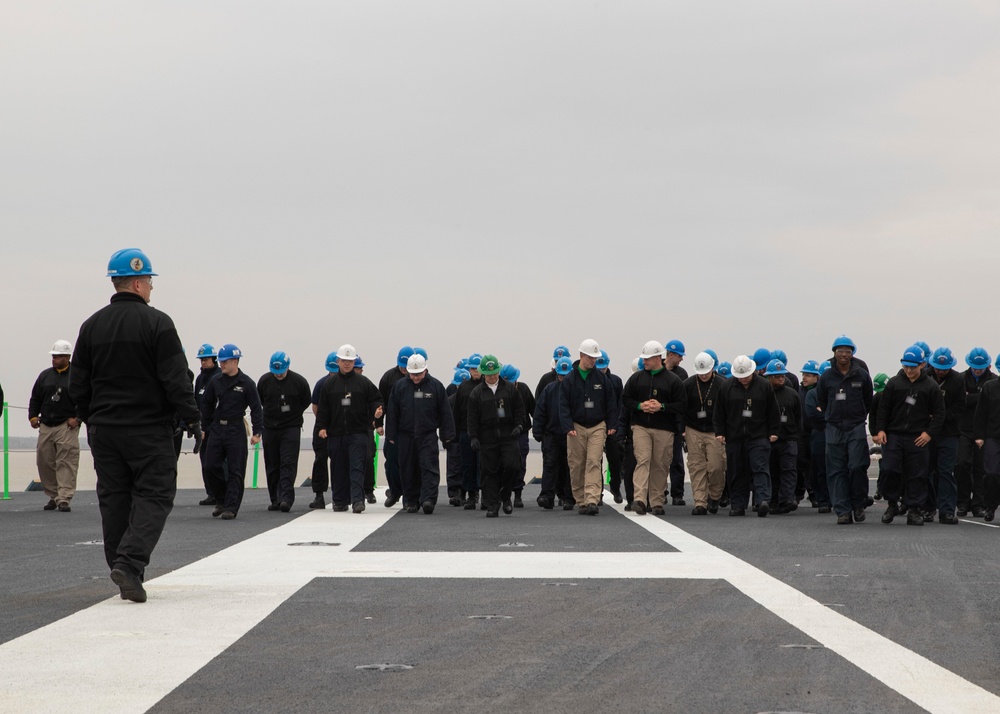
Every morning on aircraft carriers and at airfields worldwide, personnel form lines and walk slowly across flight decks and runways, eyes scanning the ground for foreign object debris. A bolt, a washer, a piece of wire. Anything that could be sucked into a jet engine.
Play through all of WW2 in 20 minutes. Not a typo. You draw military tokens from a bag and place them on theaters of war, trying to dominate enough fronts to win. Zero dice, zero luck, pure strategy in a tiny box.
This practice became mandatory after multiple incidents where small debris caused catastrophic engine failures. In one case, a single screw ingested during takeoff destroyed an engine and nearly caused a crash. The engine replacement cost exceeded the salary of everyone on the flight line combined.
FOD walkdown aboard USS Gerald R. Ford (U.S. Navy photo)
FOD walkdowns now happen before every flight evolution on carriers and at the start of every flying day at airfields. The rule is absolute. No exceptions. Miss one piece of debris and you might lose a 100-million-dollar aircraft.
2. Two-Person Integrity for Nuclear Weapons
No single individual can access, arm, or handle nuclear weapons alone. Every action requires at least two authorized personnel present, each watching the other. This is called two-person integrity, or TPI, and it applies to every nuclear-capable system in the U.S. arsenal.
The rule formalized after several close calls during the Cold War where unauthorized actions nearly led to nuclear incidents. In 1961, a B-52 broke apart over North Carolina and dropped two hydrogen bombs. One bomb's arming sequence progressed through five of six safety interlocks. The investigation revealed gaps in procedural controls that TPI was designed to close.
Today, TPI is non-negotiable. Two qualified personnel must be present for any nuclear operation, and each must have clear sightlines to the other and the weapon at all times. Violations are career-ending offenses.
3. Mandatory Reflective Belts in Garrison
The reflective belt has become a military punchline, but the regulation exists for a reason. In the 1980s and 1990s, a series of fatal pedestrian accidents on military installations led commanders to require high-visibility gear during low-light conditions.
Soldiers jogging at dawn. Airmen walking to the chow hall before sunrise. Marines crossing parking lots at dusk. Each incident added weight to the requirement. After one particularly deadly stretch where three soldiers were struck by vehicles in a single month at Fort Bragg, the reflective belt became mandatory.
Critics mock the rule. Commanders enforce it anyway. The deaths that prompted the regulation aren't funny to anyone who remembers them.
4. Weapons on Safe Until Ready to Fire
The rule seems obvious: keep your weapon on safe until you intend to shoot. But obvious rules get written down because people die when they're ignored. Negligent discharges have killed service members in every conflict and during training at every installation.
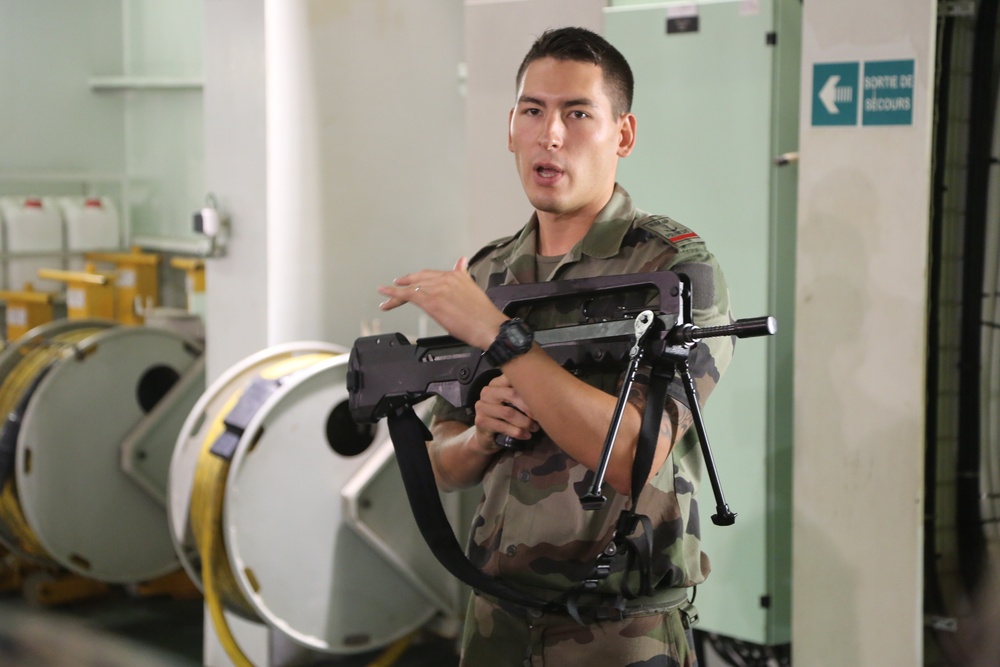
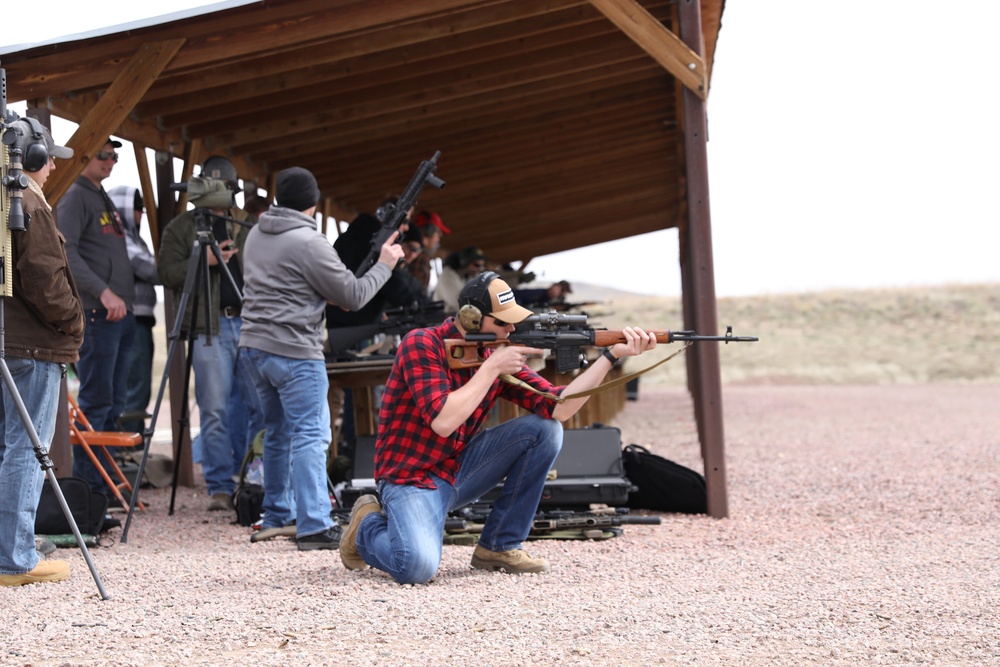
Weapons handling demonstration at Marine Corps Installations Pacific (U.S. Marine Corps photo)
The modern four weapons safety rules trace to incidents where ambiguous guidance led to tragedy. Keep your finger off the trigger until ready to fire. Treat every weapon as if loaded. Never point at anything you don't intend to destroy. Know your target and what lies beyond. Each rule addresses a specific category of fatal mistakes that occurred before the rule existed.
5. Crew Rest Requirements for Pilots
Pilots must have a minimum number of hours of uninterrupted rest before flying. The specific requirements vary by service and mission type, but the principle is absolute. Fatigued pilots make mistakes. Fatigued pilots crash aircraft.
Crew rest regulations tightened significantly after a series of accidents in the 1990s where fatigue was identified as a contributing factor. A 1994 mishap at Pope Air Force Base, a 1997 crash in Germany, and several others prompted investigations that all found pilots flying on insufficient rest.
Today, violating crew rest requirements can ground a pilot and trigger formal investigations. Commanders who pressure pilots to fly while fatigued face their own consequences. The regulation treats fatigue as a safety hazard equivalent to mechanical failure.
6. Battle Buddy System During Deployments
No service member moves alone in deployed environments. The battle buddy system requires at least two personnel for any movement, whether crossing base to the dining facility or traveling to an outlying position.
This practice formalized after incidents where isolated personnel were targeted by insider attacks or suffered medical emergencies with no one nearby to respond. In Afghanistan and Iraq, several service members died alone in circumstances where a buddy could have saved them.
The rule extends beyond combat zones. On larger bases, the buddy system ensures someone always knows where you are and can respond if something goes wrong. It seems controlling until you're the one having a heat stroke and your buddy calls for a medic.
7. Hearing Protection in Combat Zones
For decades, soldiers fired weapons and worked near explosions without consistent hearing protection. The result was generations of veterans with severe hearing loss and tinnitus. The VA now spends billions treating hearing-related disabilities.
Modern regulations mandate hearing protection in training and, increasingly, in combat. The development of tactical hearing protection that amplifies speech while blocking harmful noise made this feasible. The regulations followed once the technology caught up.
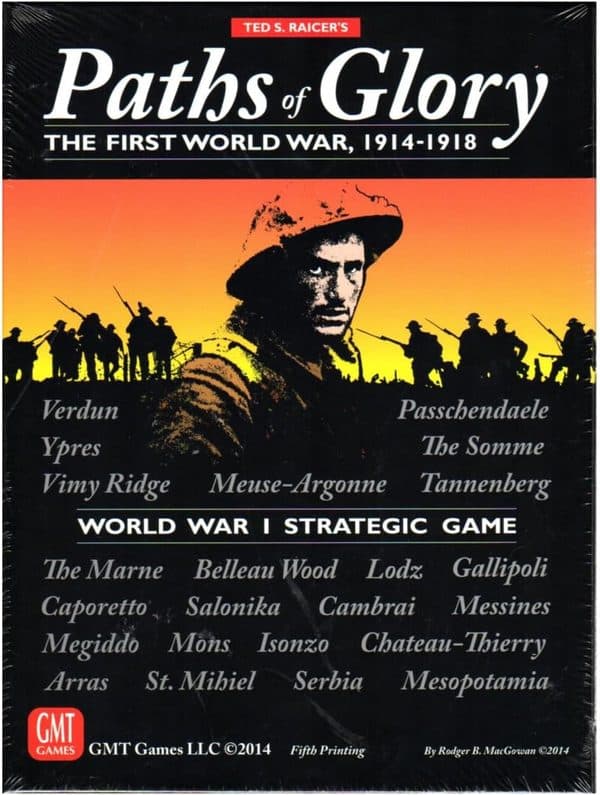
BGG 8.2 and widely considered the best World War I board game ever designed. Ted Raicer's card-driven masterpiece covers the entire Great War from 1914 to 1918. The Central Powers must win quickly before Allied economic power overwhelms them, recreating the strategic pressure that defined the real conflict.
The rule change came too late for many. But every soldier who comes home with their hearing intact benefits from regulations written because too many before them went deaf.
8. Mandatory Seatbelt Use in Military Vehicles
Military vehicles didn't always have seatbelts, and when they did, commanders didn't always require their use. The thinking was that troops needed to exit quickly if ambushed. Being strapped in slowed egress.
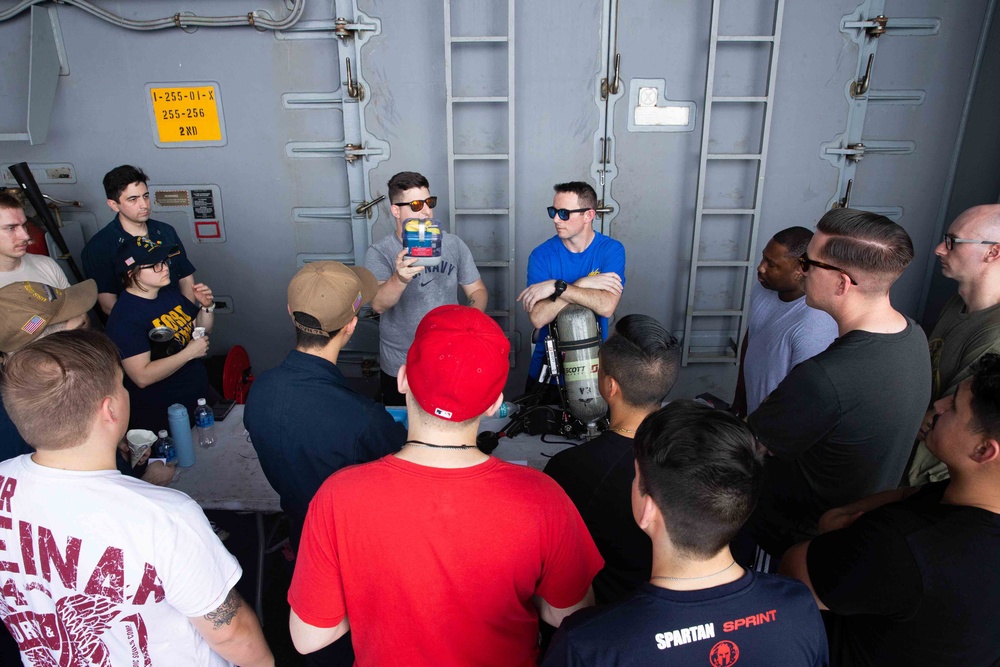
Safety training aboard USS Gerald R. Ford (U.S. Navy photo)
Then came the IED war. Rollover accidents. Mine strikes. Troops were being killed not by enemy fire but by being thrown around inside vehicles during blasts. Strapped-in personnel survived impacts that killed unrestrained passengers.
Seatbelt requirements became absolute. The egress argument lost to the overwhelming evidence that restrained passengers lived through crashes and blasts that killed unrestrained ones.
9. Positive Identification Before Engagement
Rules of engagement require positive identification of targets as hostile before firing. This seems obvious, but the rule exists because it wasn't always followed and the consequences were catastrophic.
Friendly fire incidents throughout military history prompted increasingly strict PID requirements. The Gulf War saw multiple fratricide events where aircraft struck friendly vehicles. Each incident led to revised procedures and technology investments to prevent recurrence.
Modern PID requirements can frustrate troops who feel the rules favor the enemy. But every rule traces to an incident where someone killed the wrong people and the military decided it couldn't happen again.
10. Pre-Flight Checklists for Every Flight
Before every flight, pilots work through detailed checklists covering every aircraft system. This practice dates to 1935, when a prototype B-17 crashed during a demonstration flight at Wright Field. The crash killed two crew members, including the pilot, a highly experienced test pilot.
The investigation found no mechanical failure. The pilot had simply forgotten to release a gust lock before takeoff. The aircraft was more complex than previous bombers, and the pilot's experience with simpler aircraft didn't prepare him for the additional steps required.
The solution was a checklist. Not a suggestion. A mandatory, step-by-step procedure that no pilot could skip regardless of experience. That checklist saved the B-17 program and became the foundation of aviation safety.
11. Mandatory Flight Deck Jersey Colors
On aircraft carriers, every flight deck worker wears a specific colored jersey indicating their job. Yellow for aircraft handlers. Purple for fuel crews. Red for ordnance. Green for catapult and arresting gear. Brown for plane captains. White for safety and medical.
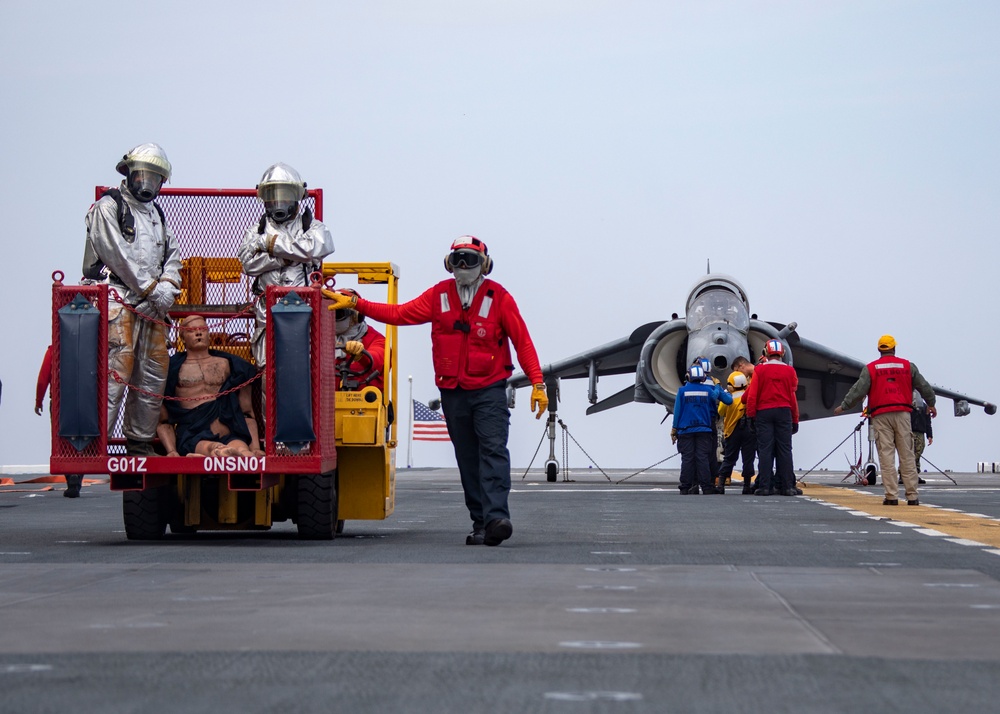
Flight deck safety drills (U.S. Navy photo)
This system formalized after incidents where confusion about roles led to accidents. Fuel crews wandering near hot engines. Ordnance handlers in the wrong place. The colors allow anyone on the flight deck to immediately understand who does what and whether someone is where they should be.
The jersey system isn't optional. Being on the flight deck in the wrong color is a safety violation that can ground flight operations.
12. Engine Run-Up Limits Near Personnel
Aircraft engines must be at idle when ground personnel are nearby. High-power run-ups require cleared areas with specific safe distances. These limits exist because jet exhaust and propeller wash have killed people.
The intake hazard is even worse. Jet engines can suck personnel into the intake from surprisingly far away. Multiple incidents where maintainers were killed by engine ingestion led to strict rules about safe distances and when engines can operate at various power settings.
Modern procedures require personnel to be clear of intake danger zones before engine start, and high-power operations require visual confirmation that no one is in the hazard area.
13. Red Light Discipline in Combat
In combat zones and on ships at night, only red lights are permitted. White lights destroy night vision that takes 30 minutes to fully develop. One white light can blind an entire bridge crew or patrol.
This practice became absolute after incidents where light discipline failures led to accidents and deaths. Pilots unable to see after a white light exposure. Ship's bridge personnel temporarily blinded during critical maneuvers. Infantry patrols compromised by a single flashlight.
Violations of light discipline in tactical environments are treated as serious safety violations because they are.
14. Mandatory Firefighting Training for All Sailors
Every Navy sailor, regardless of job specialty, receives basic firefighting training. Damage control is everyone's responsibility. This wasn't always the case.
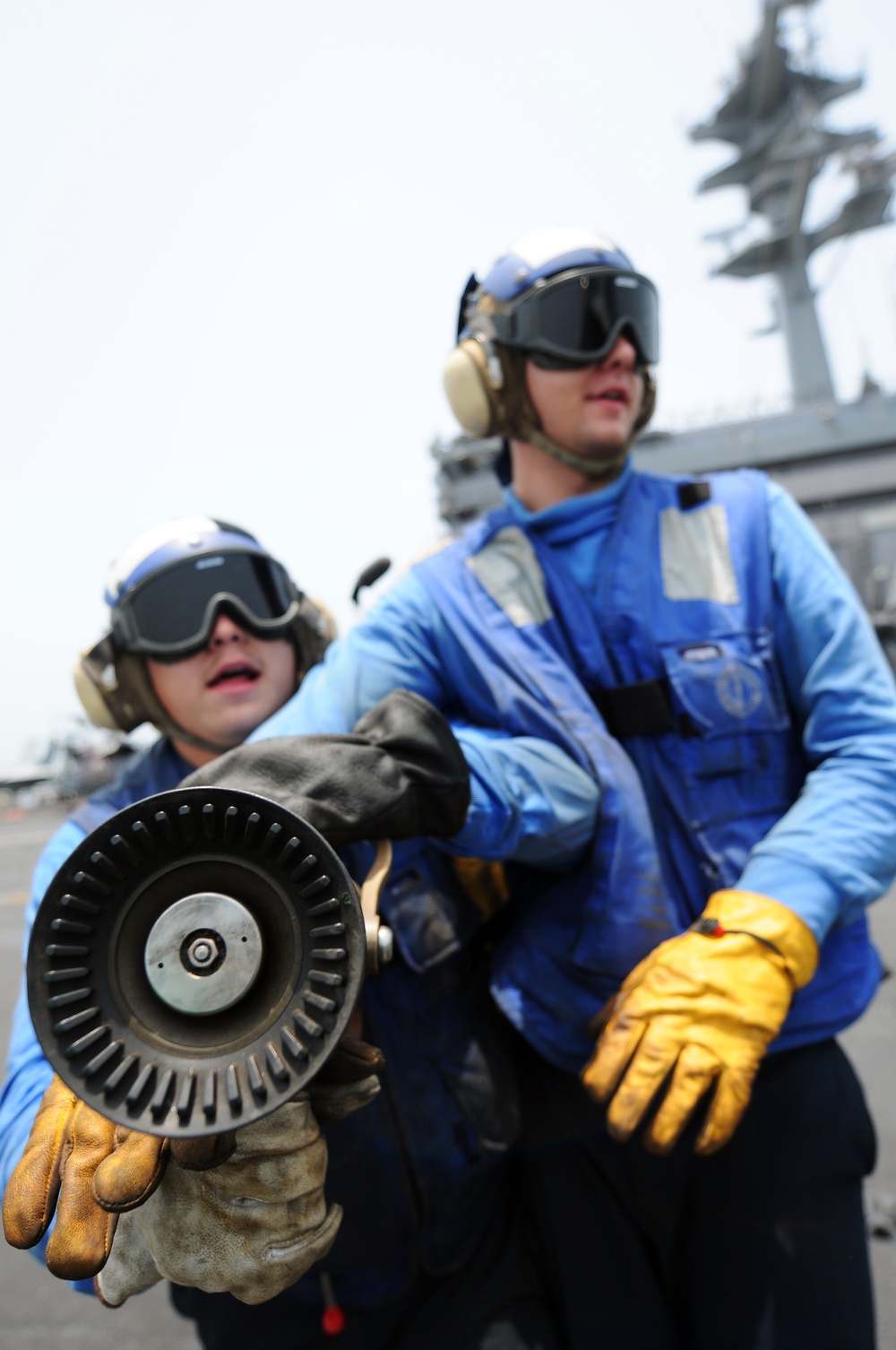
Flight deck firefighting training (U.S. Navy photo)
The 1967 USS Forrestal fire killed 134 sailors and injured 161. A Zuni rocket accidentally fired across the flight deck, striking an A-4 Skyhawk loaded with fuel and bombs. The initial fire might have been containable, but untrained personnel made mistakes that allowed it to spread.
After Forrestal, the Navy transformed its approach to damage control. Every sailor became a firefighter. Every drill emphasized that a ship's survival depends on everyone, not just the damage control specialists.
15. Ground Guide Requirements for Backing Vehicles
Military vehicles cannot back up without a ground guide visible to the driver. This person stands where the driver can see them and directs movement. No exceptions.
The rule exists because people have been crushed by backing vehicles. Large military vehicles have significant blind spots. Drivers focused on the rear often lose awareness of their surroundings. Personnel walking behind vehicles don't always realize the vehicle is about to move.
Every backing accident investigation asks the same question: where was the ground guide? The requirement exists because the answer too often was "nowhere."
16. Arming and De-Arming on Designated Areas Only
Aircraft weapons can only be armed or de-armed in specific designated areas away from personnel, buildings, and other aircraft. This rule exists because weapons have accidentally fired or released during ground handling.
Ordnance that cooks off on a crowded flight line can cause mass casualties. Missiles that fire during maintenance can destroy hangars. The designated arming areas provide standoff distance so that if something goes wrong, the damage is limited.
The painted lines and warning signs at arming areas aren't suggestions. They're boundaries established after incidents proved that proximity equals casualties when ordnance malfunctions.
17. Immediate Reporting of Safety Hazards
Service members are required to report safety hazards immediately, regardless of rank or position. The person who spots the hazard has a duty to report it, and the chain of command has a duty to act.
Soldiers receive weapons safety coaching at Fort Carson (U.S. Army photo)
This rule formalized after investigations found that personnel often knew about hazards but didn't speak up because they assumed someone else would or feared reprisal. Accidents that might have been prevented weren't because critical information stayed silent.
Modern safety programs emphasize "stop work authority" - any service member can halt operations if they observe an unsafe condition. The culture change came from too many after-action reviews that found people saw problems and said nothing.
18. Controlled Humidity for Explosive Storage
Ammunition and explosives must be stored in climate-controlled conditions within specific temperature and humidity ranges. This isn't about convenience; it's about preventing spontaneous detonation.
Certain explosives become unstable as they age, and heat and humidity accelerate degradation. Ammunition depot explosions throughout history have killed thousands. Port Chicago in 1944 killed 320 when ammunition ships exploded during loading. The exact cause remained disputed, but storage and handling conditions were contributing factors.
Modern explosive storage regulations specify exact environmental conditions that must be maintained. The rules are strict because the consequences of improper storage include catastrophic explosions that kill everyone nearby.
19. No Lone Swimmers in Military Pools
Military swimming pools require lifeguards on duty and prohibit lone swimmers. Even strong swimmers in excellent condition can drown. A cramp, a slip, a medical event - anything that incapacitates you in the water can be fatal without immediate response.
Service members have drowned in base pools during off-hours when no one else was present. By the time anyone found them, it was too late. The rule requiring lifeguards and prohibiting solo swimming came from these deaths.
Fitness-focused military culture sometimes chafes at the restriction. The regulation stays because people who thought they didn't need supervision drowned.
20. Tie-Down Requirements for All Parked Aircraft
Aircraft must be tied down when parked unless actively being worked or about to fly. This seems obvious in hurricane-prone areas but applies everywhere.
Wind gusts can move parked aircraft. An untied aircraft rolling across a ramp can strike other aircraft, personnel, or structures. Damage from aircraft that became missiles in sudden storms led to requirements that all parked aircraft be secured.
The regulation specifies tie-down procedures for different aircraft types and wind conditions. Aircraft have been written off as total losses because they weren't tied down when an unexpected storm hit.
21. Mandatory Wingman Programs for Single Soldiers
Units are required to maintain wingman programs that pair soldiers together, particularly for single service members living in barracks. The program addresses suicide prevention, alcohol incidents, and general welfare.
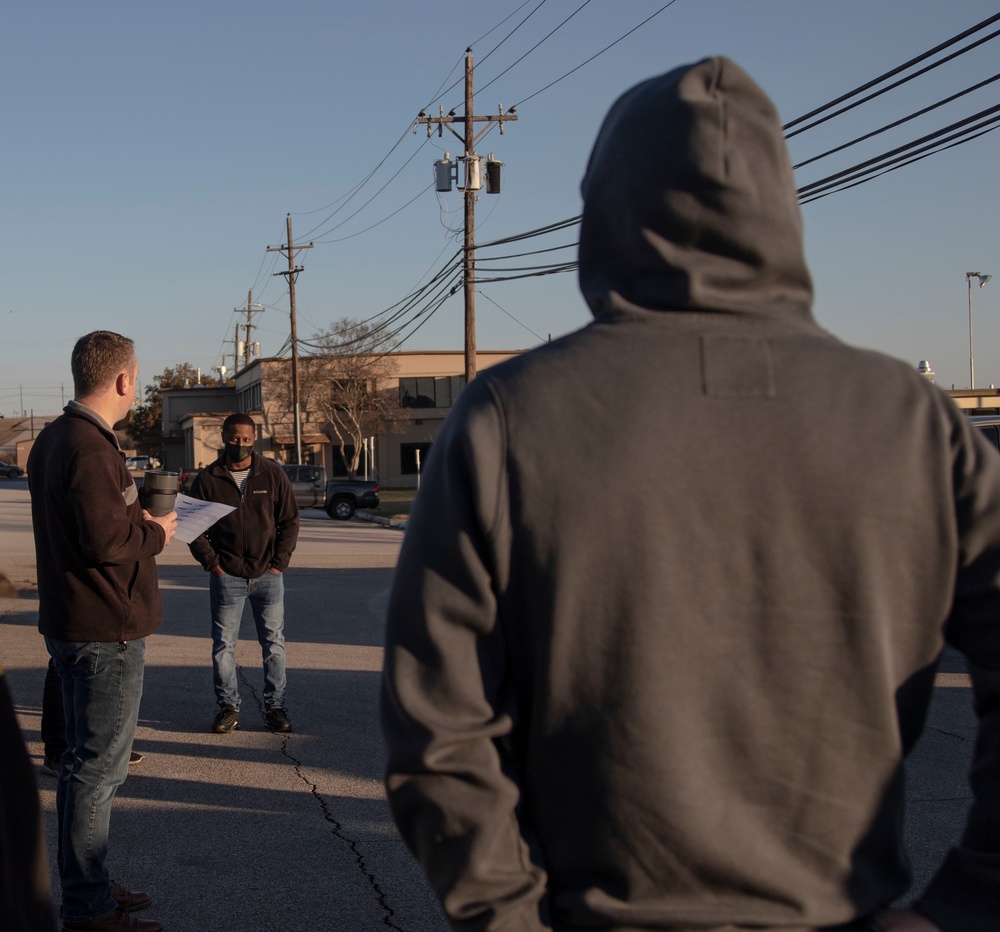
Military safety briefing at 504th Expeditionary Military Intelligence Brigade (U.S. Army photo)
The formal wingman requirement grew from recognition that isolated soldiers were at higher risk for suicide, substance abuse, and other crises. Too many soldiers died alone in barracks rooms when someone checking on them might have made the difference.
The program isn't just about buddies going downtown together. It's about making sure no one falls through the cracks and that someone is always watching out for someone else.
22. Safety Stand-Downs After Serious Incidents
When a unit experiences a serious accident or fatality, operations pause for a safety stand-down. All personnel attend briefings reviewing what happened and reinforcing relevant safety practices.
This practice became standard after incidents where similar accidents repeated within units because lessons weren't shared quickly enough. A soldier killed in a vehicle accident would be followed weeks later by another preventable death because the first incident's lessons hadn't reached everyone.
Stand-downs interrupt operations and cost readiness. Commanders call them anyway because not calling them has proven to cost lives.
23. Ammunition Compatibility Charts for Storage
Different types of ammunition cannot be stored together arbitrarily. Detailed compatibility charts specify which munitions can share storage spaces and which must be separated. Certain combinations create risks that individual components don't pose alone.
This regulation traces to depot explosions where incompatible munitions were stored together. The fire that started with one type spread to others, creating chain reactions that destroyed entire facilities. The compatibility requirements prevent single incidents from cascading.
Modern ammunition storage follows detailed matrices that specify exactly what can be stored with what. The charts are complex because the chemistry of different explosive compounds creates unexpected interactions that have killed people.
Written in Blood
These 23 rules share a common origin: someone died, something exploded, or a mission failed in a way that seemed preventable afterward. The regulations that followed weren't written by bureaucrats looking for busywork. They were written by investigators looking at bodies and wreckage, asking how to make sure this particular thing never happened again.
Military culture often jokes about regulations. The reflective belt. The ground guide. The endless checklists. But behind every mockable rule is usually a tragedy that isn't funny to anyone who was there.
The next time a regulation seems pointless, it's worth asking: what happened that made someone write this down? The answer is rarely comfortable. The military writes regulations in blood because lessons learned any other way don't stick.