James Holloway writes about military readiness, logistics, and the practical limits of modern forces. His work focuses on how training, sustainment, and organizational decisions shape what militaries can actually do -- not just what they are designed to do on paper.
In the Arizona desert, more than 4,000 aircraft sit in orderly rows stretching across 2,600 acres. Some have been there for decades. Others arrived recently. A few will fly again. Most will not. This facility, officially called the 309th Aerospace Maintenance and Regeneration Group but widely known as the Boneyard, represents just one piece of the vast infrastructure the U.S. military operates to manage equipment that has reached the end of its service life.
Every piece of military equipment eventually becomes obsolete, worn out, or simply unnecessary. Tanks, trucks, rifles, aircraft, ships, and radios all follow the same trajectory: acquisition, service, and eventual retirement. What happens after retirement depends on a complex system of regulations, logistics, and decisions that most people never see. The process involves multiple government agencies, detailed legal requirements, and considerations ranging from national security to environmental protection.
The scale of military equipment disposal is staggering. The Department of Defense manages trillions of dollars in assets. Each year, billions of dollars worth of equipment reaches the end of its useful life and must be processed through disposition channels. The choices made about this equipment affect readiness, budgets, allied capabilities, environmental outcomes, and security. Understanding these systems reveals much about how modern militaries actually operate.
Why Equipment Gets Retired Before It Breaks
Military equipment rarely serves until complete mechanical failure. Retirement decisions are driven by a combination of factors that often have little to do with whether a vehicle can still drive or an aircraft can still fly.
Obsolescence is the most common driver. When new systems offer significantly better capability, older equipment becomes a liability rather than an asset. Operating outdated platforms means crews train on systems they will not use in combat, maintenance resources go toward equipment that cannot perform modern missions, and forces face adversaries with technological advantages. A tank that works perfectly well mechanically may still be a death trap against current anti-armor weapons. An aircraft that flies fine may lack the sensors and survivability features needed in contested airspace.
Maintenance costs eventually make continued operation unsustainable. As equipment ages, parts become harder to find. Suppliers stop manufacturing components for platforms that are no longer in production. Reverse-engineering parts or finding alternative sources adds expense. Eventually, the cost of keeping a platform operational exceeds the value it provides. This calculation is not abstract. When maintenance consumes resources that could keep newer, more capable equipment ready, the older platform becomes a net drain on readiness.
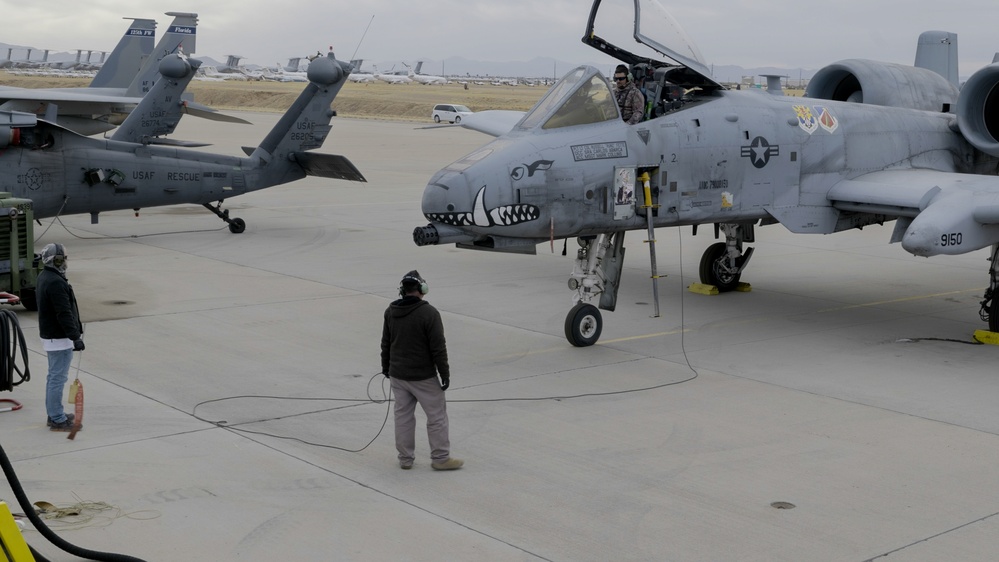
Shane Hall, an aircraft mechanic at the 309th Aerospace Maintenance and Regeneration Group, starts the engine of an A-10 Thunderbolt at Davis-Monthan Air Force Base, Arizona. The facility preserves aircraft for potential future use. U.S. Marine Corps photo by Cpl. Joshua Munsen
Doctrinal changes make some equipment unnecessary regardless of condition. The military may decide it needs fewer of a particular type of vehicle, or that a mission area requires different capabilities. When force structure changes, perfectly functional equipment becomes excess. The Army's shift toward lighter, more deployable forces has retired heavy vehicles. The Air Force's evolution of its fighter mix has phased out aircraft that still had service life remaining. These decisions respond to strategic assessments of future needs, not equipment condition.
Safety considerations can mandate retirement. Some platforms develop structural or mechanical issues that affect entire fleets. When analysis reveals problems that cannot be economically corrected, grounding and retirement follow. Fatigue in airframes, corrosion in hulls, and material degradation in ground vehicles all create retirement timelines that may arrive before equipment is mechanically worn out in the conventional sense.
Opportunity costs drive decisions even when none of the above factors are decisive. Personnel training on older equipment do not develop skills on current systems. Logistics capacity devoted to legacy platforms cannot support modern ones. Hangar space, maintenance facilities, and budget authority are all finite. Sometimes retiring equipment that still works makes sense because it frees resources for higher priorities.
Demilitarization and Safety Processes
Before any military equipment can leave Department of Defense control, it must undergo demilitarization. This process ensures that military capability cannot be transferred to unauthorized users. The requirements are not optional and are specified in detail by DoD Instruction 4160.28 and related regulations.
Demilitarization, often abbreviated DEMIL, ranges from simple to extensive depending on the equipment involved. Small arms must have their receivers destroyed. Ammunition and explosives require disposal by trained personnel in controlled conditions. Armored vehicles may need cutting or crushing. Aircraft require removal or destruction of classified systems, weapons mounting points, and sensitive avionics.
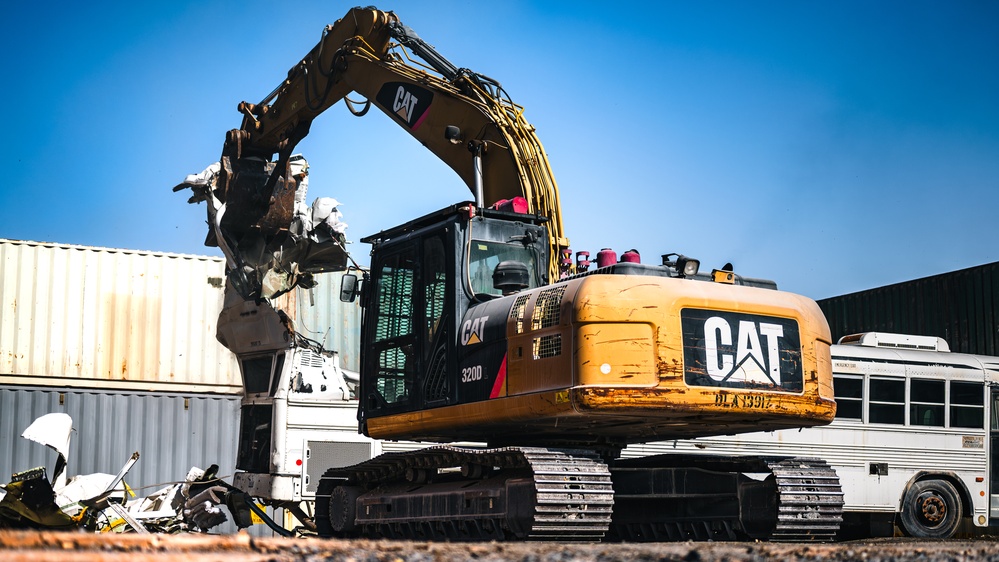
An excavator assigned to Defense Logistics Agency Disposition Services Central tears apart a U.S. Air Force government-owned vehicle. DLA Disposition Services conducts environmental disposal to repurpose DoD assets. U.S. Air Force photo
DEMIL codes categorize items by the level of demilitarization required. Code A items have no significant military technology and can be released with minimal processing. Code B items require basic demilitarization. Codes escalate through C, D, E, F, G, and P, with higher codes requiring more extensive destruction. The highest levels mandate complete destruction with no recyclable material recovery. A rifle might be Code D, requiring cutting of the receiver. A missile guidance system might be Code G, requiring destruction that prevents any recovery of technology.
60x optical zoom covers 20-1200mm equivalent, enough to fill the frame with a fighter jet at altitude. 4K Photo mode lets you shoot 30fps video and extract 8MP stills from any frame after the fact. Touch-enabled LCD for quick focus adjustments. All-in-one package with no extra lenses to buy.
The process involves multiple steps and verifications. Equipment enters the disposition system with documentation establishing its DEMIL requirements. Trained personnel execute the required demilitarization. Inspectors verify completion. Records document that procedures were followed. This paperwork trail matters because improper demilitarization creates legal liability and security risks.
Hazardous materials add complexity. Military equipment frequently contains substances requiring special handling: fuel, lubricants, hydraulic fluids, refrigerants, batteries, radioactive components, and more. Environmental regulations require proper disposal of these materials before equipment can be scrapped or transferred. Ammunition and explosives require particularly careful handling, with trained explosive ordnance disposal personnel involved when needed.
The demilitarization process serves multiple purposes simultaneously. It prevents adversaries from acquiring military technology. It prevents weapons from reaching unauthorized civilian users. It protects workers and communities from hazardous materials. It creates legal certainty about the status of disposed equipment. Without these processes, the military could not legally dispose of equipment, and the security and environmental risks would be unacceptable.
Reuse, Refurbishment, and Redistribution
Not all retired equipment leaves military use. The most cost-effective outcome is often keeping equipment in service, either in its original role or adapted for new purposes.
Reutilization within the Department of Defense is the first priority. Equipment that one unit no longer needs may be exactly what another unit requires. The Defense Logistics Agency operates a reutilization system that attempts to match excess equipment with valid requirements elsewhere in DoD. A National Guard unit may receive vehicles that an active component unit is replacing. A training facility may get aircraft that operational squadrons have retired. This internal redistribution extracts maximum value from equipment before it leaves military control.
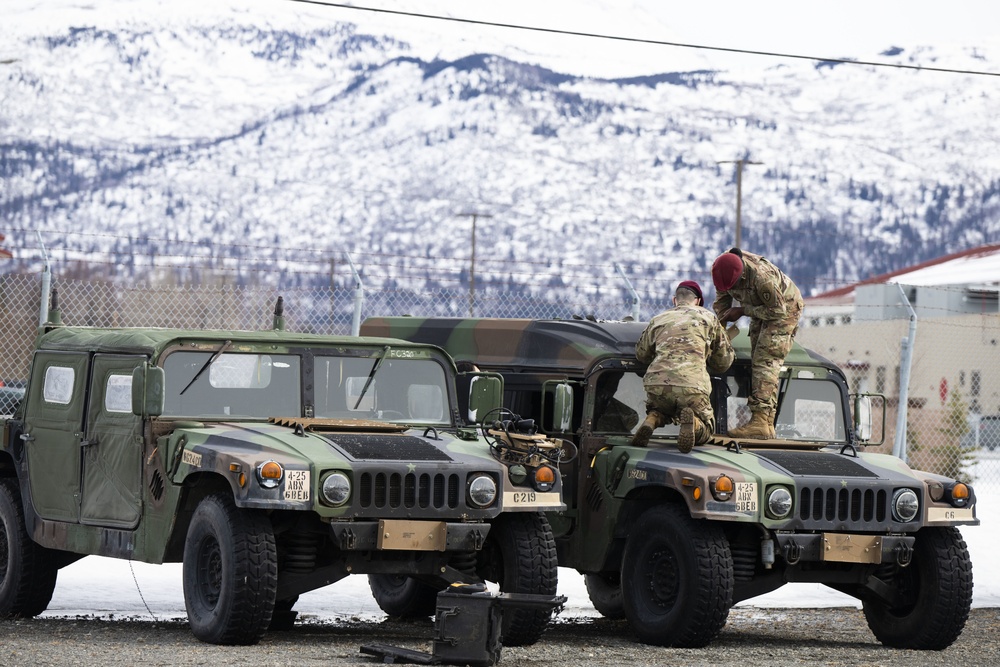
Soldiers prepare a vehicle for turn-in at the Modernization, Displacement, and Repair Site at Joint Base Elmendorf-Richardson. The MDRS receives excess equipment from units and conducts onward transfers. Photo by Katie Nelson
Depot-level refurbishment returns worn equipment to operational condition. The Army operates depots at Anniston, Alabama; Red River, Texas; and elsewhere that overhaul tanks, artillery, and vehicles. The Air Force maintains depot facilities at Oklahoma City, Ogden, and Warner Robins that rebuild aircraft and engines. These facilities tear down equipment, replace worn components, update systems, and return platforms to service with years of useful life remaining. Depot work is expensive but still cheaper than procurement of new equipment.
Transfer to allies extends the useful life of equipment while building partner capacity. The Excess Defense Articles program provides equipment to allied nations at reduced cost or free of charge. Foreign Military Sales handles transfers where partner nations pay for equipment. Either way, platforms that the U.S. no longer needs can strengthen allied capabilities. Older fighters, vehicles, and ships serve in dozens of countries, often for decades after leaving U.S. service. This requires refurbishment, training, and support arrangements, but the cost is far less than allies purchasing new equipment.
Conversion for training finds uses for equipment that cannot remain operational. Aircraft become ground trainers for maintenance personnel. Vehicles provide targets for live-fire exercises. Decommissioned ships become artificial reefs or are used for damage control training. These conversions extract utility from equipment that would otherwise only have scrap value.
Purpose-built hearing protection for little heads. The infant version (0-2 years) uses a soft elastic headband with NRR 31. The kids version (2+) switches to a padded headband with NRR 25. Both come in bright fun colors that kids actually want to wear.
Parts reclamation keeps operational equipment flying and driving. The Boneyard at Davis-Monthan exists primarily as a parts source for active aircraft. When a component fails on an operational fighter, technicians may remove the same part from a stored aircraft rather than waiting for new production. This reclamation program saves hundreds of millions of dollars annually and keeps aircraft available that would otherwise be grounded waiting for parts. Ground vehicle and ship components similarly cycle from retired platforms to active ones.
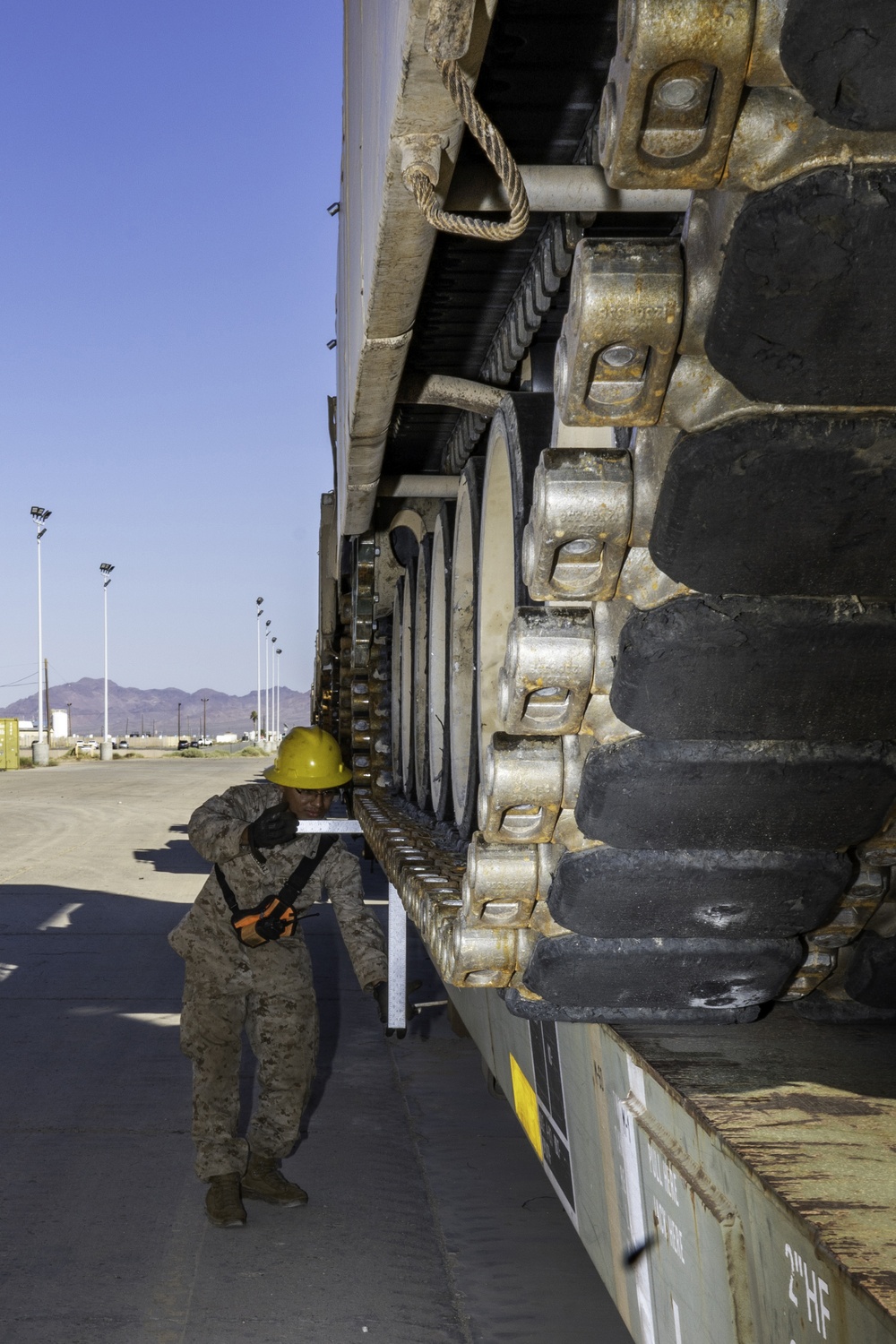
Private First Class Josue Valazquez Diaz measures tracks to ensure proper loading of an M1A1 Abrams tank on rail cars at Marine Corps Logistics Base Barstow, California. The tanks were being consolidated for transport to Army depots. Photo by Jack Adamyk
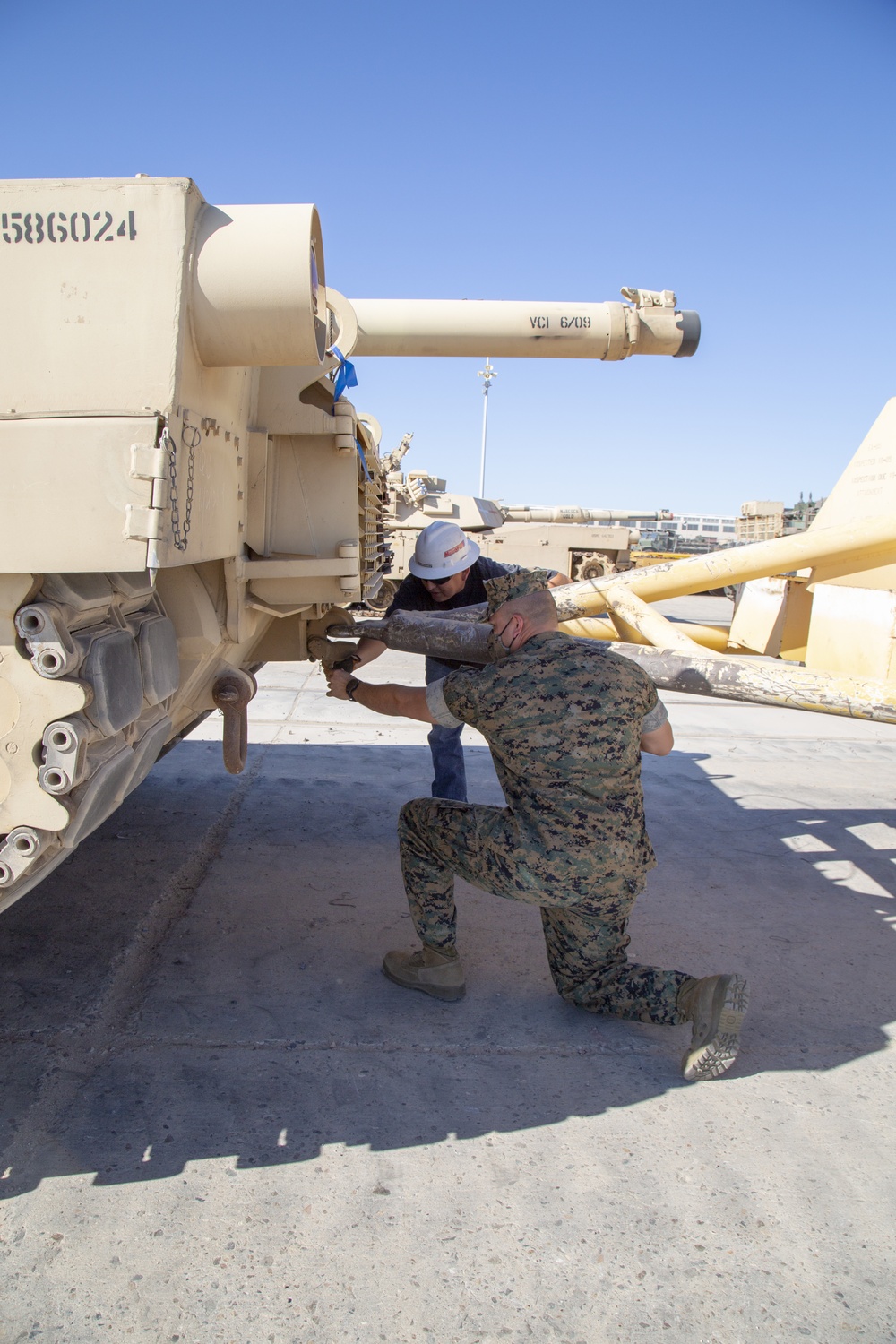
Staff Sergeant Ruben Garcia and Donnie Nez ensure a Caterpillar tractor is properly detached from a divested M1A1 Abrams tank at the Yermo Annex aboard Marine Corps Logistics Base Barstow, California. Photo by Laurie Pearson
Aircraft covered with spraylat at the 309th Aerospace Maintenance and Regeneration Group on Davis-Monthan Air Force Base. Spraylat is a plastic compound used on aircraft to reflect the sun, keeping internal temperatures low over long periods. U.S. Air Force photo by Airman 1st Class Blake Gonzales
Recycling Materials and Components
When equipment cannot be reused intact, recycling recovers valuable materials. Military platforms contain significant quantities of aluminum, steel, titanium, copper, and specialty alloys. Aircraft skins, vehicle armor, ship hulls, and electronic components all have recyclable content.
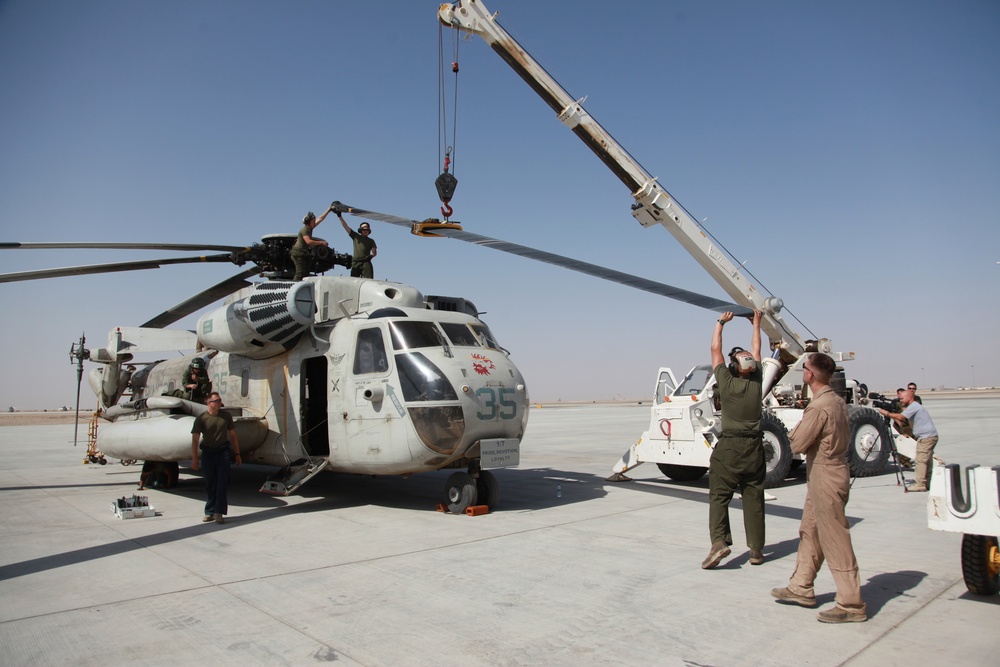
Marines with Marine Heavy Helicopter Squadron 362 disassemble the frame of a CH-53D Sea Stallion at Camp Bastion, Afghanistan, for decommissioning. U.S. Marine Corps photo by Cpl. Meghan Gonzales
The recycling process begins after demilitarization requirements are satisfied. Contractors or government facilities cut apart hulks, separate materials, and process them for sale. Aluminum from aircraft wings enters commercial recycling streams. Steel from tank hulls becomes feedstock for new production. Copper wiring is recovered and refined. The revenue from scrap sales offsets some disposal costs, though it rarely covers the full expense of processing.
Electronics recovery has become increasingly important. Military equipment contains circuit boards, processors, and components that incorporate precious metals. Gold, silver, palladium, and other valuable materials can be extracted from electronic waste. Specialized recyclers process this material, recovering metals that would otherwise end up in landfills. The quantities are small per item but significant across the volume of military electronics disposed each year.
Specialty materials require particular handling. Titanium from aircraft structures commands premium prices but requires careful separation. Depleted uranium used in some armor and ammunition requires licensed handlers. Beryllium in some aerospace components is toxic and needs specialized processing. These materials are worth recovering but add cost and complexity to recycling operations.
Composite materials present challenges. Modern military equipment increasingly uses carbon fiber and other composites that are difficult to recycle with current technology. These materials often end up in landfills rather than recycling streams. Research continues on methods to recover value from composites, but practical solutions remain limited. As more military equipment incorporates these materials, the recycling challenge grows.
The economics of military recycling are complicated. Labor costs for demilitarization and separation often exceed scrap value. Environmental compliance adds expense. Security requirements increase processing time and cost. Government oversight ensures proper handling but reduces efficiency compared to commercial operations. Still, recycling is preferable to landfill disposal both economically and environmentally, so the military continues investing in recycling infrastructure and processes.
What Cannot Be Reused and Why
Some military equipment must be destroyed regardless of remaining utility or material value. The reasons involve security, safety, and legal obligations that override economic considerations.
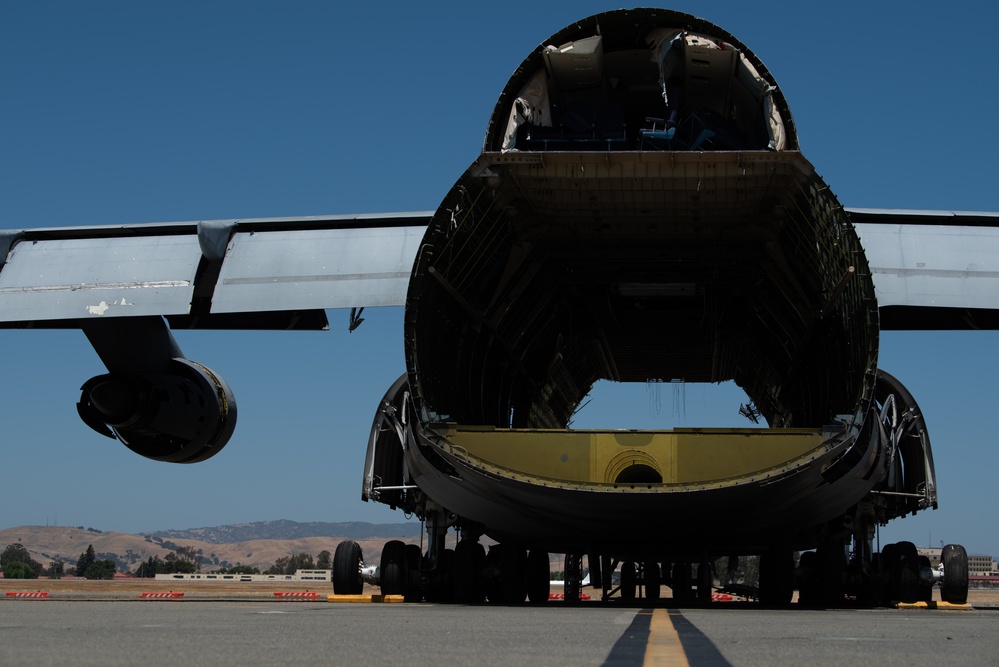
A U.S. Air Force C-5A Galaxy rests partially disassembled at Travis Air Force Base, California. Portions intended for reuse are removed while remaining sections await government disposition. U.S. Air Force photo by Airman 1st Class Robert Nichols
Classified technology cannot be released under any circumstances. When equipment incorporates sensitive capabilities, the classified portions must be destroyed. This might mean removing and destroying specific components while recycling the rest of the platform, or it might require complete destruction of the entire item. The classification system determines what requires protection and how that protection must be achieved. Selling a platform with its classified systems intact would be a serious security breach.
Weapons systems face strict controls. Missiles, bombs, and ammunition cannot be transferred to civilian markets. Even after removing explosive components, the casings and guidance systems of some weapons must be destroyed. The military cannot create a supply of weapon components that might be reassembled or adapted for unauthorized use. Complete destruction is often the only acceptable option.
International agreements mandate destruction of certain items. Arms control treaties may require destruction of specific weapon systems rather than storage or transfer. The Intermediate-Range Nuclear Forces Treaty, before its termination, required destruction of covered missiles. Other agreements limit transfers of certain technologies. Compliance with these obligations overrides any economic value the items might have.
Legal restrictions on certain equipment types require destruction. Some chemical agents and their delivery systems must be destroyed under the Chemical Weapons Convention. Certain biological equipment faces similar requirements. Nuclear materials follow their own disposal regimes. These items cannot enter any commercial or transfer pathway regardless of their condition or value.
Contamination sometimes makes equipment unsuitable for any continued use. Vehicles exposed to chemical, biological, or radiological contamination may require destruction. The cost and risk of decontamination may exceed any possible recovered value. In these cases, destruction and careful disposal of remains is the only safe option.
The decision to destroy rather than recycle is never taken lightly. Destruction is expensive. It forgoes any potential recovered value. It uses resources that could go elsewhere. But when security, safety, or legal compliance require it, destruction is the only acceptable outcome. The military maintains detailed procedures for required destruction to ensure it happens properly and completely.
Environmental, Legal, and Security Constraints
Every disposition decision operates within a framework of constraints that limit options and add complexity. These constraints reflect legitimate interests that the military must balance against its own operational and economic preferences.
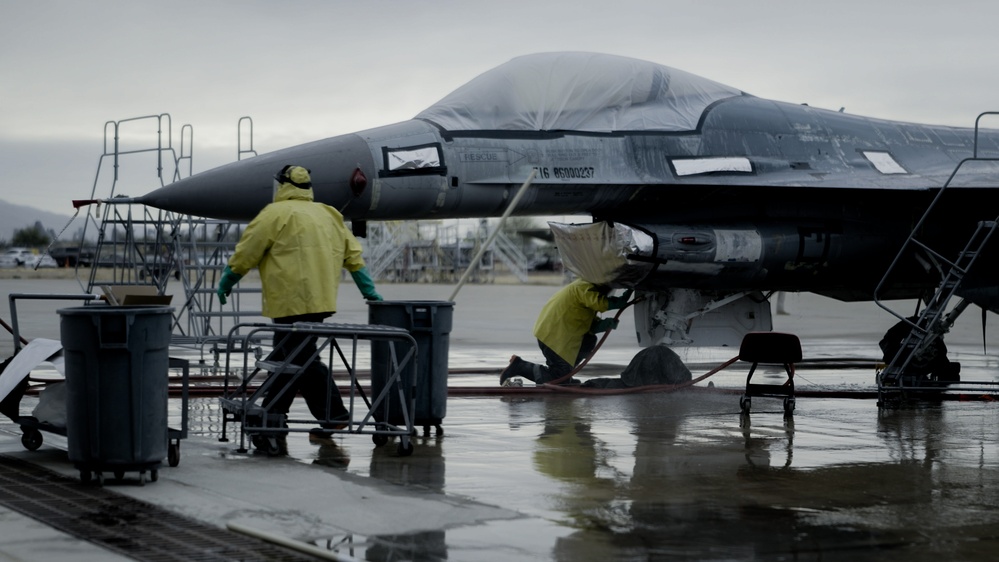
Employees at the 309th Aerospace Maintenance and Regeneration Group clean an Air Force F-16 Fighting Falcon at Davis-Monthan Air Force Base, Arizona. Preservation processes protect aircraft during long-term storage. U.S. Marine Corps photo by Cpl. Joshua Munsen
Environmental regulations apply fully to military disposal operations. The Resource Conservation and Recovery Act governs hazardous waste. The Clean Air Act limits emissions from processing operations. The Clean Water Act protects against contamination from disposal sites. State regulations often add additional requirements. Compliance is not optional. Military installations and contractors face the same enforcement as civilian entities. Environmental violations create legal liability, cleanup costs, and public relations problems. The military invests heavily in environmental compliance because the alternatives are worse.
Export control laws restrict what can leave U.S. control. The International Traffic in Arms Regulations (ITAR) and Export Administration Regulations (EAR) govern transfers of military and dual-use items. Even scrapped equipment may contain controlled technology. Recyclers must ensure that protected items do not reach prohibited destinations. These controls add administrative burden but serve legitimate nonproliferation objectives.
Property disposal laws establish procedures for government property disposition. Equipment must be screened for reutilization before sale or disposal. Proceeds from sales go to specified accounts. Records must be maintained. Auditors verify compliance. These requirements ensure accountability for public resources but add time and cost to disposition processes.
Security requirements persist throughout the disposition process. Equipment must be protected until demilitarization is complete. Classified material requires secure handling until destruction. Access to disposition facilities must be controlled. These requirements add cost but are non-negotiable when dealing with military equipment.
Treaty obligations create additional constraints. Beyond arms control treaties, status of forces agreements may affect how equipment is disposed in foreign countries. Environmental agreements may restrict certain disposal methods. Security cooperation agreements may create requirements to transfer equipment to specific partners. The military must track and comply with all applicable obligations.
Liability concerns shape decisions even when regulations do not specifically require particular outcomes. The military cannot create situations where improperly disposed equipment harms people or the environment. Even when legal requirements are unclear, prudent practice often exceeds minimum compliance. The cost of dealing with problems after the fact vastly exceeds the cost of preventing them.
The combination of all these constraints makes military equipment disposition fundamentally different from commercial asset disposal. A private company selling used equipment faces far fewer requirements. The military operates in a more complex environment where every decision must satisfy multiple regulatory regimes, security requirements, and policy objectives simultaneously. This complexity is not waste or bureaucracy. It reflects the genuine interests at stake when disposing of equipment that was built for war.
The System in Practice
Understanding the theory of military equipment disposal matters less than understanding how it works in practice. The Defense Logistics Agency, through its Disposition Services component, handles most military property that leaves active service. DLA operates disposition sites worldwide where equipment is received, processed, and ultimately disposed.
When a unit has equipment it no longer needs, that equipment goes to a DLA Disposition Services site. There, personnel determine what the item is, what demilitarization it requires, and what disposition options exist. Items suitable for reutilization are screened against requirements from other DoD components. Items that can be transferred to other agencies or donated to states are processed accordingly. Items approved for sale go to auction or negotiated sale. Items that must be destroyed go to demilitarization. Items that can be recycled go to recycling operations.
This process handles enormous volume. DLA Disposition Services receives millions of items annually representing billions of dollars in original acquisition cost. Most items are mundane: uniforms, office equipment, tools, parts. But the system also processes tanks, aircraft, and other major equipment. The same procedures apply regardless of item value, though high-value and sensitive items receive additional attention and documentation.
The system prioritizes reutilization. Before any item leaves DoD control, it is screened for potential use elsewhere in the department. This screening ensures that usable equipment is not disposed while other units have valid requirements. When reutilization is not possible, transfer to other federal agencies is considered. Then donation to eligible recipients. Then sale. Only after all these options are exhausted does equipment go to recycling or destruction.
The result is a system that extracts significant value from retired equipment while maintaining security and environmental compliance. Billions of dollars in reutilization value is captured annually. Hundreds of millions more come from sales and recycling. But the primary purpose is not revenue generation. The purpose is responsible management of military assets throughout their entire lifecycle, including after they leave active service.
The system is not perfect. Processing takes time. Bureaucratic requirements add friction. Some equipment sits in storage longer than ideal. Some reutilization opportunities are missed. Continuous process improvement efforts address these issues, but the fundamental tension between speed and control is inherent. Moving faster would reduce oversight. More oversight slows movement. The current balance represents decades of experience with what works and what creates problems.
For the military equipment that has served its purpose, the disposition system provides an orderly conclusion. Aircraft that flew combat missions end up at the Boneyard, providing parts to keep their successors flying or eventually becoming recycled aluminum. Vehicles that carried troops across battlefields end up at depots, either refurbished for continued service or processed into scrap steel. The cycle continues as new equipment enters service and older equipment reaches the end of its useful life. The system handles the transition, ensuring that nothing is wasted that can be saved and nothing is released that could cause harm.