

Skip to content
May 3:British Recapture of Rangoon: The Burma Campaign Ends81yr ago

October 29 in Military History

Share:

This Day in Military History: October 29

Go to Today
Israeli armored columns advancing across the Sinai Peninsula during Operation Kadesh, the opening phase of the Suez Crisis
Defining Moment70 years ago

Israeli Forces Invade Sinai: The Suez Crisis Begins

ArmyAir Force· 1956

Israeli paratroopers dropped near the Mitla Pass deep in Egypt's Sinai Peninsula while armored columns crossed the border, launching the opening phase of the Suez Crisis. The invasion was secretly coordinated with Britain and France, who intervened two days later under the pretext of separating the combatants. The crisis ended in a humiliating Anglo-French withdrawal under American and Soviet pressure, marking the end of European colonial power and establishing the superpowers as the dominant forces in Middle Eastern affairs.

10 events, 2 notable births, 1 notable deaths, and 5 military quotes10events2births1deaths5quotes

1800s

1863Civil WarArmy163 years ago

Union forces repelled a Confederate night attack near Wauhatchie, Tennessee, in one of the few significant night battles of the Civil War. The victory secured the "Cracker Line", a vital supply route into the besieged Union army at Chattanooga. Breaking the Confederate stranglehold on supplies set the stage for Grant's dramatic victories at Lookout Mountain and Missionary Ridge the following month.

1888RevolutionaryNavy138 years ago

The major European powers signed the Convention of Constantinople, guaranteeing free maritime passage through the Suez Canal during both war and peace. The agreement established the principle that the canal should remain open to ships of all nations regardless of conflict, a principle that would be violated repeatedly, most dramatically during the Suez Crisis of 1956 when Egypt nationalized the canal and triggered an international military confrontation.

1900s

1914WWINavyArmy112 years ago

The Ottoman Empire formally entered World War I on the side of the Central Powers when Ottoman warships, commanded by German Admiral Wilhelm Souchon, bombarded Russian ports on the Black Sea coast. The Ottoman entry expanded the war across the Middle East, leading to campaigns at Gallipoli, in Mesopotamia, Palestine, and the Caucasus. The war destroyed the 600-year-old Ottoman Empire and redrew the map of the Middle East in ways still generating conflict today.

1914WWINavy112 years ago

Ottoman warships including the former German battlecruiser Yavuz Sultan Selim (ex SMS Goeben) shelled Russian Black Sea ports including Sevastopol and Odessa without declaration of war, bringing the Ottoman Empire into World War I on the side of the Central Powers. The attack opened the Middle Eastern and Caucasus theaters that produced the Gallipoli Campaign, the fall of Baghdad, the Arab Revolt, and the collapse of Ottoman rule.

1918WWINavy108 years ago

Sailors of the German High Seas Fleet at Kiel refused orders to put to sea for a final "death ride" against the Royal Navy, igniting a mutiny that triggered the German Revolution. The mutiny spread rapidly from the navy to army garrisons and cities across Germany. Within two weeks, Kaiser Wilhelm II abdicated and Germany became a republic, forced to accept the armistice that ended World War I.

1956Cold WarArmyAir Force70 years agoDefining Moment

Israeli paratroopers and armored columns invaded Egypt's Sinai Peninsula in a secretly coordinated operation with Britain and France. The resulting Suez Crisis ended in humiliating Anglo-French withdrawal under superpower pressure, marking the end of European colonial power in the Middle East.

1956Cold WarArmyAir Force70 years ago

Israeli paratroopers of the 202nd Brigade jumped at Parker's Memorial near the Mitla Pass in the Sinai Peninsula, opening the Sinai Campaign and the broader Suez Crisis. The operation was the Israeli trigger for a secretly coordinated Anglo French Israeli attack on Egypt aimed at reversing Nasser's nationalization of the Suez Canal. The crisis ended in a strategic defeat for Britain and France and marked the end of European colonial power in the Middle East.

1961Cold WarNavy65 years ago

The United States Navy commissioned USS Enterprise, the world's first nuclear powered aircraft carrier and at 1,123 feet the longest warship ever built. The ship's eight A2W reactors generated enough power to steam continuously for years without refueling, transforming naval strategy by eliminating the logistical vulnerabilities that had constrained conventional carrier operations since the 1920s.

1969Cold WarArmy57 years ago

The first computer-to-computer message was sent over ARPANET from UCLA to the Stanford Research Institute, establishing the precursor to the modern internet. Originally a Department of Defense project designed to create survivable military communications networks capable of surviving nuclear attack, ARPANET evolved into the internet, with profound implications for military intelligence, communications, cyber warfare, and every dimension of modern conflict.

1998ModernMarinesAir Force28 years ago

Senator John Glenn, the first American astronaut to orbit the Earth in 1962, returned to space aboard Space Shuttle Discovery on October 29, 1998, at age 77 as the oldest human ever to fly in space. The mission conducted aging-research experiments that have shaped subsequent military aeromedical doctrine for senior personnel.

Enjoyed this page? Share it with someone who loves military history.

Share:

Never Miss a Day in Military History

Get daily military history, analysis, and technology delivered to your inbox.

Born on This Day

Antonio Luna

Antonio Luna

b. 1866

The most aggressive and capable Filipino military commander during the Philippine-American War, General Luna organized the Philippine Army into a more professional fighting force and led the resistance against American occupation. His tactical skill and fiery temperament made him both feared and controversial. He was assassinated by rival Filipino soldiers in June 1899, a devastating blow to the independence movement that deprived the Philippines of its most capable military leader.

Joseph Goebbels

Joseph Goebbels

b. 1897

Nazi Germany's Minister of Propaganda who wielded enormous influence over the German war effort, particularly after 1943 when he was appointed Reich Plenipotentiary for Total War and directed the mass mobilization of German society. Goebbels' mastery of media manipulation set the template for modern propaganda warfare and demonstrated the terrifying power of state-controlled information. He committed suicide in Hitler's bunker on May 1, 1945, after poisoning his six children.

Died on This Day

Nathan Bedford Forrest

Nathan Bedford Forrest

d. 1877

One of the most controversial figures in American military history, Forrest rose from private to lieutenant general in the Confederate Army through sheer tactical brilliance as a cavalry commander, earning the nickname "The Wizard of the Saddle." His innovative use of mounted infantry revolutionized cavalry tactics, and his maxim "get there first with the most men" became a cornerstone of military doctrine. His legacy is permanently darkened by the massacre of Black Union soldiers at Fort Pillow in 1864 and his role as the first Grand Wizard of the Ku Klux Klan.

Military Quotes

War is the province of danger, and therefore courage above all things is the first quality of a warrior.

Carl von Clausewitz

Prussian general and military theorist

The courage required of Israeli paratroopers dropped deep behind enemy lines at Mitla Pass, beginning the military operations that would reshape the Middle East., 1832

Get there first with the most men.

Nathan Bedford Forrest

Lieutenant General, Confederate States Army

Forrest's famous summary of military tactics, who died on this date in 1877, often misquoted as "firstest with the mostest", a phrase the literate Forrest never used., 1863

Nations have no permanent friends or allies, they only have permanent interests.

Lord Palmerston

Prime Minister of the United Kingdom

The Suez Crisis shattered the Anglo-American "special relationship" when Eisenhower opposed his closest allies, proving that even the strongest alliances fracture when interests diverge., 1848

The first casualty when war comes is truth.

Hiram Johnson

U.S. Senator

The secret collusion between Britain, France, and Israel in the Suez Crisis, hidden behind a facade of peacekeeping, exemplified this principle with devastating consequences for Allied credibility., 1918

In war, the moral is to the physical as three to one.

Napoleon Bonaparte

Emperor of France

The collapse of German naval morale in October 1918, when sailors refused to fight and triggered the revolution that ended the war, proved Napoleon's maxim about the primacy of will., 1808

Frequently Asked Questions

What military events happened on October 29?

10 military events occurred on October 29, spanning multiple centuries. Key events include: Israeli Forces Invade Sinai: The Suez Crisis Begins (1956), Ottoman Empire Enters World War I (1914), German Navy Mutinies, Triggering Revolution (1918), USS Enterprise CVN-65 Commissioned (1961), Suez Crisis Begins: Israeli Paratroopers at Mitla Pass (1956).

What is the most significant military event on October 29?

The most significant military event on October 29 is Israeli Forces Invade Sinai: The Suez Crisis Begins (1956). Israeli paratroopers dropped near the Mitla Pass deep in Egypt's Sinai Peninsula while armored columns crossed the border, launching the opening phase of the Suez Crisis. The invasion was secretly coordinated with Britain and France, who intervened two days later under the pretext of separating the combatants. The crisis ended in a humiliating Anglo-French withdrawal under American and Soviet pressure, marking the end of European colonial power and establishing the superpowers as the dominant forces in Middle Eastern affairs.

What famous military figures were born on October 29?

Notable military figures born on October 29 include Antonio Luna (1866–1899), Joseph Goebbels (1897–1945).

What wars are represented in October 29's military timeline?

Events on October 29 span the Cold War, World War I, the Civil War, the Colonial & Revolutionary era, the Modern Era, covering 10 events across 2 centuries of military history.

How many military branches are represented on October 29?

Events on October 29 involve 4 branches of the U.S. and allied armed forces, reflecting the global scope of military operations throughout history.

What Happened on Your Birthday?

Explore military history from the day you were born.

Related Days by Era

Explore More Days

Related Articles

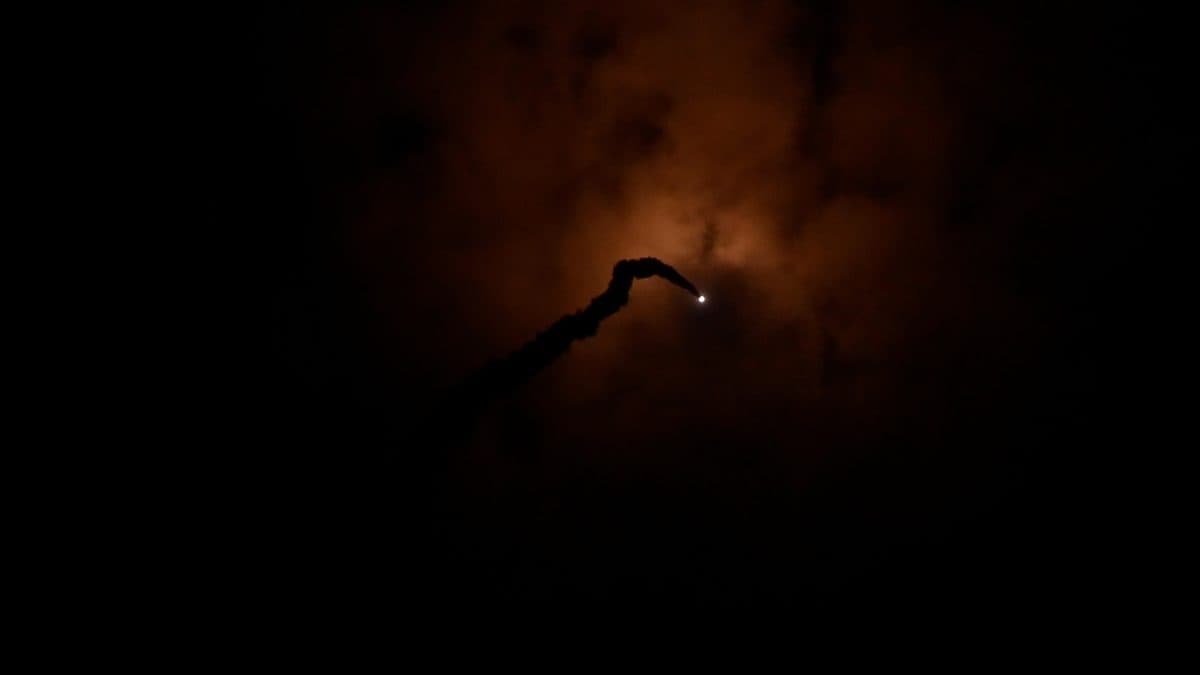
Minuteman III ICBM launching from its silo at Vandenberg Air Force Base with a trail of flame and smoke against a dark sky

10 Cold War Weapons That Were Designed for World War III and Never Fired

These weapons were built to fight a war that everyone prayed would never happen. The Minuteman III has been on alert since 1970. The Typhoon-class carried enough nuclear warheads to destroy a continent. The Davy Crockett could be fired by three soldiers. Most of them have been waiting for 40 years. Here are 10 Cold War weapons built exclusively for World War III.

daniel-mercer··13 min read
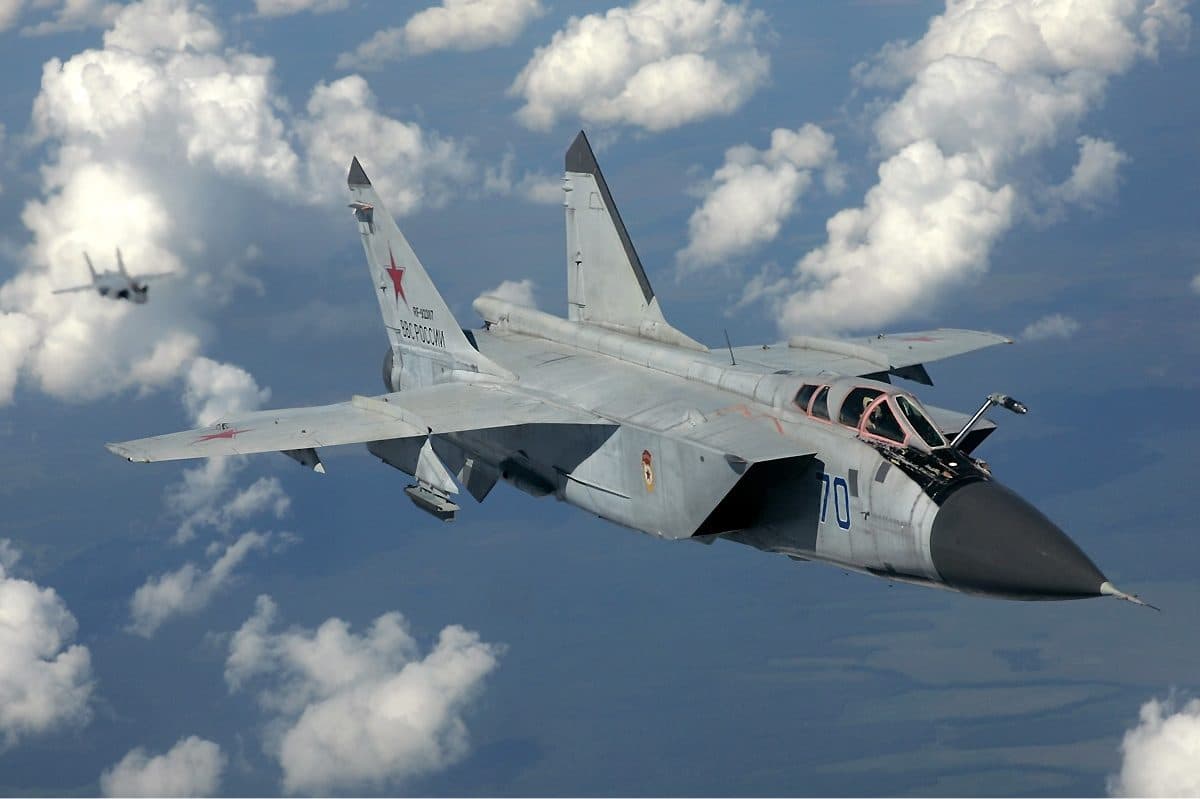
Russian Air Force MiG-31 Foxhound interceptor in flight showing its twin-engine configuration and large airframe

The MiG-31 Foxhound Can Fly Mach 2.83 and Fire Missiles at Targets 200 Miles Away

The MiG-31 was designed to catch the SR-71 Blackbird. It is still the fastest fighter in any air force. The Foxhound's Zaslon phased-array radar, the first ever installed in a fighter, can track 10 targets and engage 4 simultaneously at ranges exceeding 200 miles. Here is why Russia still flies a 1980s interceptor, and why the MiG-31BM carrying a Kinzhal hypersonic missile has changed what the aircraft means to modern warfare.

michael-trent··10 min read