


50 Military Decisions That Quietly Shaped Modern Warfare
Decisions that shaped modern military power across history.
ryan-caldwell··45 min read
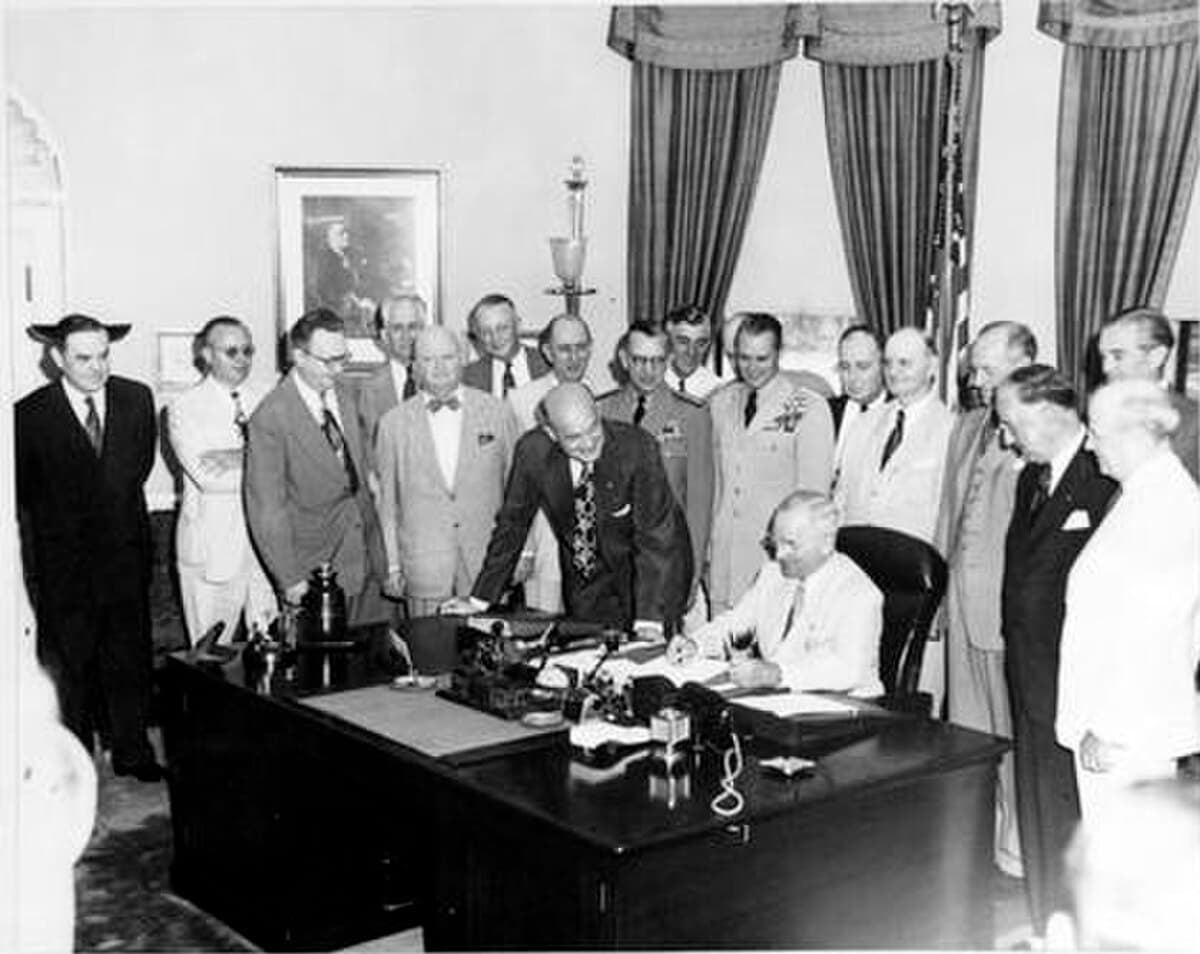
President Harry S. Truman addressed a joint session of Congress and requested $400 million in military and economic aid for Greece and Turkey to resist communist insurgencies and Soviet pressure. His declaration, "it must be the policy of the United States to support free peoples who are resisting attempted subjugation", launched the Cold War strategy of containment that would define American military policy for the next four decades.
Related articleUnion Major General Nathaniel P. Banks launched the Red River Campaign, a joint Army-Navy operation intended to capture Shreveport, the Confederate capital of Louisiana, and seize Confederate cotton supplies. The campaign deployed approximately 30,000 troops and a fleet of gunboats under Rear Admiral David Dixon Porter up the Red River. The expedition ended in humiliating failure at the Battle of Mansfield.
Related articleJuliette Gordon Low founded the Girl Scouts of the USA in Savannah, Georgia, inspired by the Boy Scout and Girl Guide movements. During both World Wars, Girl Scouts played a significant support role, selling war bonds, collecting scrap metal, growing victory gardens, and serving as hospital assistants. The organization has since produced numerous military leaders and veterans who credit their scouting experience with preparing them for service.
The Battle of Neuve Chapelle, the first deliberately planned British offensive of World War I, reached its climax as British and Indian troops attempted to exploit their initial breakthrough but were halted by German reserves and communication failures. The battle proved that artillery could rupture trench lines but that exploiting the breach before the enemy could reinforce remained the central unsolved problem of the war.
Sun Yat-sen, the revolutionary founder of the Republic of China and the Kuomintang, died of liver cancer in Beijing at age 58. His death created a power vacuum that led to Chiang Kai-shek's rise, the KMT-Communist split, the Chinese Civil War, and ultimately Mao Zedong's victory in 1949, events that reshaped Cold War geopolitics and directly influenced the Korean and Vietnam Wars.
Mahatma Gandhi began the 240-mile Salt March from Sabarmati Ashram to the coastal village of Dandi, protesting the British salt tax. The march, which culminated on April 5 when Gandhi symbolically made salt from seawater, triggered a wave of civil disobedience across India that undermined British authority and demonstrated that the empire could be resisted without military force.
German Wehrmacht troops crossed into Austria unopposed, completing the Anschluss, the annexation of Austria into the Third Reich. Hitler had pressured Austrian Chancellor Schuschnigg to resign and accept a Nazi government. The annexation added 6.7 million people and Austria's industrial base to Germany, extended the Reich's strategic reach into southeastern Europe, and emboldened Hitler's further territorial ambitions.
Related articleFinland and the Soviet Union signed the Moscow Peace Treaty, ending the brutal Winter War that had begun with the Soviet invasion on November 30, 1939. Finland ceded 11% of its territory, including the Karelian Isthmus and the city of Vyborg, but preserved its independence. The war exposed catastrophic weaknesses in the Soviet military that directly influenced Hitler's decision to invade the USSR.
Related articlePresident Harry S. Truman addressed a joint session of Congress and requested $400 million in military and economic aid for Greece and Turkey to resist communist insurgencies and Soviet pressure. His declaration, "it must be the policy of the United States to support free peoples who are resisting attempted subjugation", launched the Cold War strategy of containment that would define American military policy for the next four decades.
Related articleThe Turkish Armed Forces delivered a memorandum to Prime Minister Süleyman Demirel demanding the formation of a strong government capable of ending civil unrest, forcing his resignation in what became known as the "Coup by Memorandum." This was the second of four military interventions in Turkish politics during the Cold War, reflecting NATO's tolerance of military coups in allied nations deemed too weak or too left-leaning.
Three former Warsaw Pact nations, Poland, Hungary, and the Czech Republic, formally joined NATO, marking the alliance's first post-Cold War expansion into the former Soviet bloc. The accession ceremony at Independence, Missouri, was held at the Truman Presidential Library, symbolically linking the containment doctrine's author with its ultimate triumph.
Related article
Lieutenant Colonel, Italian Army; Combat Aviator
Italian war hero, poet, and nationalist who lost an eye in aerial combat during World War I. In 1919, he led 2,000 Italian veterans to seize the city of Fiume, defying the Allied powers and establishing a proto-fascist statelet whose methods, mass rallies, balcony speeches, paramilitary uniforms, the Roman salute, Mussolini directly copied to create Italian Fascism.

Rear Admiral, U.S. Navy
Commanded the schooner Lanikai on a secret reconnaissance mission in the South China Sea just before Pearl Harbor, an episode many historians believe was an attempt to provoke Japan. Author of "Cruise of the Lanikai" documenting this controversial chapter of pre-war intelligence operations.

Father of the Republic of China
Revolutionary leader who overthrew the Qing Dynasty and founded the Republic of China in 1912. His death in 1925 created a power vacuum that led to the rise of Chiang Kai-shek, the Chinese Civil War, and Mao Zedong's communist revolution, events whose military consequences shaped the entire Cold War.
Wear the Timeline
10 military events occurred on March 12, spanning multiple centuries. Key events include: The Truman Doctrine: America Commits to Containing Communism (1947), The Anschluss: Germany Annexes Austria Without a Shot (1938), Moscow Peace Treaty Ends the Winter War (1940), Poland, Hungary, and Czech Republic Join NATO (1999), Gandhi Begins the Salt March (1930).
The most significant military event on March 12 is The Truman Doctrine: America Commits to Containing Communism (1947). President Harry S. Truman addressed a joint session of Congress and requested $400 million in military and economic aid for Greece and Turkey to resist communist insurgencies and Soviet pressure. His declaration, "it must be the policy of the United States to support free peoples who are resisting attempted subjugation", launched the Cold War strategy of containment that would define American military policy for the next four decades.
Notable military figures born on March 12 include Gabriele d'Annunzio (1863–1938), Rear Admiral Kemp Tolley (1908–2000).
Events on March 12 span the Cold War, World War II, the Civil War, World War I, the Interwar Period, the Modern Era, covering 10 events across 2 centuries of military history.
Events on March 12 involve 3 branches of the U.S. and allied armed forces, reflecting the global scope of military operations throughout history.
Explore military history from the day you were born.
June 6
The Allied invasion of Normandy, the largest amphibious assault in history.
December 7
Japan attacks the U.S. Pacific Fleet, bringing America into World War II.
September 11
The deadliest terrorist attack in history transforms U.S. national security.
August 6
The first atomic bomb is dropped on a city, ushering in the nuclear age.
May 8
Nazi Germany surrenders unconditionally, ending World War II in Europe.
November 11
Armistice Day marks the end of World War I and honors all who served.
June 4
The turning point of the Pacific War as the U.S. Navy destroys four Japanese carriers.
July 4
The Declaration of Independence is adopted, sparking the American Revolution.
Decisions that shaped modern military power across history.
Calvin Graham Was Youngest Decorated US Soldier at 12 Pearl Harbor Visitors Bureau “Green Boys” was a term given to soldiers who…

From wrong turns to unlocked gates - real mistakes that shaped the course of history.

Why military size doesn't guarantee victory in modern warfare.