Skip to content
April 30:The Fall of Saigon51yr ago

The Stinger Missile Won the Cold War From a Soldier's Shoulder. Now It's Nearly Extinct.

David Kowalski · · 10 min read
Save
Share:
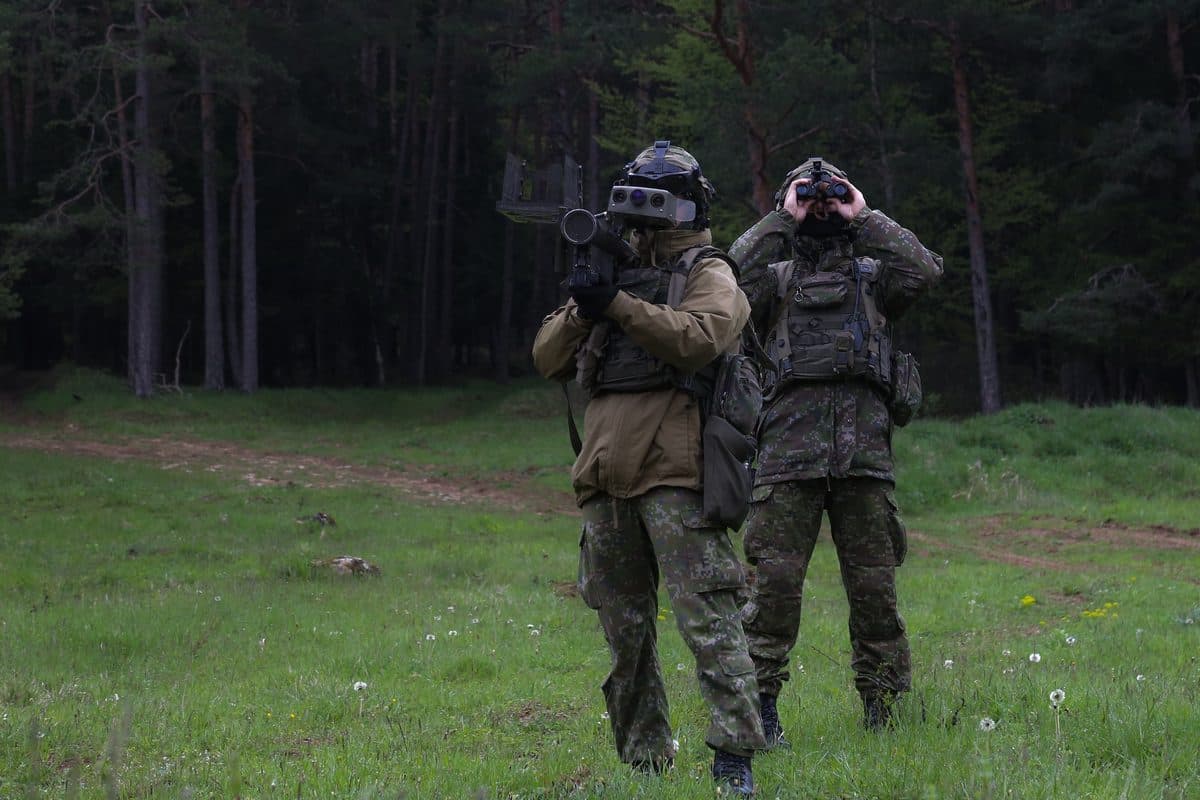
A soldier aims an FIM-92 Stinger surface-to-air missile system during a field exercise
David Kowalski
David Kowalski

Missile Systems & Air Defense Contributor

David Kowalski writes about missile systems, air defense networks, and the technology behind precision strike warfare. His work examines how offensive and defensive missile capabilities shape the balance of power between nations.

The Stinger missile helped win the Cold War. By 2023, the United States almost ran out of them, because nobody had made one in over a decade.

The FIM-92 Stinger is a four-foot-long, 35-pound missile that a single soldier can carry on their shoulder and fire at low-flying aircraft. It has a range of roughly 5 miles, an infrared seeker that locks onto engine exhaust, and a 3-pound warhead that detonates on impact. It costs approximately $38,000 per missile, a bargain for a weapon that can destroy a $30 million helicopter.

In the 1980s, the Stinger changed the course of the Soviet-Afghan War. In 2022, it helped Ukraine's defenders stop Russia's helicopter assault on Kyiv's Hostomel Airport. And somewhere between those two moments, the United States nearly let its most consequential shoulder-fired weapon disappear from the arsenal.

Afghanistan: The Weapon That Changed the War

The Soviet Union invaded Afghanistan in December 1979 with overwhelming air superiority. Mi-24 Hind helicopter gunships operated freely over Afghan valleys, devastating mujahideen positions with rockets and machine-gun fire. Fixed-wing aircraft bombed villages from altitudes that early-generation MANPADS (man-portable air defense systems) couldn't reach. For the first six years of the war, Afghan fighters had no effective response to Soviet airpower.

The CIA's Operation Cyclone, which funneled weapons to mujahideen fighters through Pakistan's ISI, initially provided Soviet-made SA-7 Grail missiles, obsolescent weapons that could be defeated by simple countermeasures. They were marginally effective but didn't change the air war's dynamics.

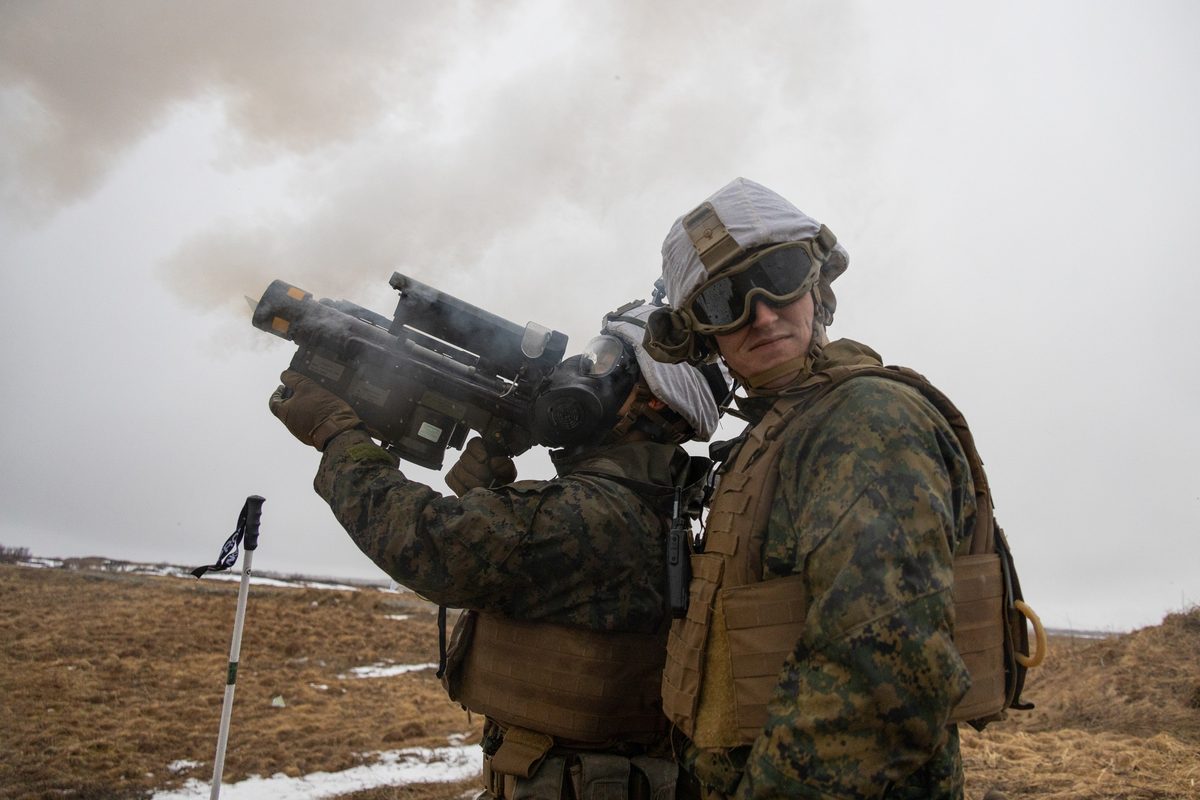
U.S. Marines fire FIM-92 Stinger missiles during a training exercise in Norway
U.S. Marines with 2nd Marine Aircraft Wing fire FIM-92 Stinger missiles during Exercise Cold Response 2022 in Norway, the same missile system that changed the course of the Soviet-Afghan War four decades earlier (U.S. Marine Corps photo)

In 1986, the Reagan administration made the controversial decision to supply Stingers to the mujahideen. The controversy was real: the Stinger was a closely guarded technology, and putting it in the hands of non-state fighters created a significant risk that the weapons would be captured, reverse-engineered, or used against civilian aircraft.

The first Stinger engagement in Afghanistan came on September 25, 1986, when mujahideen fighters near Jalalabad shot down three Mi-24 Hinds in quick succession. The psychological effect was immediate. Soviet pilots who had operated with impunity were suddenly vulnerable. Flight profiles changed overnight. Helicopters moved to higher altitudes, reducing their effectiveness for ground support. Fixed-wing aircraft adopted evasive approaches and departure patterns that degraded their accuracy.

By the time the Soviets withdrew in 1989, mujahideen fighters had been supplied with approximately 2,300 Stingers and were credited with shooting down 269 Soviet aircraft, a kill rate of roughly 79 percent of missiles fired, though these figures, sourced from CIA internal assessments, have been disputed by some analysts and by Soviet/Russian sources. Whether the Stinger was the primary cause of the Soviet withdrawal or merely one factor among many remains debated. What isn't debated is that it eliminated Soviet air superiority over Afghan battlefields and transformed the mujahideen from a nuisance into a lethal adversary.

How the Stinger Works

The FIM-92 Stinger uses a passive infrared/ultraviolet dual-seeker that homes on the heat signature of an aircraft's engines while using UV contrast to distinguish the target from background radiation (sun, hot terrain, decoy flares). This dual-band seeker was a significant improvement over earlier IR-only MANPADS like the SA-7, which could be defeated by a single flare.

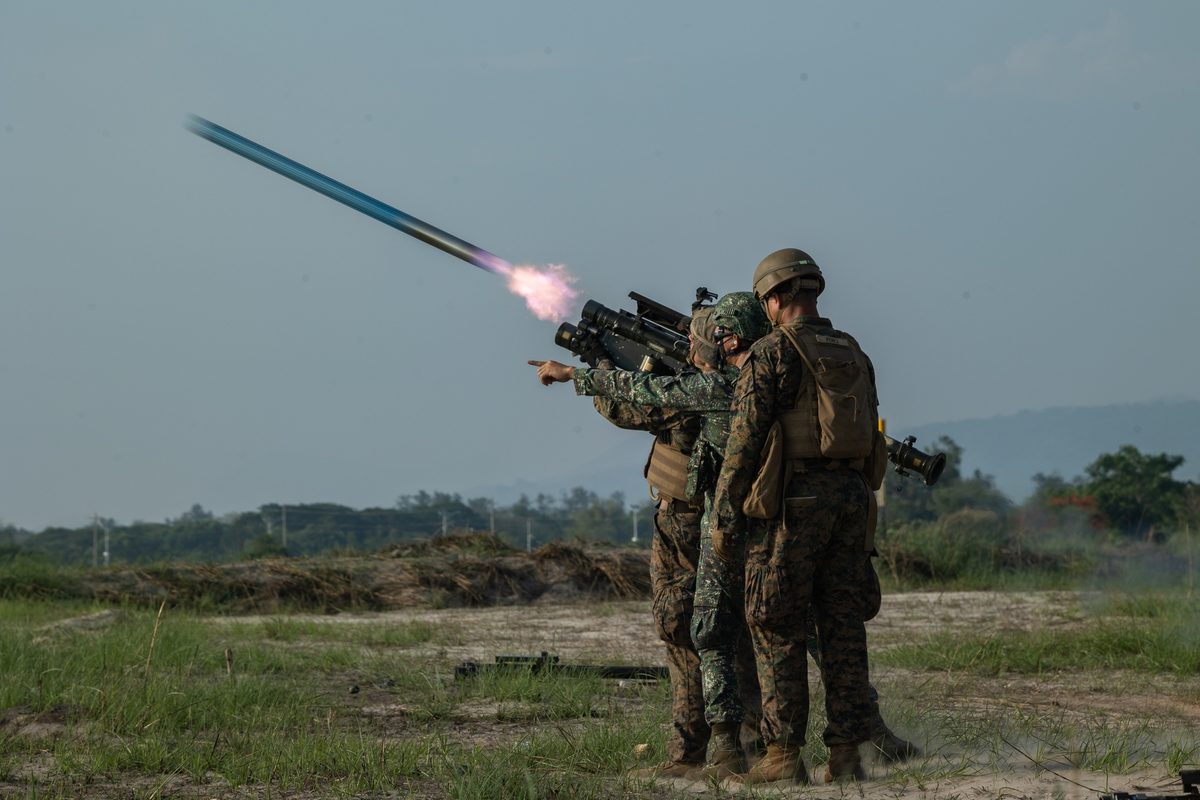
U.S. Marine fires a simulated FIM-92 Stinger missile during Exercise Balikatan in the Philippines
A Marine with 3rd Low Altitude Air Defense Battalion aims a simulated FIM-92 Stinger during Exercise Balikatan 23 in the Philippines. MANPADS training remains essential for defending forward-deployed units against aerial threats (U.S. Marine Corps photo)

The missile incorporates an IFF (Identification Friend or Foe) interrogator that queries incoming aircraft transponders before allowing a firing solution. The IFF system was a critical design requirement, preventing friendly-fire shootdowns of American aircraft, and one reason the CIA was reluctant to export Stingers: the IFF codes could be compromised.

Upon launch, the Stinger accelerates to approximately Mach 2.2 (roughly 1,500 mph), guided by proportional navigation, a guidance law that steers the missile toward the point where the target will be, not where it currently is. The 3-pound blast-fragmentation warhead is triggered by an impact fuze, with a self-destruct mechanism that detonates the missile if it misses and reaches the end of its flight envelope.

Total engagement time, from target acquisition to impact, is typically 3 to 6 seconds. The missile's speed advantage over its targets means that once a valid lock is achieved, evasion is extremely difficult for helicopters and low-performance aircraft. Fast jets at high altitude can defeat the Stinger through speed, altitude, and countermeasures, but the Stinger was never designed for those targets.

The Production Crisis: 13 Lost Years

After the Cold War ended, demand for Stinger missiles declined. The threat of low-altitude Soviet air attack that had driven MANPADS procurement evaporated. The Pentagon cut orders. Raytheon (which had acquired General Dynamics' Stinger line) slowed production. By the early 2010s, the production line was effectively cold, not formally shut down, but not producing new missiles. For roughly 13 years, no new Stingers were manufactured.

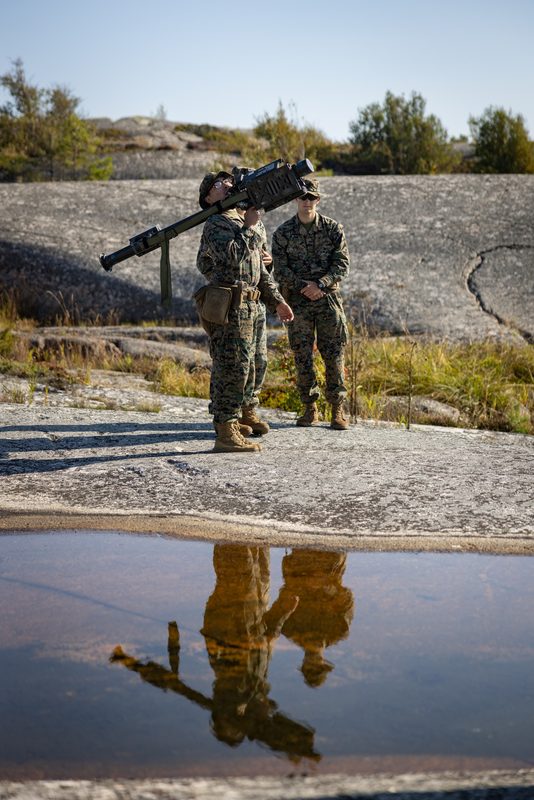
U.S. Marines conduct a Stinger missile live-fire exercise in Sweden
A Marine with 2nd Low Altitude Air Defense Battalion fires an FIM-92 Stinger during a live-fire exercise in Sweden, 2024. Live-fire training has increased as the military scrambles to rebuild Stinger stockpiles (U.S. Marine Corps photo)

The existing stockpile was maintained through shelf-life extension programs, replacing aging components to keep missiles operational past their original expiration dates. But the overall inventory was shrinking as missiles were consumed in training, transferred to allies, or retired due to age. No one in the Pentagon seemed alarmed because no one expected to need thousands of MANPADS missiles in a hurry.

Then Russia invaded Ukraine.

Ukraine: Burning Through the Stockpile

The United States began transferring Stinger missiles to Ukraine almost immediately after the February 2022 invasion. The missiles proved highly effective. Ukrainian soldiers used them to shoot down Russian helicopters, cruise missiles, and drones in the opening weeks of the war. The defense of Hostomel Airport, where Russian air assault forces attempted to seize a beachhead near Kyiv, featured Stinger engagements against Russian transport helicopters.

The problem: the rate of transfer was unsustainable. By late 2022, the United States had provided approximately 1,600 Stingers to Ukraine. This was a significant fraction of the remaining U.S. inventory. Reports indicated that the Defense Department was approaching the minimum stockpile level needed to meet its own warfighting requirements, the point where giving away more Stingers would leave American forces short in a conflict.

Restarting the production line proved agonizingly slow. Raytheon's facility in Tucson, Arizona, required rehiring skilled workers, requalifying suppliers, and rebuilding test equipment. Many of the original component suppliers had gone out of business or shifted to commercial production. The supply chain that produced Stingers in the 1980s and 1990s no longer existed in its original form.

The Pentagon awarded Raytheon (now RTX) a $625 million contract in 2022 to restart Stinger production. But the first new Stingers didn't begin rolling off the line until late 2023, more than 18 months after the contract was signed. The production rate initially was far below Cold War levels.

The Broader MANPADS Problem

The Stinger crisis is not just about one missile. It reflects a systemic failure in how the United States manages its defense industrial base during peacetime. The pattern is familiar: a weapon system is developed during a period of high threat, produced in large quantities, and then allowed to atrophy when the threat recedes. When the threat returns, invariably faster than anyone expects, the production base no longer exists.

The directed-energy weapons now entering service may eventually supplement or replace MANPADS for some missions. The Army's DE M-SHORAD program puts a laser on a Stryker to engage drones and low-flying threats. But lasers are years away from matching the Stinger's combination of portability, reliability, and lethality. A soldier can carry a Stinger on a 20-mile patrol. A laser Stryker cannot.

The Pentagon is exploring next-generation MANPADS programs that would offer improved range, better countermeasure resistance, and the ability to engage more sophisticated targets. But those programs are in early development. For the foreseeable future, the Stinger remains the primary shoulder-fired air defense weapon for the U.S. military and dozens of allied nations.

The Irony of Near-Extinction

The Stinger missile helped end the Cold War by denying the Soviet Union air superiority in Afghanistan. It proved that a single soldier with a $38,000 missile could neutralize a $30 million attack helicopter, an asymmetric capability that fundamentally altered the cost calculus of air power. It was arguably the most consequential infantry weapon of the late 20th century.

And the United States nearly allowed it to disappear from the arsenal through peacetime complacency. The assumption that the absence of a current threat meant the permanent absence of a future threat, the same assumption that left America short of artillery ammunition, shipyard capacity, and submarine production capability, nearly eliminated the weapon that had done more than any other to demonstrate the enduring value of shoulder-fired air defense.

The Stinger's story is a cautionary tale about what happens when a military optimized for efficiency meets a world that demands resilience. A just-in-time production line that produces missiles only when needed works perfectly, until the day you need missiles and the line isn't running. By the time you restart it, the war has already started.

Share this article

Share:

Recommended

Ace of The Skies: Can You Identify These Military Aircraft Throughout The Years?
Test Yourself

Ace of The Skies: Can You Identify These Military Aircraft Throughout The Years?

Can you identify these aircraft?

Take the Quiz

Get Military News & History in Your Inbox

Join thousands of readers receiving our weekly digest of military technology, history, and analysis.

Test Your Knowledge