Ryan Caldwell writes about military decision-making, failed programs, and the tradeoffs behind major defense choices. His work is focused on understanding why systems succeed or fail beyond headlines, promises, and initial expectations.
Sometimes the dumbest-looking weapon is the one that works. These 10 machines made their designers' colleagues laugh, right up until they proved devastating on the battlefield.
Military history is full of weapons that looked brilliant on paper and failed catastrophically in practice. This is not that list. This is the opposite, machines that looked absurd, impractical, or downright foolish, but turned out to be exactly what the situation demanded. In warfare, effectiveness doesn't care about aesthetics. These 10 machines prove it.
1. The A-10 Warthog, The Plane Nobody Wanted That Everyone Loves
The A-10 Thunderbolt II is, by conventional aviation standards, an ugly airplane. Its twin engines are mounted on pylons behind the fuselage, giving it the appearance of something assembled from spare parts. Its nickname, "Warthog", was not given as a compliment. The Air Force has tried to retire it at least five times since the 1990s.
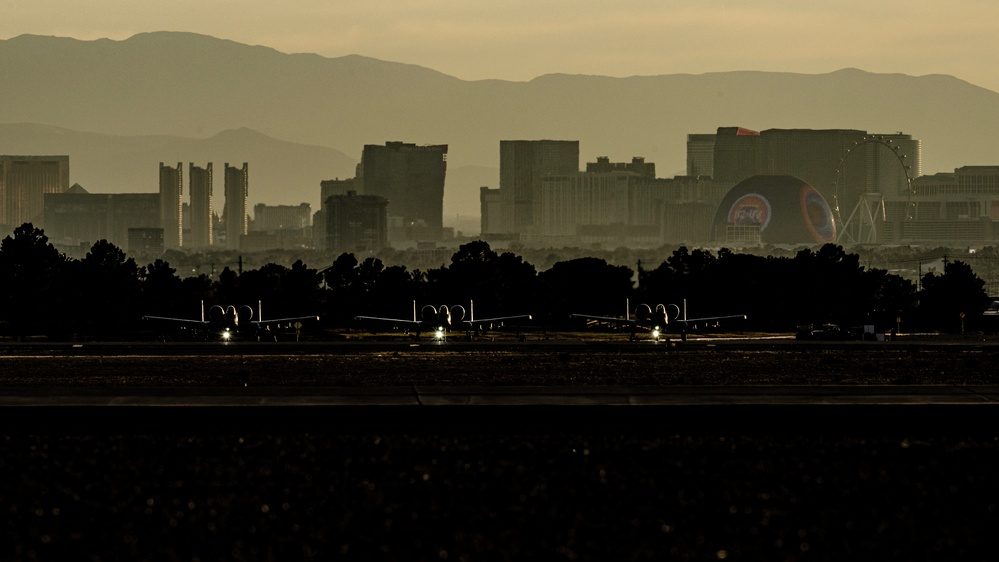
A-10 Thunderbolt II aircraft lined up at Nellis Air Force Base, the aircraft the Air Force keeps trying to retire but ground troops refuse to let go (U.S. Air Force photo)
And yet the A-10 has become the most beloved aircraft in the U.S. military, not among pilots, but among the ground troops it supports. The aircraft was built around its 30mm GAU-8/A Avenger rotary cannon, a weapon so large that the aircraft was literally designed around it. The gun fires depleted uranium rounds at 3,900 rounds per minute, producing a distinctive "BRRRT" sound that has become iconic. The A-10 can absorb extraordinary damage, engines, hydraulics, and flight controls have redundant systems, and the pilot sits in a titanium "bathtub" that can withstand 23mm cannon fire.
The Air Force's repeated attempts to retire the A-10 have been blocked by Congress, largely because Army and Marine ground commanders refuse to let it go. It may not be pretty. It may not be fast. But when troops are in contact with the enemy and need something dead immediately, the Warthog delivers.
2. The DUKW "Duck", An Amphibious Truck That Won D-Day
The DUKW (pronounced "duck") was a six-wheeled amphibious truck based on the GMC CCKW "deuce-and-a-half", a standard Army cargo truck fitted with a watertight hull and a propeller. When it was first proposed in 1942, the Army was skeptical. A truck that could swim seemed like a solution in search of a problem.
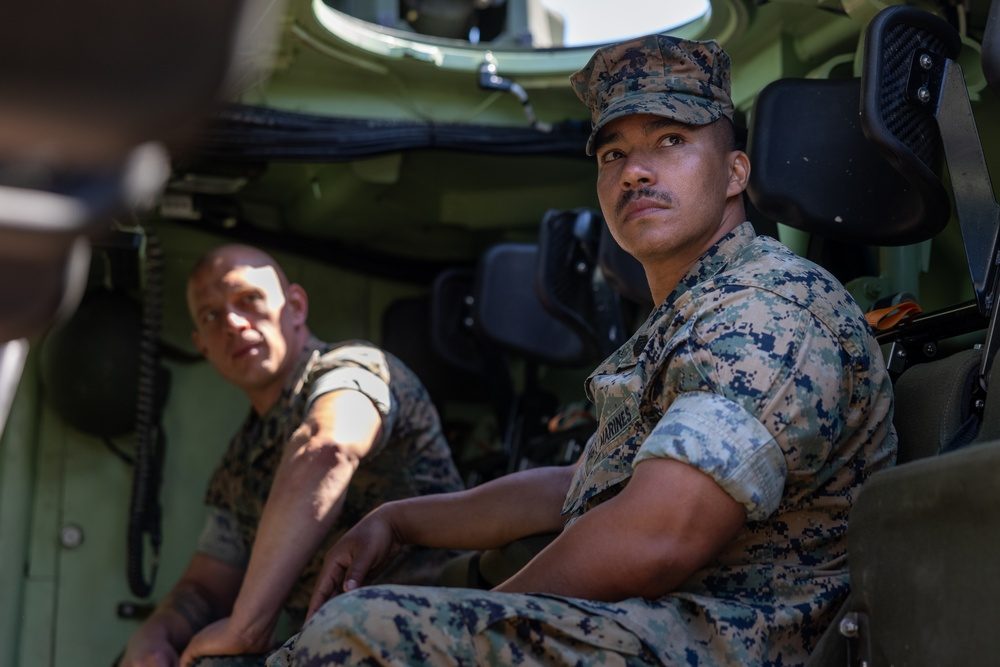
Modern amphibious vehicles trace their lineage to the DUKW, which proved that the concept of a truck that could drive off a ship and onto a beach, despite looking absurd, was militarily essential (U.S. Marine Corps photo)
Then D-Day happened. On June 6, 1944, DUKWs carried supplies directly from cargo ships offshore to supply dumps on the Normandy beaches, bypassing the need for functioning port facilities. The vehicles drove out of the surf, across the sand, and up the bluffs to dump points, a continuous ship-to-shore supply chain that didn't require docks, cranes, or unloading equipment. Over the course of the Normandy campaign, DUKWs moved an estimated 40 percent of all supplies landed across the beaches.
The United States produced 21,147 DUKWs during the war. The vehicle was ugly, slow on water (6 mph), mediocre on land, and mechanically temperamental. It was also indispensable. General Eisenhower later identified the DUKW as one of the pieces of equipment that most contributed to Allied victory.
3. Hobart's Funnies, The Circus Tanks That Cracked Hitler's Atlantic Wall
Major General Percy Hobart was considered eccentric even by British military standards. His 79th Armoured Division fielded modified tanks that looked like they belonged in a carnival rather than a combat zone: tanks with giant spinning drums of chains (Crab mine flails), tanks with canvas screens that could "swim" (DD tanks), tanks with massive fascines (bundles of logs) for filling ditches, and tanks that fired demolition charges from a spigot mortar (AVRE Petards).
The reaction from conventional tank commanders ranged from bemusement to open ridicule. Churchill himself had to intervene to keep Hobart in command after senior officers tried to sideline him.
On D-Day, the British and Canadian beaches (Gold, Juno, and Sword) used Hobart's Funnies extensively. Crab tanks flailed paths through minefields. DD tanks provided armored fire support from the waterline. AVRE tanks blew holes in concrete bunkers. The American beaches (Omaha and Utah) declined most of Hobart's designs. Omaha Beach, where casualties were highest, had no mine-clearing flail tanks and no specialized obstacle-clearing vehicles. The correlation was noticed.
4. The Sherman Calliope, A Tank With a Pipe Organ of Rockets
Take an M4 Sherman tank. Now bolt a rack of 60 T34 Calliope rocket launcher tubes on top of the turret. The result looks like someone strapped a church pipe organ to a tank, which is approximately what happened. The nickname "Calliope" came from the resemblance to the steam-powered musical instruments found at circuses.
The system worked by firing 4.5-inch M8 rockets in rapid salvos, saturating an area with high-explosive fragmentation. A single Calliope could fire all 60 rockets in a few seconds, delivering the equivalent firepower of a battalion of conventional artillery onto a concentrated area. The rockets were inaccurate individually, but when you fire 60 at once, accuracy per rocket matters less than total area coverage.
The Calliope saw action in the European Theater from Normandy through Germany. Crews loved the psychological effect, the sound of 60 rockets screaming simultaneously was demoralizing beyond its actual destructive capability. German soldiers who survived Calliope attacks described the experience as terrifying.
5. The Vespa 150 TAP, A Scooter With a Cannon
In the 1950s, French airborne forces needed a light anti-armor weapon that could be parachute-dropped into combat. The solution: mount a U.S.-made M20 75mm recoilless rifle onto a Vespa 150 motor scooter. The result, the Vespa 150 TAP (Troupes Aéro Portées), looked like something from a cartoon.
It was not a joke. The French military deployed approximately 800 Vespa 150 TAPs between 1956 and 1959. The scooter was dropped by parachute alongside its crew. Upon landing, the rider drove the scooter into position, dismounted, and fired the recoilless rifle, which could penetrate 100mm of armor at 400 meters. The Vespa itself was not designed to fire while driving (the recoil would be catastrophic), though persistent rumors suggest that some crews tried it anyway.
Was a Vespa-mounted cannon a good weapon? By modern standards, no. By the standards of a French paratrooper in 1956 who needed something, anything, that could knock out an armored vehicle and fit in a parachute container, it was brilliant.
6. The Toyota Technical, The Truck That Won the Toyota War
A "technical" is a civilian vehicle, usually a Toyota Hilux or Land Cruiser, with a heavy weapon mounted in the bed. Machine guns, recoilless rifles, anti-aircraft guns, and even multiple rocket launchers have all been bolted onto pickup trucks by irregular forces worldwide. The concept looks improvised because it is improvised.
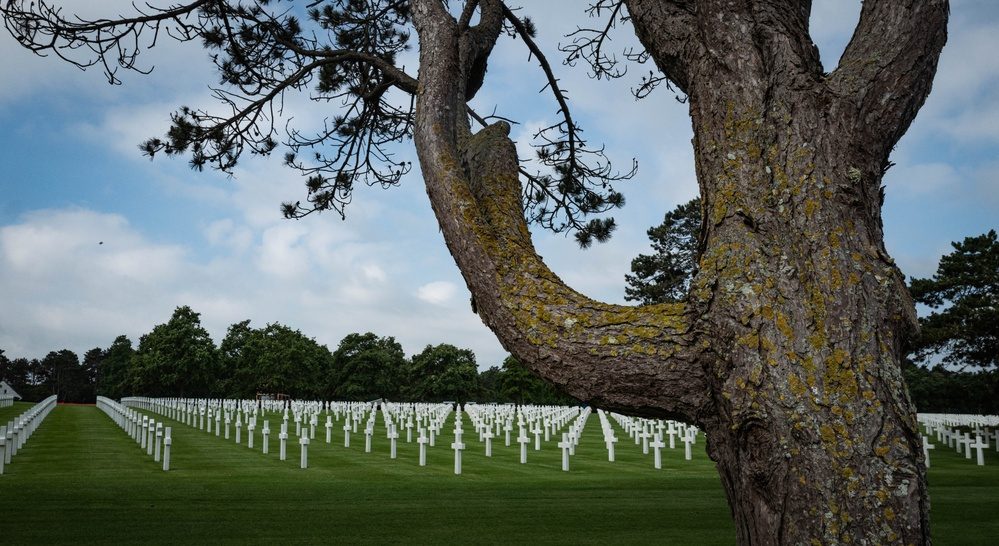
Modern forces pay tribute at Normandy, where improvised solutions like the DUKW and Hobart's Funnies, machines that looked ridiculous on paper, proved decisive on the beaches (U.S. Army photo)
In 1987, Chad's military used a fleet of Toyota Hilux technicals to decisively defeat Libya's armored forces in the "Toyota War." Chadian fighters mounted Milan anti-tank missiles and ZU-23 anti-aircraft guns on their trucks, then used their speed and knowledge of the desert terrain to outmaneuver Libyan tanks and APCs. Libya lost over 7,500 troops and $1.5 billion in military equipment to an army riding in pickup trucks.
The Toyota technical has since become the defining vehicle of asymmetric warfare. ISIS, various African militias, and rebel groups worldwide have adopted the concept. The weapon system is crude, uncomfortable, and offers zero protection to its operators. It is also fast, cheap, easy to maintain, and devastatingly effective when used with tactical intelligence.
7. USS Monitor, The "Tin Can on a Raft" That Revolutionized Naval Warfare
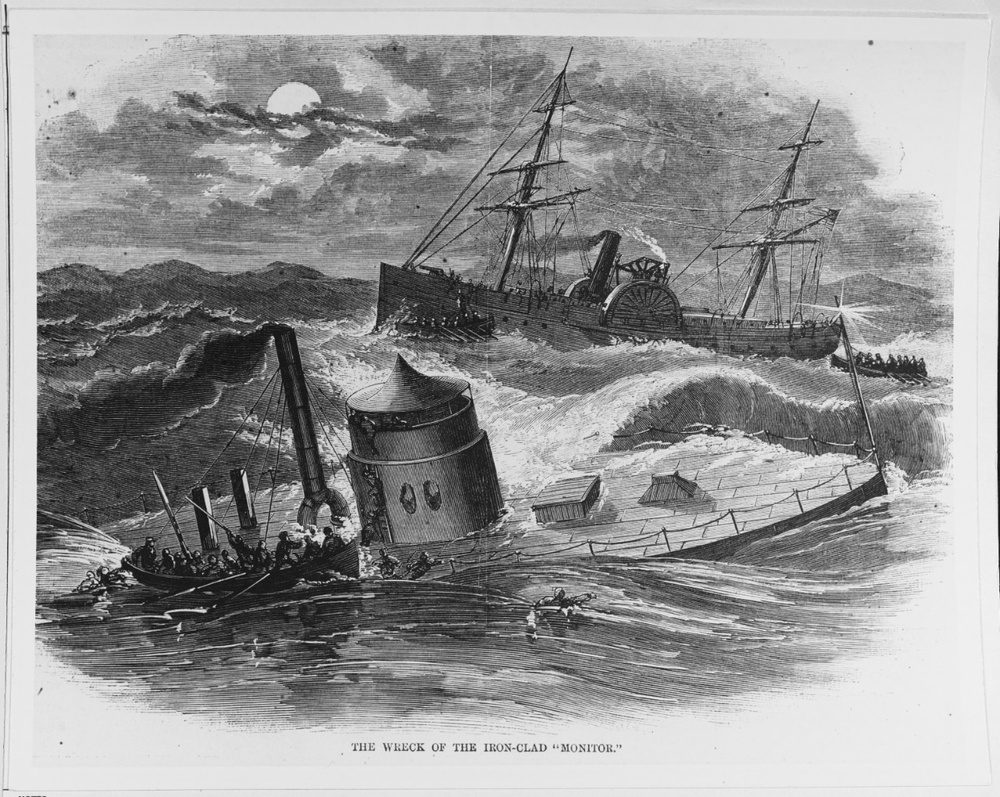
When the USS Monitor was launched in January 1862, observers were unimpressed. The ironclad warship sat so low in the water that waves washed over its deck. Its single rotating turret, housing two 11-inch Dahlgren guns, looked like a cheese box sitting on a raft. Newspapers called it "Ericsson's Folly" after its Swedish-born designer, John Ericsson.
An illustration of the USS Monitor alongside USS Rhode Island during the Civil War, the ironclad's revolutionary rotating turret looked absurd to contemporary observers but changed naval warfare forever (U.S. Navy History and Heritage Command)
On March 9, 1862, the Monitor fought the CSS Virginia (the rebuilt USS Merrimack) in the Battle of Hampton Roads, the first battle between ironclad warships. The engagement was tactically inconclusive, but strategically revolutionary. The Monitor demonstrated that a small, low-profile vessel with a rotating gun turret could stand toe-to-toe with a much larger warship. Every major navy in the world immediately began building turreted ironclads.
The Monitor's revolving turret, the feature that looked most absurd, became the defining element of warship design for the next 150 years. Every battleship, cruiser, and destroyer that followed owes its turret arrangement to Ericsson's "cheese box."
8. The Bat Bomb, Incendiary Bats That Actually Worked
In 1943, the U.S. military tested Project X-Ray: a weapon system that used Mexican free-tailed bats fitted with small incendiary devices. The concept was the brainchild of a Pennsylvania dentist named Lytle Adams, who proposed it to President Roosevelt after Pearl Harbor. Thousands of bats would be placed in a specially designed bomb casing, dropped over Japanese cities, and released at altitude. The bats would roost in the eaves and attics of Japan's predominantly wooden buildings. Timed incendiary charges would then ignite, starting thousands of simultaneous fires.
The concept sounds insane. The testing proved it was not. In controlled experiments at a mock Japanese village constructed at Dugway Proving Ground, Utah, the bat bombs started more fires than conventional incendiary bombs. A Marine Corps report concluded that the bat bomb could have caused widespread destruction at a fraction of the cost of conventional bombing.
The project was canceled in 1944, not because it failed, but because the Manhattan Project was moving faster. The atomic bomb was deemed a higher priority, and resources were redirected accordingly. The bat bomb worked. It was simply overtaken by an even more dramatic weapon.
9. The Katyusha Rocket Launcher, Organ Pipes on a Truck
The BM-13 Katyusha was a multiple rocket launcher mounted on the back of a standard Soviet truck. Its launch rails, which looked like a set of organ pipes, could fire up to 16 132mm rockets in 7-10 seconds, saturating an area roughly 400 meters wide and 400 meters deep with high-explosive fragmentation. The rockets were inaccurate. The launcher was crude. The weapon system was devastating.
German soldiers called it the "Stalin's Organ" because of the howling sound the rockets made in flight. The psychological effect of a Katyusha salvo, a wall of screaming rockets arriving without warning, was as significant as its explosive power. Entire battalions broke and ran under Katyusha fire, not because of casualties inflicted but because of the sheer terror of the experience.
The Soviets produced over 10,000 Katyusha launchers during World War II. The weapon was cheap (no precision machining required), fast to reload (relatively), and effective when used in mass. Its descendants, the BM-21 Grad and BM-30 Smerch, remain in service worldwide, including in Ukraine, where both sides use multiple rocket launchers descended from the original Katyusha concept.
10. Bob Semple Tank, New Zealand's Corrugated Iron Monster
In 1940, New Zealand faced a genuine threat of Japanese invasion and had exactly zero tanks. Minister of Works Bob Semple authorized the construction of armored vehicles using the only materials available: corrugated iron plates bolted onto Caterpillar D8 tractor chassis. The result, the Bob Semple Tank, is widely considered the worst tank ever built. It was slow (6 mph), poorly armored (the corrugated iron could be penetrated by rifle fire), mechanically unreliable, and so cramped that the crew of eight could barely move.
Military historians routinely rank the Bob Semple Tank as a punchline. But context matters. New Zealand in 1940 had no armor, no prospect of importing armor, and a real possibility of defending its coastline against Japanese amphibious forces. The Bob Semple Tank was not designed to fight Panzers. It was designed to look like a tank from a distance, provide psychological reassurance to the civilian population, and serve as a mobile machine-gun position for beach defense.
Did it work? As a tank, absolutely not. As a coastal defense stopgap that bought time until real military equipment could be acquired, it served its purpose. Three prototypes were built. None saw combat. But New Zealand was never invaded, and during the months when the Bob Semple Tank was the only armored vehicle on the island, it was the only armored vehicle on the island. Sometimes showing up is enough.
The Lesson: Ugly Wins Wars
Every weapon on this list was mocked when it appeared. The A-10 was too slow. The DUKW was neither a good truck nor a good boat. The Monitor looked like a tin can. The Katyusha was imprecise. The bat bomb was the idea of a dentist.
And every one of them worked, often better than the "proper" solutions they were compared against. Military effectiveness doesn't require elegance. It requires solving the problem in front of you with the resources available, and doing it before the enemy solves their problem first. Sometimes that means strapping rockets to a tank, mounting a cannon on a scooter, or building a tank out of corrugated iron.
In warfare, the ugly machine that shows up on time beats the beautiful machine that arrives too late. Every single time.