

15 Best World War II Books for History Enthusiasts (2026)
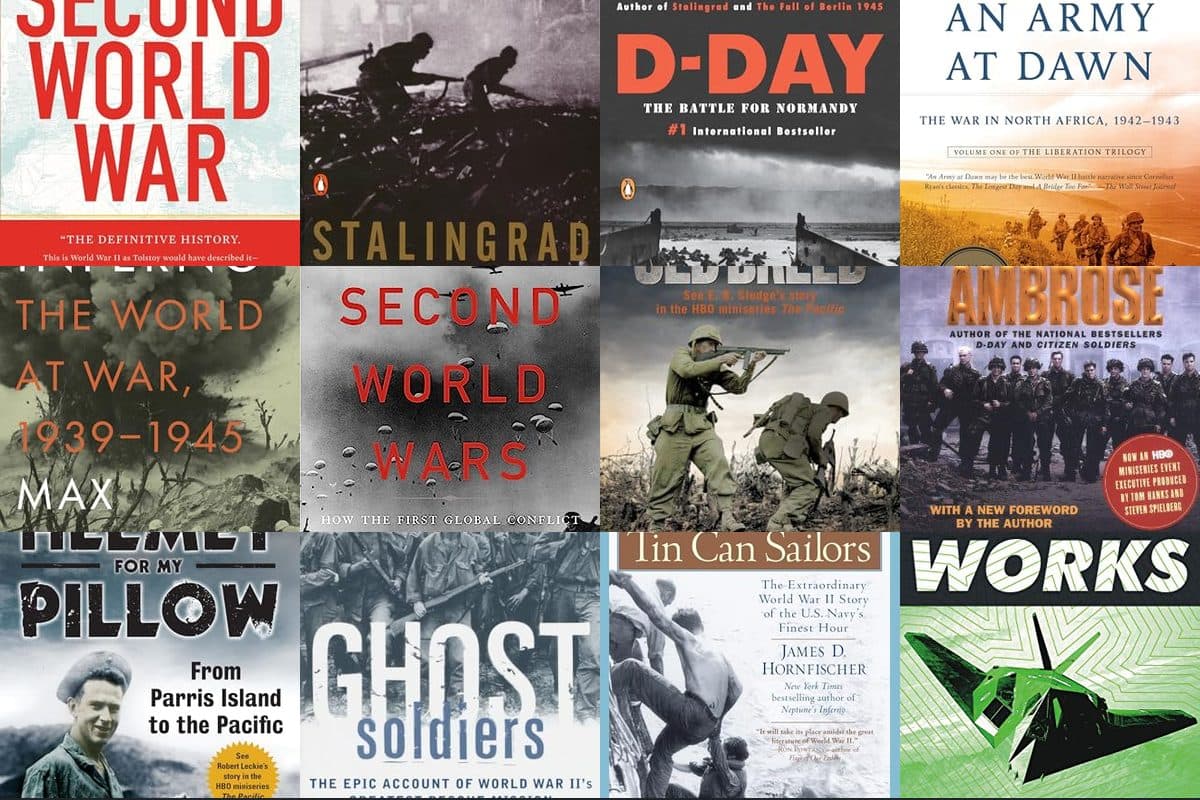
15 essential WW2 books covering every theater. Narrative histories, memoirs, and visual references ranked.
daniel-mercer··21 min read

The Warsaw Uprising, the largest single military operation by any European resistance movement in World War II, ended in defeat as the Polish Home Army surrendered to German forces after 63 days of desperate urban combat. Approximately 200,000 Polish civilians and 16,000 resistance fighters perished. The Soviets, whose armies stood across the Vistula River, controversially failed to intervene.
Sultan Salah ad-Din (Saladin) accepted the surrender of Jerusalem from its Christian defenders after a brief siege, ending 88 years of Crusader rule over the Holy City. Unlike the Crusaders who had massacred Jerusalem's Muslim and Jewish inhabitants in 1099, Saladin allowed the Christian population to ransom themselves and depart peacefully. The fall of Jerusalem triggered the Third Crusade, bringing Richard the Lionheart into conflict with Saladin.
British Major John André was hanged as a spy at Tappan, New York, for his role in Benedict Arnold's plot to surrender the fortifications at West Point to the British. André, captured while carrying the plans in civilian clothes, was tried by a military tribunal and sentenced to death. His composure and dignity at his execution won the respect of his captors, and even George Washington expressed private regret at the necessity of hanging him.
Texan settlers fired on a Mexican cavalry detachment sent to reclaim a cannon at Gonzales, Texas, flying a flag that read "Come and Take It." The skirmish, sometimes called the "Lexington of Texas," produced no Mexican casualties and only minor Texan injuries, but it began the armed revolt that would lead to the Battle of the Alamo, the Battle of San Jacinto, and the creation of the Republic of Texas.
Texian settlers at Gonzales refused to surrender a small bronze cannon to Mexican troops, firing the first shots of the Texas Revolution under a hand-stitched flag reading "Come and Take It." The skirmish was militarily minor, with only one Mexican casualty, but it committed the Anglo-American colonists to open war with Mexico, leading within six months to Texas independence and eventually to the Mexican-American War.
The Royal Navy survey ship HMS Beagle docked at Falmouth on October 2, 1836, concluding a five-year circumnavigation under Captain Robert FitzRoy that produced the hydrographic charts still used for Pacific and South American navigation and the natural history observations that would reshape scientific understanding of life on Earth.
The Wehrmacht launched Operation Typhoon, the final German offensive to capture Moscow before winter. Army Group Center committed nearly two million troops in a massive double envelopment, initially encircling hundreds of thousands of Soviet troops at Vyazma and Bryansk. However, autumn rains turned Russian roads into impassable mud, and the onset of the worst Russian winter in decades would ultimately halt the offensive within sight of the Kremlin.
The German A-4 rocket, later designated V-2, made its first fully successful test flight from Peenemunde on the Baltic coast, reaching an altitude of 52 miles and becoming the first man-made object to enter space. The liquid-fueled ballistic missile, designed by Wernher von Braun's team, would be used against London and Antwerp from 1944 and laid the engineering foundation for postwar American and Soviet space programs.
The Warsaw Uprising ended in defeat as the Polish Home Army surrendered to German forces after 63 days of desperate urban combat. Approximately 200,000 Polish civilians and 16,000 resistance fighters perished.
USS Nautilus (SSN-571), the world's first nuclear-powered submarine, signaled "Underway on nuclear power" as she left New London, Connecticut, for initial sea trials. Her S2W pressurized water reactor delivered 13,400 shaft horsepower and unlimited range, transforming submarines from surface ships that could briefly dive into true undersea vessels capable of remaining submerged for months.
Thurgood Marshall was sworn in as the first African American justice of the U.S. Supreme Court. As the NAACP's chief counsel, Marshall had argued Brown v. Board of Education, which led to the desegregation of the U.S. military academies and defense-related institutions. His appointment was part of the broader civil rights revolution that transformed the composition and culture of the American armed forces.

Field Marshal
Paul von Hindenburg commanded the German victory at the Battle of Tannenberg in 1914, the greatest German triumph of World War I. As Supreme Commander of the German Army from 1916, he oversaw the final years of the war. Later, as President of the Weimar Republic, he fatefully appointed Adolf Hitler as Chancellor in January 1933.

Leader of the most significant slave rebellion in American history. In August 1831, Turner led approximately 70 enslaved and free African Americans in an uprising in Southampton County, Virginia, killing 55 to 65 white people before militia forces suppressed the revolt. The rebellion sent shockwaves through the slaveholding South and hardened attitudes that would eventually lead to civil war.

American revolutionary leader and organizer of colonial resistance to British rule. Adams was instrumental in organizing the Sons of Liberty, the Boston Tea Party, and the committees of correspondence that coordinated colonial opposition. A signer of the Declaration of Independence, he was one of the principal architects of the American Revolution.
Wear the Timeline
10 military events occurred on October 2, spanning multiple centuries. Key events include: Warsaw Uprising Crushed After 63 Days (1944), Saladin Captures Jerusalem (1187), Battle of Gonzales, First Shot of the Texas Revolution (1835), Operation Typhoon, German Drive on Moscow Begins (1941), USS Nautilus Underway on Nuclear Power (1954).
The most significant military event on October 2 is Warsaw Uprising Crushed After 63 Days (1944). The Warsaw Uprising, the largest single military operation by any European resistance movement in World War II, ended in defeat as the Polish Home Army surrendered to German forces after 63 days of desperate urban combat. Approximately 200,000 Polish civilians and 16,000 resistance fighters perished. The Soviets, whose armies stood across the Vistula River, controversially failed to intervene.
Notable military figures born on October 2 include Hindenburg (1847–1934), Nat Turner (1800–1831).
Events on October 2 span World War II, the Colonial & Revolutionary era, the Cold War, the Civil War, covering 10 events across 4 centuries of military history.
Events on October 2 involve 4 branches of the U.S. and allied armed forces, reflecting the global scope of military operations throughout history.
Explore military history from the day you were born.
June 6
The Allied invasion of Normandy, the largest amphibious assault in history.
December 7
Japan attacks the U.S. Pacific Fleet, bringing America into World War II.
September 11
The deadliest terrorist attack in history transforms U.S. national security.
August 6
The first atomic bomb is dropped on a city, ushering in the nuclear age.
May 8
Nazi Germany surrenders unconditionally, ending World War II in Europe.
November 11
Armistice Day marks the end of World War I and honors all who served.
June 4
The turning point of the Pacific War as the U.S. Navy destroys four Japanese carriers.
July 4
The Declaration of Independence is adopted, sparking the American Revolution.
15 essential WW2 books covering every theater. Narrative histories, memoirs, and visual references ranked.
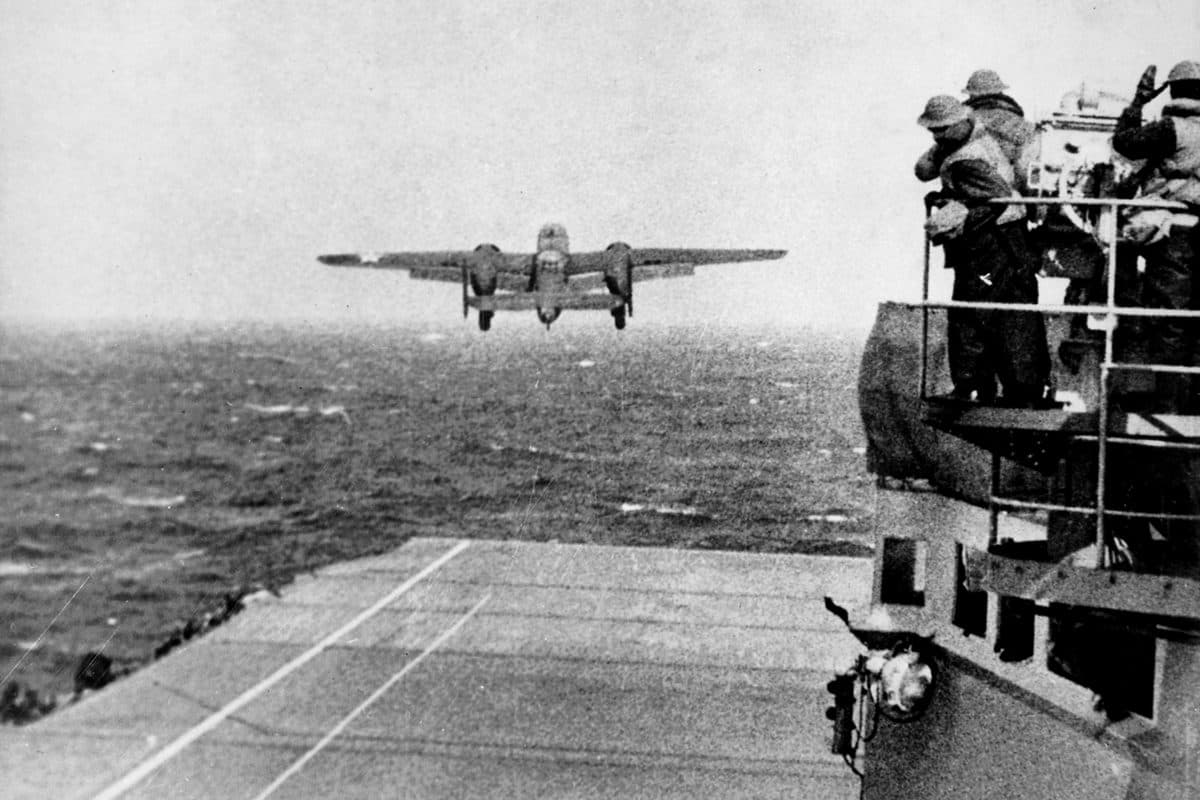
On April 18, 1942, sixteen B-25 Mitchell bombers did something no one thought possible: they launched from the deck of an aircraft carrier, flew 650 miles to Japan, and bombed Tokyo. Every aircraft was lost. The damage was negligible. The consequences changed the war.
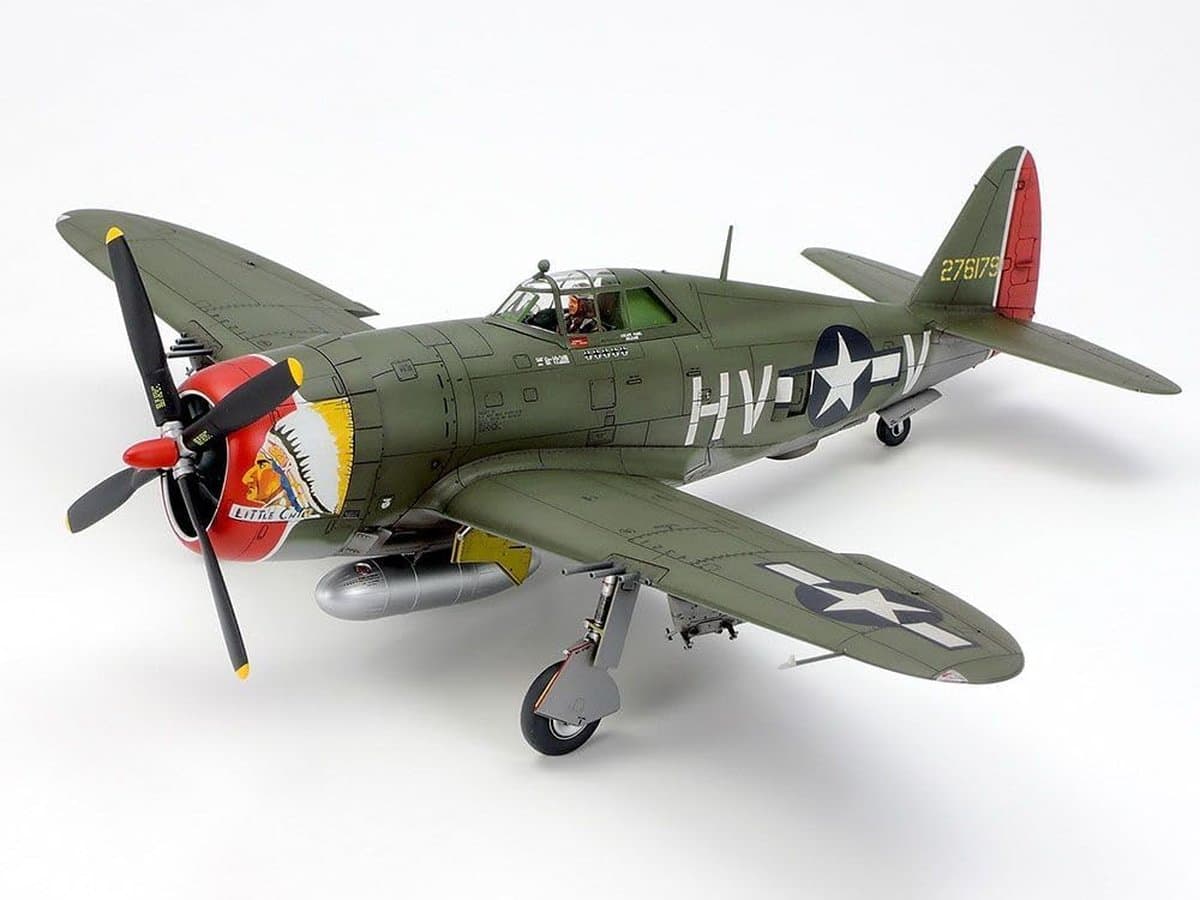
Compare 85+ WW2 scale model kits across aircraft, tanks, and ships. Beginner builds from $9 to museum-grade showpieces at $580. Covers Tamiya, Eduard, HK Models, Trumpeter, and more with honest reviews, trade-offs, and pricing.

On April 7, 1945, the Imperial Japanese Navy sent the largest battleship ever built on a one-way suicide mission to Okinawa. She never arrived. 386 American aircraft found her first, and sank her in under two hours.