
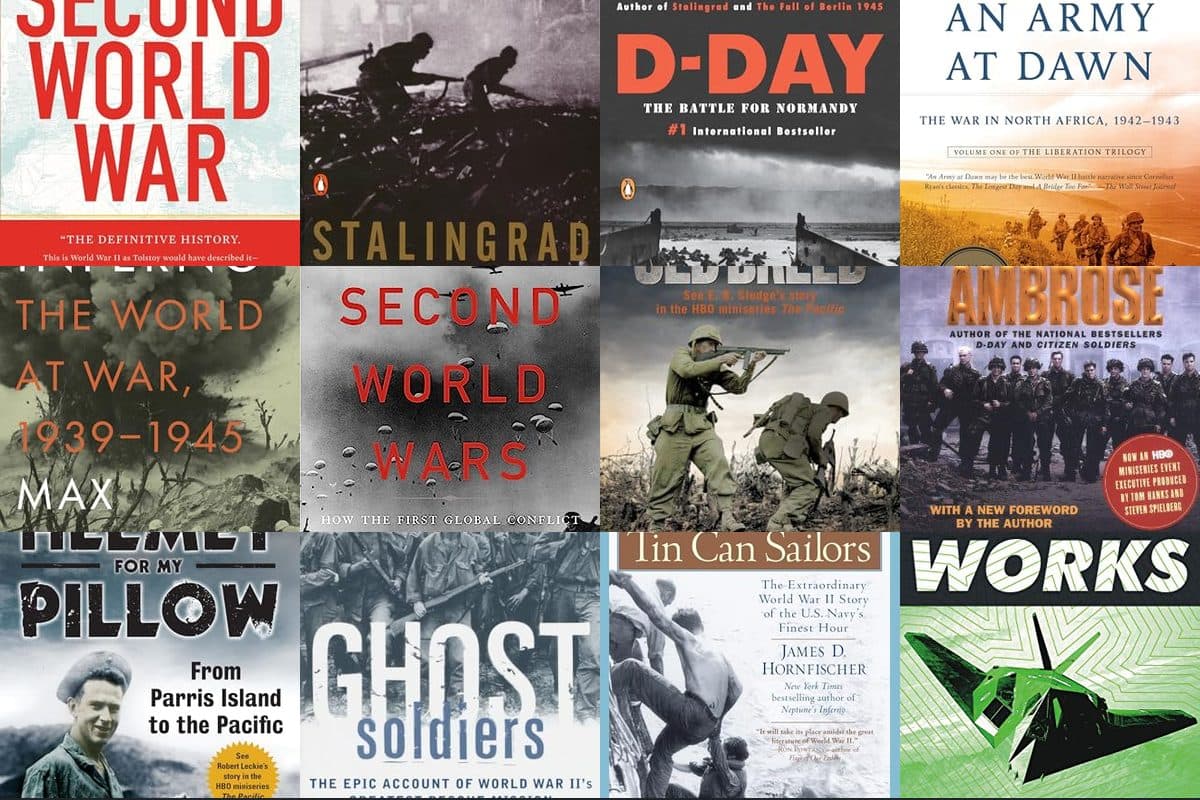
15 Best World War II Books for History Enthusiasts (2026)
15 essential WW2 books covering every theater. Narrative histories, memoirs, and visual references ranked.
daniel-mercer··21 min read

Lieutenant John Paul Jones raised the Grand Union Flag, the first flag flown on an American naval vessel, aboard the USS Alfred at Philadelphia, marking the symbolic birth of the United States Navy. The Alfred, a converted merchantman, was the flagship of the tiny Continental Navy's first squadron. Jones would go on to become the father of the American Navy, and the tradition he inaugurated on this day would grow into the most powerful naval force in history.
French General Jean Victor Marie Moreau defeated an Austro-Bavarian army under Archduke John in a decisive battle near Munich. Moreau's brilliant use of terrain, allowing the Austrians to advance into a forested defile before attacking their flanks, inflicted 14,000 casualties and forced Austria to sue for peace. The victory, combined with Napoleon's earlier triumph at Marengo, secured French dominance over Continental Europe.
Confederate General James Longstreet abandoned his siege of Knoxville, Tennessee, following the failed assault on Fort Sanders on November 29 and the Union victory at Chattanooga on November 25. Longstreet withdrew his forces toward Rogersville, securing East Tennessee for the Union and freeing Grant to begin planning the spring campaigns that would ultimately end the war.
Greek communist partisans of ELAS clashed with British forces and Greek government troops in Athens, igniting the Dekemvriana, the December Events, that marked the beginning of the Greek Civil War. Churchill ordered British forces to intervene to prevent a communist takeover, making Greece one of the first Cold War battlegrounds. The conflict foreshadowed the Truman Doctrine and the global struggle between Western democracy and Soviet-backed communism.
Surgeon Christiaan Barnard led a team at Groote Schuur Hospital in Cape Town that performed the first successful human-to-human heart transplant. Though a civilian procedure, the operation drew directly on decades of trauma and cardiothoracic surgical techniques refined in military medical corps during the Korean and Vietnam Wars.
Pakistan launched pre-emptive air strikes against Indian airfields, triggering the Indo-Pakistani War that would result in the creation of Bangladesh. India's military response was swift and overwhelming: Indian forces invaded East Pakistan from three directions while the Indian Navy blockaded Pakistani ports. The war lasted just thirteen days, one of the shortest and most decisive wars in modern history, ending with the surrender of 93,000 Pakistani troops.
Pakistan launched preemptive air strikes against eleven Indian airfields, opening the Indo-Pakistani War of 1971. The 13-day conflict ended with the surrender of 93,000 Pakistani troops at Dhaka and the creation of Bangladesh, a campaign that featured carrier aviation from INS Vikrant and the first combat use of the MiG-21FL by the Indian Air Force in a decisive air superiority role.
A release of 42 tons of methyl isocyanate from a Union Carbide pesticide plant in Bhopal, India killed thousands and injured more than half a million people. The disaster drove new thinking in US and NATO chemical defense doctrine about civil chemical hazards and contributed to the development of the M40-series protective mask requirements.
President George H.W. Bush and Soviet General Secretary Mikhail Gorbachev concluded the Malta Summit aboard the Soviet cruise ship Maxim Gorky, declaring that the Cold War was over. Meeting just weeks after the fall of the Berlin Wall, the two leaders discussed German reunification, arms reduction, and the transformation of the Soviet bloc. Bush famously stated that the summit marked "the end of a Cold War that has divided the world for forty years."
During Operation Just Cause in Panama, two F-117A Nighthawks of the 37th Tactical Fighter Wing struck Rio Hato barracks with 2,000-pound GBU-27 laser-guided bombs, the first combat sorties by a stealth aircraft. The mission validated low-observable operations against an integrated threat environment and foreshadowed the stealth-led opening of Desert Storm fourteen months later.

American portrait painter whose iconic images of George Washington, including the unfinished "Athenaeum" portrait used on the one-dollar bill, defined how Americans visualized their first Commander-in-Chief. Stuart painted Washington, John Adams, Thomas Jefferson, James Madison, James Monroe, and John Quincy Adams, six of the first seven presidents, creating the visual record of the nation's founding military and political leaders.

Colonel (ret.)
First Hispanic woman in space and former director of NASA's Johnson Space Center. Ochoa flew four Space Shuttle missions between 1993 and 2002, logging nearly 1,000 hours in orbit. As director of JSC from 2013 to 2018, she oversaw astronaut training, mission control operations, and the development of the Orion spacecraft for deep-space missions, leading one of the nation's most important military-adjacent research institutions.

Founder of Christian Science and The Christian Science Monitor, whose son George Washington Glover II served in the Confederate Army during the Civil War. While not a military figure herself, Eddy founded the Monitor in 1908 specifically to counter yellow journalism, including sensationalist war reporting, that she believed was misleading the American public. The Monitor's commitment to accurate war reporting has served the military community for over a century.
Wear the Timeline
10 military events occurred on December 3, spanning multiple centuries. Key events include: The First Flag Raised on a Continental Navy Ship (1775), The Greek Dekemvriana: Civil War Erupts in Athens (1944), The Indo-Pakistani War of 1971 Begins (1971).
The most significant military event on December 3 is The First Flag Raised on a Continental Navy Ship (1775). Lieutenant John Paul Jones raised the Grand Union Flag, the first flag flown on an American naval vessel, aboard the USS Alfred at Philadelphia, marking the symbolic birth of the United States Navy. The Alfred, a converted merchantman, was the flagship of the tiny Continental Navy's first squadron. Jones would go on to become the father of the American Navy, and the tradition he inaugurated on this day would grow into the most powerful naval force in history.
Notable military figures born on December 3 include Gilbert Stuart (1755–1828), Ellen Ochoa (1958–present).
Events on December 3 span the Colonial & Revolutionary era, the Civil War, World War II, the Cold War, the Modern Era, covering 10 events across 3 centuries of military history.
Events on December 3 involve 4 branches of the U.S. and allied armed forces, reflecting the global scope of military operations throughout history.
Explore military history from the day you were born.
June 6
The Allied invasion of Normandy, the largest amphibious assault in history.
December 7
Japan attacks the U.S. Pacific Fleet, bringing America into World War II.
September 11
The deadliest terrorist attack in history transforms U.S. national security.
August 6
The first atomic bomb is dropped on a city, ushering in the nuclear age.
May 8
Nazi Germany surrenders unconditionally, ending World War II in Europe.
November 11
Armistice Day marks the end of World War I and honors all who served.
June 4
The turning point of the Pacific War as the U.S. Navy destroys four Japanese carriers.
July 4
The Declaration of Independence is adopted, sparking the American Revolution.
15 essential WW2 books covering every theater. Narrative histories, memoirs, and visual references ranked.
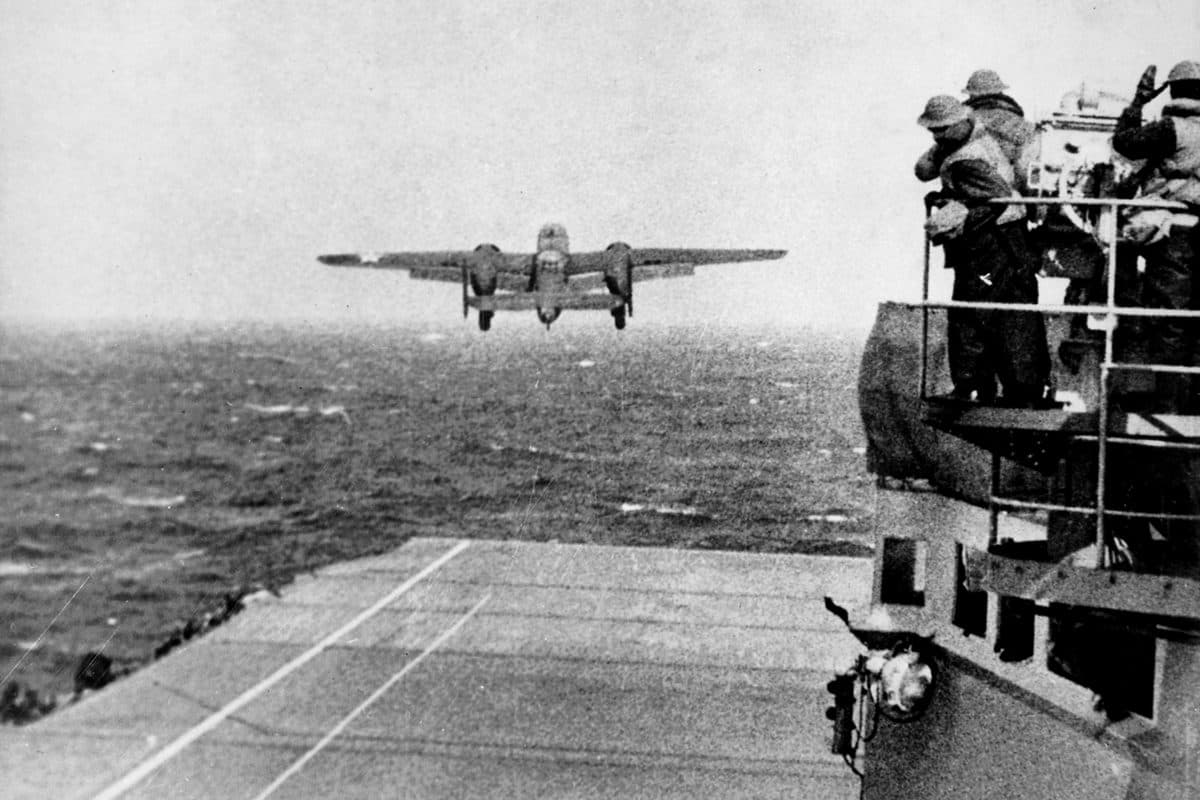
On April 18, 1942, sixteen B-25 Mitchell bombers did something no one thought possible: they launched from the deck of an aircraft carrier, flew 650 miles to Japan, and bombed Tokyo. Every aircraft was lost. The damage was negligible. The consequences changed the war.
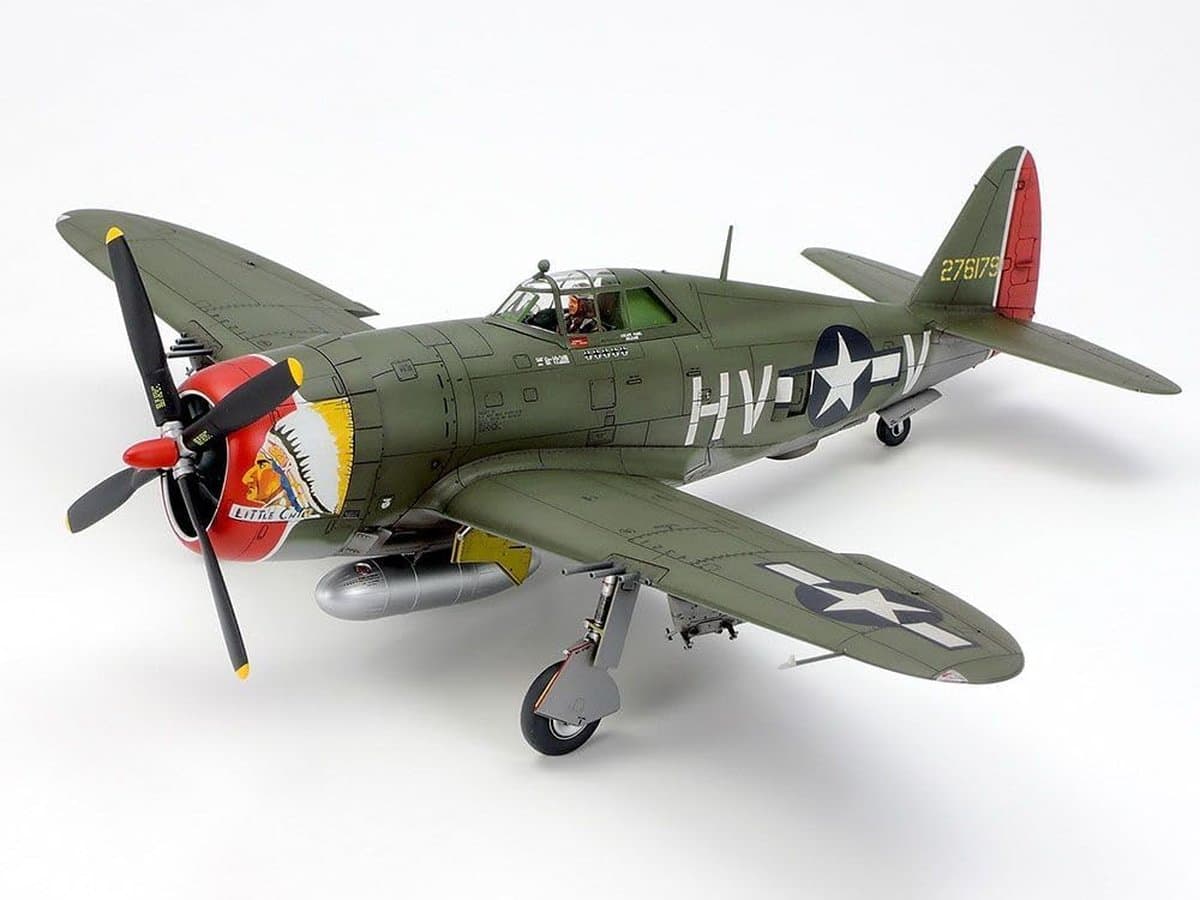
Compare 85+ WW2 scale model kits across aircraft, tanks, and ships. Beginner builds from $9 to museum-grade showpieces at $580. Covers Tamiya, Eduard, HK Models, Trumpeter, and more with honest reviews, trade-offs, and pricing.

On April 7, 1945, the Imperial Japanese Navy sent the largest battleship ever built on a one-way suicide mission to Okinawa. She never arrived. 386 American aircraft found her first, and sank her in under two hours.