

15 Best World War II Books for History Enthusiasts (2026)
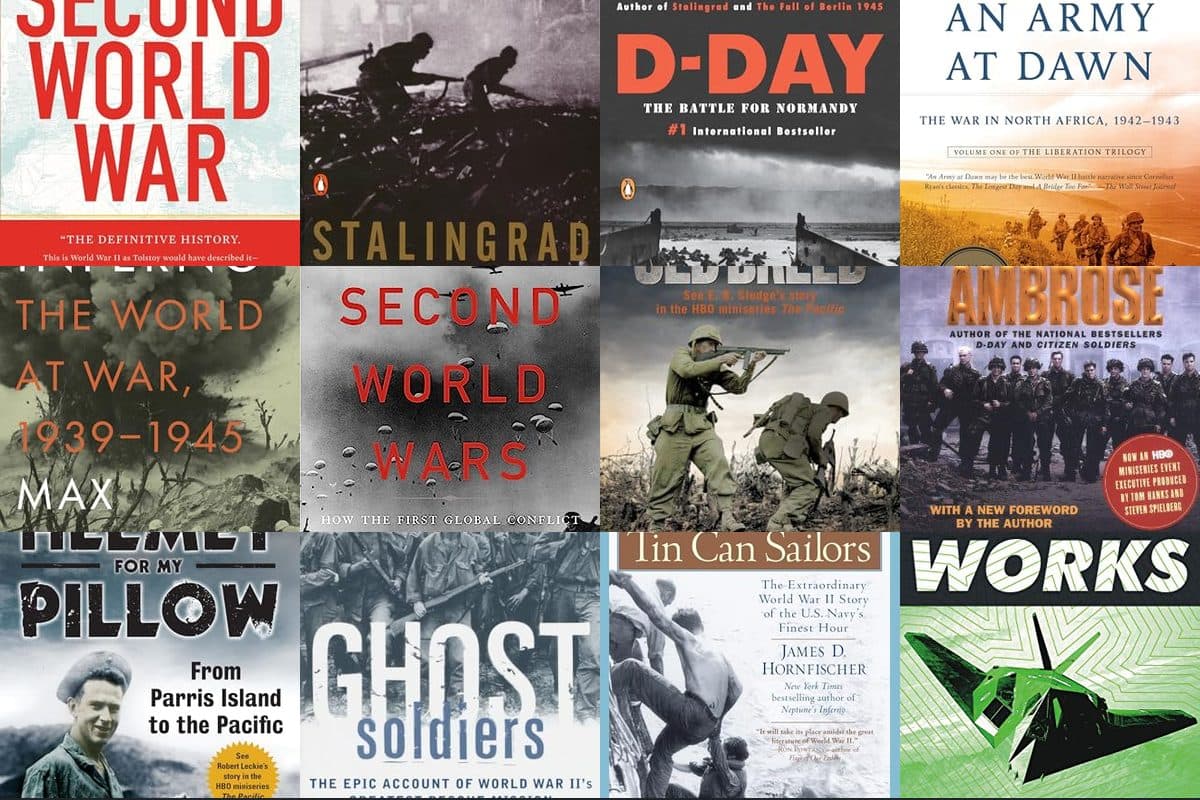
15 essential WW2 books covering every theater. Narrative histories, memoirs, and visual references ranked.
daniel-mercer··21 min read

Emperor Napoleon Bonaparte achieved his greatest military victory at Austerlitz in modern-day Czech Republic, decisively defeating the combined armies of Russia and Austria. Fighting against numerically superior forces of the Third Coalition, Napoleon deliberately weakened his right flank to lure the Allies into a trap, then shattered their center with a devastating assault on the Pratzen Heights. The battle destroyed the Third Coalition, forced Austria out of the war, and established Napoleon as the dominant military genius of his age.
After the defeats at Brandywine and Germantown, General George Washington's Continental Army began moving into winter quarters at Valley Forge, Pennsylvania. The six-month encampment that followed would transform a ragged colonial force into a disciplined continental army under the Prussian drill of Baron von Steuben.
At Notre-Dame Cathedral in Paris, Napoleon Bonaparte crowned himself Emperor of the French, taking the crown from Pope Pius VII and placing it on his own head. The ceremony formalized the military dictatorship that would reorganize European armies, create the corps system, and drive a decade of warfare across the continent.
Napoleon defeated the combined armies of Russia and Austria at Austerlitz, deliberately luring the Allies into a trap before shattering their center on the Pratzen Heights. The victory destroyed the Third Coalition and is studied as the supreme example of the decisive battle.
President James Monroe announced the Monroe Doctrine in his annual message to Congress, declaring that the Western Hemisphere was closed to further European colonization and that the United States would consider any European intervention in the Americas as a hostile act. The doctrine became the cornerstone of American foreign and military policy for two centuries, justifying interventions from the Mexican-American War to the Cuban Missile Crisis.
Abolitionist John Brown was hanged in Charles Town, Virginia, for treason, murder, and conspiracy after his failed raid on the federal armory at Harpers Ferry in October 1859. Brown's execution polarized the nation: the North mourned him as a martyr while the South viewed him as proof of Northern aggression. His raid and death accelerated the slide toward civil war and inspired Union soldiers who marched singing "John Brown's Body."
Physicist Enrico Fermi and his team achieved the first controlled, self-sustaining nuclear chain reaction in a makeshift reactor built under the stands of the University of Chicago's football stadium. The experiment, part of the Manhattan Project, proved that nuclear fission could be harnessed for both energy and weapons. Arthur Compton famously reported the success in coded language: "The Italian navigator has just landed in the new world."
Beneath the west stands of the University of Chicago's Stagg Field, Enrico Fermi's team started up Chicago Pile-1 and sustained the first human-made self-sustaining nuclear chain reaction. The experiment, conducted for the Manhattan Project, validated the physics that would produce the reactors at Hanford, the plutonium for the Trinity test, and the weapon dropped on Nagasaki.
A German Luftwaffe raid on the Allied port of Bari, Italy struck the SS John Harvey, a Liberty ship secretly carrying 2,000 M47A1 mustard gas bombs. The resulting fires and contaminated harbor water killed over 1,000 military personnel and civilians, while the medical response produced data that later drove the development of chemotherapy.
The United States Senate voted 67-22 to censure Senator Joseph McCarthy of Wisconsin, effectively ending his four-year campaign of accusing military officers, government officials, and civilians of being communists or Soviet agents. McCarthy's investigation of the U.S. Army, the Army-McCarthy hearings, had turned public opinion against him. The censure restored civilian control and protected the military from politically motivated purges.
Fidel Castro, Che Guevara, and 80 revolutionaries landed in southeastern Cuba aboard the yacht Granma to begin the guerrilla campaign that would overthrow the Batista dictatorship. The landing was a disaster, the boat ran aground, the rebels were ambushed by Batista's forces, and only 12-20 survivors escaped into the Sierra Maestra mountains. From this remnant, Castro built the revolutionary army that seized power in January 1959, triggering the Cuban Missile Crisis and reshaping Cold War geopolitics.

General
U.S. Army general who served as Supreme Allied Commander Europe (SACEUR), White House Chief of Staff under Nixon and Ford, and Secretary of State under Reagan. Haig served with distinction in the Korean and Vietnam Wars, earning a Distinguished Service Cross for heroism in Vietnam. He managed the White House during Watergate's final days and famously declared "I am in control here" after the assassination attempt on President Reagan in 1981.

Admiral
British admiral who commanded the Royal Navy's Baltic Fleet during the Napoleonic Wars, protecting British trade interests and maintaining the naval blockade against Napoleon. Saumarez fought at the Battle of the Nile and commanded at the Battle of Algeciras Bay, where his aggressive tactics against a superior Franco-Spanish fleet demonstrated the daring that made the Royal Navy dominant throughout the Age of Sail.

Spanish conquistador who led the expedition that overthrew the Aztec Empire between 1519 and 1521, conquering one of the largest empires in the Americas with fewer than 1,000 Spanish soldiers. Cortés's combination of military tactics, diplomacy with disaffected Aztec subjects, superior weapons technology, and inadvertent biological warfare (smallpox) produced one of the most consequential military campaigns in world history, reshaping the Americas forever.
Wear the Timeline
10 military events occurred on December 2, spanning multiple centuries. Key events include: The Battle of Austerlitz: Napoleon's Masterpiece (1805), John Brown Hanged for Treason (1859), The Monroe Doctrine Proclaimed (1823), First Controlled Nuclear Chain Reaction (1942), CP-1 Achieves the First Controlled Nuclear Chain Reaction (1942).
The most significant military event on December 2 is The Battle of Austerlitz: Napoleon's Masterpiece (1805). Emperor Napoleon Bonaparte achieved his greatest military victory at Austerlitz in modern-day Czech Republic, decisively defeating the combined armies of Russia and Austria. Fighting against numerically superior forces of the Third Coalition, Napoleon deliberately weakened his right flank to lure the Allies into a trap, then shattered their center with a devastating assault on the Pratzen Heights. The battle destroyed the Third Coalition, forced Austria out of the war, and established Napoleon as the dominant military genius of his age.
Notable military figures born on December 2 include Alexander Haig (1924–2010), Georges Saumarez (1757–1836).
Events on December 2 span the Colonial & Revolutionary era, the Civil War, World War II, the Cold War, covering 10 events across 3 centuries of military history.
Events on December 2 involve 2 branches of the U.S. and allied armed forces, reflecting the global scope of military operations throughout history.
Explore military history from the day you were born.
June 6
The Allied invasion of Normandy, the largest amphibious assault in history.
December 7
Japan attacks the U.S. Pacific Fleet, bringing America into World War II.
September 11
The deadliest terrorist attack in history transforms U.S. national security.
August 6
The first atomic bomb is dropped on a city, ushering in the nuclear age.
May 8
Nazi Germany surrenders unconditionally, ending World War II in Europe.
November 11
Armistice Day marks the end of World War I and honors all who served.
June 4
The turning point of the Pacific War as the U.S. Navy destroys four Japanese carriers.
July 4
The Declaration of Independence is adopted, sparking the American Revolution.
15 essential WW2 books covering every theater. Narrative histories, memoirs, and visual references ranked.
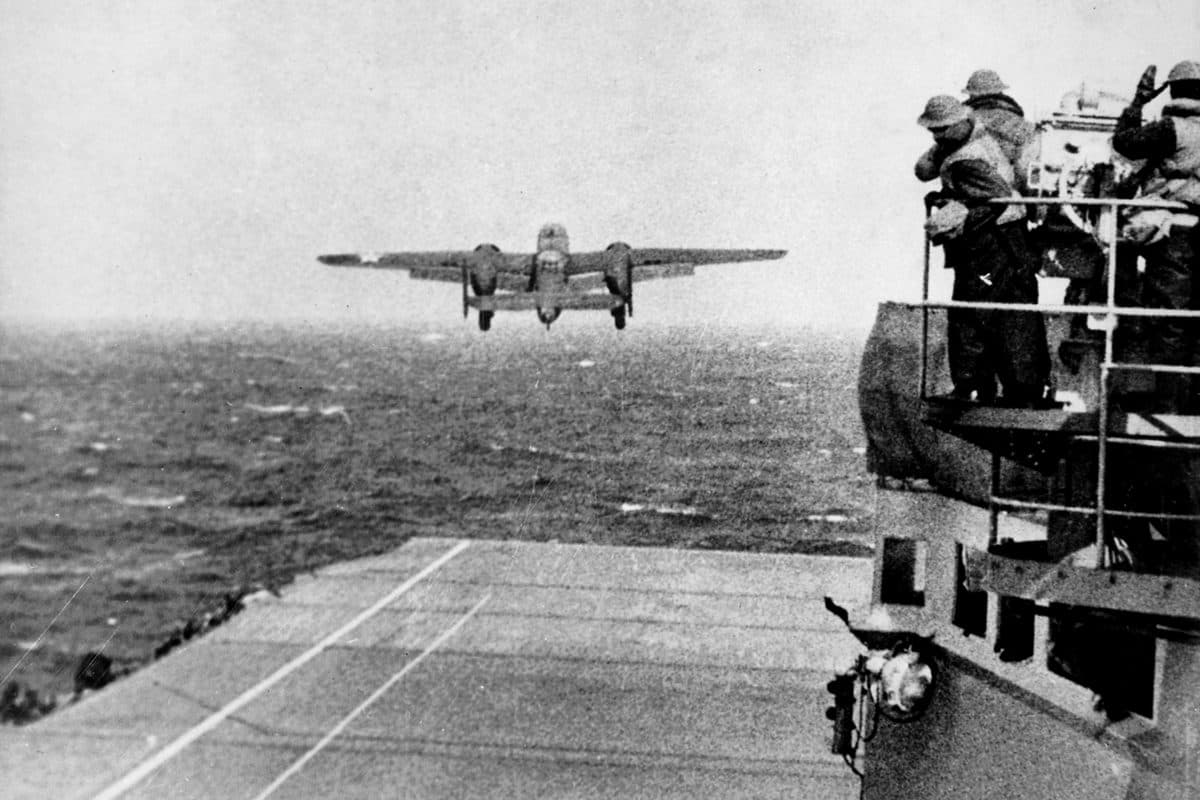
On April 18, 1942, sixteen B-25 Mitchell bombers did something no one thought possible: they launched from the deck of an aircraft carrier, flew 650 miles to Japan, and bombed Tokyo. Every aircraft was lost. The damage was negligible. The consequences changed the war.
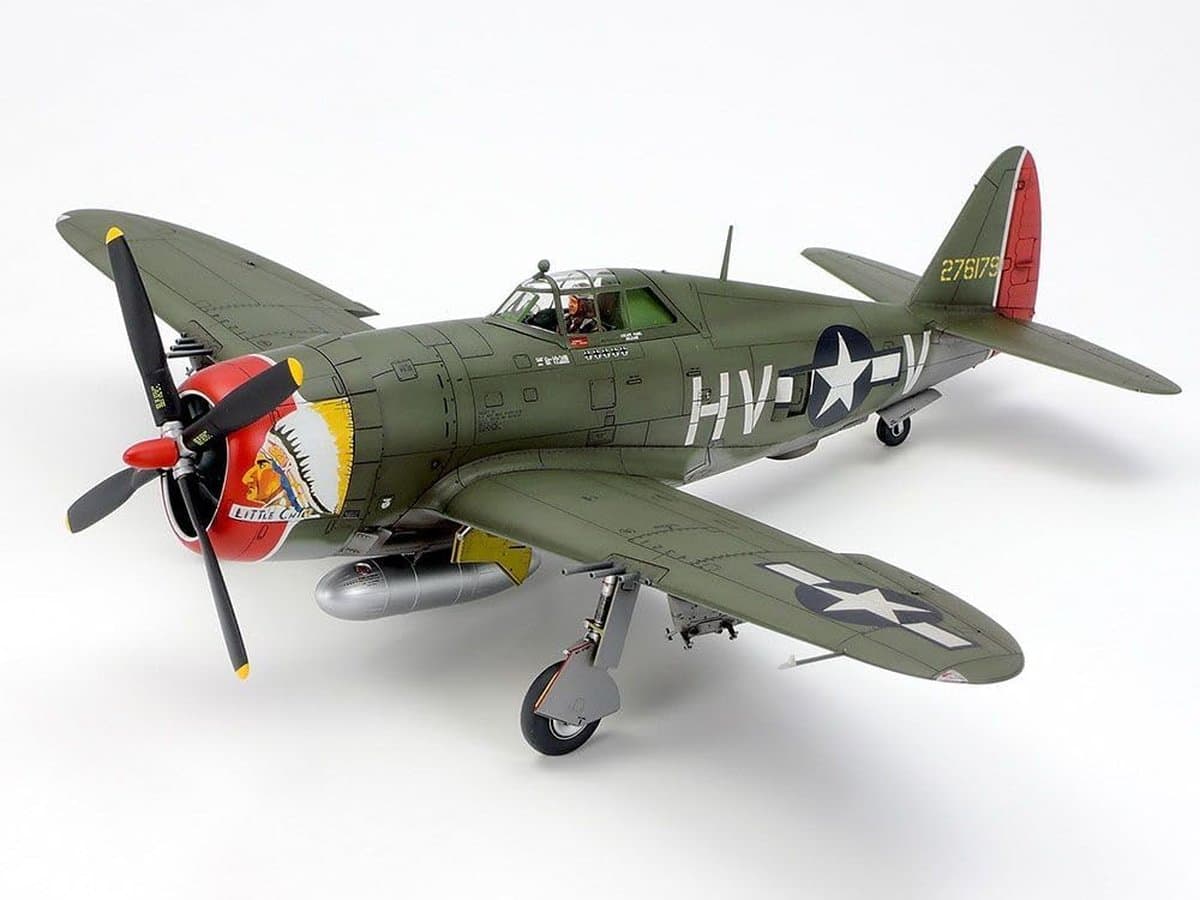
Compare 85+ WW2 scale model kits across aircraft, tanks, and ships. Beginner builds from $9 to museum-grade showpieces at $580. Covers Tamiya, Eduard, HK Models, Trumpeter, and more with honest reviews, trade-offs, and pricing.

On April 7, 1945, the Imperial Japanese Navy sent the largest battleship ever built on a one-way suicide mission to Okinawa. She never arrived. 386 American aircraft found her first, and sank her in under two hours.