

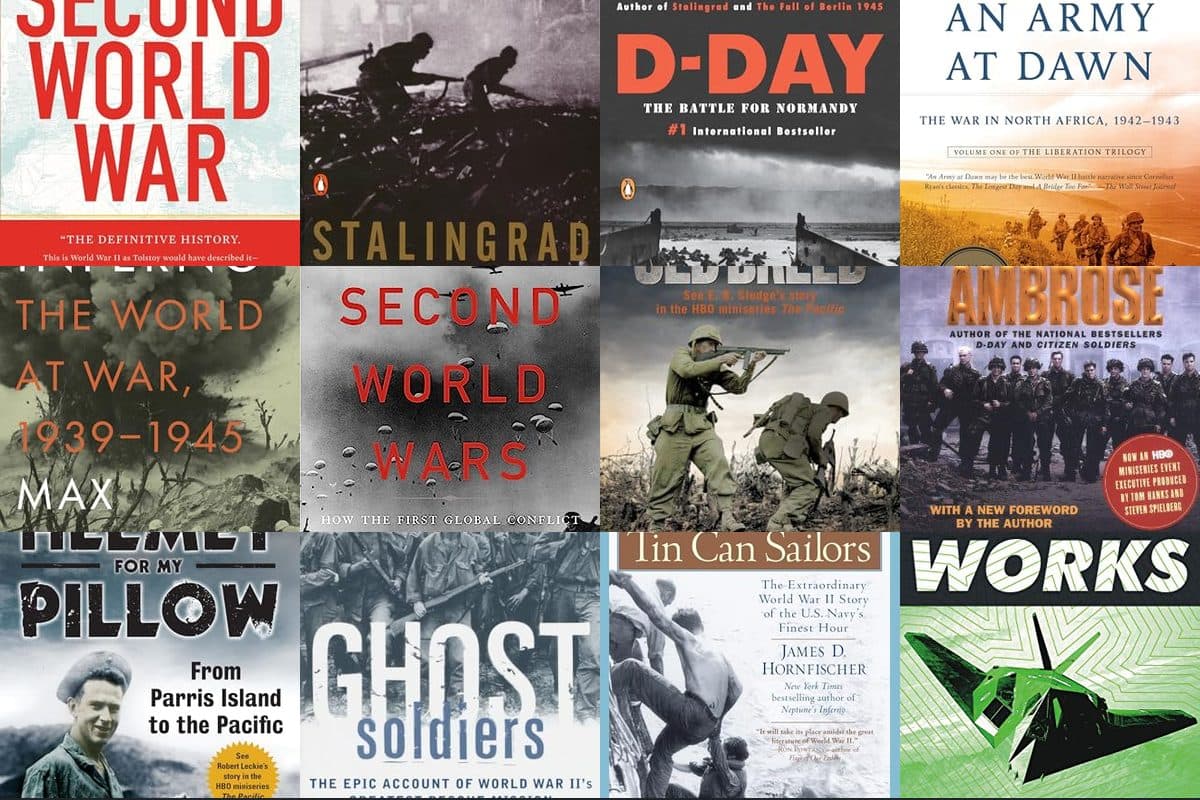
15 Best World War II Books for History Enthusiasts (2026)
15 essential WW2 books covering every theater. Narrative histories, memoirs, and visual references ranked.
daniel-mercer··21 min read

Revolutionary forces stormed the Tuileries Palace in Paris, overthrowing King Louis XVI and effectively ending the French monarchy. The assault, in which the Swiss Guard was massacred defending the royal family, marked the beginning of the radical phase of the French Revolution and the rise of the revolutionary armies that would reshape Europe.
The Swedish warship Vasa capsized and sank in Stockholm harbor less than a mile into her maiden voyage. Carrying 64 bronze cannons across two gun decks, she was top-heavy due to design flaws that no one dared report to King Gustavus Adolphus. The disaster became a legendary case study in military procurement failure and was salvaged nearly intact in 1961.
The Swedish warship Vasa capsized less than a mile from her launch in Stockholm harbor when a modest gust of wind heeled her beyond recovery and water flooded her open gun ports. The loss became one of the most instructive failures in naval architecture, illustrating the consequences of unstable top-hamper and willful royal intervention in warship design.
The first-rate ship of the line HMS Victory, launched in 1765, reported for operational service with the Channel Fleet during the crisis of the American Revolutionary War. The 104-gun three-decker would serve as flagship for a succession of admirals over the next four decades, culminating in Nelson's flag at Trafalgar in 1805.
Revolutionary forces stormed the Tuileries Palace in Paris, overthrowing King Louis XVI and effectively ending the French monarchy. The assault, in which the Swiss Guard was massacred defending the royal family, marked the beginning of the radical phase of the French Revolution and the rise of the revolutionary armies that would reshape Europe.
President James K. Polk signed legislation establishing the Smithsonian Institution, funded by the bequest of British scientist James Smithson. The Smithsonian would eventually house the National Air and Space Museum, the National Museum of American History, and other institutions that preserve military artifacts and the history of American warfare.
President James K. Polk signed legislation establishing the Smithsonian Institution, endowed by the bequest of English scientist James Smithson. The Smithsonian's later role as custodian of the National Air and Space Museum and the National Museum of American History made it one of the primary repositories of American military aviation, weapons, and engineering artifacts.
After three weeks of intense fighting, the island of Guam was declared secure by American forces. The recapture of Guam, an American territory seized by Japan in December 1941, provided a major air and naval base for the final campaign against Japan. Japanese holdouts continued fighting in the jungle for decades; the last, Shoichi Yokoi, surrendered in 1972.
The Japanese government transmitted a message through Swiss and Swedish intermediaries offering to accept the Potsdam Declaration's terms of unconditional surrender, with the sole condition that the Emperor's sovereign prerogatives be preserved. This initiated the final negotiations that ended World War II.
President Reagan signed the Civil Liberties Act of 1988, formally apologizing for the internment of 120,000 Japanese Americans during World War II and providing $20,000 in reparations to each surviving internee. The act acknowledged that the internment was motivated by "racial prejudice, war hysteria, and a failure of political leadership."
The Magellan spacecraft, launched from Space Shuttle Atlantis in May 1989, entered orbit around Venus and began a four-year mission that produced radar maps of 98 percent of the planet's surface. The synthetic aperture radar techniques validated on Magellan shaped military and intelligence radar imaging programs for the next three decades.

U.S. President whose humanitarian work feeding millions in Belgium during World War I and in post-war Europe earned him international acclaim. As President during the Manchurian Crisis (1931), he established the Stimson Doctrine refusing to recognize territorial changes made by force, a principle tested repeatedly in the decades that followed.

Russian political philosopher whose geopolitical theories, particularly "The Foundations of Geopolitics," have influenced Russian military and foreign policy thinking. His advocacy for a Eurasian empire built through destabilization of Western alliances has been described as a blueprint for Russian strategic ambitions.

Over 600 Swiss Guards were killed defending King Louis XVI during the storming of the Tuileries Palace. Their sacrifice is commemorated by the Lion of Lucerne monument in Switzerland, one of the most poignant war memorials in Europe. The inscription reads: "To the loyalty and bravery of the Swiss."
Wear the Timeline
10 military events occurred on August 10, spanning multiple centuries. Key events include: Storming of the Tuileries Palace (1792), Guam Declared Secure (1944), Japan Offers to Surrender (1945).
The most significant military event on August 10 is Storming of the Tuileries Palace (1792). Revolutionary forces stormed the Tuileries Palace in Paris, overthrowing King Louis XVI and effectively ending the French monarchy. The assault, in which the Swiss Guard was massacred defending the royal family, marked the beginning of the radical phase of the French Revolution and the rise of the revolutionary armies that would reshape Europe.
Notable military figures born on August 10 include Herbert Hoover (1874–1964), Alexander Gruber Dugin (1962–present).
Events on August 10 span the Colonial & Revolutionary era, the Civil War, World War II, the Modern Era, covering 10 events across 4 centuries of military history.
Events on August 10 involve 4 branches of the U.S. and allied armed forces, reflecting the global scope of military operations throughout history.
Explore military history from the day you were born.
June 6
The Allied invasion of Normandy, the largest amphibious assault in history.
December 7
Japan attacks the U.S. Pacific Fleet, bringing America into World War II.
September 11
The deadliest terrorist attack in history transforms U.S. national security.
August 6
The first atomic bomb is dropped on a city, ushering in the nuclear age.
May 8
Nazi Germany surrenders unconditionally, ending World War II in Europe.
November 11
Armistice Day marks the end of World War I and honors all who served.
June 4
The turning point of the Pacific War as the U.S. Navy destroys four Japanese carriers.
July 4
The Declaration of Independence is adopted, sparking the American Revolution.
15 essential WW2 books covering every theater. Narrative histories, memoirs, and visual references ranked.
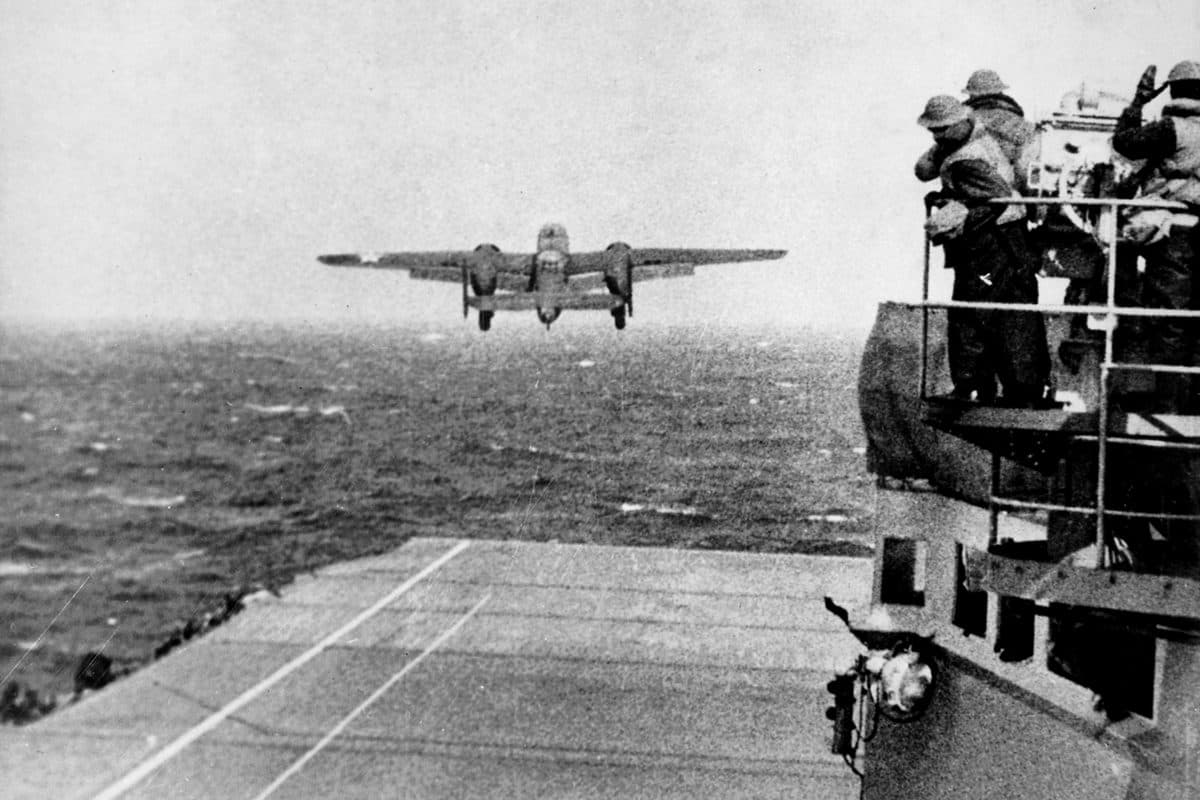
On April 18, 1942, sixteen B-25 Mitchell bombers did something no one thought possible: they launched from the deck of an aircraft carrier, flew 650 miles to Japan, and bombed Tokyo. Every aircraft was lost. The damage was negligible. The consequences changed the war.
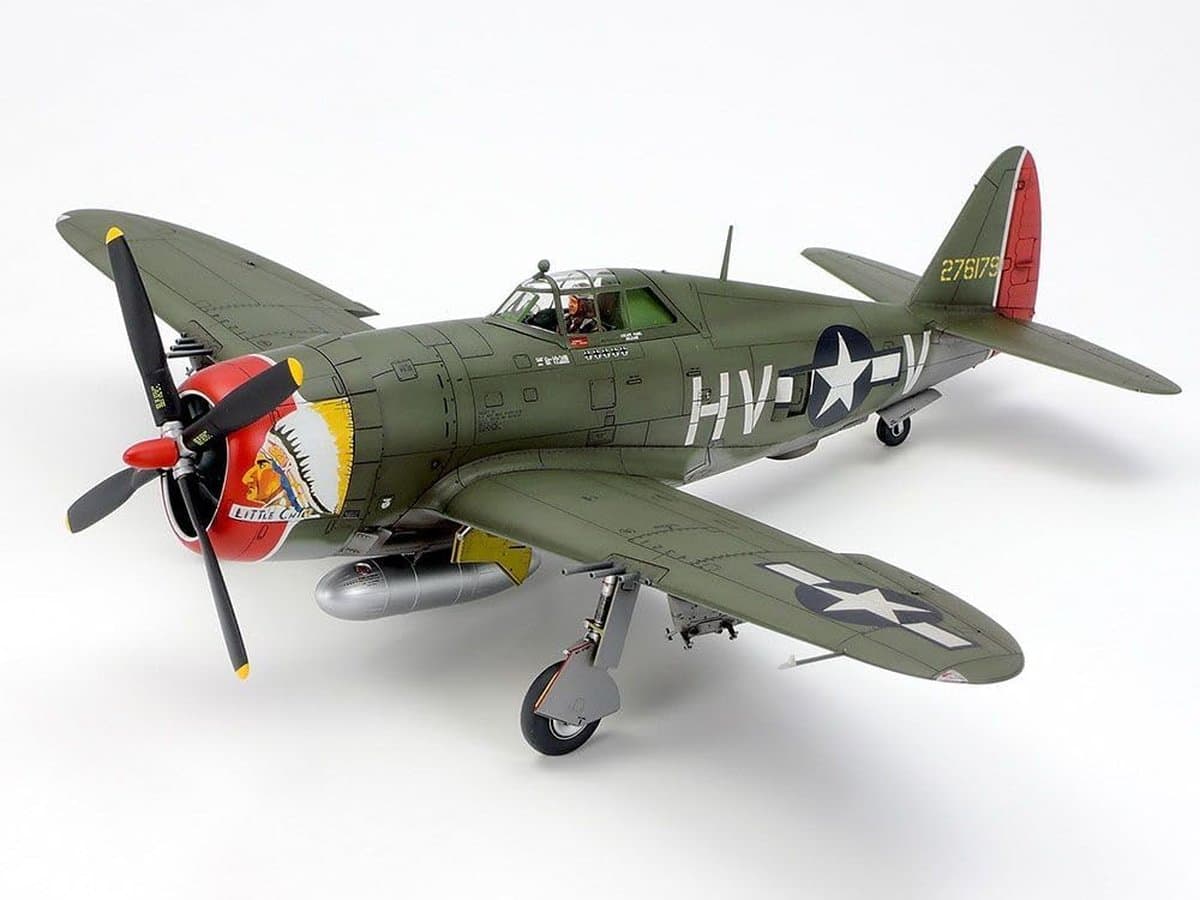
Compare 85+ WW2 scale model kits across aircraft, tanks, and ships. Beginner builds from $9 to museum-grade showpieces at $580. Covers Tamiya, Eduard, HK Models, Trumpeter, and more with honest reviews, trade-offs, and pricing.

On April 7, 1945, the Imperial Japanese Navy sent the largest battleship ever built on a one-way suicide mission to Okinawa. She never arrived. 386 American aircraft found her first, and sank her in under two hours.