
China's Military Buildup by the Numbers: How the PLA Became a Superpower in a Decade
China built the world's largest navy, deployed hypersonic missiles, and grew its nuclear arsenal by 400%. Here is the PLA's transformation by the numbers.

Abolitionist John Brown led a band of 21 men, including five African Americans, in a raid on the United States Arsenal at Harpers Ferry, Virginia, intending to seize weapons and arm enslaved people for a massive slave rebellion. The raid was suppressed within 36 hours by a detachment of U.S. Marines under Colonel Robert E. Lee, but Brown's subsequent trial and execution electrified the nation and pushed it toward civil war.
French Revolutionary forces under General Jean-Baptiste Jourdan defeated the Austrian Army under the Prince of Saxe-Coburg at Wattignies in northern France. The two-day battle, fought with massed conscript infantry employing the new system of tactical columns and skirmishers, lifted the siege of Maubeuge and validated the mass levy that would reshape European warfare.
The largest battle in European history before World War I began near Leipzig, Saxony, as a coalition of Russian, Prussian, Austrian, and Swedish forces attacked Napoleon's army. Over four days, approximately 600,000 troops engaged in fighting that killed or wounded over 100,000 men. Napoleon's decisive defeat at Leipzig shattered his control of Germany and forced his retreat to France, leading directly to his first abdication in April 1814.
Abolitionist John Brown led 21 men in a raid on the U.S. Arsenal at Harpers Ferry, intending to arm enslaved people for a rebellion. The raid failed but pushed the nation toward civil war.
Roughly 86,000 soldiers of the Chinese Red Army began their retreat from the Jiangxi Soviet base area, breaking through Nationalist encirclement and beginning the 5,600-mile Long March. The year-long strategic withdrawal preserved the Communist Party's core cadres, including Mao Zedong, and ultimately produced the leadership that would win the Chinese Civil War.
Sixteen million American men between the ages of 21 and 36 registered for the first peacetime military draft in United States history under the Selective Training and Service Act of 1940. The act, signed by President Roosevelt on September 16, created the framework for the massive mobilization that would eventually put over 16 million Americans in uniform during World War II.
Ten of the twelve Nazi leaders sentenced to death at the Nuremberg Trials were hanged in the gymnasium of the Nuremberg Palace of Justice. Hermann Göring escaped the gallows by swallowing a cyanide capsule hours before his scheduled execution. Those executed included Joachim von Ribbentrop, Wilhelm Keitel, Alfred Jodl, and Ernst Kaltenbrunner. The executions marked the first time in history that leaders of a sovereign nation were put to death for crimes against humanity.
National Security Advisor McGeorge Bundy briefed President John F. Kennedy on U-2 reconnaissance photographs showing Soviet medium-range ballistic missile sites under construction in Cuba. The imagery, captured two days earlier by Major Richard Heyser flying a CIA U-2C at 72,500 feet, launched thirteen days of nuclear brinkmanship.
The People's Republic of China detonated its first nuclear device, codenamed 596, at the Lop Nur test site in Xinjiang province. The 22-kiloton uranium-235 implosion device made China the fifth nuclear weapons state. The test, accomplished despite the withdrawal of Soviet technical assistance in 1960, demonstrated China's scientific capability and fundamentally altered the strategic balance in Asia.
China's Military BuildupIsraeli Defense Forces under Major General Ariel Sharon launched Operation Stouthearted Men, bridging the Suez Canal at the Deversoir gap between the Egyptian Second and Third Armies. The crossing, executed with preassembled roller bridges and armored pontoons, reversed the strategic balance of the war and encircled an entire Egyptian field army within days.
The Archbishop of Kraków, Karol Wojtyła, was elected Pope John Paul II, the first non-Italian pope in 455 years. As a young man, Wojtyła had survived the German occupation of Poland, lost friends to both the Nazis and the Soviets, and worked in forced labor. His papacy would play a crucial role in undermining Soviet control of Eastern Europe, particularly through his support of the Solidarity movement in Poland.
Get daily military history, analysis, and technology delivered to your inbox.
10 military events occurred on October 16, spanning multiple centuries. Key events include: John Brown Raids Harpers Ferry (1859), Execution of Nazi War Criminals at Nuremberg (1946), Battle of Leipzig, "Battle of the Nations" (1813), China Detonates Its First Nuclear Weapon (1964), Cuban Missile Crisis Begins as Kennedy Sees U-2 Photos (1962).
The most significant military event on October 16 is John Brown Raids Harpers Ferry (1859). Abolitionist John Brown led a band of 21 men, including five African Americans, in a raid on the United States Arsenal at Harpers Ferry, Virginia, intending to seize weapons and arm enslaved people for a massive slave rebellion. The raid was suppressed within 36 hours by a detachment of U.S. Marines under Colonel Robert E. Lee, but Brown's subsequent trial and execution electrified the nation and pushed it toward civil war.
Notable military figures born on October 16 include David Ben-Gurion (1886–1973), Michael Collins (1930–2021).
Events on October 16 span the Civil War, World War II, the Colonial & Revolutionary era, the Cold War, the Interwar Period, covering 10 events across 3 centuries of military history.
Events on October 16 involve 4 branches of the U.S. and allied armed forces, reflecting the global scope of military operations throughout history.
Explore military history from the day you were born.
June 6
The Allied invasion of Normandy, the largest amphibious assault in history.
December 7
Japan attacks the U.S. Pacific Fleet, bringing America into World War II.
September 11
The deadliest terrorist attack in history transforms U.S. national security.
August 6
The first atomic bomb is dropped on a city, ushering in the nuclear age.
May 8
Nazi Germany surrenders unconditionally, ending World War II in Europe.
November 11
Armistice Day marks the end of World War I and honors all who served.
June 4
The turning point of the Pacific War as the U.S. Navy destroys four Japanese carriers.
July 4
The Declaration of Independence is adopted, sparking the American Revolution.
China built the world's largest navy, deployed hypersonic missiles, and grew its nuclear arsenal by 400%. Here is the PLA's transformation by the numbers.
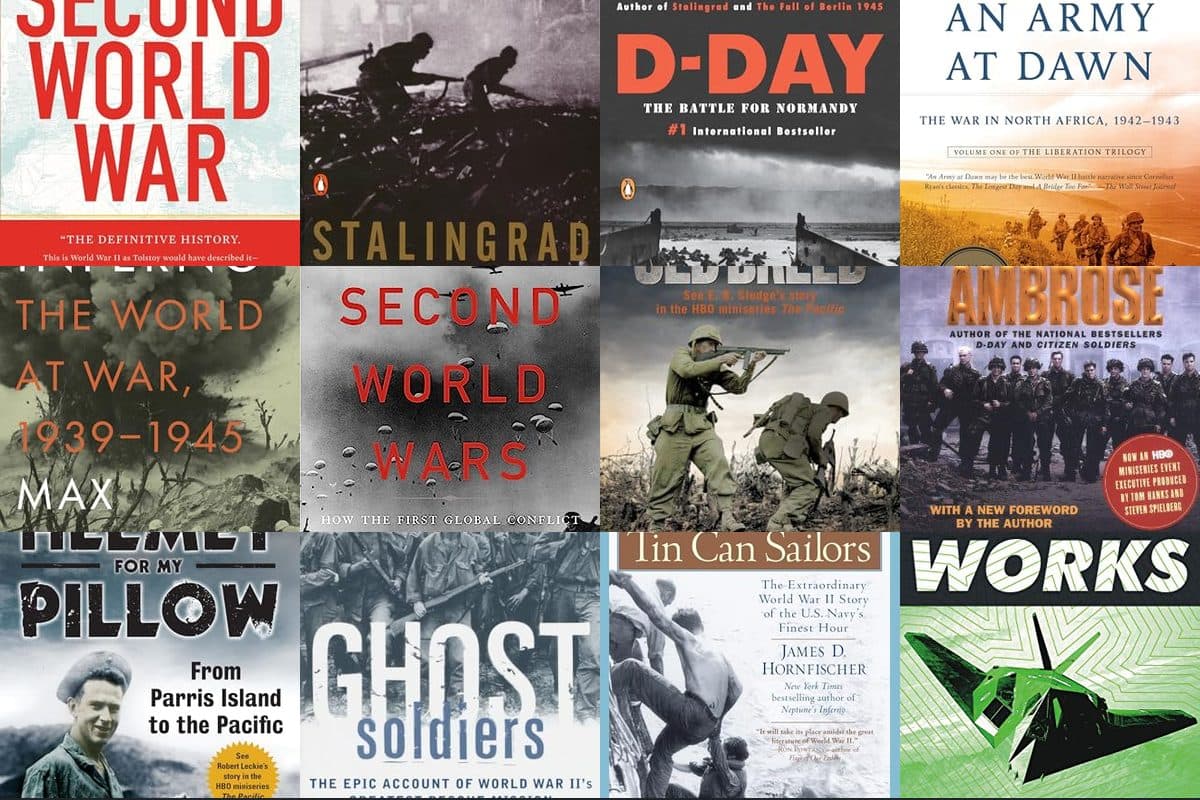
15 essential WW2 books covering every theater. Narrative histories, memoirs, and visual references ranked.
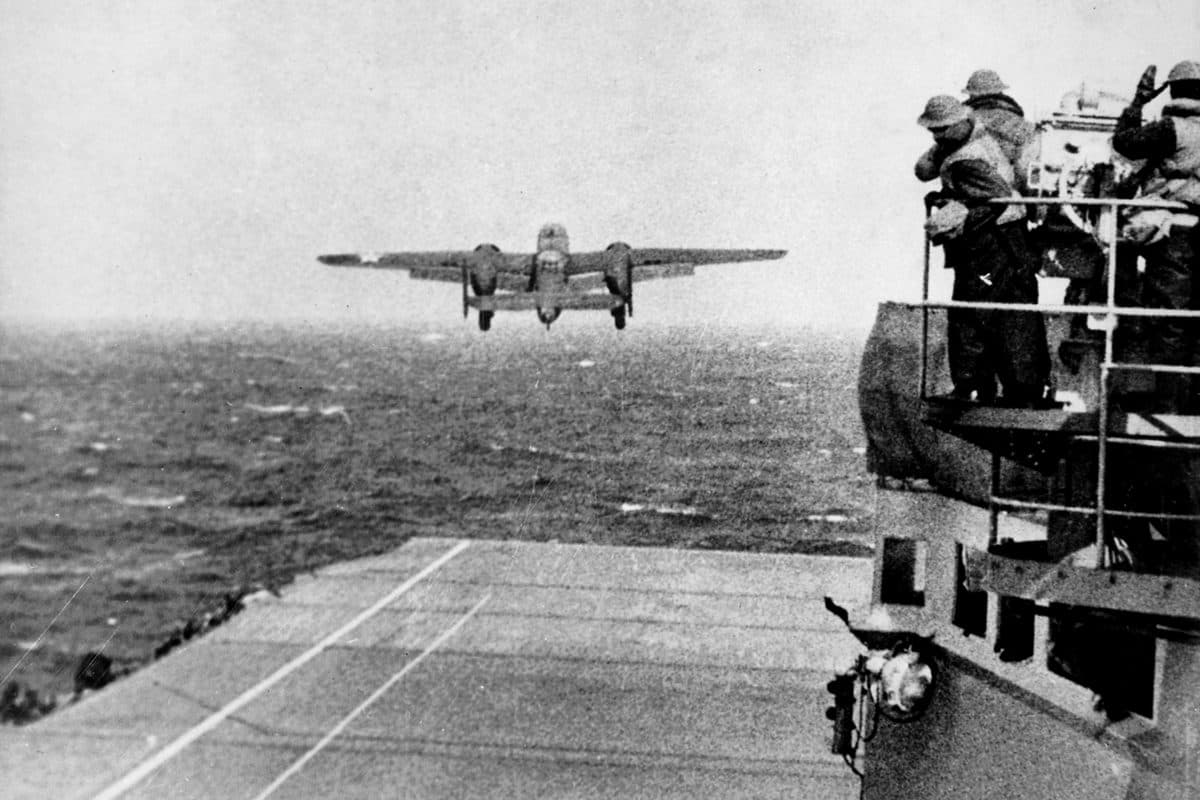
On April 18, 1942, sixteen B-25 Mitchell bombers did something no one thought possible: they launched from the deck of an aircraft carrier, flew 650 miles to Japan, and bombed Tokyo. Every aircraft was lost. The damage was negligible. The consequences changed the war.
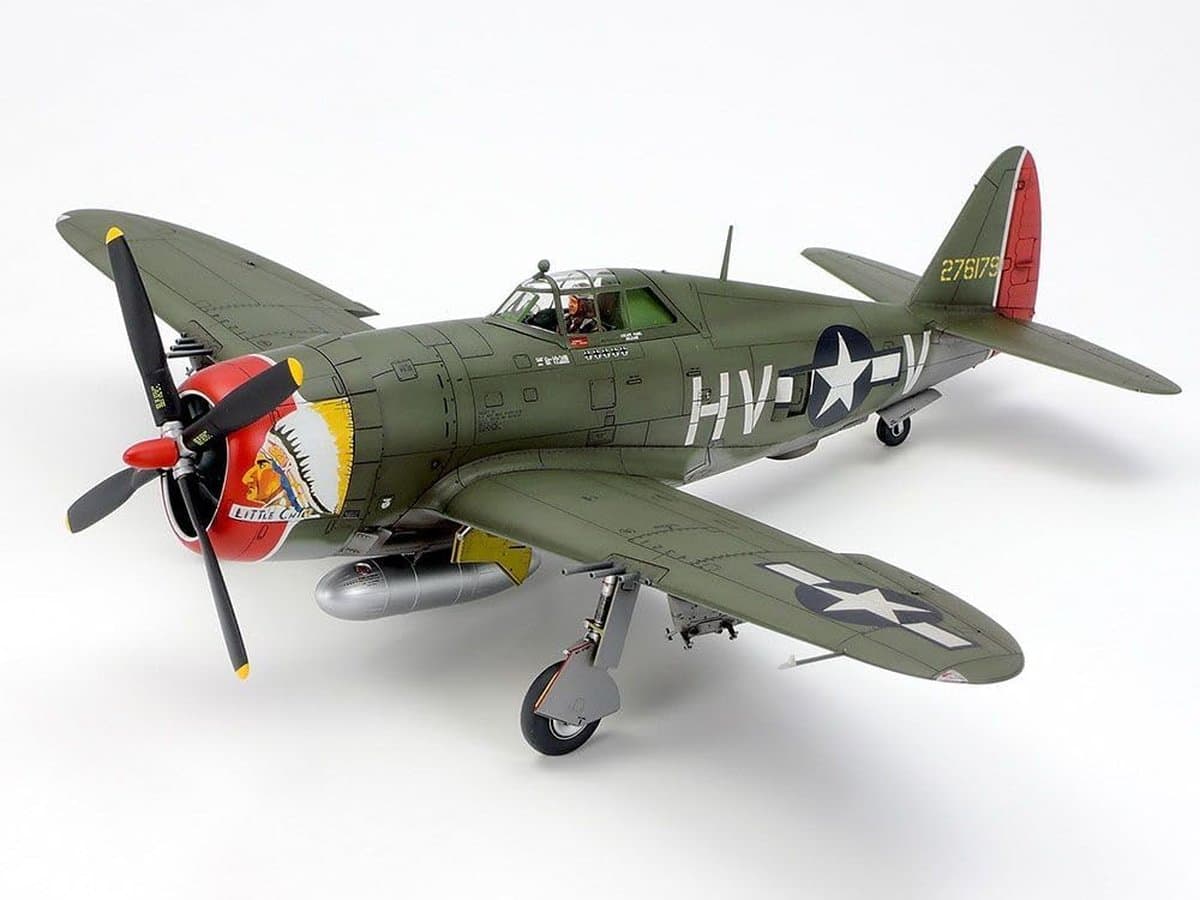
Compare 85+ WW2 scale model kits across aircraft, tanks, and ships. Beginner builds from $9 to museum-grade showpieces at $580. Covers Tamiya, Eduard, HK Models, Trumpeter, and more with honest reviews, trade-offs, and pricing.