
15 Best World War II Books for History Enthusiasts (2026)
15 essential WW2 books covering every theater. Narrative histories, memoirs, and visual references ranked.
daniel-mercer··21 min read

Major General William Tecumseh Sherman led 62,000 Union soldiers out of a burning Atlanta on a 285-mile march toward Savannah, Georgia, deliberately cutting his supply lines and living off the land while destroying everything of military value in a 60-mile-wide swath. The March to the Sea pioneered the concept of total war, targeting not just enemy armies but the economic and psychological capacity of a civilization to sustain conflict.
The Continental Congress adopted the Articles of Confederation, the first constitution of the United States, after more than a year of debate. The document created a loose confederation of sovereign states with a weak central government that lacked the power to tax or maintain a standing army, weaknesses that would become painfully apparent during the final years of the Revolutionary War.
Sherman led 62,000 troops out of burning Atlanta on a 285-mile march to Savannah, cutting supply lines and destroying everything of military value in a 60-mile-wide swath, pioneering total war.
European powers convened the Berlin Conference to regulate the colonial partition of Africa. The fourteen-nation meeting established procedures for claiming African territory that required "effective occupation" by military force, triggering the arms buildup and colonial campaigns that defined the next thirty years.
The first general assembly of the League of Nations convened in Geneva, Switzerland, with 41 member states represented. The United States, whose President Wilson had championed the League, was conspicuously absent after the Senate rejected membership. The League's inability to enforce its decisions without American participation foreshadowed its failure to prevent World War II.
SS Security Service chief Reinhard Heydrich issued the directive ordering the concentration of Polish Jews into urban ghettos, the organizational predecessor to the Holocaust. The directive set military and logistical procedures that the SS and Wehrmacht would implement across German-occupied Europe.
In the climax of the Naval Battle of Guadalcanal, battleship USS Washington under Admiral Willis Lee engaged the Japanese battleship Kirishima at 8,400 yards. Washington's radar-directed 16-inch guns scored nine hits in seven minutes, reducing Kirishima to a sinking wreck. The action ended Japan's last attempt to recapture Guadalcanal.
An estimated 500,000 to 600,000 people gathered in Washington, D.C., for the Moratorium to End the War in Vietnam, the largest antiwar demonstration in American history. The peaceful protest, which included a March Against Death reading the names of fallen soldiers, demonstrated the depth of public opposition to the Vietnam War.
The Palestine National Council, meeting in Algiers, declared the independence of the State of Palestine, with PLO Chairman Yasser Arafat as president. The declaration, which implicitly recognized Israel's right to exist, was immediately recognized by over 80 countries and represented a shift from armed struggle toward diplomatic engagement.
Canada's House of Commons passed the Canada-United States Free Trade Agreement, deepening military-industrial integration between the two nations. The agreement expanded defense-industrial cooperation in aerospace, armored vehicles, and munitions production that continues to shape NORAD and NATO procurement today.
The Soviet Buran orbiter completed a fully automated two-orbit flight from Baikonur Cosmodrome and landed without a crew aboard. The reusable spacecraft was the USSR's answer to the US Space Shuttle and represented a major military-space achievement that was abandoned with the collapse of the Soviet Union.

Field Marshal
The "Desert Fox", arguably the most famous German commander of World War II. Rommel earned renown for his daring leadership of the Afrika Korps in North Africa before commanding Army Group B during the Normandy invasion. Implicated in the July 20, 1944, plot against Hitler, he was forced to take poison on October 14, 1944, in exchange for his family's safety.

British statesman and war minister who masterminded Britain's victory in the Seven Years' War, transforming the country from a European power into a global empire. As Secretary of State, Pitt directed the campaigns that conquered French Canada, India, and the Caribbean, establishing British naval supremacy for the next 150 years.

Shawnee chief and one of the most gifted military leaders in Native American history. Tecumseh built a pan-Indian confederacy spanning from the Great Lakes to the Gulf of Mexico to resist American expansion. Allied with Britain during the War of 1812, he was killed at the Battle of the Thames on October 5, 1813. His death shattered the dream of a united Native resistance east of the Mississippi.
Wear the Timeline
10 military events occurred on November 15, spanning multiple centuries. Key events include: Sherman Begins the March to the Sea (1864), Articles of Confederation Adopted (1777), USS Washington Sinks Kirishima at Guadalcanal (1942), Reinhard Heydrich Announces Ghetto Plan (1939).
The most significant military event on November 15 is Sherman Begins the March to the Sea (1864). Major General William Tecumseh Sherman led 62,000 Union soldiers out of a burning Atlanta on a 285-mile march toward Savannah, Georgia, deliberately cutting his supply lines and living off the land while destroying everything of military value in a 60-mile-wide swath. The March to the Sea pioneered the concept of total war, targeting not just enemy armies but the economic and psychological capacity of a civilization to sustain conflict.
Notable military figures born on November 15 include Erwin Rommel (1891–1944), William Pitt the Elder (1708–1778).
Events on November 15 span the Civil War, the Colonial & Revolutionary era, World War II, the Interwar Period, the Vietnam War, the Modern Era, the Cold War, covering 10 events across 3 centuries of military history.
Events on November 15 involve 4 branches of the U.S. and allied armed forces, reflecting the global scope of military operations throughout history.
Explore military history from the day you were born.
June 6
The Allied invasion of Normandy, the largest amphibious assault in history.
December 7
Japan attacks the U.S. Pacific Fleet, bringing America into World War II.
September 11
The deadliest terrorist attack in history transforms U.S. national security.
August 6
The first atomic bomb is dropped on a city, ushering in the nuclear age.
May 8
Nazi Germany surrenders unconditionally, ending World War II in Europe.
November 11
Armistice Day marks the end of World War I and honors all who served.
June 4
The turning point of the Pacific War as the U.S. Navy destroys four Japanese carriers.
July 4
The Declaration of Independence is adopted, sparking the American Revolution.
15 essential WW2 books covering every theater. Narrative histories, memoirs, and visual references ranked.
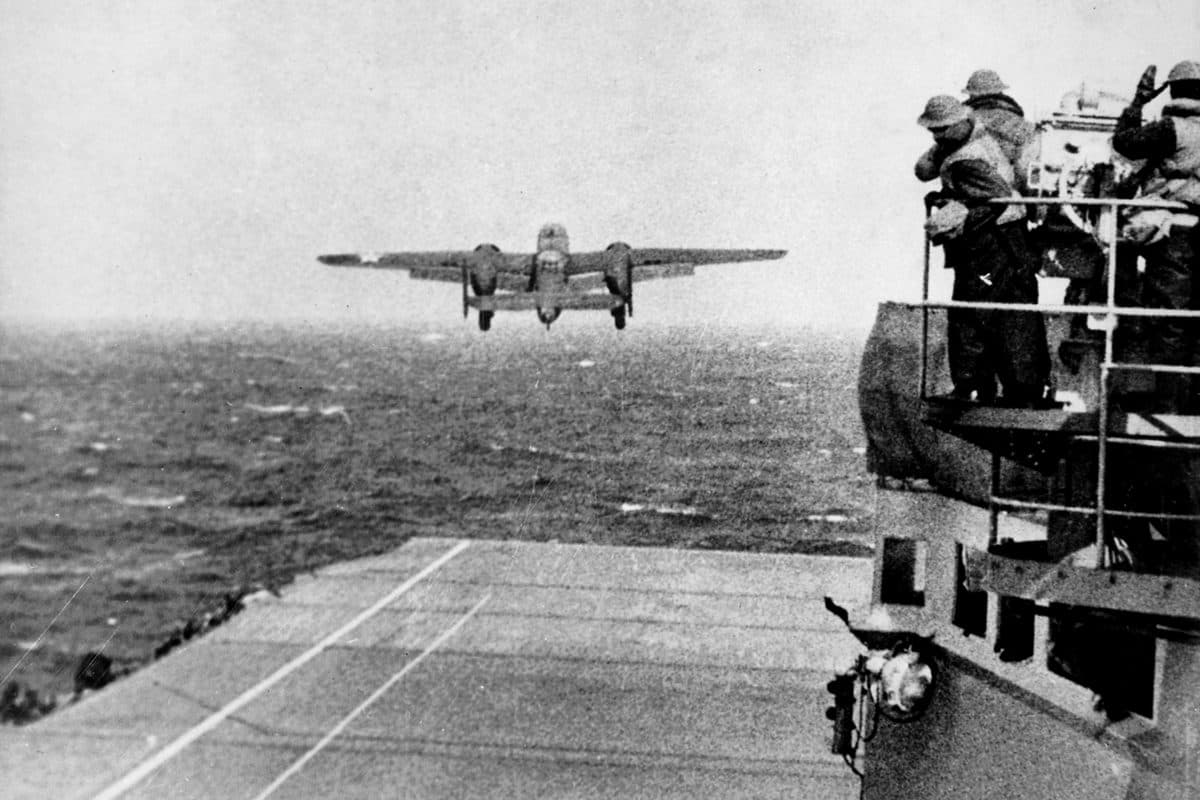
On April 18, 1942, sixteen B-25 Mitchell bombers did something no one thought possible: they launched from the deck of an aircraft carrier, flew 650 miles to Japan, and bombed Tokyo. Every aircraft was lost. The damage was negligible. The consequences changed the war.
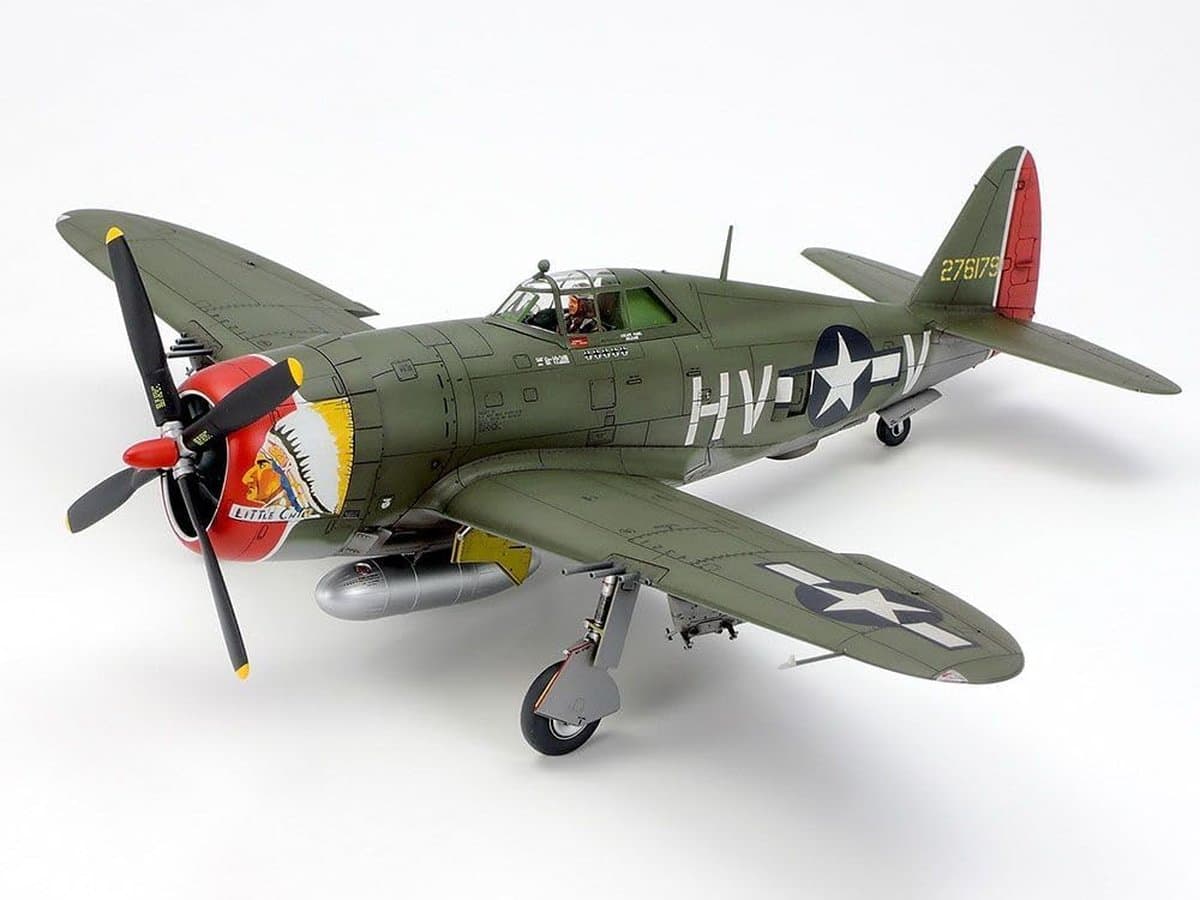
Compare 85+ WW2 scale model kits across aircraft, tanks, and ships. Beginner builds from $9 to museum-grade showpieces at $580. Covers Tamiya, Eduard, HK Models, Trumpeter, and more with honest reviews, trade-offs, and pricing.

On April 7, 1945, the Imperial Japanese Navy sent the largest battleship ever built on a one-way suicide mission to Okinawa. She never arrived. 386 American aircraft found her first, and sank her in under two hours.