

15 Best World War II Books for History Enthusiasts (2026)
15 essential WW2 books covering every theater. Narrative histories, memoirs, and visual references ranked.
daniel-mercer··21 min read
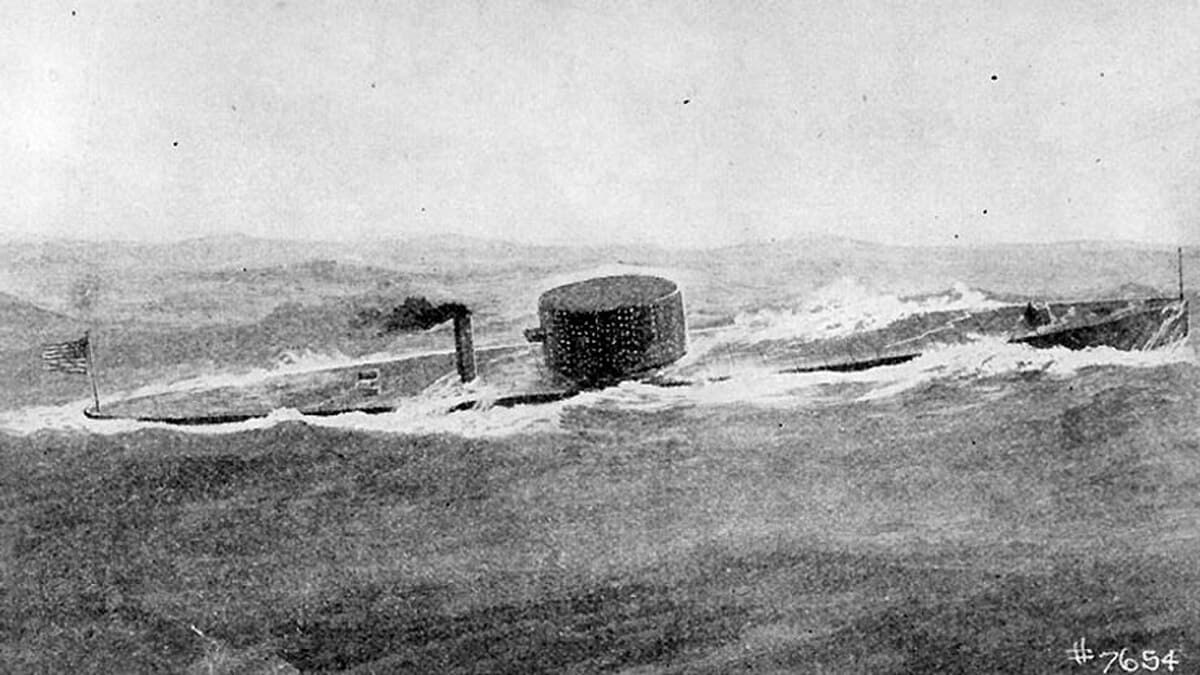
The USS Monitor and CSS Virginia fought the first battle between ironclad warships at Hampton Roads, Virginia. The four-hour duel ended inconclusively, neither could penetrate the other's armor, but it revolutionized naval warfare worldwide, rendering every wooden warship on earth obsolete overnight. Britain and France immediately halted construction of wooden-hulled warships.
Napoleon married Josephine in a civil ceremony in Paris, just two days before departing to take command of the Army of Italy. The Italian Campaign that followed transformed the 26-year-old general into Europe's most famous military commander. His passionate letters to Josephine from the campaign are among history's most famous correspondence from a military leader.
During the Mexican-American War, General Winfield Scott landed approximately 10,000 troops near Veracruz, Mexico, in the first large-scale amphibious assault in U.S. military history. Using specially designed surfboats, the landing was executed without the loss of a single man. The campaign that followed, the march from Veracruz to Mexico City, is considered one of the most brilliant in American military history.
The USS Monitor and CSS Virginia fought the first battle between ironclad warships at Hampton Roads. The four-hour duel ended inconclusively, but it revolutionized naval warfare worldwide, making every wooden warship obsolete overnight.
President Abraham Lincoln promoted Ulysses S. Grant to the rank of Lieutenant General, a rank previously held only by George Washington, and placed him in command of all Union armies. The promotion recognized Grant's victories at Vicksburg and Chattanooga and set the stage for the coordinated strategy that would finally defeat the Confederacy.
Mexican revolutionary Pancho Villa led nearly 500 raiders in a pre-dawn attack on the border town of Columbus, New Mexico, killing 18 Americans. It was the last significant armed incursion into the continental United States by a foreign force and triggered the Punitive Expedition under Brigadier General John J. Pershing, which became an invaluable training ground for World War I.
Germany declared war on Portugal after the Portuguese government seized 36 German merchant ships interned in Portuguese ports. Portugal subsequently joined the Entente powers, sending an expeditionary force of 55,000 troops to the Western Front and reinforcing its colonial holdings in Africa against German East Africa.
President Franklin Roosevelt submitted the Emergency Banking Act to Congress, which passed it in a record eight hours. The act, framed in explicitly military language, gave the government wartime-equivalent emergency powers to inspect and stabilize banks. Roosevelt had used military rhetoric throughout his inauguration, declaring war on the economic crisis as urgently as any foreign enemy.
The Royal Netherlands East Indies Army unconditionally surrendered to Japanese forces at Kalijati, West Java, completing Japan's conquest of the Dutch East Indies. The capitulation gave Japan control of the world's fourth-largest oil production, the resource for which Japan had gone to war, and resulted in over 100,000 Allied military personnel becoming prisoners of war.
Major General Curtis LeMay launched Operation Meetinghouse, dispatching 334 B-29 Superfortresses to firebomb Tokyo at low altitude. The bombers were stripped of defensive armament to carry maximum incendiary loads. The resulting firestorm, peaking in the early hours of March 10, would kill over 100,000 people and destroy 16 square miles of the city, the deadliest single air raid in human history.
Japanese forces in French Indochina overthrew the Vichy French colonial administration in a sudden coup, disarming French garrisons and imprisoning colonial officials across Vietnam, Laos, and Cambodia. The power vacuum allowed Ho Chi Minh's Viet Minh to expand dramatically, setting the stage for the First Indochina War and ultimately the American involvement in Vietnam.

Colonel, Soviet Air Force
Soviet cosmonaut and Air Force pilot who became the first human in space on April 12, 1961, aboard Vostok 1. His achievement was a Cold War triumph that accelerated the space race and the militarization of space. Killed in a training jet crash in 1968 at age 34, his legacy endures as both a milestone in human exploration and a symbol of Cold War competition.

Minister of Foreign Affairs, Soviet Union
Soviet Foreign Minister who negotiated the Molotov-Ribbentrop Pact with Nazi Germany in 1939, secretly dividing Eastern Europe between the two powers. Served as Stalin's chief diplomat throughout World War II and the early Cold War. The "Molotov cocktail" incendiary weapon was ironically named by Finnish soldiers fighting against the Soviet invasion he helped orchestrate.

Explorer and Navigator
Italian explorer whose accounts of voyages to the New World led cartographer Martin Waldseemüller to name the continents "America" in his honor. His explorations along the South American coast provided crucial geographic knowledge that shaped European colonial and military strategies in the Western Hemisphere for centuries.

Commander, Irgun / Prime Minister of Israel
Israeli Prime Minister and former commander of the Irgun paramilitary organization who led the insurgency against the British Mandate in Palestine. As Prime Minister, he signed the Camp David Accords with Egyptian President Anwar Sadat in 1978, earning the Nobel Peace Prize, a remarkable transformation from underground fighter to peacemaker.
Wear the Timeline
10 military events occurred on March 9, spanning multiple centuries. Key events include: USS Monitor vs. CSS Virginia: The First Ironclad Battle (1862), Pancho Villa Raids Columbus, New Mexico (1916), Tokyo Firebombing: Operation Meetinghouse Launched (1945), Siege of Veracruz: First Large-Scale American Amphibious Assault (1847), Grant Promoted to Lieutenant General, Given Command of All Union Armies (1864).
The most significant military event on March 9 is USS Monitor vs. CSS Virginia: The First Ironclad Battle (1862). The USS Monitor and CSS Virginia fought the first battle between ironclad warships at Hampton Roads, Virginia. The four-hour duel ended inconclusively, neither could penetrate the other's armor, but it revolutionized naval warfare worldwide, rendering every wooden warship on earth obsolete overnight. Britain and France immediately halted construction of wooden-hulled warships.
Notable military figures born on March 9 include Yuri Gagarin (1934–1968), Vyacheslav Molotov (1890–1986), Amerigo Vespucci (1454–1512).
Events on March 9 span the Civil War, World War I, World War II, the Colonial & Revolutionary era, the Interwar Period, covering 10 events across 3 centuries of military history.
Events on March 9 involve 4 branches of the U.S. and allied armed forces, reflecting the global scope of military operations throughout history.
Explore military history from the day you were born.
June 6
The Allied invasion of Normandy, the largest amphibious assault in history.
December 7
Japan attacks the U.S. Pacific Fleet, bringing America into World War II.
September 11
The deadliest terrorist attack in history transforms U.S. national security.
August 6
The first atomic bomb is dropped on a city, ushering in the nuclear age.
May 8
Nazi Germany surrenders unconditionally, ending World War II in Europe.
November 11
Armistice Day marks the end of World War I and honors all who served.
June 4
The turning point of the Pacific War as the U.S. Navy destroys four Japanese carriers.
July 4
The Declaration of Independence is adopted, sparking the American Revolution.
15 essential WW2 books covering every theater. Narrative histories, memoirs, and visual references ranked.
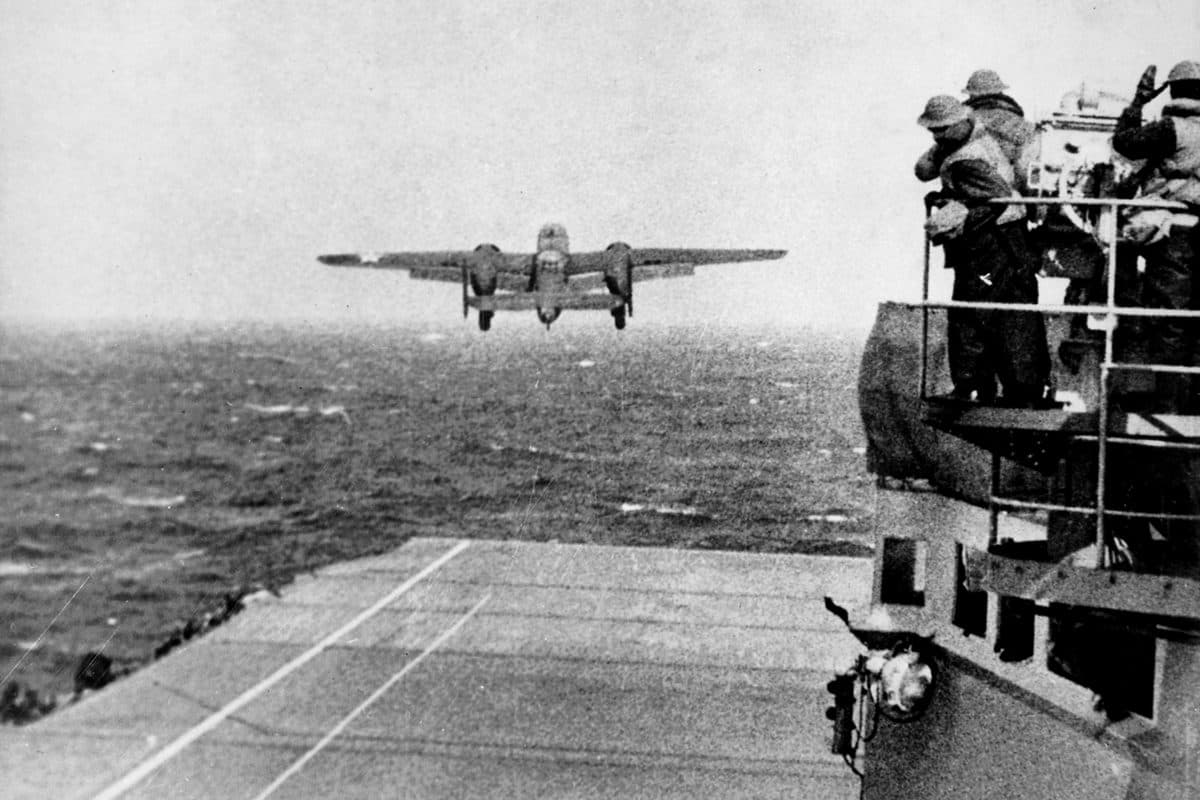
On April 18, 1942, sixteen B-25 Mitchell bombers did something no one thought possible: they launched from the deck of an aircraft carrier, flew 650 miles to Japan, and bombed Tokyo. Every aircraft was lost. The damage was negligible. The consequences changed the war.
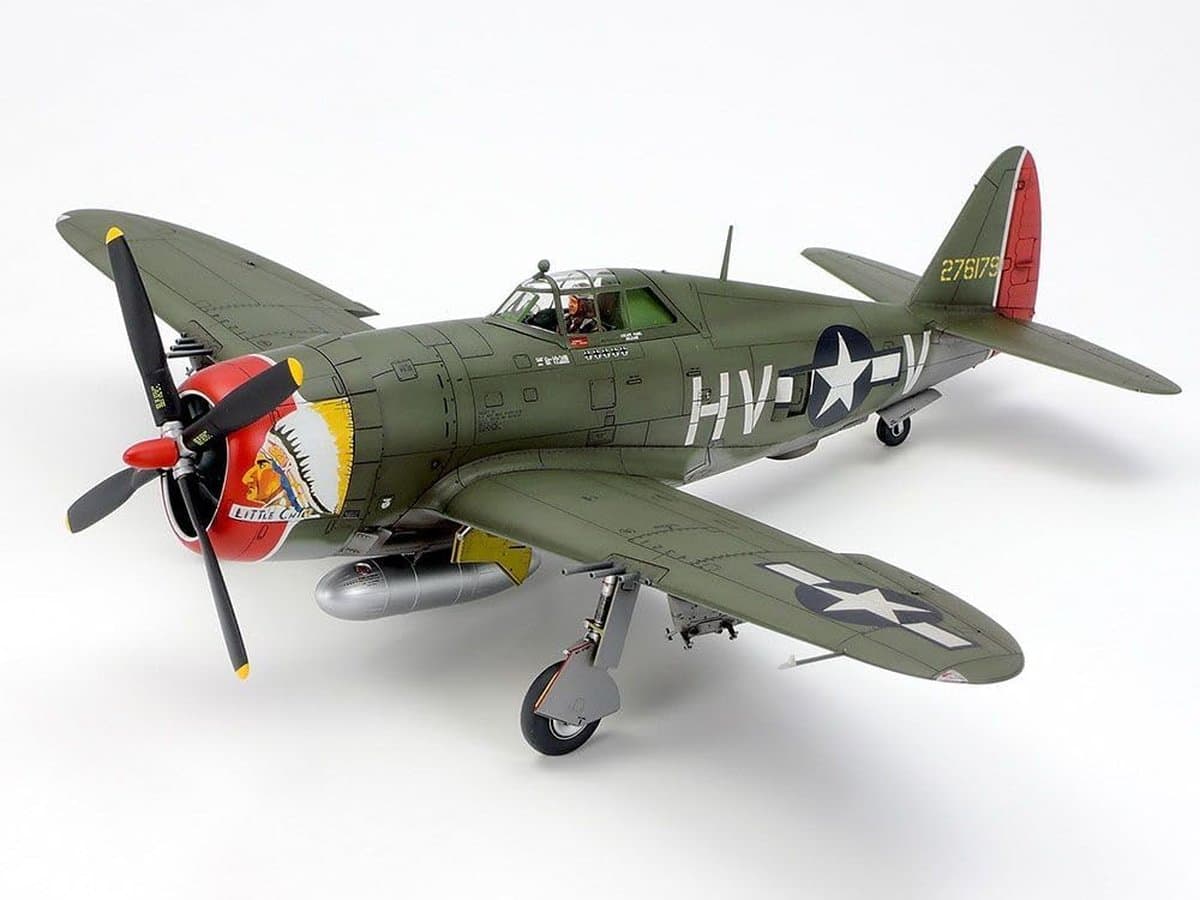
Compare 85+ WW2 scale model kits across aircraft, tanks, and ships. Beginner builds from $9 to museum-grade showpieces at $580. Covers Tamiya, Eduard, HK Models, Trumpeter, and more with honest reviews, trade-offs, and pricing.

On April 7, 1945, the Imperial Japanese Navy sent the largest battleship ever built on a one-way suicide mission to Okinawa. She never arrived. 386 American aircraft found her first, and sank her in under two hours.