


15 Military Mistakes That Accidentally Changed History
From wrong turns to unlocked gates - real mistakes that shaped the course of history.
ryan-caldwell··22 min read
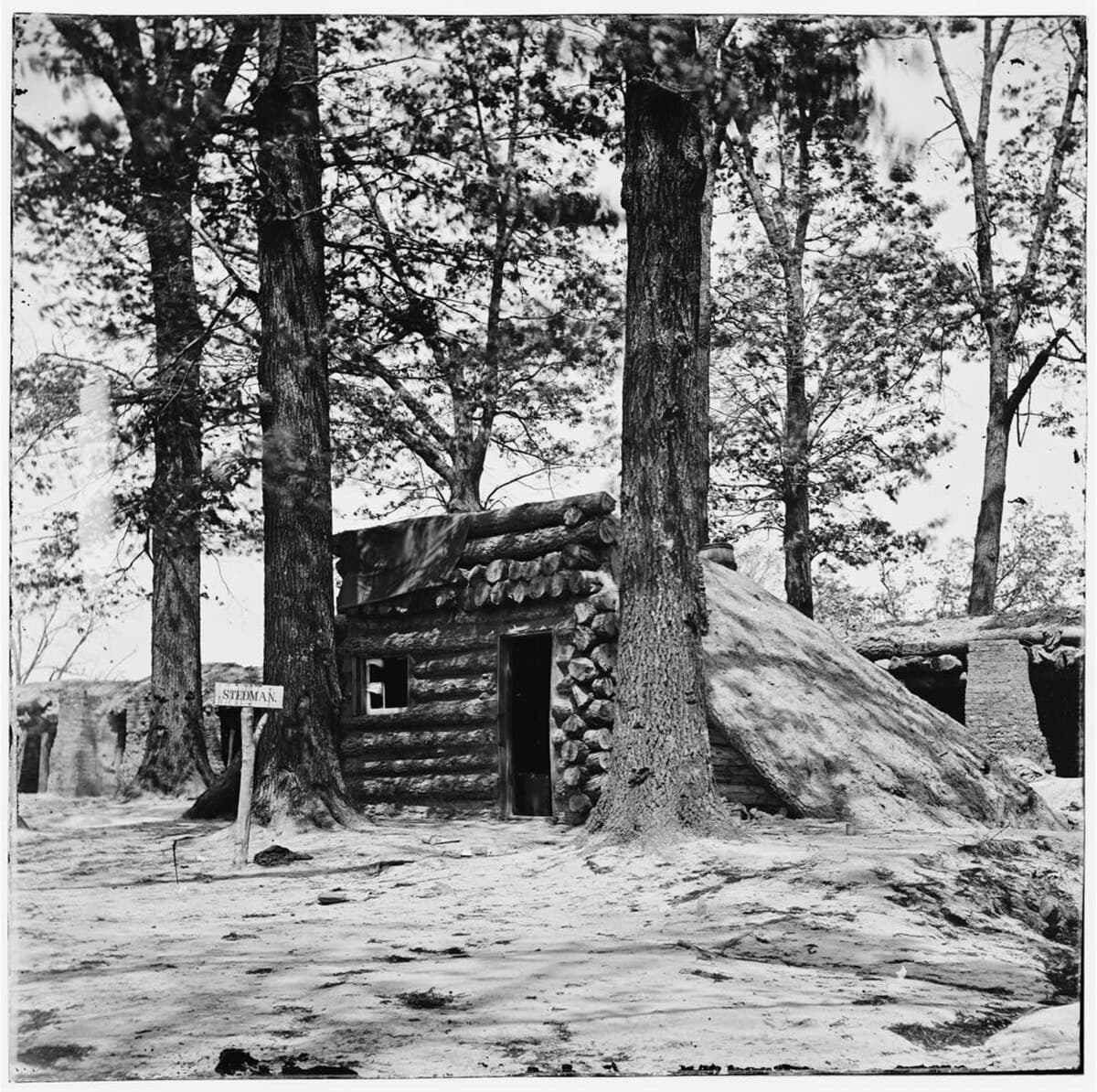
In the pre-dawn hours, Major General John B. Gordon led 11,500 Confederate troops in an assault on Fort Stedman in the Petersburg siege lines, the last offensive action of the Army of Northern Virginia. Confederate soldiers posing as deserters overwhelmed Union pickets, and infantry captured the fort and adjacent batteries. But Union counterattacks under Brigadier General Hartranft sealed the breach within four hours. Confederate casualties were devastating: approximately 4,000, including 1,000 captured. Lee wrote that the failure "removed my last hope of any other course than a retreat."
King Richard I of England was struck by a crossbow bolt while inspecting the siege of Château de Châlus-Chabrol in the Limousin region of France. The wound became gangrenous, and the legendary warrior-king died eleven days later on April 6, ending the reign of one of the most famous military monarchs in history.
The British Parliament passed the Abolition of the Slave Trade Act, making the transatlantic slave trade illegal throughout the British Empire. The Royal Navy subsequently deployed the West Africa Squadron to enforce the ban, intercepting slave ships and freeing captives in what became one of the longest sustained naval operations in history.
Metropolitan Germanos of Patras raised the banner of revolution at the Monastery of Agia Lavra, marking the formal declaration of the Greek War of Independence against the Ottoman Empire. The war (1821-1829) drew international intervention from Britain, France, and Russia at the Battle of Navarino, established the modern Greek state, and inspired nationalist movements across Europe.
Secretary of War Edwin Stanton presented the first six Medals of Honor in U.S. history to Union soldiers from the Great Locomotive Chase of April 12, 1862. Private Jacob Parrott became the first-ever recipient. March 25 is now observed as National Medal of Honor Day. The Medal of Honor remains America's highest military decoration, with fewer than 3,600 recipients out of over 41 million who have served.
In the pre-dawn hours, Major General John B. Gordon led 11,500 Confederate troops in an assault on Fort Stedman in the Petersburg siege lines, the last offensive action of the Army of Northern Virginia. Confederate soldiers posing as deserters overwhelmed Union pickets, and infantry captured the fort and adjacent batteries. But Union counterattacks under Brigadier General Hartranft sealed the breach within four hours. Confederate casualties were devastating: approximately 4,000, including 1,000 captured. Lee wrote that the failure "removed my last hope of any other course than a retreat."
During training off Honolulu, the submarine USS F-4 suffered a catastrophic hull failure and sank to 306 feet, killing all 21 crew. Battery acid had corroded the pressure hull, and flooding produced lethal chlorine gas. It was the first U.S. Navy submarine lost at sea. The subsequent salvage operation set precedents for deep-water recovery and led to significant changes in submarine construction standards.
Related articleUnder German pressure, Yugoslavia signed the Tripartite Pact, aligning with the Axis powers. The signing provoked a military coup two days later by Serbian officers who placed 17-year-old King Peter II on the throne and rejected the pact. Hitler was so enraged he ordered Yugoslavia invaded on April 6, a campaign that delayed Operation Barbarossa by critical weeks that many historians argue contributed to the Wehrmacht's failure to capture Moscow before winter.
Related articleItaly's elite Decima MAS unit launched six explosive motor boats against British ships at Souda Bay, Crete, in the first successful combat use of manned torpedo technology. The heavy cruiser HMS York was so badly damaged it had to be beached and abandoned. The tactics pioneered here would be used to devastating effect at Alexandria in December 1941, crippling two British battleships.
Approximately 300 Japanese troops launched a final pre-dawn assault near Airfield No. 2, the last organized resistance on Iwo Jima. Army pilots, Seabees, and Marines fought through the night, losing over 100 killed and wounded before eliminating the attackers. The island was declared secure the following day, ending 36 days of fighting that killed nearly 7,000 Americans and over 21,000 Japanese.
Six Western European nations signed the Treaty of Rome, creating the European Economic Community, the foundation of what would become the European Union. Born directly from the devastation of two world wars, the EEC was designed to make war between European nations economically impossible by binding their economies together.

Vice Admiral, Imperial Japanese Navy
Commander of the Kidō Butai, the six-carrier strike force that attacked Pearl Harbor on December 7, 1941. His hesitation and poor tactical decisions at the Battle of Midway contributed to the loss of four Japanese fleet carriers, turning the tide of the Pacific War. A torpedo expert poorly suited for carrier command, he took his own life during the Battle of Saipan in 1944.

Captain, U.S. Navy (Retired)
Navy test pilot and NASA astronaut who was the first person to fly in space four times. Served as command module pilot on Apollo 8, the first mission to orbit the Moon, and commanded Apollo 13, safely bringing his crew home after a catastrophic systems failure through extraordinary piloting and calm under pressure.

Lieutenant General, Imperial Japanese Army
The Japanese commander at Iwo Jima who revolutionized defensive tactics by rejecting banzai charges in favor of defense-in-depth using interconnected tunnels and fortified caves. His tactics inflicted 26,000 U.S. casualties and made Iwo Jima one of the bloodiest battles in Marine Corps history. Believed killed leading the final attack on the night of March 25-26, 1945.
Wear the Timeline
10 military events occurred on March 25, spanning multiple centuries. Key events include: Battle of Fort Stedman, The Confederacy's Last Attack (1865), First Medals of Honor Awarded, Andrews' Raiders (1863), Yugoslavia Signs the Tripartite Pact, Then Overthrows Its Government (1941), Final Japanese Attack on Iwo Jima (1945).
The most significant military event on March 25 is Battle of Fort Stedman, The Confederacy's Last Attack (1865). In the pre-dawn hours, Major General John B. Gordon led 11,500 Confederate troops in an assault on Fort Stedman in the Petersburg siege lines, the last offensive action of the Army of Northern Virginia. Confederate soldiers posing as deserters overwhelmed Union pickets, and infantry captured the fort and adjacent batteries. But Union counterattacks under Brigadier General Hartranft sealed the breach within four hours. Confederate casualties were devastating: approximately 4,000, including 1,000 captured. Lee wrote that the failure "removed my last hope of any other course than a retreat."
Notable military figures born on March 25 include Vice Admiral Chūichi Nagumo (1887–1944), Captain James A. Lovell Jr. (1928–present).
Events on March 25 span the Civil War, World War II, World War I, the Colonial & Revolutionary era, the Cold War, covering 10 events across 3 centuries of military history.
Events on March 25 involve 3 branches of the U.S. and allied armed forces, reflecting the global scope of military operations throughout history.
Explore military history from the day you were born.
June 6
The Allied invasion of Normandy, the largest amphibious assault in history.
December 7
Japan attacks the U.S. Pacific Fleet, bringing America into World War II.
September 11
The deadliest terrorist attack in history transforms U.S. national security.
August 6
The first atomic bomb is dropped on a city, ushering in the nuclear age.
May 8
Nazi Germany surrenders unconditionally, ending World War II in Europe.
November 11
Armistice Day marks the end of World War I and honors all who served.
June 4
The turning point of the Pacific War as the U.S. Navy destroys four Japanese carriers.
July 4
The Declaration of Independence is adopted, sparking the American Revolution.
From wrong turns to unlocked gates - real mistakes that shaped the course of history.

The Virginia Block V just completed its pressure hull. Australia committed billions to AUKUS submarines. Japan's Taigei-class introduced lithium-ion batteries. And South Korea built a diesel sub with cruise missile VLS tubes. The attack submarine rankings needed rewriting.
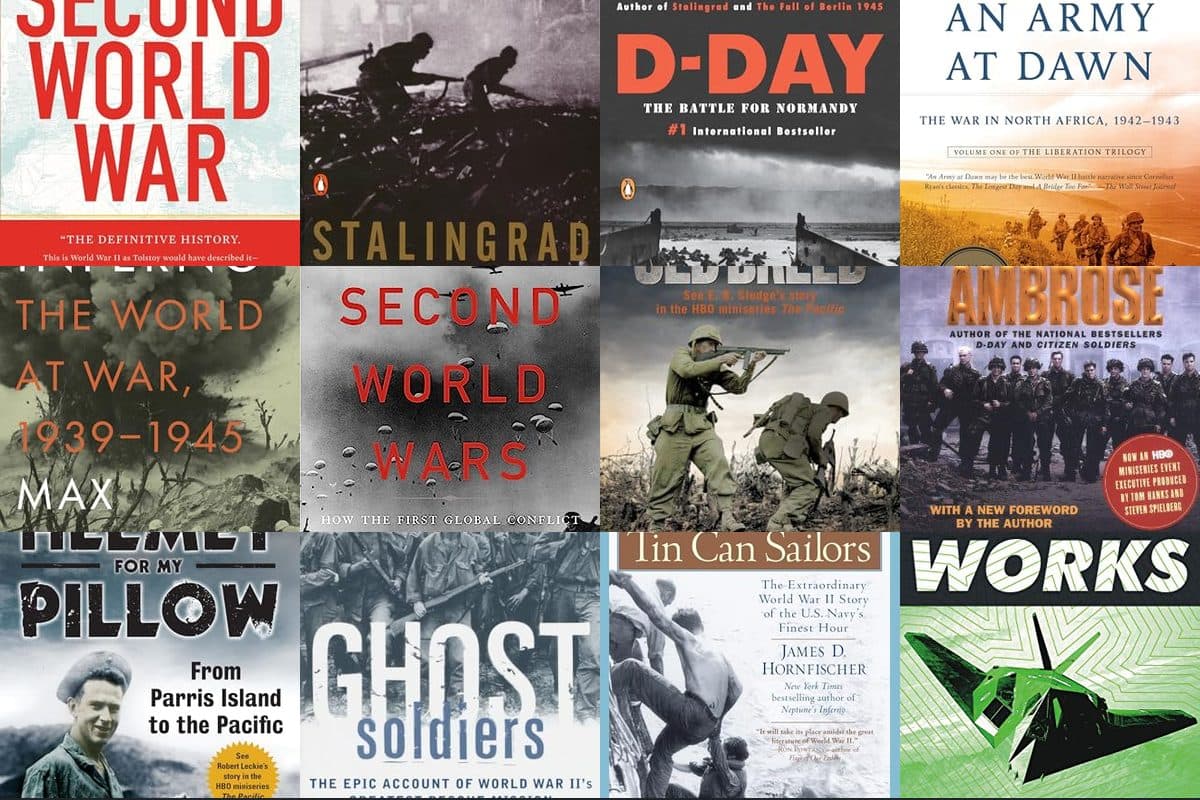
15 essential WW2 books covering every theater. Narrative histories, memoirs, and visual references ranked.
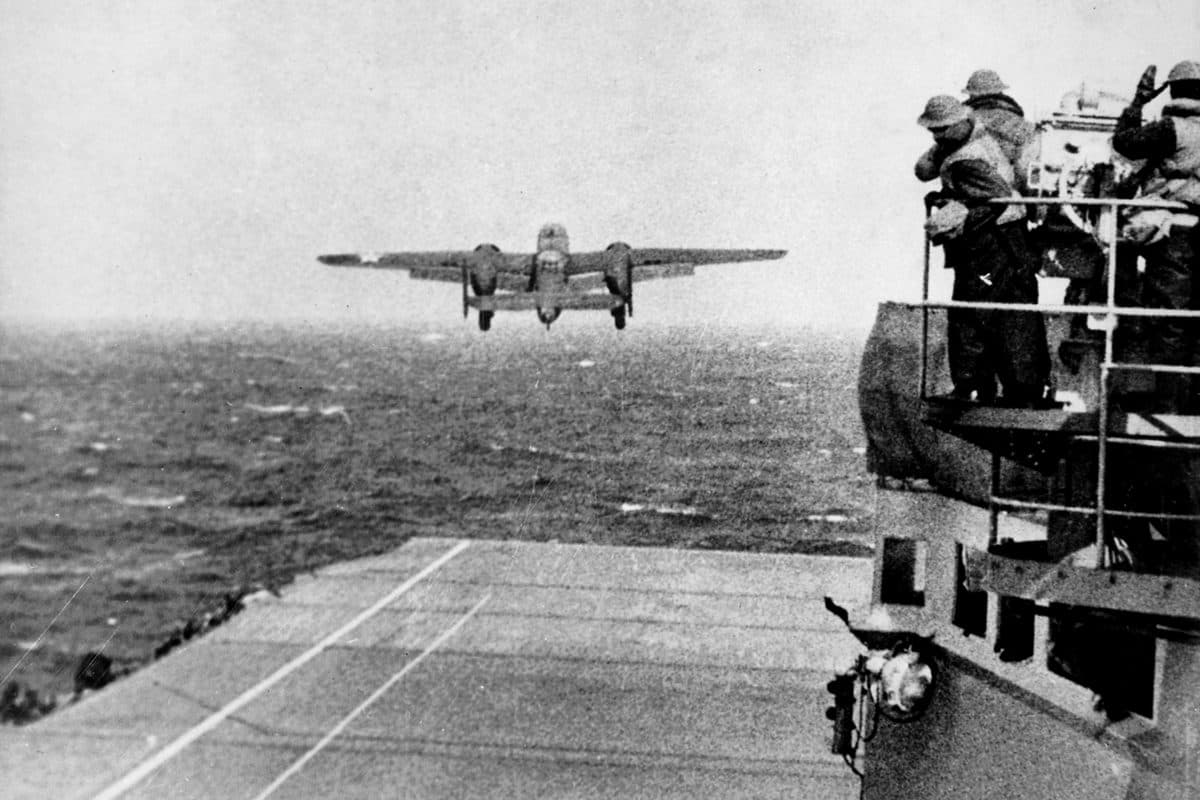
On April 18, 1942, sixteen B-25 Mitchell bombers did something no one thought possible: they launched from the deck of an aircraft carrier, flew 650 miles to Japan, and bombed Tokyo. Every aircraft was lost. The damage was negligible. The consequences changed the war.