


15 Military Mistakes That Accidentally Changed History
From wrong turns to unlocked gates - real mistakes that shaped the course of history.
ryan-caldwell··22 min read

The revolutionary ironclad USS Monitor, the ship that changed naval warfare forever by fighting CSS Virginia to a draw at Hampton Roads, sank in a storm off Cape Hatteras, North Carolina, taking 16 crew members to their deaths on New Year's Eve.
The Continental Army launched a desperate New Year's Eve assault on Quebec City in a blinding snowstorm, suffering a catastrophic defeat that killed General Richard Montgomery and left Colonel Benedict Arnold wounded, ending the American invasion of Canada.
Military mistakes that changed historyContinental Army forces under Major General Richard Montgomery and Colonel Benedict Arnold launched a dawn assault on the walls of Quebec City in a driving snowstorm. Montgomery was killed in the opening moments of the attack on the lower town, Arnold was severely wounded in the leg, and approximately 400 Americans were captured in the collapse of the assault. The failure ended the 1775 American expedition to seize Canada from British control.
The revolutionary ironclad USS Monitor sank in a storm off Cape Hatteras, North Carolina, killing 16 crew members. The ship that had ended the age of wooden warships at Hampton Roads was claimed by the sea nine months later.
Union forces under General William Rosecrans clashed with Braxton Bragg's Confederate army near Murfreesboro, Tennessee, in one of the bloodiest battles of the Civil War. The three-day engagement would produce over 23,000 combined casualties.
Decisions that shaped warfareThe Union Army of the Cumberland under Major General William Rosecrans and the Confederate Army of Tennessee under General Braxton Bragg clashed at Murfreesboro, Tennessee, on the banks of Stones River. The opening day saw a massive Confederate surprise attack drive the Union right flank back three miles before Rosecrans rallied his forces for a stand at the Nashville Pike, setting the stage for three days of brutal combat that would produce 23,500 combined casualties.
Admiral Chester Nimitz assumed command of the U.S. Pacific Fleet at Pearl Harbor, replacing Admiral Husband Kimmel. Nimitz would transform the shattered fleet into the most powerful naval force in history, leading the island-hopping campaign that defeated Japan.
The Battle of MidwayThe Joint Task Force One report on Operation Crossroads, the 1946 nuclear weapons tests at Bikini Atoll, was released. The two tests, code-named Able and Baker, had been conducted in July 1946 against an anchored target fleet of 95 surplus warships and had provided the first systematic data on the effects of nuclear weapons against naval vessels. The report reshaped postwar naval construction, damage control doctrine, and ship dispersion planning for the entire Cold War era.
The Soviet Tupolev Tu-144 supersonic transport made its first flight from Zhukovsky airfield near Moscow, two months before the first flight of the British-French Concorde. Although the Tu-144 never achieved reliable commercial service and suffered a fatal crash at the 1973 Paris Air Show, the aircraft represented the peak of Soviet aerospace engineering ambition and drew directly on military supersonic bomber technology from the Tu-22 and Tu-160 programs.
The United States formally transferred control of the Panama Canal Zone to the Republic of Panama at noon on December 31, 1999, ending 85 years of American military presence in the strategically vital waterway connecting the Atlantic and Pacific oceans.
Operations that sound fake but aren'tThe Panama Canal and the Canal Zone, American sovereign territory since the 1903 Hay-Bunau-Varilla Treaty, were formally transferred to the government of Panama at noon local time. The transfer completed the terms of the 1977 Torrijos-Carter treaties and ended 96 years of direct American administration of the strategic waterway that had reshaped naval operations and world maritime commerce since its opening in 1914.

General of the Army
U.S. Army Chief of Staff during World War II who organized the largest military expansion in American history, growing the Army from 200,000 to 8.3 million and overseeing the global war effort that defeated the Axis powers. Churchill called him "the organizer of victory." After the war, as Secretary of State, Marshall created the European Recovery Program, the Marshall Plan, that rebuilt war-torn Europe and helped prevent the spread of communism. He remains the only career military officer to receive the Nobel Peace Prize.

Austrian Holocaust survivor who dedicated his life to tracking down Nazi war criminals and bringing them to justice. Wiesenthal survived the Mauthausen concentration camp and spent the postwar decades documenting Nazi atrocities and locating fugitive war criminals. His research contributed to the capture of Adolf Eichmann and the prosecution of numerous SS officers, concentration camp guards, and collaborators. The Simon Wiesenthal Center, founded in his honor, continues to combat antisemitism and document the crimes of the Holocaust.

Brigadier General
Union Army brigadier general killed in action at the Battle of Stones River on this date while leading his brigade against a Confederate assault. A West Point classmate of Phil Sheridan, Sill had been one of the most promising young officers in the Army of the Ohio. He was struck by a bullet through the face while rallying his men at the height of the battle. Fort Sill, Oklahoma, one of the most important U.S. military installations, was named in his honor by his friend Sheridan in 1869.
Wear the Timeline
10 military events occurred on December 31, spanning multiple centuries. Key events include: USS Monitor Sinks off Cape Hatteras (1862), Battle of Quebec, Continental Army Storms the Citadel (1775), Battle of Stones River Begins (1862), Admiral Nimitz Takes Command of the Pacific Fleet (1941), Battle of Stones River Begins in Tennessee (1862).
The most significant military event on December 31 is USS Monitor Sinks off Cape Hatteras (1862). The revolutionary ironclad USS Monitor, the ship that changed naval warfare forever by fighting CSS Virginia to a draw at Hampton Roads, sank in a storm off Cape Hatteras, North Carolina, taking 16 crew members to their deaths on New Year's Eve.
Notable military figures born on December 31 include George C. Marshall (1880–1959), Simon Wiesenthal (1908–2005).
Events on December 31 span the Civil War, the Colonial & Revolutionary era, World War II, the Modern Era, the Cold War, covering 10 events across 3 centuries of military history.
Events on December 31 involve 5 branches of the U.S. and allied armed forces, reflecting the global scope of military operations throughout history.
Explore military history from the day you were born.
June 6
The Allied invasion of Normandy, the largest amphibious assault in history.
December 7
Japan attacks the U.S. Pacific Fleet, bringing America into World War II.
September 11
The deadliest terrorist attack in history transforms U.S. national security.
August 6
The first atomic bomb is dropped on a city, ushering in the nuclear age.
May 8
Nazi Germany surrenders unconditionally, ending World War II in Europe.
November 11
Armistice Day marks the end of World War I and honors all who served.
June 4
The turning point of the Pacific War as the U.S. Navy destroys four Japanese carriers.
July 4
The Declaration of Independence is adopted, sparking the American Revolution.
From wrong turns to unlocked gates - real mistakes that shaped the course of history.
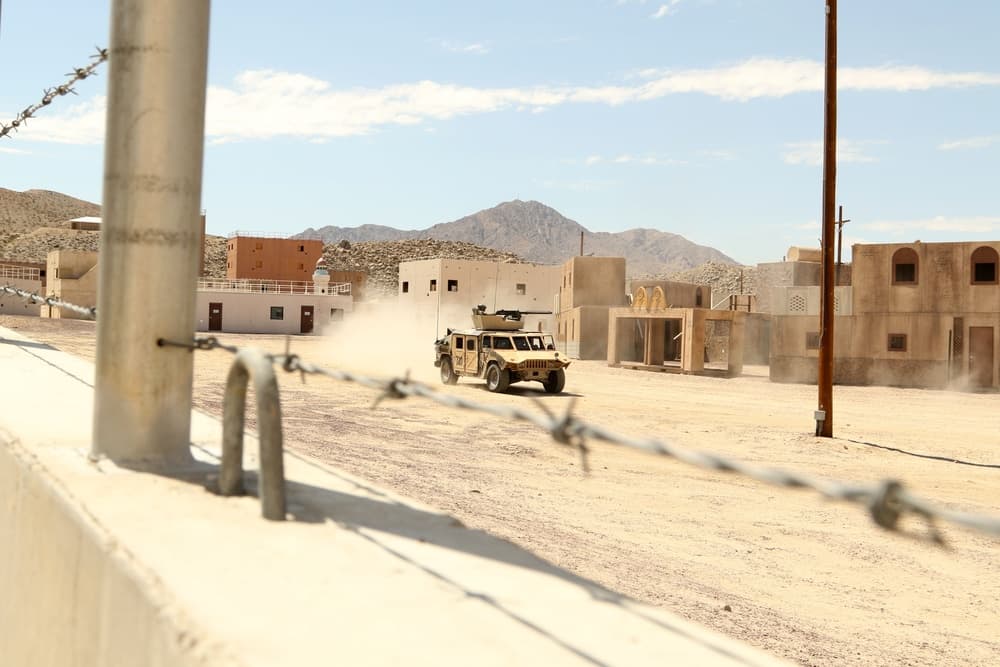
Decisions that shaped modern military power across history.
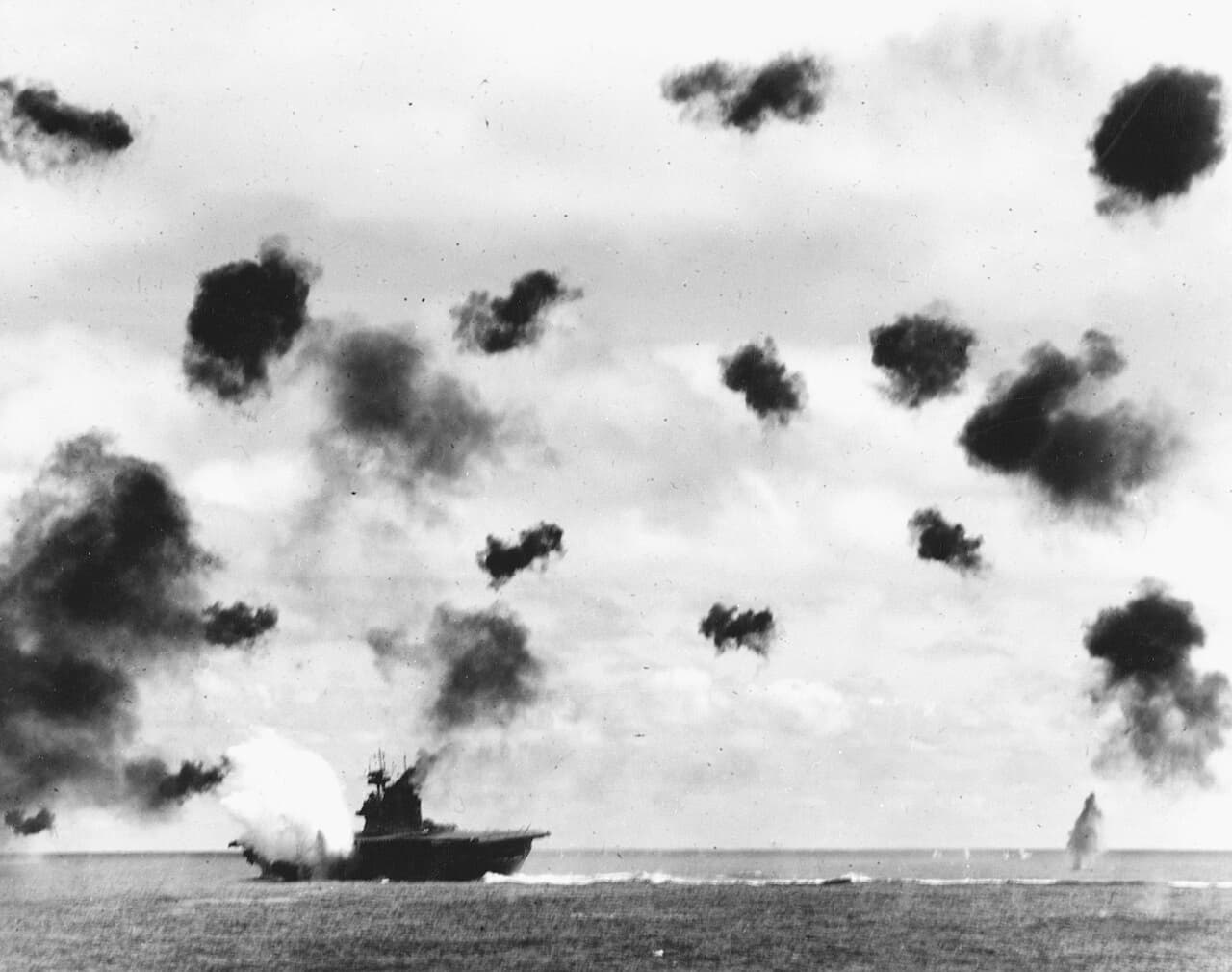
In June 1942, six months after Pearl Harbor, a handful of American dive bombers caught four Japanese carriers with their flight decks full of armed planes. In roughly five minutes, three of those carriers were fatally hit, and Japan's dominance in the Pacific was broken forever.

From inflatable tanks to cat spies, this is verified military history that sounds like fiction.