


15 Best World War II Books for History Enthusiasts (2026)
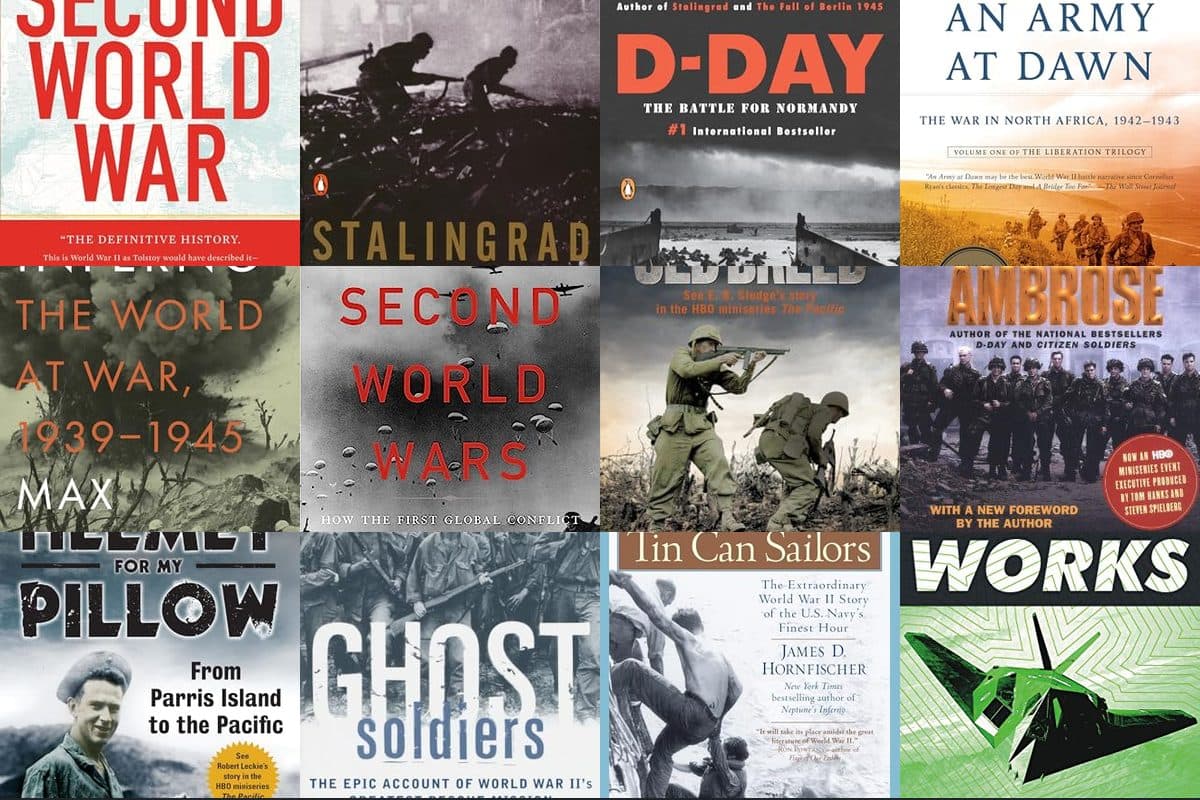
15 essential WW2 books covering every theater. Narrative histories, memoirs, and visual references ranked.
daniel-mercer··21 min read
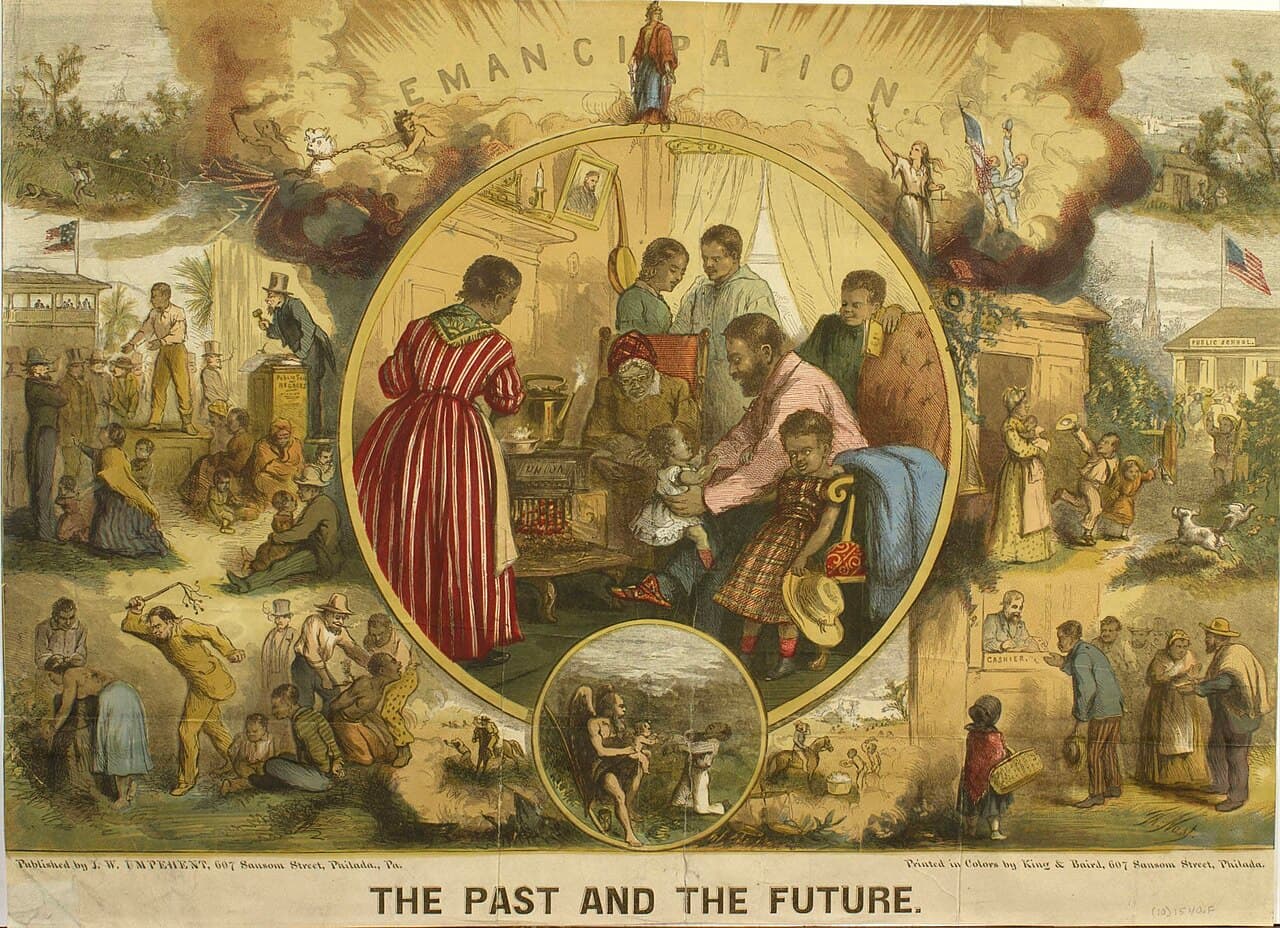
President Abraham Lincoln's Emancipation Proclamation went into effect, declaring "all persons held as slaves" in Confederate states "are, and henceforward shall be free." The executive order transformed the Civil War from a struggle to preserve the Union into a war for human freedom, authorized the enlistment of Black soldiers, and ensured that the Confederacy would never win diplomatic recognition from Britain or France.
The Continental Army raised the Grand Union Flag, the first national flag of the United States, at Prospect Hill near Washington's headquarters in Cambridge, Massachusetts. The flag featured thirteen alternating red and white stripes with the British Union Jack in the canton, symbolizing the colonies' initial hope for reconciliation with the Crown while asserting their distinct identity.
The Act Prohibiting Importation of Slaves took effect, making it illegal to bring enslaved Africans into the United States. The law, signed by President Thomas Jefferson in March 1807, authorized the U.S. Navy to patrol the coast and seize vessels engaged in the trade, though enforcement remained inconsistent for decades.
President Abraham Lincoln's Emancipation Proclamation went into effect, declaring "all persons held as slaves" in Confederate states "are, and henceforward shall be free." The order authorized the enlistment of Black soldiers and ensured that the Confederacy would never receive diplomatic recognition from European powers.
The British pre-dreadnought battleship HMS Formidable was torpedoed and sunk by the German submarine U-24 in the English Channel off the coast of Devon, killing 547 of her 780-man crew. She was the first British battleship lost to submarine attack during World War I, foreshadowing the devastating effectiveness of unrestricted submarine warfare.
Representatives of 26 nations signed the Declaration by United Nations in Washington, D.C., pledging to fight together against the Axis powers and not make a separate peace. The document, drafted by Roosevelt and Churchill, established the framework for the wartime Grand Alliance and laid the groundwork for the post-war United Nations organization.
The Luftwaffe launched Operation Bodenplatte (Baseplate), a massive surprise attack by nearly 900 fighter aircraft against Allied airfields in Belgium, the Netherlands, and France. The operation destroyed or damaged approximately 465 Allied aircraft on the ground but cost the Luftwaffe 271 irreplaceable pilots, losses from which German air power never recovered. It was the Luftwaffe's last major offensive operation.
The Wehrmacht launched Operation Nordwind, the last major German offensive on the Western Front. Eight divisions attacked thinly held U.S. Seventh Army positions in northern Alsace, aiming to recapture the Saverne Gap and force Eisenhower to divert forces from the Ardennes. After three weeks of brutal winter fighting, the offensive stalled short of its objectives.
Japanese Emperor Hirohito issued the Humanity Declaration, renouncing the traditional belief that the Emperor was a living god descended from the sun goddess Amaterasu. Issued under Allied occupation pressure, the declaration was a crucial step in the demilitarization and democratization of Japan, undermining the ideological foundation that had driven Japanese military fanaticism and the willingness of soldiers to die rather than surrender.
Dictator Fulgencio Batista fled Cuba as Fidel Castro's revolutionary forces marched on Havana, culminating a guerrilla campaign that had begun with just 82 men landing from the yacht Granma in December 1956. Castro's seizure of power placed a hostile, Soviet-allied state 90 miles from the United States, triggering the Bay of Pigs invasion, the Cuban Missile Crisis, and decades of Cold War confrontation in the Western Hemisphere.
Czechoslovakia peacefully dissolved into the Czech Republic and Slovakia at midnight on January 1, 1993, in what became known as the "Velvet Divorce." The separation required the division of the former nation's military forces, including 100,000 troops, thousands of tanks and armored vehicles, and the infrastructure of the Warsaw Pact's most strategically located member state.

Major General
Known as "Mad Anthony" for his bold and aggressive tactics, Wayne was one of George Washington's most trusted generals. He led the daring bayonet assault at Stony Point in 1779 and later defeated a Native American confederation at the Battle of Fallen Timbers in 1794, securing the Northwest Territory for the United States.

General
Known as "Lightning Joe," Collins commanded VII Corps during the D-Day landings at Utah Beach and the breakout at St. Lo. He later served as Army Chief of Staff during the Korean War, where he played a key role in strategic decisions including the relief of General MacArthur.

Marshal of France
French commander who led the successful Allied offensive from Salonika in September 1918, knocking Bulgaria out of World War I and threatening Austria-Hungary from the south. His Balkan campaign was one of the most decisive yet overlooked operations of the war.
Wear the Timeline
10 military events occurred on January 1, spanning multiple centuries. Key events include: Emancipation Proclamation Takes Effect (1863), Declaration by United Nations Signed (1942), Continental Army Raises the Grand Union Flag (1776), Luftwaffe Launches Operation Bodenplatte (1945), Fidel Castro Takes Power in Cuba (1959).
The most significant military event on January 1 is Emancipation Proclamation Takes Effect (1863). President Abraham Lincoln's Emancipation Proclamation went into effect, declaring "all persons held as slaves" in Confederate states "are, and henceforward shall be free." The executive order transformed the Civil War from a struggle to preserve the Union into a war for human freedom, authorized the enlistment of Black soldiers, and ensured that the Confederacy would never win diplomatic recognition from Britain or France.
Notable military figures born on January 1 include Anthony Wayne (1745–1796), J. Lawton Collins (1896–1987).
Events on January 1 span the Civil War, World War II, the Colonial & Revolutionary era, the Cold War, World War I, the Modern Era, covering 10 events across 3 centuries of military history.
Events on January 1 involve 4 branches of the U.S. and allied armed forces, reflecting the global scope of military operations throughout history.
Explore military history from the day you were born.
June 6
The Allied invasion of Normandy, the largest amphibious assault in history.
December 7
Japan attacks the U.S. Pacific Fleet, bringing America into World War II.
September 11
The deadliest terrorist attack in history transforms U.S. national security.
August 6
The first atomic bomb is dropped on a city, ushering in the nuclear age.
May 8
Nazi Germany surrenders unconditionally, ending World War II in Europe.
November 11
Armistice Day marks the end of World War I and honors all who served.
June 4
The turning point of the Pacific War as the U.S. Navy destroys four Japanese carriers.
July 4
The Declaration of Independence is adopted, sparking the American Revolution.
15 essential WW2 books covering every theater. Narrative histories, memoirs, and visual references ranked.
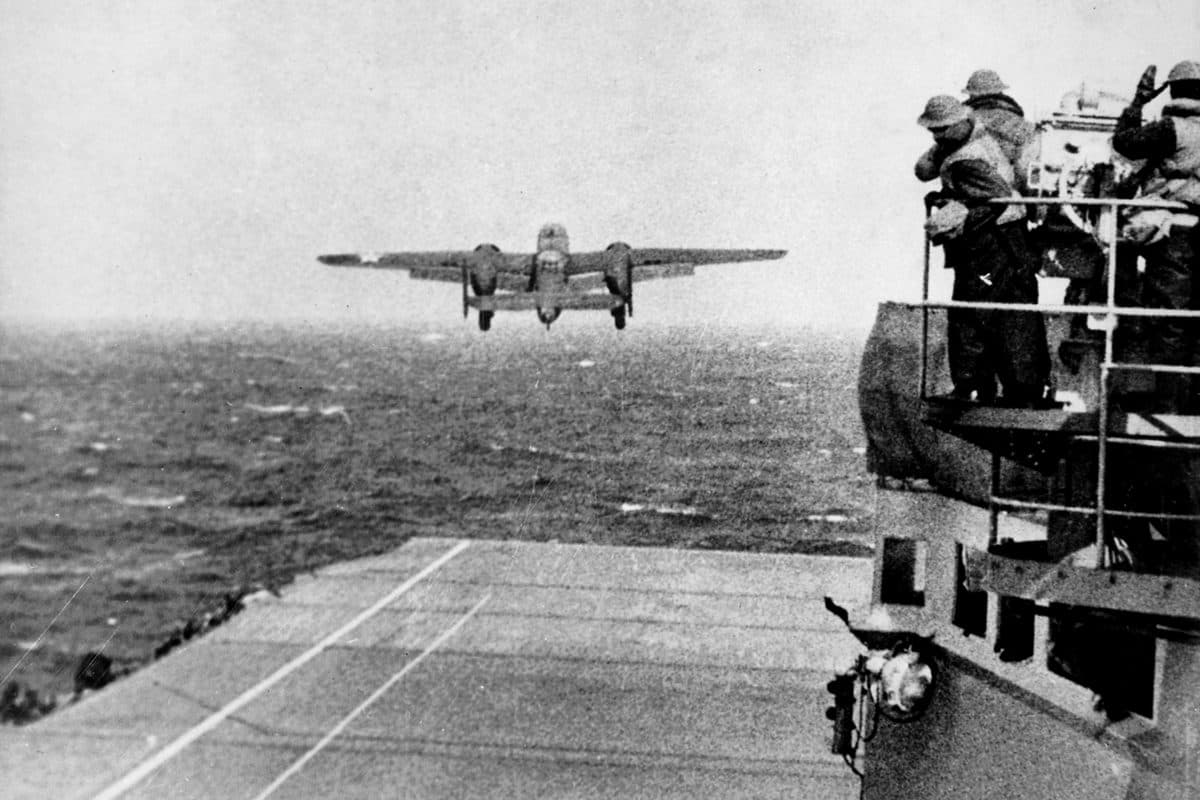
On April 18, 1942, sixteen B-25 Mitchell bombers did something no one thought possible: they launched from the deck of an aircraft carrier, flew 650 miles to Japan, and bombed Tokyo. Every aircraft was lost. The damage was negligible. The consequences changed the war.
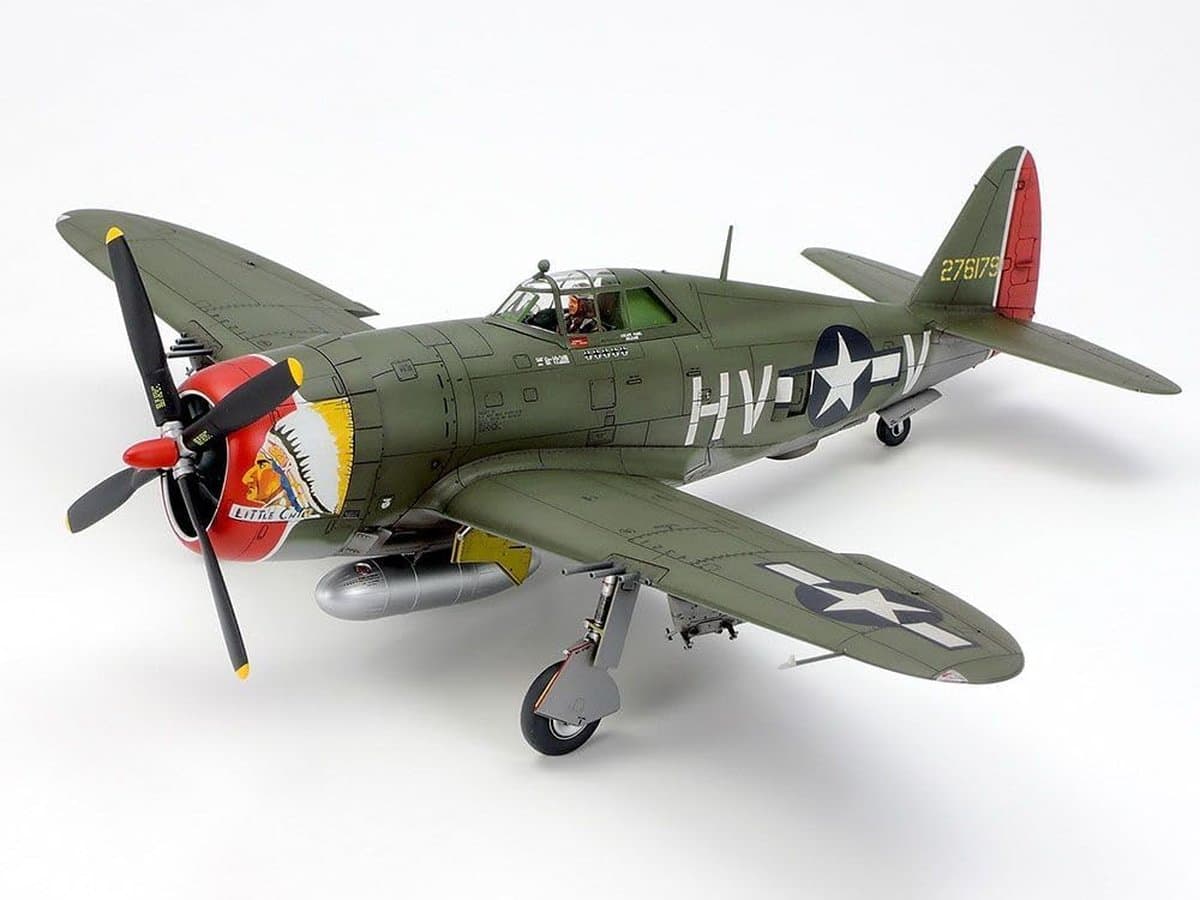
Compare 85+ WW2 scale model kits across aircraft, tanks, and ships. Beginner builds from $9 to museum-grade showpieces at $580. Covers Tamiya, Eduard, HK Models, Trumpeter, and more with honest reviews, trade-offs, and pricing.

On April 7, 1945, the Imperial Japanese Navy sent the largest battleship ever built on a one-way suicide mission to Okinawa. She never arrived. 386 American aircraft found her first, and sank her in under two hours.