


15 Military Mistakes That Accidentally Changed History
From wrong turns to unlocked gates - real mistakes that shaped the course of history.
ryan-caldwell··22 min read

The Union of Soviet Socialist Republics was officially established, uniting Russia, Ukraine, Belorussia, and the Transcaucasian Federation into the world's first constitutionally socialist state, creating the superpower that would define global military competition for seven decades.
British forces and their Native American allies crossed the Niagara River and burned the city of Buffalo, New York, along with the village of Black Rock, in retaliation for the American burning of Newark (Niagara-on-the-Lake) earlier that month.
Military mistakes that changed historyAmerican Minister James Gadsden and Mexican President Antonio Lopez de Santa Anna signed the Gadsden Purchase treaty in Mexico City, transferring approximately 29,670 square miles of territory in what is now southern Arizona and southwestern New Mexico to the United States for $10 million. The purchase completed the continental border of the United States and secured the route for the planned southern transcontinental railroad.
Spanish colonial authorities executed Filipino nationalist José Rizal by firing squad in Manila, transforming him into a martyr who galvanized the Philippine Revolution and whose legacy would shape American military involvement in the Philippines for half a century.
When bigger militaries don't winRussian nobles assassinated Grigori Rasputin, the mystic who had wielded enormous influence over Czar Nicholas II and Czarina Alexandra. His death destabilized the already fragile Russian monarchy, accelerating the chain of events that led to the Russian Revolution and the collapse of the Imperial Russian Army.
Decisions that shaped warfareThe last major reconnaissance patrols of Brigadier General John J. Pershing's Punitive Expedition reported from positions near Ojinaga, Chihuahua. The 11-month American incursion into Mexico in pursuit of Pancho Villa was winding down without capturing its target, but it had served as the operational proving ground for motorized reconnaissance, air reconnaissance, and signals communications techniques that would define American military operations in World War I.
The USSR was officially established, uniting Russia, Ukraine, Belorussia, and the Transcaucasus into the superpower that would define global military competition for seventy years.
Soviet test pilot Mikhail Gromov completed a non-stop endurance flight of 75 hours aboard the Tupolev ANT-25 long-range research aircraft, setting a world record for closed-circuit endurance flight that demonstrated the feasibility of very long-range aircraft for strategic military missions. The ANT-25 design became the basis of several Soviet record-setting transcontinental flights during the 1930s including the 1937 flight from Moscow to San Jacinto, California, over the North Pole.
Operation Linebacker II ended after eleven nights of B-52 strikes against Hanoi and Haiphong, with North Vietnamese negotiators having signaled willingness to return to the Paris peace talks. The campaign dropped approximately 15,000 tons of bombs, lost 15 B-52s and 11 other aircraft to North Vietnamese SA-2 surface-to-air missiles, and shaped the final American approach to concluding direct involvement in the Vietnam War.
Former Iraqi dictator Saddam Hussein was executed by hanging at a joint Iraqi-American military base in Baghdad, following his conviction for crimes against humanity by an Iraqi tribunal, closing a chapter in Middle Eastern military history that had spanned three decades of conflict.
Decisions that shaped warfareSaddam Hussein, the former President of Iraq, was hanged at an Iraqi government facility in the Kadhimiya neighborhood of Baghdad after conviction by the Iraqi Special Tribunal for crimes against humanity. The execution took place three years after his capture by American forces at a rural compound near Tikrit and closed one chapter of the Iraq War while the insurgency against American and Iraqi security forces continued at elevated intensity.

British author and Nobel laureate whose poems and stories shaped how generations understood military service and the British Empire. Works like "Gunga Din," "Tommy," "If," and "The Charge of the Light Brigade" became defining texts of military culture. Kipling's fervent support for World War I turned to bitter grief when his son John was killed at the Battle of Loos in 1915 at age 18, an event that haunted his later writing and led to his work with the Imperial War Graves Commission choosing the inscription "Their Name Liveth for Evermore" for war cemeteries.

General
Japanese general and Prime Minister who led Japan into World War II by ordering the attack on Pearl Harbor and overseeing the vast Pacific War campaign that swept across Southeast Asia and the Pacific Islands. As War Minister and then Prime Minister from 1941 to 1944, Tojo was the driving force behind Japanese military expansion and bore primary responsibility for the brutal treatment of prisoners and occupied populations. Convicted of war crimes by the International Military Tribunal for the Far East, he was executed by hanging on December 23, 1948.

Commander-in-Chief
Iraqi dictator and military commander who ruled Iraq from 1979 to 2003, waging the Iran-Iraq War (1980-1988), invading Kuwait (1990), and facing two American-led coalitions. His military adventurism and pursuit of weapons of mass destruction shaped Middle Eastern security for three decades. After the 2003 U.S. invasion, Saddam was captured hiding in a spider hole near Tikrit. Convicted of crimes against humanity by an Iraqi tribunal, he was executed by hanging on this date in 2006.
Wear the Timeline
10 military events occurred on December 30, spanning multiple centuries. Key events include: Formation of the Soviet Union (1922), Execution of José Rizal Sparks the Philippine Revolution (1896), Assassination of Grigori Rasputin (1916), Linebacker II Concludes Over North Vietnam (1972), Saddam Hussein Executed in Baghdad (2006).
The most significant military event on December 30 is Formation of the Soviet Union (1922). The Union of Soviet Socialist Republics was officially established, uniting Russia, Ukraine, Belorussia, and the Transcaucasian Federation into the world's first constitutionally socialist state, creating the superpower that would define global military competition for seven decades.
Notable military figures born on December 30 include Rudyard Kipling (1865–1936), Hideki Tojo (1884–1948).
Events on December 30 span the Interwar Period, the Colonial & Revolutionary era, World War I, the Modern Era, the Civil War, the Vietnam War, covering 10 events across 3 centuries of military history.
Events on December 30 involve 4 branches of the U.S. and allied armed forces, reflecting the global scope of military operations throughout history.
Explore military history from the day you were born.
June 6
The Allied invasion of Normandy, the largest amphibious assault in history.
December 7
Japan attacks the U.S. Pacific Fleet, bringing America into World War II.
September 11
The deadliest terrorist attack in history transforms U.S. national security.
August 6
The first atomic bomb is dropped on a city, ushering in the nuclear age.
May 8
Nazi Germany surrenders unconditionally, ending World War II in Europe.
November 11
Armistice Day marks the end of World War I and honors all who served.
June 4
The turning point of the Pacific War as the U.S. Navy destroys four Japanese carriers.
July 4
The Declaration of Independence is adopted, sparking the American Revolution.
From wrong turns to unlocked gates - real mistakes that shaped the course of history.

Why military size doesn't guarantee victory in modern warfare.
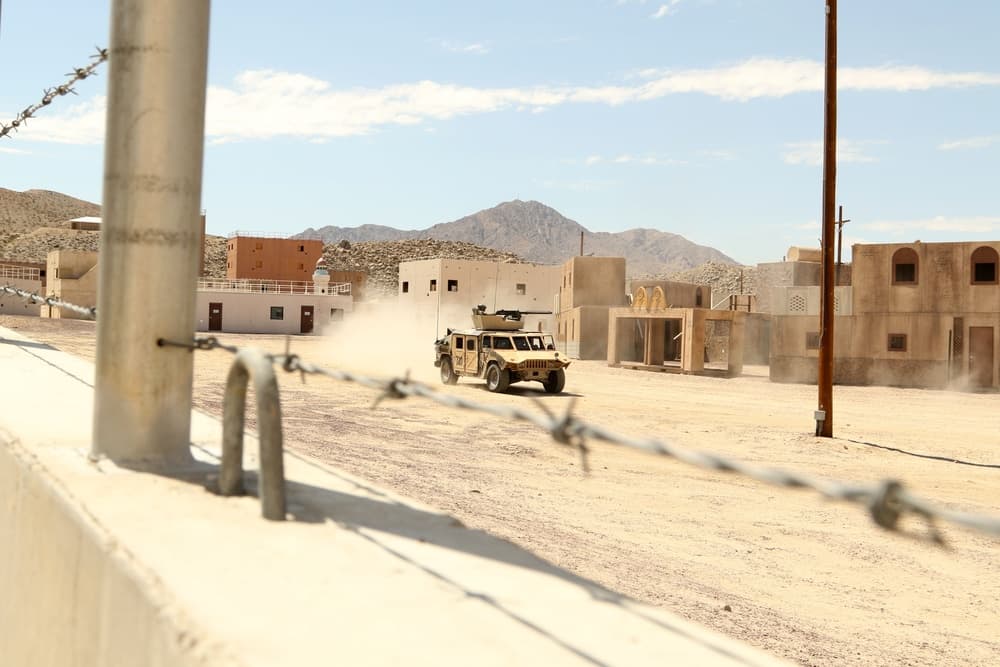
Decisions that shaped modern military power across history.
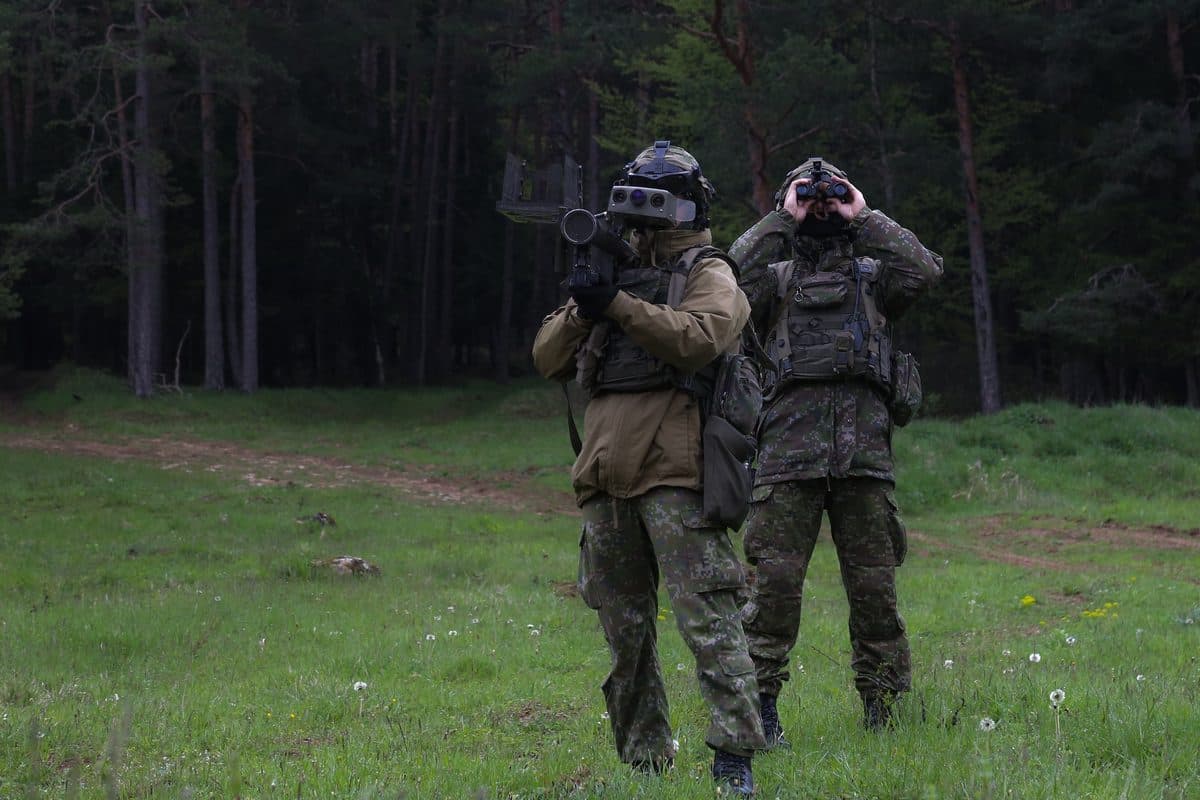
The FIM-92 Stinger helped win the Cold War by turning Afghan mujahideen into a credible anti-aircraft threat. By 2023, the United States almost ran out of them, because Raytheon stopped making them for 13 years, and the first 10 months of Ukraine support burned through the remaining stockpile.