

15 Best World War II Books for History Enthusiasts (2026)
15 essential WW2 books covering every theater. Narrative histories, memoirs, and visual references ranked.
daniel-mercer··21 min read

Britain, France, Germany, and Italy signed the Munich Agreement, ceding Czechoslovakia's Sudetenland to Nazi Germany without Czechoslovak consent. British Prime Minister Neville Chamberlain returned to London waving the agreement and declaring "peace for our time." The appeasement policy failed catastrophically, Hitler occupied the rest of Czechoslovakia within six months and invaded Poland a year later.
Mozart's opera "The Magic Flute" premiered in Vienna. While not directly military, the opera's themes of courage, trials, and triumph over darkness resonated with the revolutionary era's martial spirit. Mozart himself died just two months later, during a period when European armies were mobilizing for the wars that would follow the French Revolution.
Royal Navy Captain George Vancouver sailed HMS Discovery from Falmouth on a four-year hydrographic survey of the Pacific Northwest coast of North America. The expedition produced charts of exceptional accuracy used by naval and commercial mariners for more than a century, and established British territorial claims that shaped the later Oregon boundary dispute.
President Franklin Roosevelt dedicated Hoover Dam on the Colorado River, adding 1,345 megawatts of generating capacity that would power Southern California aircraft, aluminum, and synthetic rubber plants essential to the World War II arsenal. The dam demonstrated the coupling of New Deal infrastructure to later defense industrial capacity.
Britain and France ceded Czechoslovakia's Sudetenland to Hitler at Munich, the most infamous act of appeasement. The agreement failed, Hitler occupied the rest of Czechoslovakia within six months and invaded Poland a year later.
The International Military Tribunal at Nuremberg delivered its verdicts on 22 major Nazi war criminals. Twelve defendants were sentenced to death by hanging, including Göring, Ribbentrop, and Keitel. Three were acquitted. The tribunal established the principle that military and political leaders can be held personally responsible for crimes against humanity and war crimes.
Pakistan was admitted to the United Nations just weeks after gaining independence from British India. The partition of the subcontinent had already triggered massive military violence, with over one million killed in sectarian conflict. Pakistan would build one of the most powerful military forces in South Asia and eventually become a nuclear power.
The Berlin Airlift officially ended after 15 months, during which American and British aircraft flew over 278,000 flights delivering 2.3 million tons of food, fuel, and supplies to the blockaded city. The airlift demonstrated Western resolve to defend Berlin and dealt the Soviet Union a major propaganda defeat. It was the first great confrontation of the Cold War, and the West won without firing a shot.
The U.S. Navy commissioned USS Nautilus (SSN-571), the world's first nuclear-powered submarine, at the Electric Boat yard in Groton, Connecticut. Nautilus's entry into service ended the era of diesel-electric undersea warfare and launched the nuclear attack and ballistic-missile submarine programs that shaped Cold War maritime strategy.
The 101st Airborne Division concluded Operation Jefferson Glenn in Thua Thien Province, the last major U.S. Army ground combat operation of the Vietnam War. The transition to Vietnamization placed the burden of ground combat operations on South Vietnamese forces with U.S. air and logistics support, a model that would fail in 1975.
The U.S. Navy decommissioned VA-75, the last operational squadron of the A-6 Intruder all-weather attack aircraft, at Naval Air Station Oceana. The Intruder's retirement closed the career of the aircraft that had executed most U.S. Navy and Marine Corps strike missions over Vietnam, Lebanon, Libya, and Iraq across thirty-five years of service.

Romanian-born Jewish writer, Holocaust survivor, and Nobel Peace Prize laureate. Imprisoned at Auschwitz and Buchenwald as a teenager, his memoir "Night" became the definitive literary witness to the Holocaust. He dedicated his life to ensuring the world remembered the atrocities committed by the Nazi military machine.

American author who served as a war correspondent and whose non-fiction novel "In Cold Blood" pioneered the true crime genre. His literary techniques influenced the way military conflicts and their aftermath were reported and understood.

American actor who was eligible for the Korean War draft but received a deferment. His portrayal of alienated youth in "Rebel Without a Cause" captured the restlessness of a generation that grew up in the shadow of World War II and the atomic bomb. He died in a car accident at age 24.
Wear the Timeline
10 military events occurred on September 30, spanning multiple centuries. Key events include: Munich Agreement, "Peace for Our Time" (1938), Nuremberg Tribunal Delivers Verdicts (1946), Berlin Airlift Ends (1949), USS Nautilus Commissioned, First Nuclear Submarine (1954).
The most significant military event on September 30 is Munich Agreement, "Peace for Our Time" (1938). Britain, France, Germany, and Italy signed the Munich Agreement, ceding Czechoslovakia's Sudetenland to Nazi Germany without Czechoslovak consent. British Prime Minister Neville Chamberlain returned to London waving the agreement and declaring "peace for our time." The appeasement policy failed catastrophically, Hitler occupied the rest of Czechoslovakia within six months and invaded Poland a year later.
Notable military figures born on September 30 include Elie Wiesel (1928–2016), Truman Capote (1924–1984).
Events on September 30 span the Interwar Period, the Colonial & Revolutionary era, World War II, the Cold War, the Vietnam War, the Modern Era, covering 10 events across 2 centuries of military history.
Events on September 30 involve 4 branches of the U.S. and allied armed forces, reflecting the global scope of military operations throughout history.
Explore military history from the day you were born.
June 6
The Allied invasion of Normandy, the largest amphibious assault in history.
December 7
Japan attacks the U.S. Pacific Fleet, bringing America into World War II.
September 11
The deadliest terrorist attack in history transforms U.S. national security.
August 6
The first atomic bomb is dropped on a city, ushering in the nuclear age.
May 8
Nazi Germany surrenders unconditionally, ending World War II in Europe.
November 11
Armistice Day marks the end of World War I and honors all who served.
June 4
The turning point of the Pacific War as the U.S. Navy destroys four Japanese carriers.
July 4
The Declaration of Independence is adopted, sparking the American Revolution.
15 essential WW2 books covering every theater. Narrative histories, memoirs, and visual references ranked.
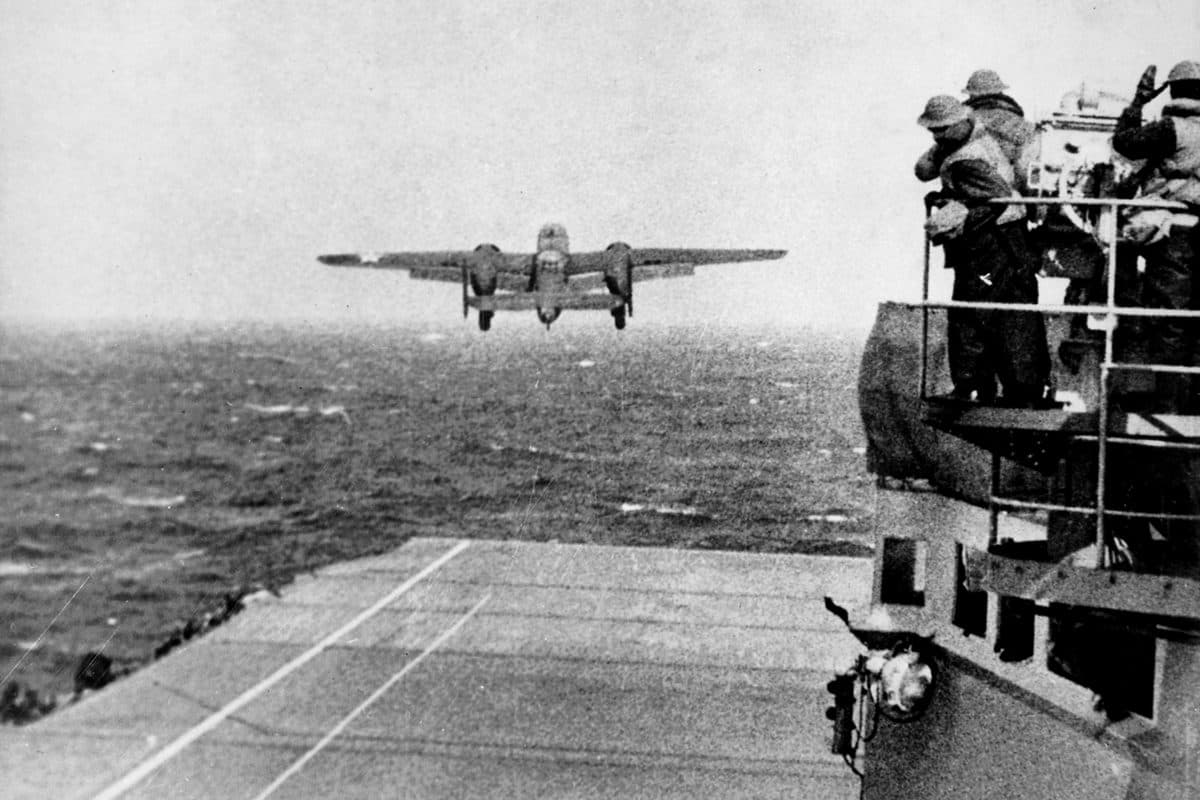
On April 18, 1942, sixteen B-25 Mitchell bombers did something no one thought possible: they launched from the deck of an aircraft carrier, flew 650 miles to Japan, and bombed Tokyo. Every aircraft was lost. The damage was negligible. The consequences changed the war.
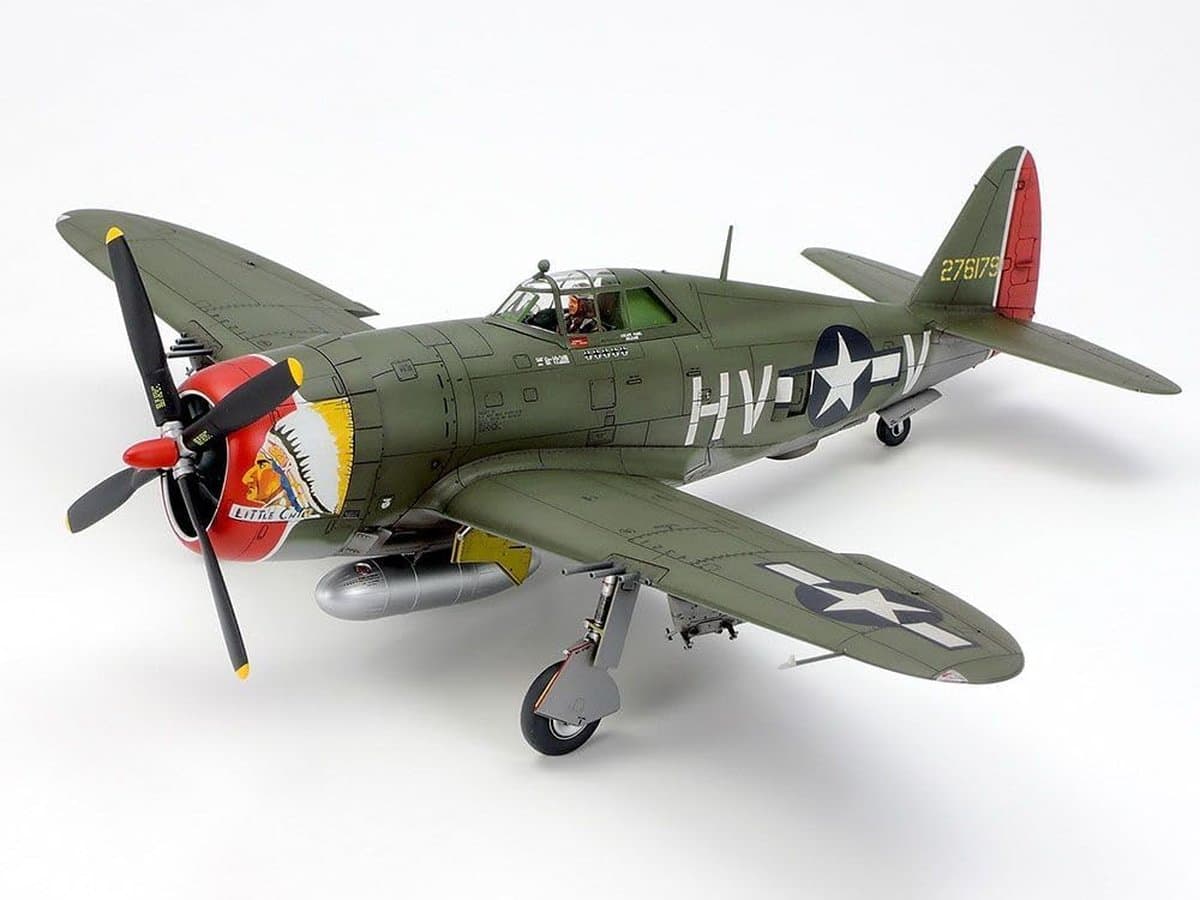
Compare 85+ WW2 scale model kits across aircraft, tanks, and ships. Beginner builds from $9 to museum-grade showpieces at $580. Covers Tamiya, Eduard, HK Models, Trumpeter, and more with honest reviews, trade-offs, and pricing.

On April 7, 1945, the Imperial Japanese Navy sent the largest battleship ever built on a one-way suicide mission to Okinawa. She never arrived. 386 American aircraft found her first, and sank her in under two hours.