

World World 2 Facts: Did You Know These 29 Interesting Details?
Calvin Graham Was Youngest Decorated US Soldier at 12 Pearl Harbor Visitors Bureau “Green Boys” was a term given to soldiers who…
daniel-mercer··27 min read
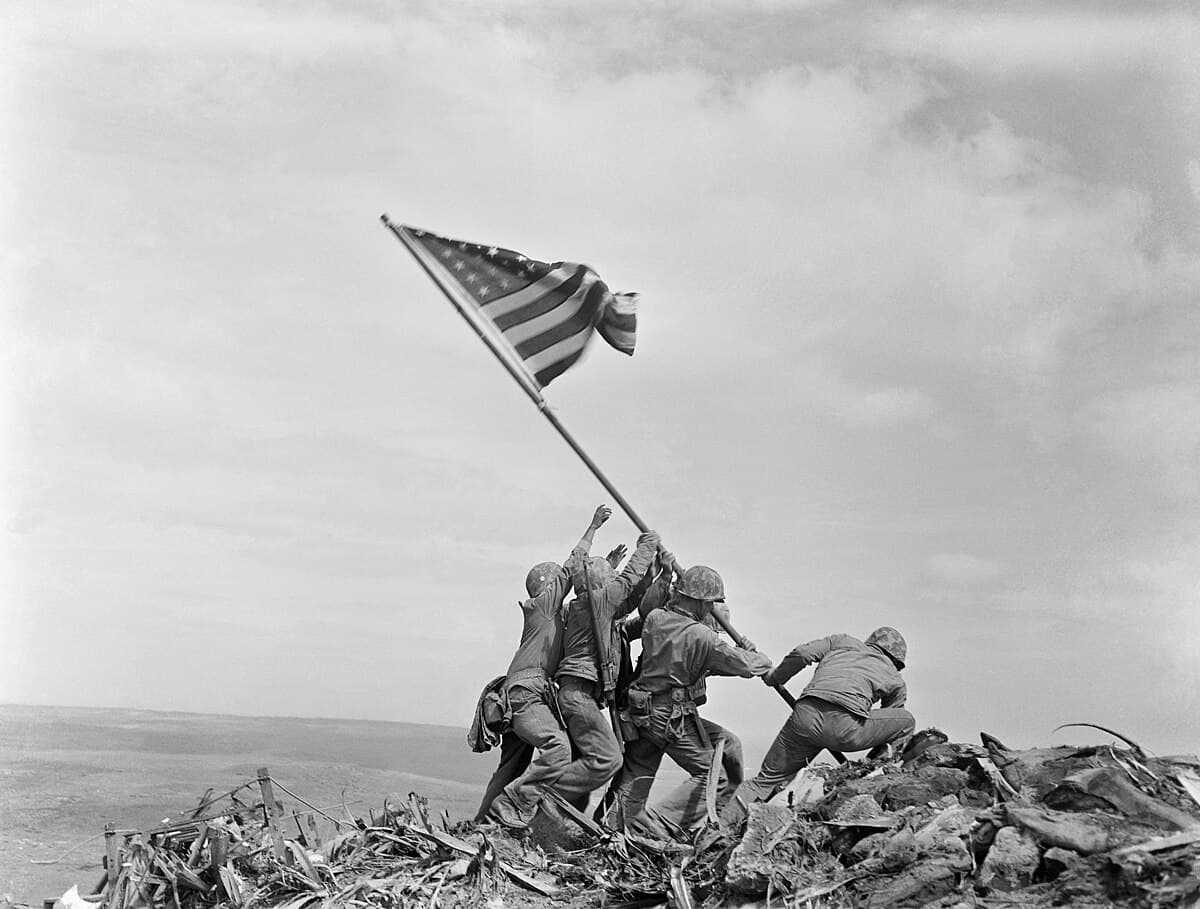
After 36 days of the most brutal fighting in the Pacific War, the island of Iwo Jima was officially declared secure. The Marines had expected a five-day battle; Kuribayashi's revolutionary defense-in-depth using 11 miles of interconnected tunnels turned it into a nightmare. The battle cost 6,821 American dead and 19,217 wounded. Of approximately 21,000 Japanese defenders, only 216 were taken prisoner. Fleet Admiral Nimitz declared: "Among the Americans who served on Iwo Jima, uncommon valor was a common virtue."
Related articleWilliam Caxton published his English translation of Aesop's Fables, which included numerous military allegories about strategy, deception, and the consequences of hubris. While not a military event itself, Caxton's printing press had already begun revolutionizing military communication, enabling the mass production of tactical manuals, drill books, and military treatises that transformed how European armies trained and fought.
Ludwig van Beethoven died in Vienna at age 56. His compositions, particularly "Wellington's Victory" and the martial themes in his symphonies, profoundly influenced military music across Europe. His funeral procession was attended by an estimated 20,000 people, including military honor guards from the Austrian Empire.
Union forces under Major John Chivington clashed with Confederate troops in the Sangre de Cristo Mountains of New Mexico Territory. Over three days of fighting, Chivington's flanking force destroyed all Confederate supply wagons and animals at Johnson's Ranch, forcing the entire Confederate force to retreat. The battle ended the Confederacy's ambitious plan to conquer the western territories and seize gold and silver mines in Colorado and California.
British and ANZAC forces attacked the Ottoman garrison at Gaza in southern Palestine. Advancing under dense fog, cavalry successfully encircled the city while infantry attacked from the south. But concerns about water supplies led the commander to order withdrawal at dusk, just as the British were on the verge of capturing the city. The premature retreat and a misleading victory report to London led to the disastrous Second Battle of Gaza three weeks later.
Related articleWith the German Spring Offensive threatening to split the British and French armies, Allied leaders met at Doullens and agreed to appoint Ferdinand Foch as supreme commander of all Allied forces on the Western Front. The decision to unify command under a single general was a pivotal turning point that enabled the coordinated defense and eventual counteroffensive that won the war.
After 36 days of the most brutal fighting in the Pacific War, the island of Iwo Jima was officially declared secure. The Marines had expected a five-day battle; Kuribayashi's revolutionary defense-in-depth using 11 miles of interconnected tunnels turned it into a nightmare. The battle cost 6,821 American dead and 19,217 wounded. Of approximately 21,000 Japanese defenders, only 216 were taken prisoner. Fleet Admiral Nimitz declared: "Among the Americans who served on Iwo Jima, uncommon valor was a common virtue."
Related articleApproximately 3,500 Chinese soldiers assaulted the "Nevada Cities" outposts held by the 1st Marine Division in Korea. Hospital Corpsman Francis Hammond, though critically wounded, treated casualties for four hours before being killed, earning a posthumous Medal of Honor. The five-day battle cost the Marines 1,015 casualties, nearly 70% of their engaged strength.
After Pakistan's military junta refused to honor election results, Sheikh Mujibur Rahman declared Bangladesh's independence. Simultaneously, Pakistan launched Operation Searchlight, a brutal military crackdown targeting civilians, intellectuals, and minorities. The resulting nine-month war drew India's intervention and ended with Pakistan's surrender of over 93,000 troops, one of the largest military surrenders since World War II.
King Faisal bin Abdulaziz of Saudi Arabia was shot and killed by his nephew Prince Faisal bin Musaid at a public audience in Riyadh. The assassination sent shockwaves through the Middle East and temporarily destabilized global oil markets, given Saudi Arabia's pivotal role in the 1973 oil embargo that had reshaped Western military and energy policy.
Egyptian President Anwar Sadat and Israeli Prime Minister Menachem Begin signed the Egypt-Israel Peace Treaty, formally ending the state of war that had existed since 1948. The treaty removed the Arab world's most powerful military from the conflict with Israel and required Israeli withdrawal from the Sinai. It came at enormous cost, Egypt was expelled from the Arab League, and Sadat was assassinated in 1981. The treaty remains in effect today.

Rear Admiral, U.S. Navy
The highest-ranking American casualty at Pearl Harbor and first U.S. Navy flag officer killed in World War II. He was aboard USS Arizona when the Japanese attacked on December 7, 1941, running toward the bridge when the forward magazine detonated. Posthumously awarded the Medal of Honor. Two destroyers have been named in his honor.

General (four-star), U.S. Army
Commander of all U.S. forces in Vietnam from 1964 to 1968, overseeing the buildup from 16,000 advisors to over 500,000 combat troops. His strategy of attrition and his optimistic November 1967 assertion that "the end begins to come into view" were devastated by the Tet Offensive. He remains the central figure in debates about American strategy in Vietnam.

Hospitalman, U.S. Navy
Medal of Honor recipient killed at Outpost Vegas in Korea. Though critically wounded, Hammond treated casualties for four hours during a massive Chinese assault, remaining behind to supervise evacuation when his unit withdrew. He was killed by mortar fire while carrying out these duties. His hometown of Alexandria, Virginia, named a high school in his honor.
Wear the Timeline
10 military events occurred on March 26, spanning multiple centuries. Key events include: Battle of Iwo Jima Declared Secure (1945), Battle of Glorieta Pass Begins, "The Gettysburg of the West" (1862), First Battle of Gaza, A Victory Thrown Away (1917), Egypt-Israel Peace Treaty Signed at the White House (1979), Bangladesh Declares Independence, Operation Searchlight Begins (1971).
The most significant military event on March 26 is Battle of Iwo Jima Declared Secure (1945). After 36 days of the most brutal fighting in the Pacific War, the island of Iwo Jima was officially declared secure. The Marines had expected a five-day battle; Kuribayashi's revolutionary defense-in-depth using 11 miles of interconnected tunnels turned it into a nightmare. The battle cost 6,821 American dead and 19,217 wounded. Of approximately 21,000 Japanese defenders, only 216 were taken prisoner. Fleet Admiral Nimitz declared: "Among the Americans who served on Iwo Jima, uncommon valor was a common virtue."
Notable military figures born on March 26 include Rear Admiral Isaac C. Kidd (1884–1941), General William C. Westmoreland (1914–2005).
Events on March 26 span World War II, the Civil War, World War I, the Modern Era, the Cold War, the Korean War, the Colonial & Revolutionary era, covering 10 events across 3 centuries of military history.
Events on March 26 involve 3 branches of the U.S. and allied armed forces, reflecting the global scope of military operations throughout history.
Explore military history from the day you were born.
June 6
The Allied invasion of Normandy, the largest amphibious assault in history.
December 7
Japan attacks the U.S. Pacific Fleet, bringing America into World War II.
September 11
The deadliest terrorist attack in history transforms U.S. national security.
August 6
The first atomic bomb is dropped on a city, ushering in the nuclear age.
May 8
Nazi Germany surrenders unconditionally, ending World War II in Europe.
November 11
Armistice Day marks the end of World War I and honors all who served.
June 4
The turning point of the Pacific War as the U.S. Navy destroys four Japanese carriers.
July 4
The Declaration of Independence is adopted, sparking the American Revolution.
Calvin Graham Was Youngest Decorated US Soldier at 12 Pearl Harbor Visitors Bureau “Green Boys” was a term given to soldiers who…

From wrong turns to unlocked gates - real mistakes that shaped the course of history.
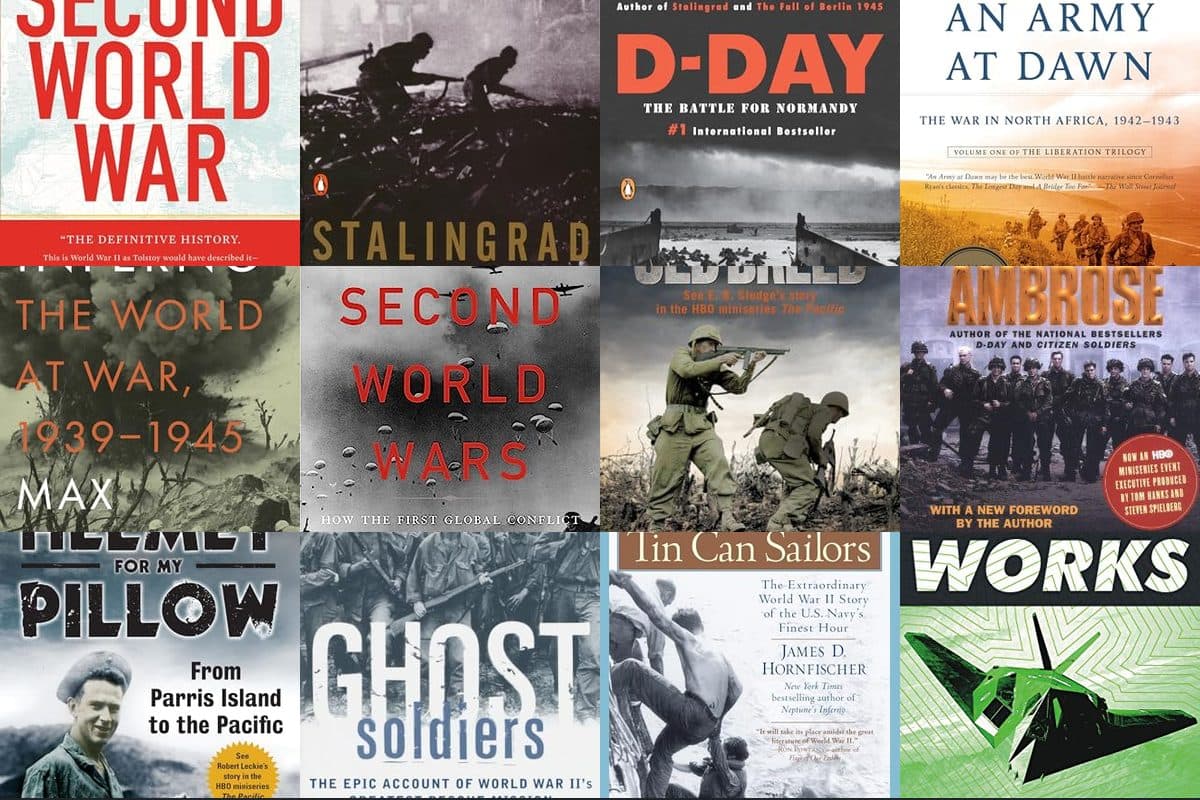
15 essential WW2 books covering every theater. Narrative histories, memoirs, and visual references ranked.
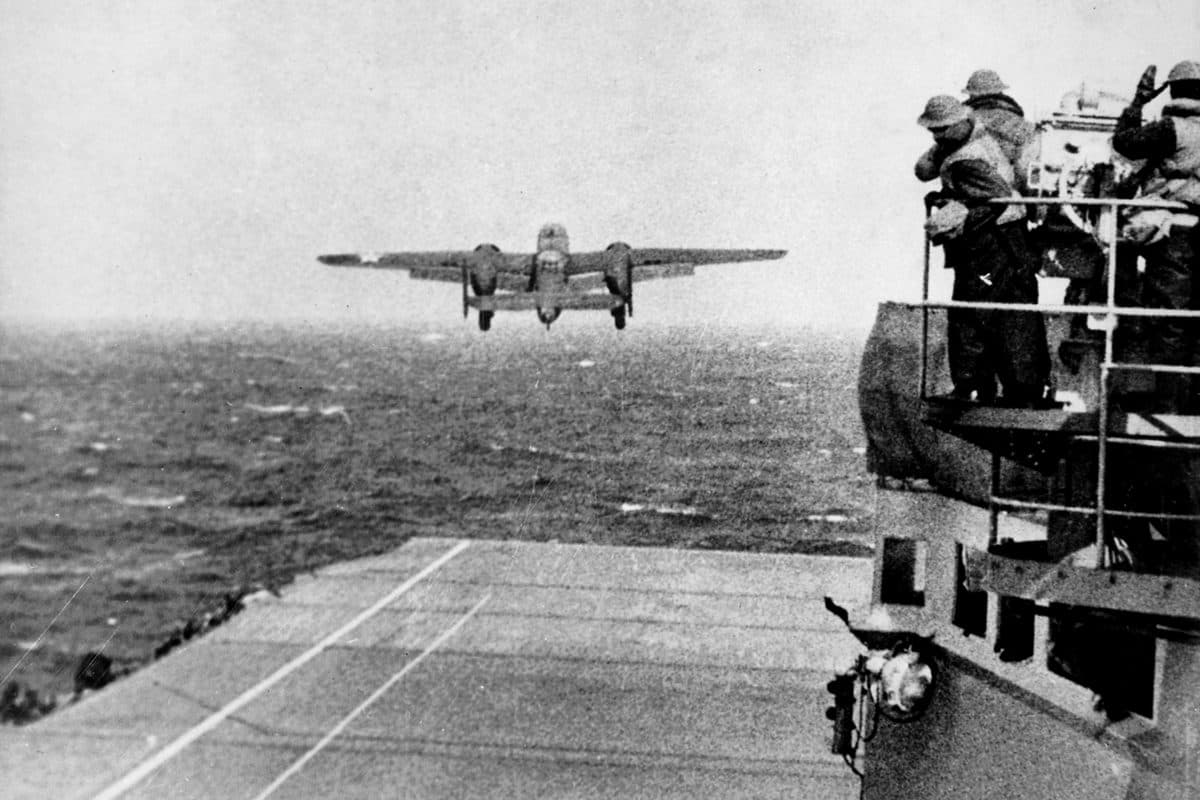
On April 18, 1942, sixteen B-25 Mitchell bombers did something no one thought possible: they launched from the deck of an aircraft carrier, flew 650 miles to Japan, and bombed Tokyo. Every aircraft was lost. The damage was negligible. The consequences changed the war.