
Skip to content
May 3:British Recapture of Rangoon: The Burma Campaign Ends81yr ago

November 29 in Military History

Share:

This Day in Military History: November 29

Go to Today
Sand Creek Massacre National Historic Site in southeastern Colorado, where the 1864 atrocity took place
Defining Moment162 years ago

The Sand Creek Massacre

Army· 1864

Approximately 675 U.S. volunteer soldiers of the 1st and 3rd Colorado Cavalry under Colonel John Chivington attacked a peaceful encampment of Cheyenne and Arapaho people at Sand Creek in southeastern Colorado Territory. Despite the camp flying an American flag and a white flag of surrender, the troops killed an estimated 150-200 people, the majority women, children, and the elderly, and mutilated the dead. The massacre, initially celebrated as a victory, was exposed by congressional investigations and became one of the most infamous atrocities in American military history.

10 events, 2 notable births, 1 notable deaths, and 5 military quotes10events2births1deaths5quotes

1700s

1776RevolutionaryContinental250 years ago250th Anniversary

A siege of Fort Cumberland in Nova Scotia by pro-American rebels came to an end with the arrival of British reinforcements. The failed siege was one of several attempts by American sympathizers to bring Nova Scotia into the Revolution, but British naval superiority and strong Loyalist sentiment in the province prevented it. Nova Scotia's continued loyalty to Britain would have lasting consequences for North American military geography.

1800s

1862Civil WarArmy164 years ago

Union cavalry under Brigadier General James G. Blunt defeated a Confederate cavalry force under Brigadier General John S. Marmaduke at Cane Hill in northwestern Arkansas. The running engagement across 12 miles of rough terrain tested Union mountain howitzer tactics and shaped the subsequent campaign that led to the decisive Union victory at Prairie Grove.

1863Civil WarArmy163 years ago

Union forces under General Ambrose Burnside successfully defended Knoxville, Tennessee, against a Confederate assault led by General James Longstreet. The Confederates attacked Fort Sanders in freezing pre-dawn conditions, but a frozen ditch and wire entanglements created an impassable obstacle. The assault was repulsed in approximately 20 minutes with over 800 Confederate casualties compared to fewer than 20 Union killed.

1864Civil WarArmy162 years agoDefining Moment

Colonel Chivington's Colorado Cavalry attacked a peaceful Cheyenne and Arapaho camp at Sand Creek, killing 150-200 people, mostly women, children, and elderly. The massacre, committed against people flying an American flag and white flag of surrender, became one of the most infamous atrocities in American frontier history.

1864Civil WarArmy162 years ago

In one of the Civil War's great mysteries, Confederate General John Bell Hood's entire Army of Tennessee failed to cut off the retreating Union Army of the Ohio at Spring Hill, Tennessee. The Union force under General John Schofield marched directly past the Confederate army along the Columbia Pike during the night without being attacked. Hood was furious and blamed his subordinates, leading to the catastrophic frontal assault at Franklin the next day.

1900s

1929InterwarNavy97 years ago

U.S. Navy Rear Admiral Richard E. Byrd and three companions completed the first flight over the South Pole in a Ford Trimotor aircraft named "Floyd Bennett." The 18-hour round-trip flight from their base at Little America on the Ross Ice Shelf was a milestone in polar exploration and demonstrated the military potential of long-range aviation in extreme environments.

1944WWIINavy82 years ago

The submarine USS Archerfish torpedoed and sank the Japanese aircraft carrier Shinano on her maiden voyage, the largest warship ever sunk by a submarine. Converted from a Yamato-class battleship hull, Shinano displaced over 71,000 tons but sank in seven hours after four torpedo hits exposed catastrophic construction and damage-control deficiencies.

1947Cold WarArmy79 years ago

The United Nations General Assembly voted 33-13 to approve Resolution 181, the Partition Plan for Palestine, dividing British-controlled Palestine into separate Jewish and Arab states with Jerusalem as an international zone. Arab nations rejected the plan, and the vote immediately triggered civil war in Palestine that escalated into the 1948 Arab-Israeli War, the first of many conflicts that continue to shape the military landscape of the Middle East.

1950KoreaArmyMarines76 years ago

Chinese People's Volunteer Army forces completed the encirclement of the 1st Marine Division and elements of the Army's 7th Infantry Division around Hagaru-ri at the Chosin Reservoir, launching one of the most brutal winter campaigns in U.S. military history. The subsequent fighting withdrawal over 78 miles of mountain road became an epic of small-unit cohesion under extreme cold.

1972Cold WarAir ForceArmy54 years ago

Atari released the Pong arcade cabinet in November 1972, a commercial launch that seeded the electronic simulation industry and ultimately produced the flight, armor, and combat training simulators that transformed military pilot and crew training in the following three decades.

Enjoyed this page? Share it with someone who loves military history.

Share:

Never Miss a Day in Military History

Get daily military history, analysis, and technology delivered to your inbox.

Born on This Day

Frederick Townsend Ward

Frederick Townsend Ward

General

b. 1831

American soldier of fortune who organized and commanded the "Ever Victorious Army," a force of Chinese soldiers trained and led by Western officers that fought for the Qing Dynasty during the Taiping Rebellion, the deadliest civil war in human history, which killed an estimated 20-30 million people. Ward achieved remarkable military success defending Shanghai before being killed in action at the Battle of Cixi in 1862 at age 30. He is still honored in China as a foreign hero.

Louisa May Alcott

Louisa May Alcott

b. 1832

Celebrated American author who served as a volunteer nurse at the Union Hospital in Georgetown, Washington, D.C., during the Civil War. Her six weeks tending wounded soldiers from the Battle of Fredericksburg, until she contracted typhoid fever from the hospital's unsanitary conditions, inspired "Hospital Sketches," one of the earliest and most vivid accounts of military hospital life. She later wrote "Little Women," which was informed by the wartime sacrifices she witnessed.

Died on This Day

Chief White Antelope

Chief White Antelope

d. 1864

Cheyenne peace chief who was killed during the Sand Creek Massacre on this date while standing in front of his lodge singing his death song: "Nothing lives long, except the earth and the mountains." White Antelope had been one of the most prominent advocates for peace with the United States, having traveled to Washington, D.C., in 1851 to meet President Millard Fillmore. He was approximately 75 years old when he was cut down by Chivington's troops.

Military Quotes

Damn any man who sympathizes with Indians! I have come to kill Indians, and believe it is right and honorable to use any means under God's heaven to kill Indians.

John Chivington

Colonel, 3rd Colorado Cavalry

Chivington's words to his officers before the Sand Creek Massacre, revealing the genocidal intent behind the attack. He was a former Methodist minister who was never prosecuted for the atrocity., 1864

Nothing lives long, except the earth and the mountains.

Chief White Antelope

Cheyenne Peace Chief

White Antelope's death song, sung as he stood before Chivington's troops at Sand Creek. He refused to flee and faced his killers with dignity and defiance., 1864

I want no war. I want to be friends with the white man.

Chief Black Kettle

Southern Cheyenne Peace Chief

Black Kettle had spent years seeking peace with the U.S. government. His camp at Sand Creek was flying an American flag and a white flag when Chivington attacked on this date., 1864

What is life? It is the flash of a firefly in the night. It is the breath of a buffalo in the wintertime.

Crowfoot

Blackfoot Chief

The brevity and fragility of life that Crowfoot described was demonstrated with brutal finality at Sand Creek, where the lives of women and children were extinguished in moments of senseless violence., 1890

A great democracy does not make it harder to uncover governmental abuses. It makes it harder to excuse them.

Frank Church

U.S. Senator

Congressional investigations exposed the Sand Creek Massacre as an atrocity, not a battle. The military's willingness to investigate itself, however belatedly, is what separates accountability from impunity., 1975

Frequently Asked Questions

What military events happened on November 29?

10 military events occurred on November 29, spanning multiple centuries. Key events include: The Sand Creek Massacre (1864), The Battle of Spring Hill (1864), The United Nations Partition Plan for Palestine (1947), USS Archerfish Sinks IJN Shinano (1944), Chinese Forces Encircle Marines at Chosin Reservoir (1950).

What is the most significant military event on November 29?

The most significant military event on November 29 is The Sand Creek Massacre (1864). Approximately 675 U.S. volunteer soldiers of the 1st and 3rd Colorado Cavalry under Colonel John Chivington attacked a peaceful encampment of Cheyenne and Arapaho people at Sand Creek in southeastern Colorado Territory. Despite the camp flying an American flag and a white flag of surrender, the troops killed an estimated 150-200 people, the majority women, children, and the elderly, and mutilated the dead. The massacre, initially celebrated as a victory, was exposed by congressional investigations and became one of the most infamous atrocities in American military history.

What famous military figures were born on November 29?

Notable military figures born on November 29 include Frederick Townsend Ward (1831–1862), Louisa May Alcott (1832–1888).

What wars are represented in November 29's military timeline?

Events on November 29 span the Civil War, the Colonial & Revolutionary era, the Interwar Period, the Cold War, World War II, the Korean War, covering 10 events across 3 centuries of military history.

How many military branches are represented on November 29?

Events on November 29 involve 5 branches of the U.S. and allied armed forces, reflecting the global scope of military operations throughout history.

What Happened on Your Birthday?

Explore military history from the day you were born.

Related Days by Era

Explore More Days

Related Articles

Minuteman III ICBM launching from its silo at Vandenberg Air Force Base with a trail of flame and smoke against a dark sky

10 Cold War Weapons That Were Designed for World War III and Never Fired

These weapons were built to fight a war that everyone prayed would never happen. The Minuteman III has been on alert since 1970. The Typhoon-class carried enough nuclear warheads to destroy a continent. The Davy Crockett could be fired by three soldiers. Most of them have been waiting for 40 years. Here are 10 Cold War weapons built exclusively for World War III.

daniel-mercer··13 min read
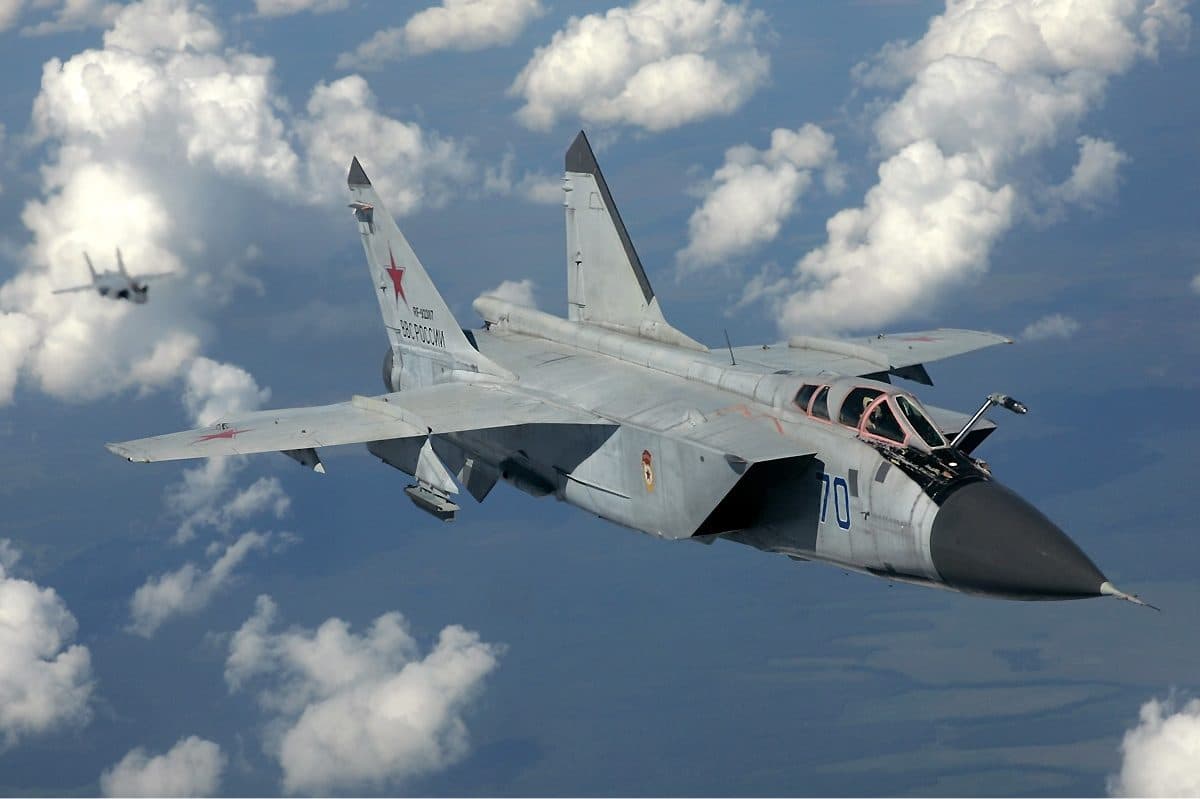
Russian Air Force MiG-31 Foxhound interceptor in flight showing its twin-engine configuration and large airframe

The MiG-31 Foxhound Can Fly Mach 2.83 and Fire Missiles at Targets 200 Miles Away

The MiG-31 was designed to catch the SR-71 Blackbird. It is still the fastest fighter in any air force. The Foxhound's Zaslon phased-array radar, the first ever installed in a fighter, can track 10 targets and engage 4 simultaneously at ranges exceeding 200 miles. Here is why Russia still flies a 1980s interceptor, and why the MiG-31BM carrying a Kinzhal hypersonic missile has changed what the aircraft means to modern warfare.

michael-trent··10 min read