


15 Best World War II Books for History Enthusiasts (2026)
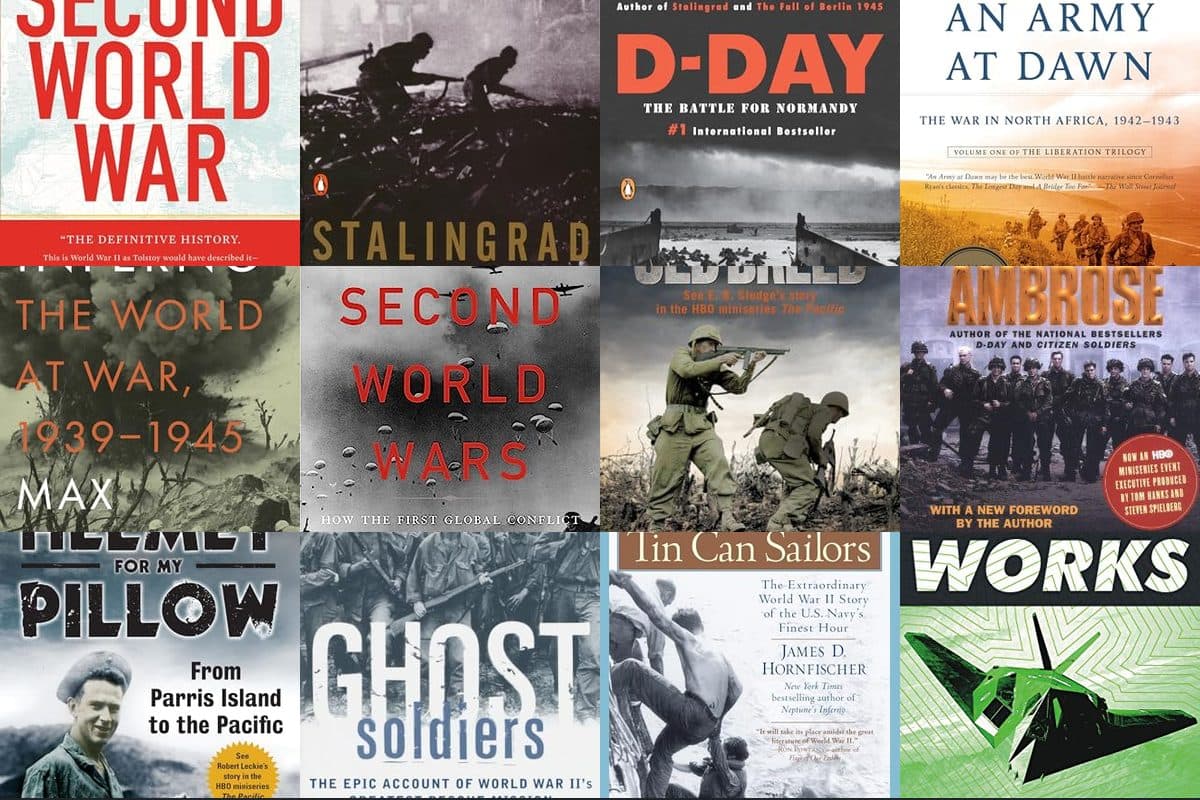
15 essential WW2 books covering every theater. Narrative histories, memoirs, and visual references ranked.
daniel-mercer··21 min read

The Treaty of Aix-la-Chapelle ended the eight-year War of the Austrian Succession, restoring the pre-war status quo and settling virtually nothing. The treaty returned conquered territories in the Netherlands, Italy, and India while confirming Prussia's seizure of Silesia from Austria. The inconclusive peace ensured that the underlying conflicts would erupt again in the Seven Years' War, the first true world war, just eight years later.
The treaty ended the eight-year war but settled virtually nothing, ensuring the underlying conflicts would erupt again in the Seven Years' War just eight years later.
The Treaty of Aix-la-Chapelle concluded the War of the Austrian Succession, restoring most conquered territories to their prewar owners but leaving the strategic question of Silesia unresolved. The peace preserved the European balance of power briefly but set the stage for the Seven Years' War within a decade.
British astronomers Charles Mason and Jeremiah Dixon completed their survey of the boundary between Pennsylvania and Maryland. The Mason-Dixon Line would become the most famous geographic dividing line in American history, separating free states from slave states and eventually marking the cultural boundary between North and South that the Civil War would be fought to resolve.
The United States formally took possession of Alaska from Russia in a ceremony at Sitka, as the Russian flag was lowered and the American flag raised. The $7.2 million purchase, about two cents per acre, was mocked as "Seward's Folly" but gave the U.S. an enormous strategic position in the North Pacific. Alaska's military importance became clear during World War II, when the Japanese invaded the Aleutian Islands, and during the Cold War as a forward base against the Soviet Union.
The formal ceremony transferring Russian America to the United States took place at Sitka, with Russian troops lowering the imperial flag and American soldiers raising the Stars and Stripes. The $7.2 million purchase handed the U.S. Army responsibility for 586,000 square miles of strategic Pacific coastline and the naval approaches to the Bering Sea.
The Balkan League, Serbia, Bulgaria, Greece, and Montenegro, declared war on the Ottoman Empire, beginning the First Balkan War. The allied armies rapidly overran Ottoman territories in Europe, nearly driving Turkey out of the continent. The wars of 1912-1913 redrew the map of southeastern Europe and created the volatile conditions that led to World War I.
Adolf Hitler issued a decree establishing the Volkssturm, a national militia that conscripted all remaining German males between 16 and 60 not already in military service. The desperate measure, placing poorly armed civilians, including old men and teenage boys, in the path of advancing Allied armies, reflected the terminal nature of Germany's military position. Tens of thousands of Volkssturm members would be killed in the final months of the war.
Red Army forces of the 1st Baltic Front under General Ivan Bagramyan reached the Baltic Sea near Memel, cutting off the German Army Group North in the Courland Pocket of western Latvia. Roughly 250,000 German soldiers and their equipment would remain isolated there until the final surrender of May 1945, stripped from the Reich's defense of East Prussia.
The United States halted the systematic air interdiction campaign against North Vietnam known as Operation Linebacker I, concluding 150 days of B-52 and tactical fighter-bomber operations that had destroyed critical transportation infrastructure. The campaign demonstrated the effectiveness of laser-guided bombs and forced Hanoi back to the Paris peace talks.
West German counterterrorism unit GSG 9, assisted by two British SAS operators, stormed a hijacked Lufthansa Boeing 737 at Mogadishu Airport, Somalia, freeing all 86 hostages and killing three of the four Palestinian hijackers. The daring raid, completed in seven minutes, demonstrated the effectiveness of elite counterterrorism forces and became a model for hostage rescue operations worldwide.

Major General
U.S. Army officer who served as Chief of the Air Service of the American Expeditionary Forces in World War I and later as Chief of the Army Air Service. An engineer by training, Patrick was instrumental in developing American military aviation and advocating for an independent air force.

Pioneer of rock and roll who served in a deferred military classification during the Korean War. His music became the soundtrack of the generation that fought in Vietnam, and "Johnny B. Goode" was included on the Voyager Golden Record launched into space, a mission managed by the same military-space complex that put men on the Moon.

America's most prolific inventor, whose technologies, including the phonograph, electric light, and motion pictures, had enormous military applications. During World War I, Edison chaired the Naval Consulting Board, advising the Navy on technology and innovation. His research laboratory model was the forerunner of military R&D institutions.
Wear the Timeline
10 military events occurred on October 18, spanning multiple centuries. Key events include: Treaty of Aix-la-Chapelle Ends the War of Austrian Succession (1748), United States Takes Possession of Alaska (1867), First Balkan War Begins (1912), Alaska Transfers from Russia to the United States (1867), Soviet Baltic Offensive Isolates Army Group North (1944).
The most significant military event on October 18 is Treaty of Aix-la-Chapelle Ends the War of Austrian Succession (1748). The Treaty of Aix-la-Chapelle ended the eight-year War of the Austrian Succession, restoring the pre-war status quo and settling virtually nothing. The treaty returned conquered territories in the Netherlands, Italy, and India while confirming Prussia's seizure of Silesia from Austria. The inconclusive peace ensured that the underlying conflicts would erupt again in the Seven Years' War, the first true world war, just eight years later.
Notable military figures born on October 18 include Mason Patrick (1863–1942), Chuck Berry (1926–2017).
Events on October 18 span the Colonial & Revolutionary era, the Interwar Period, World War II, World War I, the Cold War, the Civil War, the Vietnam War, covering 10 events across 3 centuries of military history.
Events on October 18 involve 3 branches of the U.S. and allied armed forces, reflecting the global scope of military operations throughout history.
Explore military history from the day you were born.
June 6
The Allied invasion of Normandy, the largest amphibious assault in history.
December 7
Japan attacks the U.S. Pacific Fleet, bringing America into World War II.
September 11
The deadliest terrorist attack in history transforms U.S. national security.
August 6
The first atomic bomb is dropped on a city, ushering in the nuclear age.
May 8
Nazi Germany surrenders unconditionally, ending World War II in Europe.
November 11
Armistice Day marks the end of World War I and honors all who served.
June 4
The turning point of the Pacific War as the U.S. Navy destroys four Japanese carriers.
July 4
The Declaration of Independence is adopted, sparking the American Revolution.
15 essential WW2 books covering every theater. Narrative histories, memoirs, and visual references ranked.
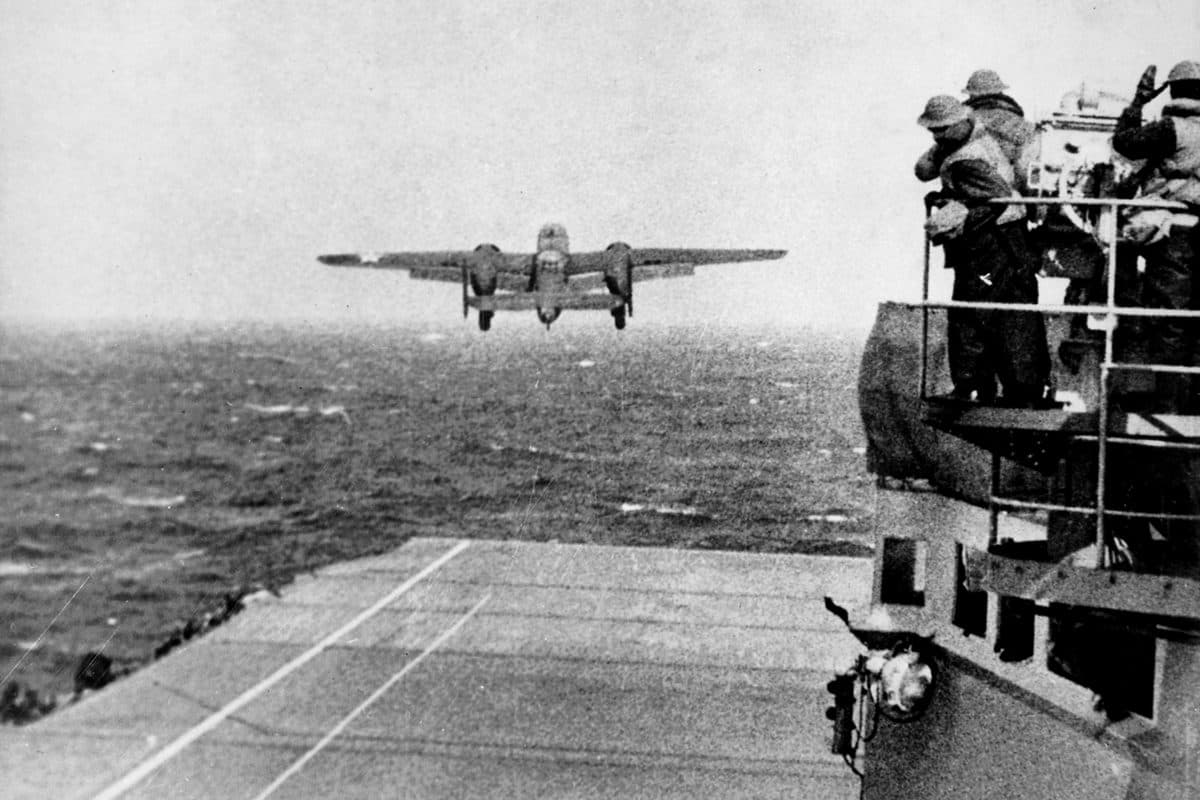
On April 18, 1942, sixteen B-25 Mitchell bombers did something no one thought possible: they launched from the deck of an aircraft carrier, flew 650 miles to Japan, and bombed Tokyo. Every aircraft was lost. The damage was negligible. The consequences changed the war.
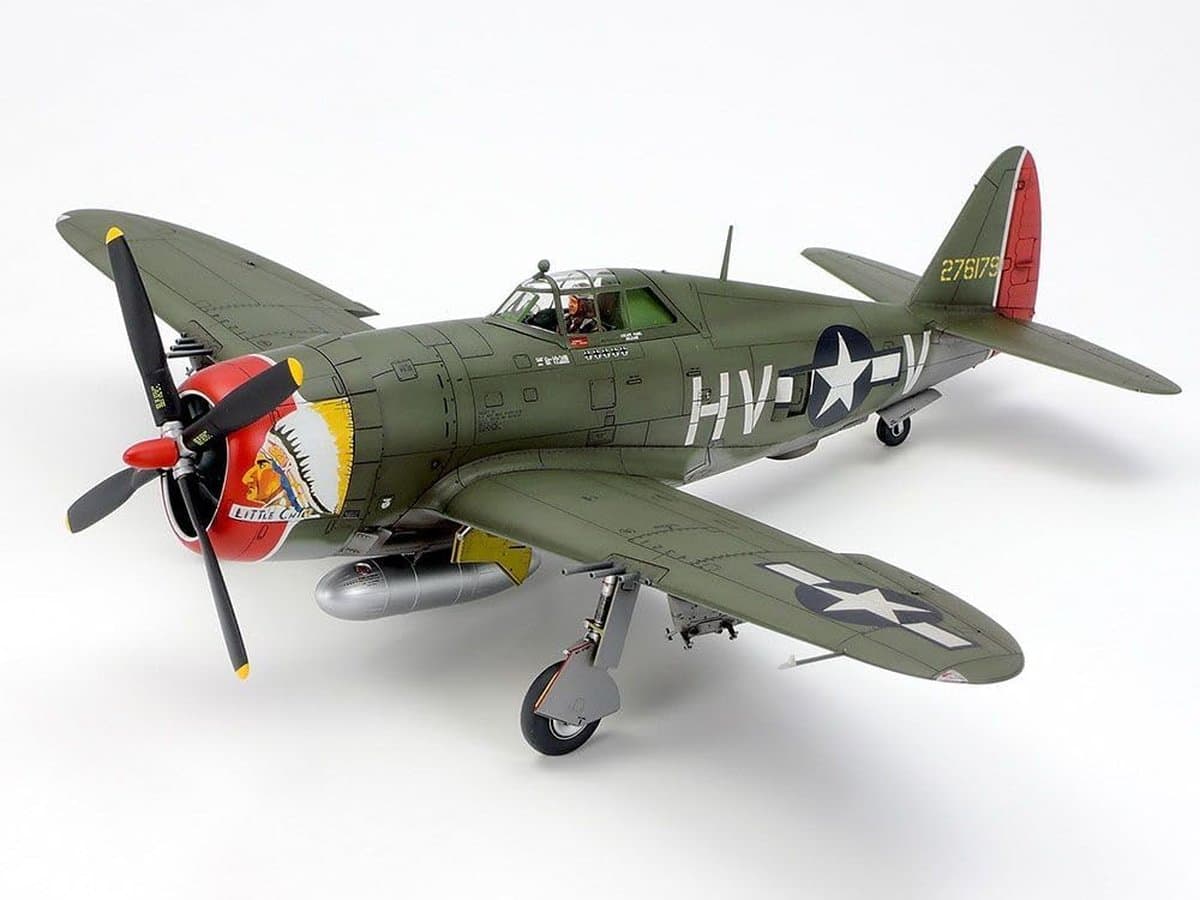
Compare 85+ WW2 scale model kits across aircraft, tanks, and ships. Beginner builds from $9 to museum-grade showpieces at $580. Covers Tamiya, Eduard, HK Models, Trumpeter, and more with honest reviews, trade-offs, and pricing.

On April 7, 1945, the Imperial Japanese Navy sent the largest battleship ever built on a one-way suicide mission to Okinawa. She never arrived. 386 American aircraft found her first, and sank her in under two hours.