

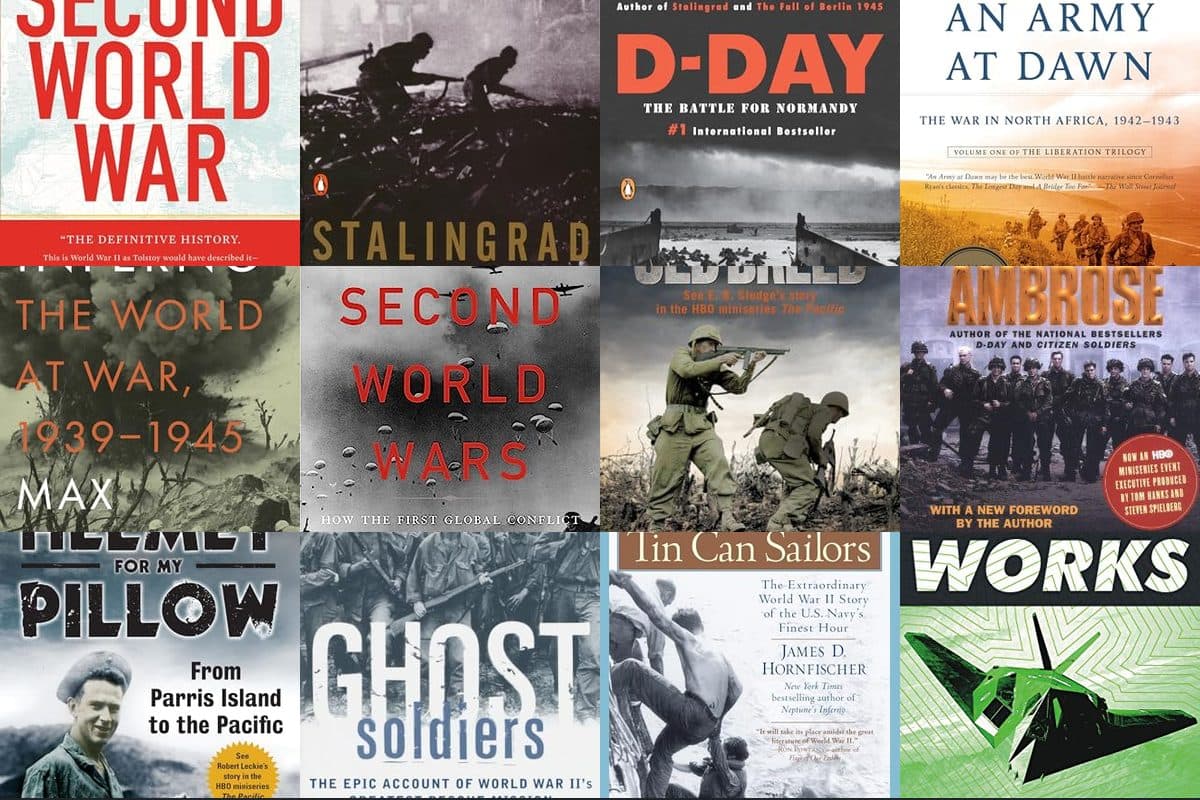
15 Best World War II Books for History Enthusiasts (2026)
15 essential WW2 books covering every theater. Narrative histories, memoirs, and visual references ranked.
daniel-mercer··21 min read
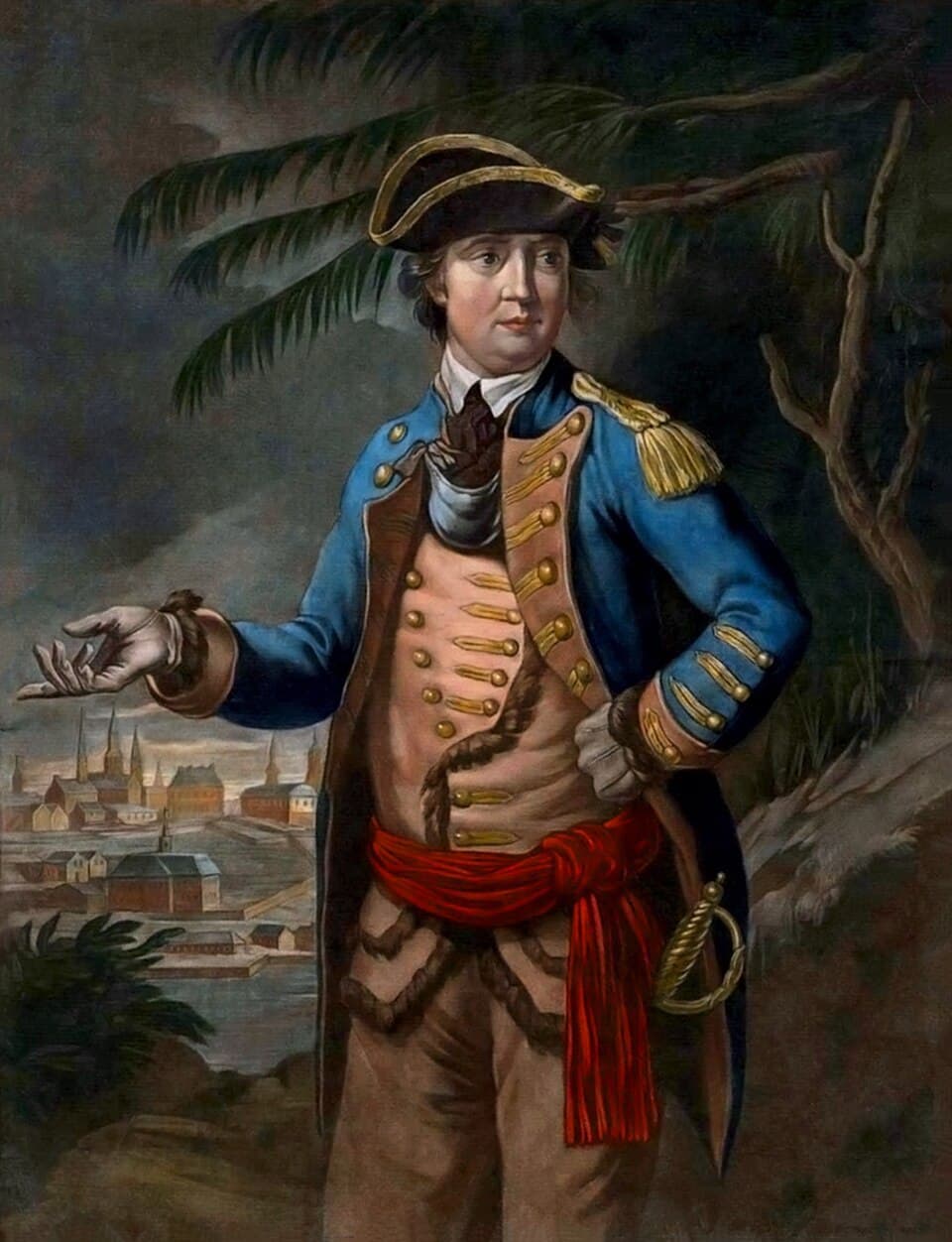
Brigadier General Benedict Arnold, now fighting for the British after his infamous treason, led a raiding force of 1,600 troops up the James River and burned much of Richmond, Virginia's capital. The raid destroyed military supplies, tobacco warehouses, and public buildings, and demonstrated that the British could strike deep into the American interior with impunity, a humiliation that would push Virginia toward greater commitment to the war effort.
Marshal Turenne's French army defeated the combined forces of Austria and Brandenburg at Turckheim in Alsace, culminating one of the most celebrated winter campaigns in military history. After a daring concealed march through the Vosges Mountains, Turenne used feigned attacks and terrain to rout the Imperial army.
Brigadier General Benedict Arnold, now fighting for the British after his infamous treason, led 1,600 troops up the James River and burned much of Richmond, Virginia's capital. The raid destroyed military supplies, tobacco warehouses, and public buildings.
Captain Alfred Dreyfus of the French Army was publicly stripped of his rank in the courtyard of the École Militaire in Paris after being wrongfully convicted of treason for allegedly passing military secrets to Germany. The Dreyfus Affair, which tore French society apart for over a decade, exposed deep antisemitism within the French military establishment and had lasting effects on French civil-military relations.
The Spartacist Uprising erupted in Berlin as communist revolutionaries led by Karl Liebknecht and Rosa Luxemburg attempted to overthrow the fledgling Weimar Republic. The German government crushed the revolt using Freikorps, demobilized veterans organized into paramilitary units, setting a pattern of political violence that would plague Germany throughout the 1920s and help pave the road to Nazism.
Locksmith Anton Drexler and a small group of nationalists founded the Deutsche Arbeiterpartei (German Workers' Party) at a Munich hotel. The obscure party attracted fewer than 40 members, but within two years, a young war veteran named Adolf Hitler would seize control and transform it into the Nazi Party.
Japanese kamikaze attacks reached a crescendo against the U.S. naval force approaching Lingayen Gulf for the invasion of Luzon. On this day alone, kamikaze strikes damaged multiple ships including the escort carrier USS Manila Bay and several destroyers. The suicide attacks during the Lingayen Gulf operations killed nearly 2,000 American sailors and demonstrated the terrifying effectiveness of Japan's desperate tactic.
President Dwight D. Eisenhower addressed a joint session of Congress requesting authorization to use American military force to defend any Middle Eastern nation threatened by international communism. The proposal committed $200 million in annual military and economic aid and established the Middle East as a primary theater of Cold War competition.
Alexander Dubček became First Secretary of the Czechoslovak Communist Party, beginning the period of liberalization known as the Prague Spring. Dubček's program of "socialism with a human face", including freedom of the press, speech, and travel, alarmed the Soviet Union. On August 20, 1968, Soviet-led Warsaw Pact forces invaded Czechoslovakia with 500,000 troops, crushing the reform movement by force.
President Richard Nixon announced approval of a reusable Space Shuttle, committing NASA and major aerospace contractors to develop the winged orbiter, solid rocket boosters, and external tank that would dominate American spaceflight for the next three decades. The decision locked in a dual-use architecture intended to serve both civilian science missions and classified Department of Defense payloads.
While not directly a military event, NASA's Stardust spacecraft began its final approach to collect samples from Comet Wild 2, a mission enabled by military rocket technology and defense department tracking networks. The space technologies developed from military research continued to expand humanity's understanding of the solar system.

Commodore
One of the first heroes of the U.S. Navy, Decatur led the daring raid to destroy the captured frigate USS Philadelphia in Tripoli harbor during the Barbary Wars, a feat Horatio Nelson called "the most bold and daring act of the age." He later commanded ships in the War of 1812 and gave the famous toast: "Our country, right or wrong."

First Chancellor of West Germany (1949-1963), Adenauer oversaw the rebuilding of the German military within NATO, the Bundeswehr, transforming a defeated and occupied nation into a key Western alliance member. His policy of Western integration and rearmament was one of the Cold War's most consequential strategic decisions.

As President of the United States (1923-1929), Coolidge signed the Kellogg-Briand Pact of 1928, which outlawed war as an instrument of national policy. Though the pact failed to prevent World War II, it established the legal principle later used to prosecute Axis leaders at Nuremberg for crimes against peace.
Wear the Timeline
10 military events occurred on January 5, spanning multiple centuries. Key events include: Benedict Arnold Burns Richmond, Virginia (1781), Spartacist Uprising Begins in Berlin (1919), Kamikaze Attacks Peak During Lingayen Gulf Operations (1945), Prague Spring Begins, Dubček Comes to Power (1968), Captain Alfred Dreyfus Publicly Degraded (1895).
The most significant military event on January 5 is Benedict Arnold Burns Richmond, Virginia (1781). Brigadier General Benedict Arnold, now fighting for the British after his infamous treason, led a raiding force of 1,600 troops up the James River and burned much of Richmond, Virginia's capital. The raid destroyed military supplies, tobacco warehouses, and public buildings, and demonstrated that the British could strike deep into the American interior with impunity, a humiliation that would push Virginia toward greater commitment to the war effort.
Notable military figures born on January 5 include Stephen Decatur (1779–1820), Konrad Adenauer (1876–1967).
Events on January 5 span the Colonial & Revolutionary era, the Interwar Period, World War II, the Cold War, the Modern Era, World War I, covering 10 events across 5 centuries of military history.
Events on January 5 involve 5 branches of the U.S. and allied armed forces, reflecting the global scope of military operations throughout history.
Explore military history from the day you were born.
June 6
The Allied invasion of Normandy, the largest amphibious assault in history.
December 7
Japan attacks the U.S. Pacific Fleet, bringing America into World War II.
September 11
The deadliest terrorist attack in history transforms U.S. national security.
August 6
The first atomic bomb is dropped on a city, ushering in the nuclear age.
May 8
Nazi Germany surrenders unconditionally, ending World War II in Europe.
November 11
Armistice Day marks the end of World War I and honors all who served.
June 4
The turning point of the Pacific War as the U.S. Navy destroys four Japanese carriers.
July 4
The Declaration of Independence is adopted, sparking the American Revolution.
15 essential WW2 books covering every theater. Narrative histories, memoirs, and visual references ranked.
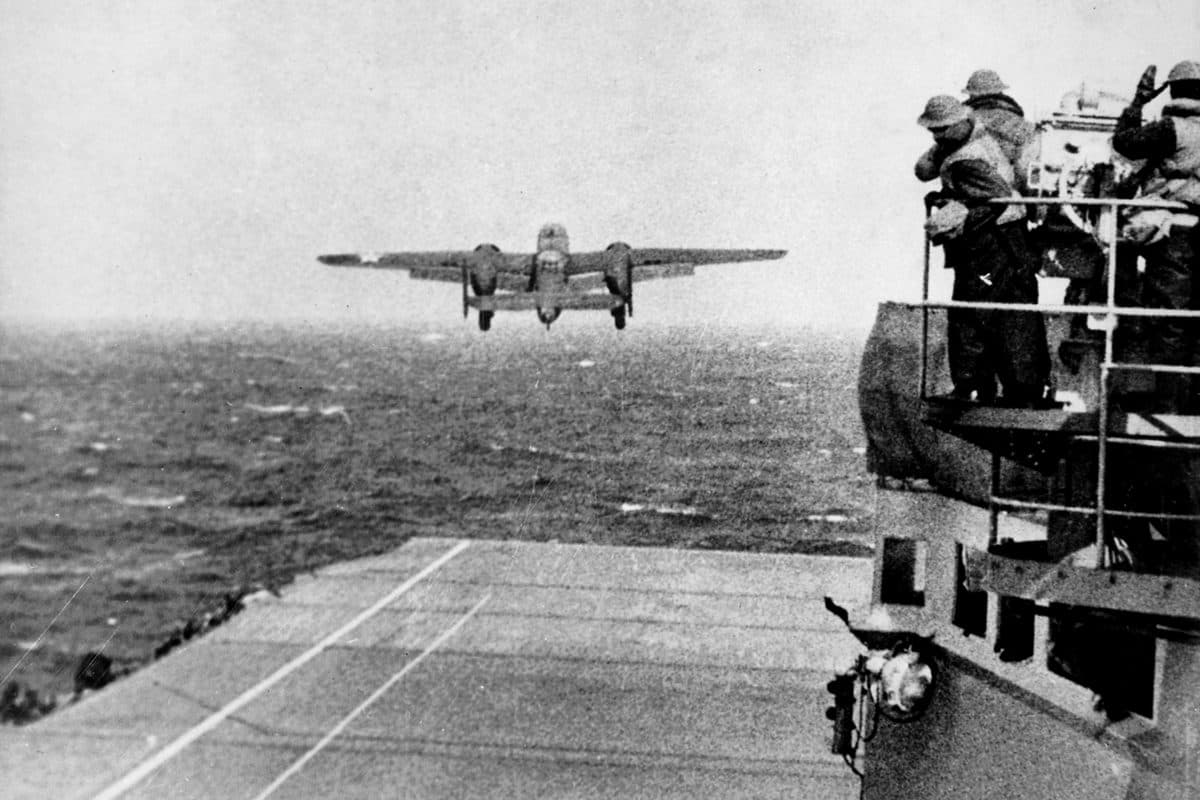
On April 18, 1942, sixteen B-25 Mitchell bombers did something no one thought possible: they launched from the deck of an aircraft carrier, flew 650 miles to Japan, and bombed Tokyo. Every aircraft was lost. The damage was negligible. The consequences changed the war.
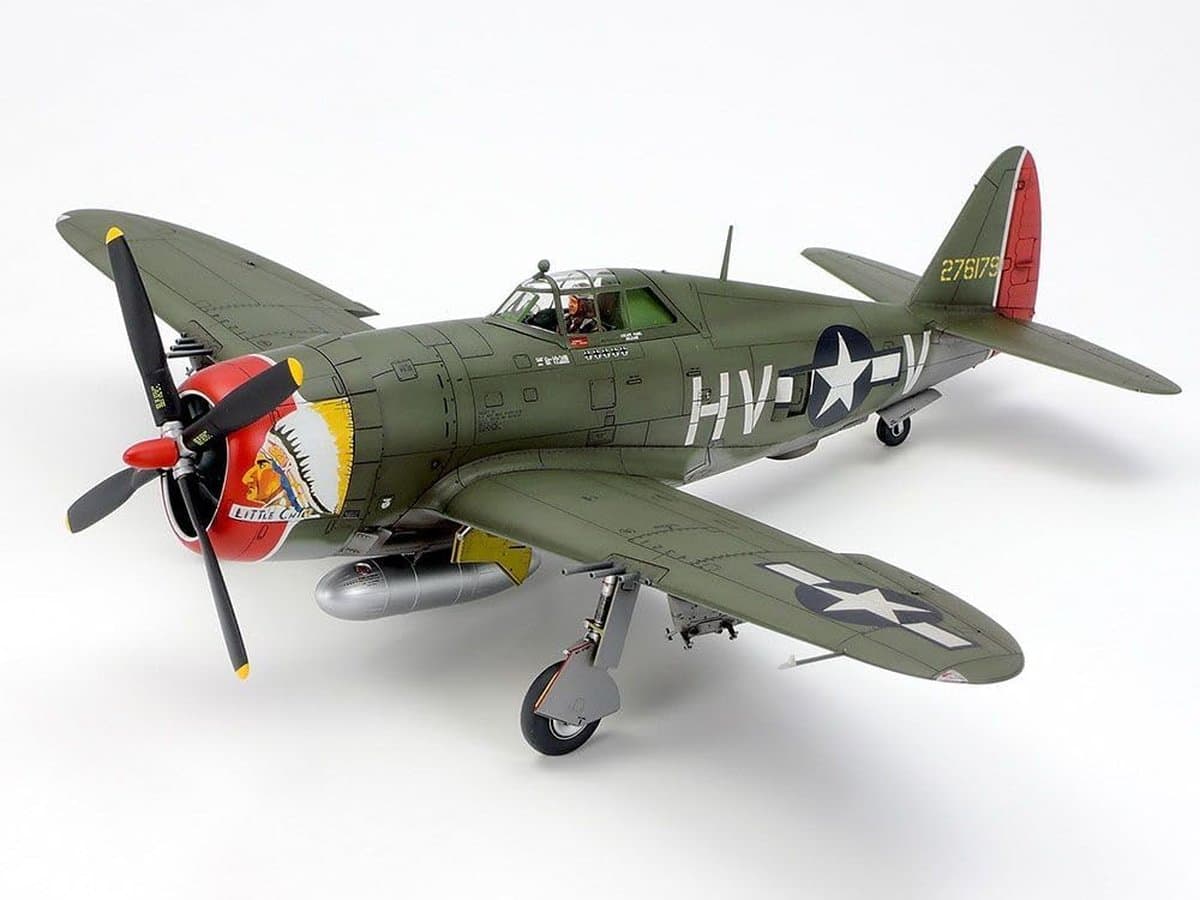
Compare 85+ WW2 scale model kits across aircraft, tanks, and ships. Beginner builds from $9 to museum-grade showpieces at $580. Covers Tamiya, Eduard, HK Models, Trumpeter, and more with honest reviews, trade-offs, and pricing.

On April 7, 1945, the Imperial Japanese Navy sent the largest battleship ever built on a one-way suicide mission to Okinawa. She never arrived. 386 American aircraft found her first, and sank her in under two hours.