

15 Best World War II Books for History Enthusiasts (2026)
15 essential WW2 books covering every theater. Narrative histories, memoirs, and visual references ranked.
daniel-mercer··21 min read

The Continental Congress authorized the creation of a naval force to intercept British supply ships, effectively establishing what would become the United States Navy. The resolution authorized the fitting out of two armed vessels to cruise against British transports. This modest beginning, two small ships against the mightiest navy in the world, launched the naval tradition that would grow into the most powerful navy in history.
Following the death (likely by poisoning) of Emperor Claudius, the sixteen-year-old Nero ascended to the Roman throne. Initially guided by the philosopher Seneca and the Praetorian prefect Burrus, Nero's reign would descend into tyranny, culminating in the Great Fire of Rome, the persecution of Christians, and a military revolt that ended in his suicide in 68 AD, triggering the "Year of the Four Emperors" and civil war.
British and Canadian forces under Major General Isaac Brock repulsed an American invasion across the Niagara River at Queenston Heights, Ontario. Brock was killed leading a counterattack up the heights, a loss that devastated British morale but made him Canada's greatest military hero. The battle demonstrated the difficulty of invading Canada and the unreliability of American militia, who refused to cross the international border to reinforce the troops already engaged.
The International Meridian Conference in Washington, DC, concluded with a resolution naming the Royal Observatory at Greenwich as the world's prime meridian, establishing the longitudinal reference line for global navigation. The decision standardized maritime navigation, enabled precise longitude calculation for warships and merchant fleets worldwide, and laid the foundation for the global time zone system on which modern military logistics depend.
Just days after his extraordinary feat at the Meuse-Argonne, Corporal (soon Sergeant) Alvin York's commanding officers submitted the documentation for his Medal of Honor. The Tennessee marksman's single-handed elimination of 35 machine gun positions, 25 German soldiers killed, and 132 prisoners captured was verified by multiple witnesses and would make York the most celebrated American soldier of World War I.
The Kingdom of Italy, under the new government of Marshal Pietro Badoglio, formally declared war on its former Axis ally Germany, becoming a "co-belligerent" of the Allies. The declaration, coming five weeks after Italy's armistice, was prompted by the German occupation of most of the Italian peninsula and the atrocities committed against Italian civilians and soldiers who resisted.
The Kingdom of Italy, now under the Badoglio government following the fall of Mussolini and the September armistice with the Allies, formally declared war on Germany. The switch transformed Italy from Axis power to co-belligerent on the Allied side, brought the Italian Co-Belligerent Army into operations alongside British and American forces, and committed the Italian Navy's surviving warships to Allied command.
Soviet forces liberated the Latvian capital of Riga from German occupation after heavy fighting. The city, which had endured three years of Nazi occupation including the murder of the vast majority of its Jewish population, was taken by the 3rd Baltic Front. The German Army Group North was cut off in the Courland Pocket, where it would hold out until the end of the war.
Uruguayan Air Force Flight 571, a Fairchild FH-227 charter carrying the Old Christians rugby team and families, crashed in the high Andes on October 13, 1972. The 72-day survival ordeal of the surviving passengers produced case studies that subsequently shaped military high-altitude survival training and search-and-rescue doctrine.

The legendary figure (likely based on Mary Ludwig Hays McCauley) who manned a cannon at the Battle of Monmouth in 1778 after her husband collapsed from heat exhaustion. She carried water to soldiers during the battle, earning the nickname "Molly Pitcher." She was later granted a military pension by the state of Pennsylvania for her wartime service.

Major General
British Army officer who served as the military commander and administrator of Upper Canada. Brock's aggressive tactics, including the capture of Detroit and the defense of Queenston Heights, saved Canada from American conquest in 1812. He was killed at Queenston Heights and became the most revered military figure in Canadian history.

Emperor and Commander-in-Chief
Roman Emperor who personally led the invasion of Britain in 43 AD, the most ambitious Roman military operation since the conquests of Augustus. Claudius expanded the empire to include Britain, Thrace, and Mauritania, and reformed the Roman military administration. He likely died of poisoning by his wife Agrippina to secure the succession of her son Nero.
Wear the Timeline
10 military events occurred on October 13, spanning multiple centuries. Key events include: Continental Congress Establishes the Continental Navy (1775), Battle of Queenston Heights (1812), Italy Declares War on Germany (1943), Continental Navy Established (1775).
The most significant military event on October 13 is Continental Congress Establishes the Continental Navy (1775). The Continental Congress authorized the creation of a naval force to intercept British supply ships, effectively establishing what would become the United States Navy. The resolution authorized the fitting out of two armed vessels to cruise against British transports. This modest beginning, two small ships against the mightiest navy in the world, launched the naval tradition that would grow into the most powerful navy in history.
Notable military figures born on October 13 include Molly Pitcher (1754–1832), Isaac Brock (1769–1812).
Events on October 13 span the Colonial & Revolutionary era, World War II, World War I, the Interwar Period, the Cold War, covering 10 events across 4 centuries of military history.
Events on October 13 involve 4 branches of the U.S. and allied armed forces, reflecting the global scope of military operations throughout history.
Explore military history from the day you were born.
June 6
The Allied invasion of Normandy, the largest amphibious assault in history.
December 7
Japan attacks the U.S. Pacific Fleet, bringing America into World War II.
September 11
The deadliest terrorist attack in history transforms U.S. national security.
August 6
The first atomic bomb is dropped on a city, ushering in the nuclear age.
May 8
Nazi Germany surrenders unconditionally, ending World War II in Europe.
November 11
Armistice Day marks the end of World War I and honors all who served.
June 4
The turning point of the Pacific War as the U.S. Navy destroys four Japanese carriers.
July 4
The Declaration of Independence is adopted, sparking the American Revolution.
15 essential WW2 books covering every theater. Narrative histories, memoirs, and visual references ranked.
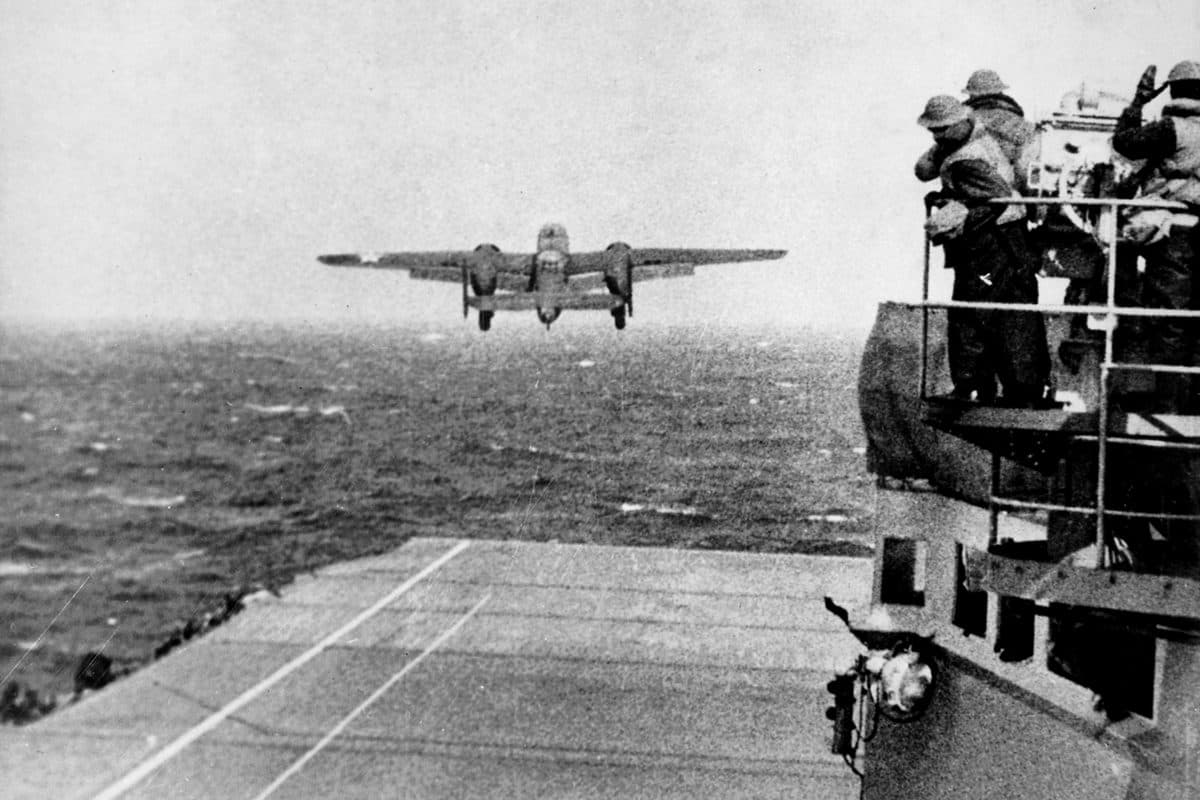
On April 18, 1942, sixteen B-25 Mitchell bombers did something no one thought possible: they launched from the deck of an aircraft carrier, flew 650 miles to Japan, and bombed Tokyo. Every aircraft was lost. The damage was negligible. The consequences changed the war.
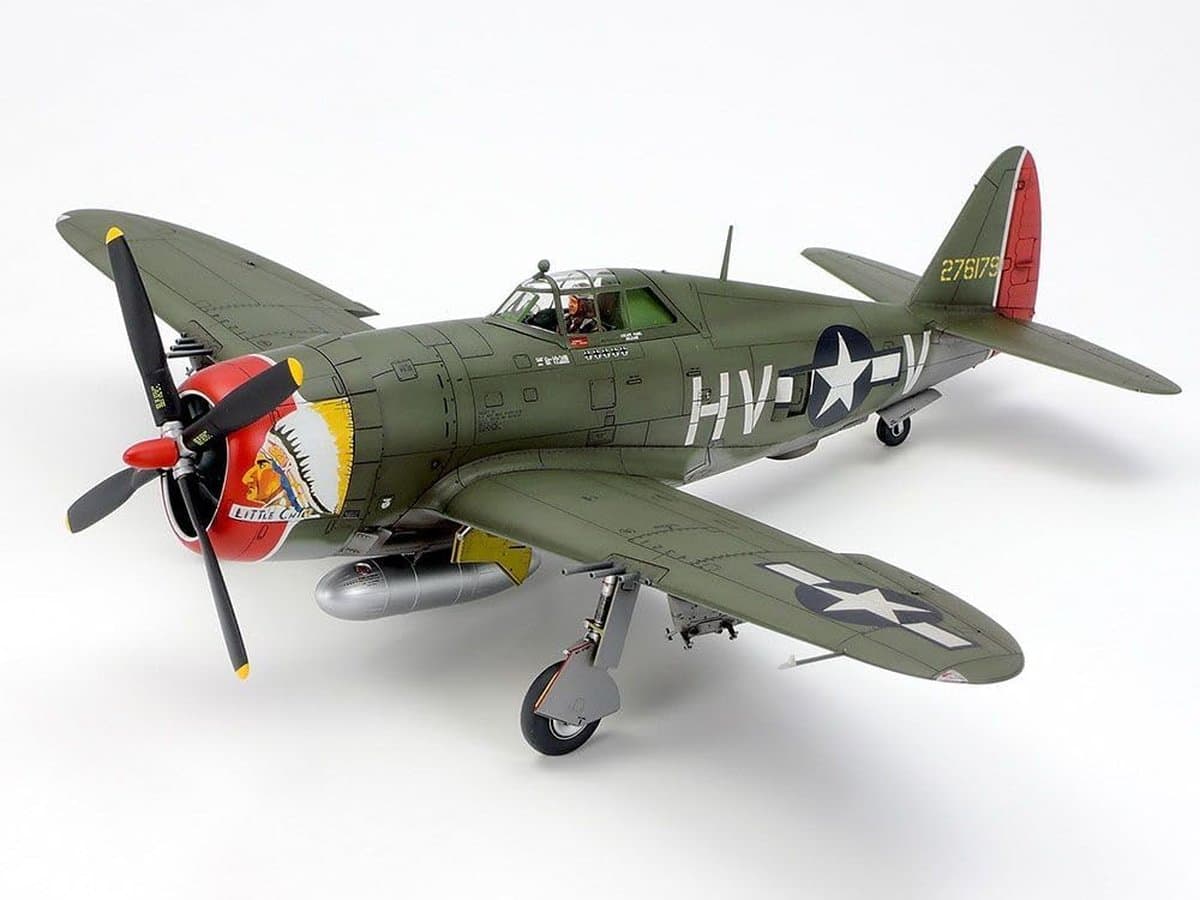
Compare 85+ WW2 scale model kits across aircraft, tanks, and ships. Beginner builds from $9 to museum-grade showpieces at $580. Covers Tamiya, Eduard, HK Models, Trumpeter, and more with honest reviews, trade-offs, and pricing.

On April 7, 1945, the Imperial Japanese Navy sent the largest battleship ever built on a one-way suicide mission to Okinawa. She never arrived. 386 American aircraft found her first, and sank her in under two hours.