


Skip to content
May 1:Operation Neptune Spear: U.S. Navy SEALs Kill Osama bin Laden15yr ago

March 18 in Military History

Share:

This Day in Military History: March 18

Go to Today
Allied battleships under fire from Ottoman shore batteries during the naval assault on the Dardanelles, March 18, 1915
Defining Moment111 years ago

Allied Naval Assault on the Dardanelles

Navy· 1915

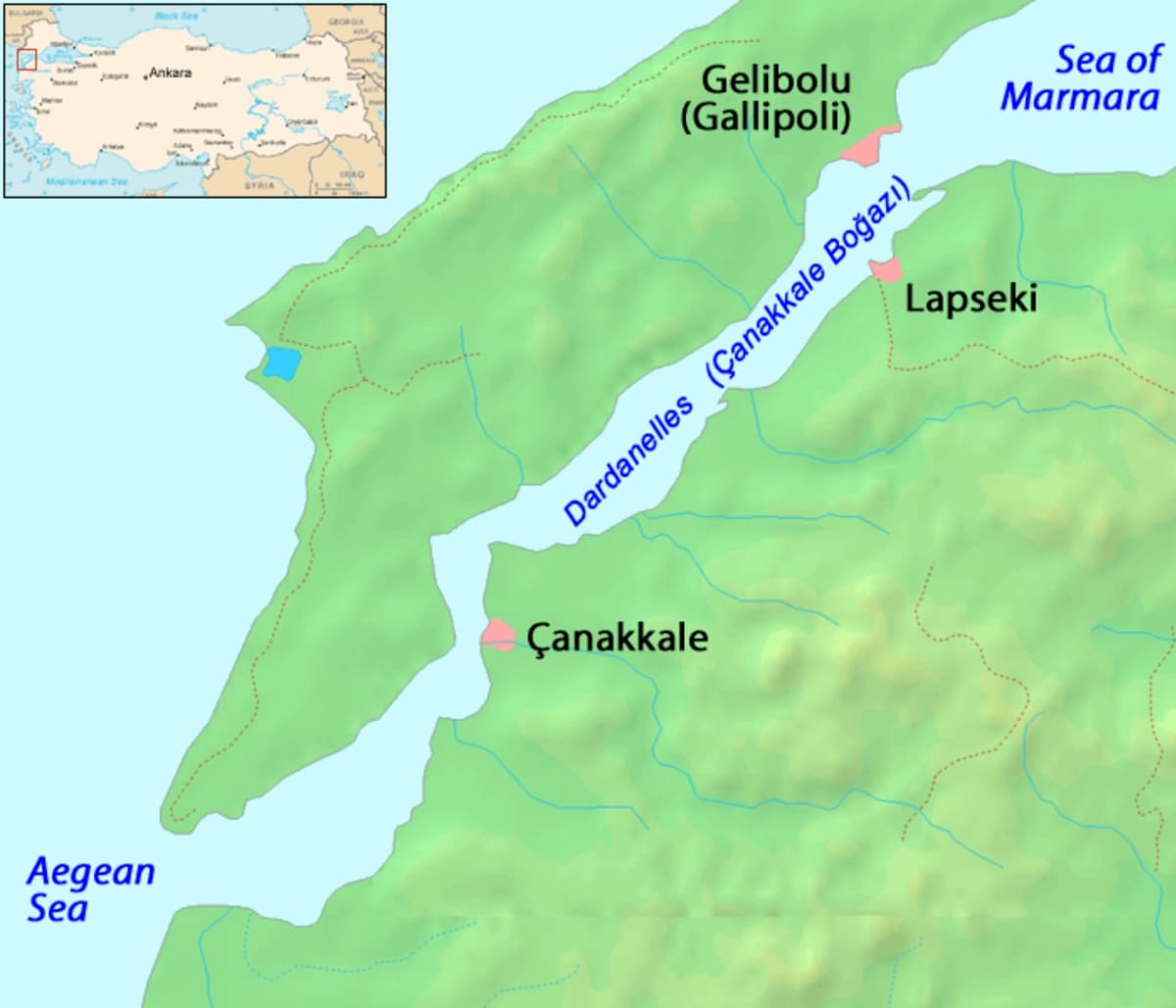
A combined British and French fleet of 16 battleships launched a massive naval assault to force the Dardanelles strait and threaten Constantinople. Concealed Ottoman minefields proved devastating, the French battleship Bouvet capsized and sank in two minutes, killing 639 of her 710 crew. HMS Irresistible and HMS Ocean also sank, and HMS Inflexible was badly damaged. Three capital ships lost in a single afternoon. The failure led directly to the catastrophic Gallipoli Campaign that cost over 250,000 Allied casualties.

10 events, 2 notable births, 1 notable deaths, and 5 military quotes10events2births1deaths5quotes

1200s

1229RevolutionaryArmy797 years ago

Holy Roman Emperor Frederick II crowned himself King of Jerusalem in the Church of the Holy Sepulchre, having achieved through diplomacy what five previous Crusades had failed to win through force. His treaty with the Sultan of Egypt restored Jerusalem, Bethlehem, and Nazareth to Christian control for ten years without a battle, the most remarkable diplomatic achievement of the Crusades.

1700s

1766Revolutionary260 years ago

Parliament voted 276-168 to repeal the Stamp Act of 1765, which had imposed direct taxation on the American colonies and provoked violent protests by the Sons of Liberty. However, on the same day, Parliament passed the Declaratory Act, asserting its authority to legislate for the colonies "in all cases whatsoever", setting the stage for further confrontations that led to the American Revolution.

1800s

1871Interwar155 years ago

After France's defeat in the Franco-Prussian War, the government ordered troops to seize cannons from the Paris National Guard at Montmartre. The soldiers refused to fire and fraternized with the crowd. Two army generals were captured and executed by the mob. The government fled to Versailles, and the National Guard seized control, establishing the Paris Commune, the first workers' government in modern history. It held power for 72 days before being crushed during "Bloody Week," with an estimated 10,000-20,000 Communards killed.

1900s

1915WWINavy111 years agoDefining Moment

A combined British and French fleet of 16 battleships launched a massive naval assault to force the Dardanelles strait and threaten Constantinople. Concealed Ottoman minefields proved devastating, the French battleship Bouvet capsized and sank in two minutes, killing 639 of her 710 crew. HMS Irresistible and HMS Ocean also sank, and HMS Inflexible was badly damaged. Three capital ships lost in a single afternoon. The failure led directly to the catastrophic Gallipoli Campaign that cost over 250,000 Allied casualties.

1916WWI110 years ago

In response to France's plea for relief from the German assault on Verdun, Russia launched the Lake Naroch Offensive in present-day Belarus. Approximately 350,000 Russian troops attacked 75,000 Germans after the heaviest artillery bombardment yet seen on the Eastern Front, but the advance collapsed in muddy terrain with inaccurate fire. Russia suffered approximately 100,000 casualties versus 20,000 German losses, one of the costliest Russian failures of the war.

1940WWII86 years ago

Adolf Hitler and Benito Mussolini held a summit in a railway carriage at the Brenner Pass on the Austro-Italian border. Hitler spoke for two hours, laying out his planned invasion of France while concealing his imminent attacks on Denmark and Norway. He pressured Mussolini to enter the war. Mussolini promised to join once German victory appeared certain, a commitment he fulfilled on June 10, 1940, expanding the war into North Africa and the Mediterranean.

1944WWIIArmy82 years ago

Mount Vesuvius erupted violently while Allied forces were based around Naples, destroying 88 B-25 Mitchell medium bombers of the U.S. Army Air Forces' 340th Bombardment Group at the Pompeii Airfield. The eruption, the only one during the 20th century, was the only time a natural disaster destroyed an entire combat air unit during World War II.

1962Cold War64 years ago

France and the Provisional Government of the Algerian Republic signed the Evian Accords, ending the brutal seven-year Algerian War of Independence. A ceasefire took effect the following day. The war had cost an estimated 300,000-1,500,000 Algerian lives, profoundly destabilized French politics, including multiple assassination attempts on President de Gaulle, and triggered the collapse of the Fourth Republic.

1969VietnamAir Force57 years ago

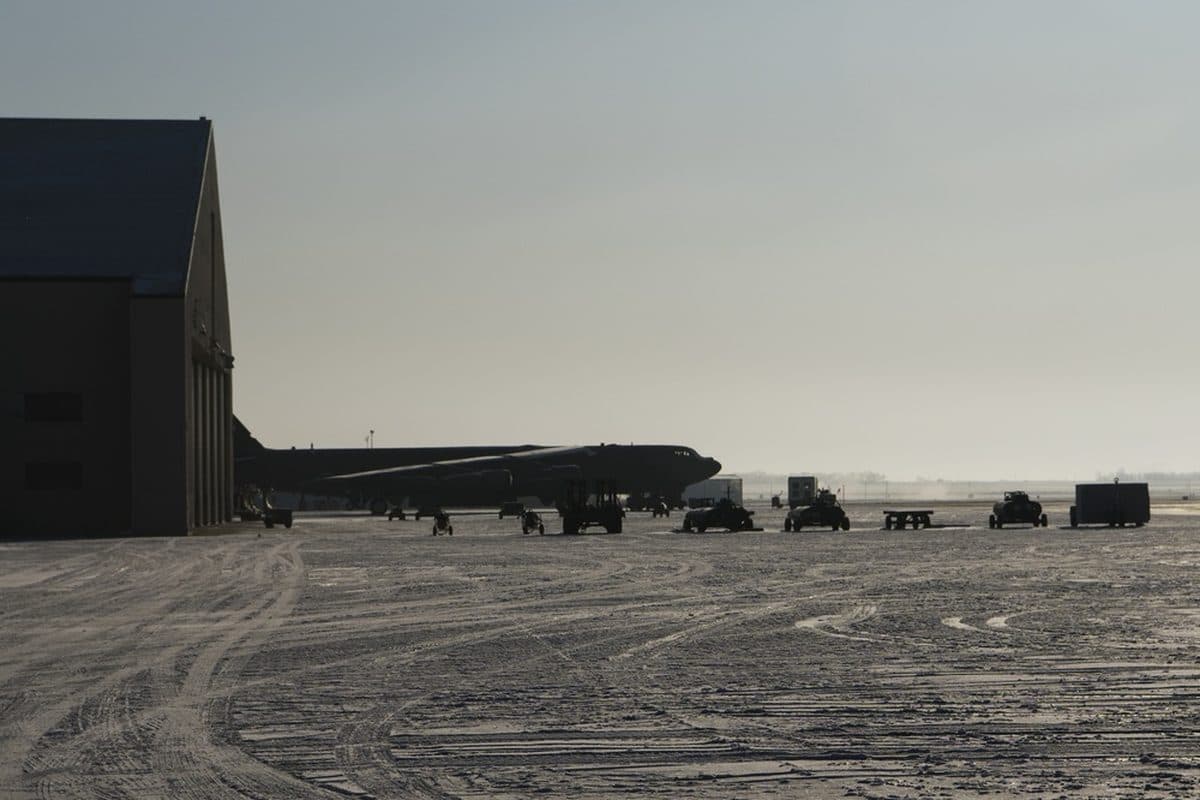
Sixty B-52 Stratofortress bombers struck suspected North Vietnamese base camps in eastern Cambodia, the first U.S. bombing of a neutral country. Authorized by President Nixon and designated Operation Breakfast, the campaign was kept secret from Congress and the American public. Over 14 months, more than 3,000 sorties dropped 108,000 tons of bombs on Cambodia, contributing to domestic upheaval and a constitutional confrontation over executive war powers.

Related article

2000s

2011ModernArmyAir Force15 years ago

Anti-government protests erupted in Daraa, Syria, after security forces arrested and tortured teenagers for writing anti-government graffiti. The government's violent crackdown on the protests triggered a nationwide uprising that devolved into a multi-sided civil war involving regional powers, jihadist groups, and eventually Russian and American military forces.

Enjoyed this page? Share it with someone who loves military history.

Share:

Never Miss a Day in Military History

Get daily military history, analysis, and technology delivered to your inbox.

Born on This Day

Wilfred Owen, MC

Wilfred Owen, MC

Lieutenant, Manchester Regiment, British Army

b. 1893

The most celebrated war poet of World War I, whose works, "Dulce et Decorum Est," "Anthem for Doomed Youth," and "Strange Meeting", exposed the horrifying reality of trench warfare and challenged the romanticized view of military glory. Awarded the Military Cross for courage at the Battle of Joncourt, Owen was killed in action at the Sambre-Oise Canal on November 4, 1918, one week before the Armistice.

Rudolf Diesel

Rudolf Diesel

b. 1858

German inventor of the diesel engine that revolutionized naval and military technology. The diesel engine became the standard power plant for submarines worldwide, fundamentally changing naval warfare in both World Wars. Diesel vanished from a steamship on September 29, 1913, while traveling to meet the British Royal Navy about powering submarines, a disappearance some attributed to German agents.

Died on This Day

Marshal Vasily Chuikov

Marshal Vasily Chuikov

Marshal of the Soviet Union

d. 1982

The legendary commander of the 62nd Army at the Battle of Stalingrad, the bloodiest battle in human history. Chuikov developed the tactic of "hugging the enemy," keeping Soviet lines so close that the Luftwaffe could not bomb without hitting their own troops. He later led his forces from Stalingrad to Berlin, where he personally accepted the unconditional German surrender on May 2, 1945. He was buried at Mamayev Kurgan, the Stalingrad battlefield memorial.

Military Quotes

The Dardanelles might have saved millions of lives. Don't imagine I am running away from the Dardanelles. I glory in it.

Winston Churchill

Former First Lord of the Admiralty

Churchill defending the Dardanelles concept despite the March 18, 1915, disaster and the subsequent Gallipoli catastrophe that cost him his position, 1923

My friend, you would not tell with such high zest to children ardent for some desperate glory, the old Lie: Dulce et decorum est pro patria mori.

Wilfred Owen

Lieutenant, Manchester Regiment

Born on March 18, 1893, Owen wrote the most powerful anti-war poetry in the English language, exposing the gap between patriotic rhetoric and battlefield horror in the trenches of the Western Front, 1917

We shall hold the city or die here.

Marshal Vasily Chuikov

Commander, 62nd Army

Chuikov's defiant declaration upon taking command at Stalingrad, where his forces held against the full weight of the German 6th Army, he died on March 18, 1982, 1942

The only thing that ever really frightened me during the war was the U-boat peril.

Winston Churchill

Prime Minister of the United Kingdom

Churchill reflecting on the Battle of the Atlantic in The Second World War, a campaign whose turning points included naval mines of the type that devastated the Allied fleet at the Dardanelles on March 18, 1915, 1951

Never forget that no military leader has ever become great without audacity.

Carl von Clausewitz

Prussian military theorist

From On War, applicable to the bold but doomed Dardanelles assault and the secret bombing of Cambodia, both March 18 events defined by the consequences of audacious action, 1832

Frequently Asked Questions

What military events happened on March 18?

10 military events occurred on March 18, spanning multiple centuries. Key events include: Allied Naval Assault on the Dardanelles (1915), British Parliament Repeals the Stamp Act (1766), The Paris Commune Uprising Begins (1871), Evian Accords End the Algerian War (1962), Operation Menu: Secret Bombing of Cambodia Begins (1969).

What is the most significant military event on March 18?

The most significant military event on March 18 is Allied Naval Assault on the Dardanelles (1915). A combined British and French fleet of 16 battleships launched a massive naval assault to force the Dardanelles strait and threaten Constantinople. Concealed Ottoman minefields proved devastating, the French battleship Bouvet capsized and sank in two minutes, killing 639 of her 710 crew. HMS Irresistible and HMS Ocean also sank, and HMS Inflexible was badly damaged. Three capital ships lost in a single afternoon. The failure led directly to the catastrophic Gallipoli Campaign that cost over 250,000 Allied casualties.

What famous military figures were born on March 18?

Notable military figures born on March 18 include Wilfred Owen, MC (1893–1918), Rudolf Diesel (1858–1913).

What wars are represented in March 18's military timeline?

Events on March 18 span World War I, the Colonial & Revolutionary era, the Interwar Period, World War II, the Cold War, the Vietnam War, the Modern Era, covering 10 events across 5 centuries of military history.

How many military branches are represented on March 18?

Events on March 18 involve 3 branches of the U.S. and allied armed forces, reflecting the global scope of military operations throughout history.

What Happened on Your Birthday?

Explore military history from the day you were born.

Related Days by Era

Explore More Days

Related Articles

B-52 Stratofortress strategic bomber taking off from an Air Force base

B-52 Stratofortress Strategic Bomber - The BUFF

Boeing’s B-52 long-range strategic bomber is not only one of the most iconic symbols of the Cold War; it’s also the longest-serving combat aircraft in any major nation’s arsenal. Since…

michael-trent··5 min read