

Stunning Images of US Aircraft Carriers
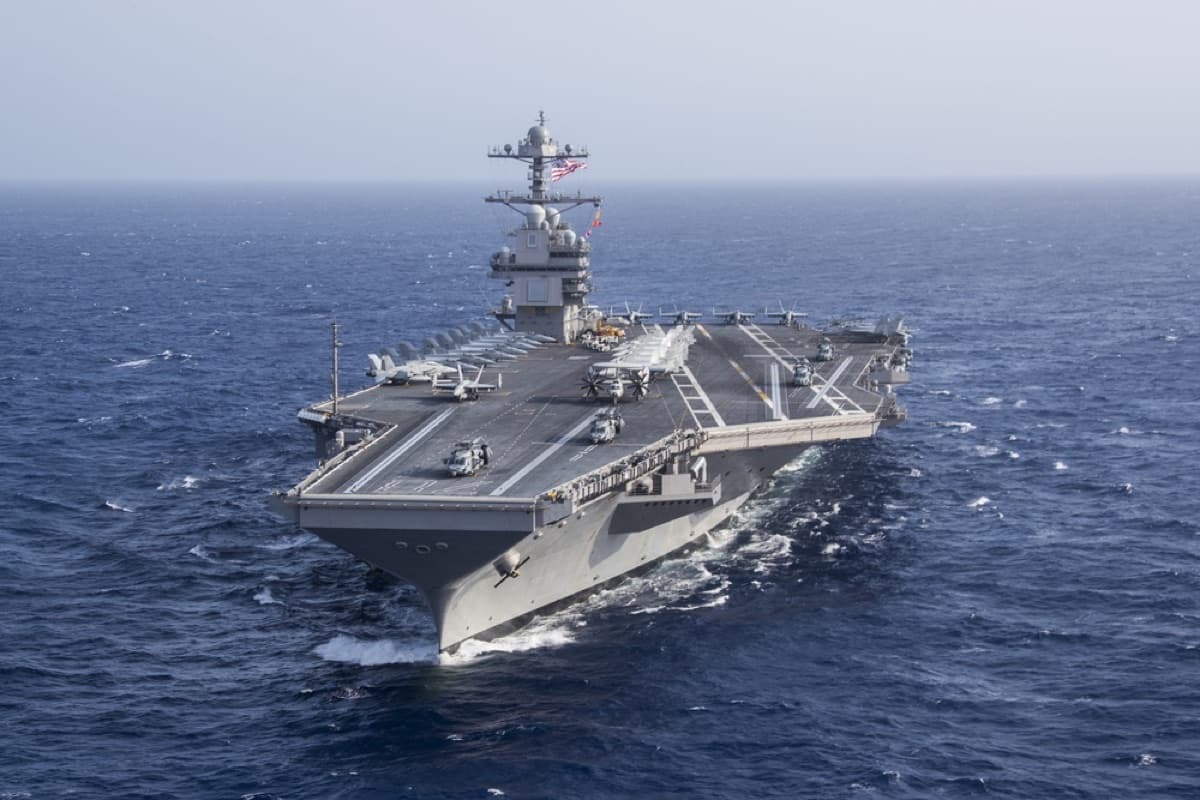
A gallery of images showcasing U.S. Navy aircraft carriers, the massive floating airbases that project American military power across the world's oceans.
daniel-mercer··9 min read
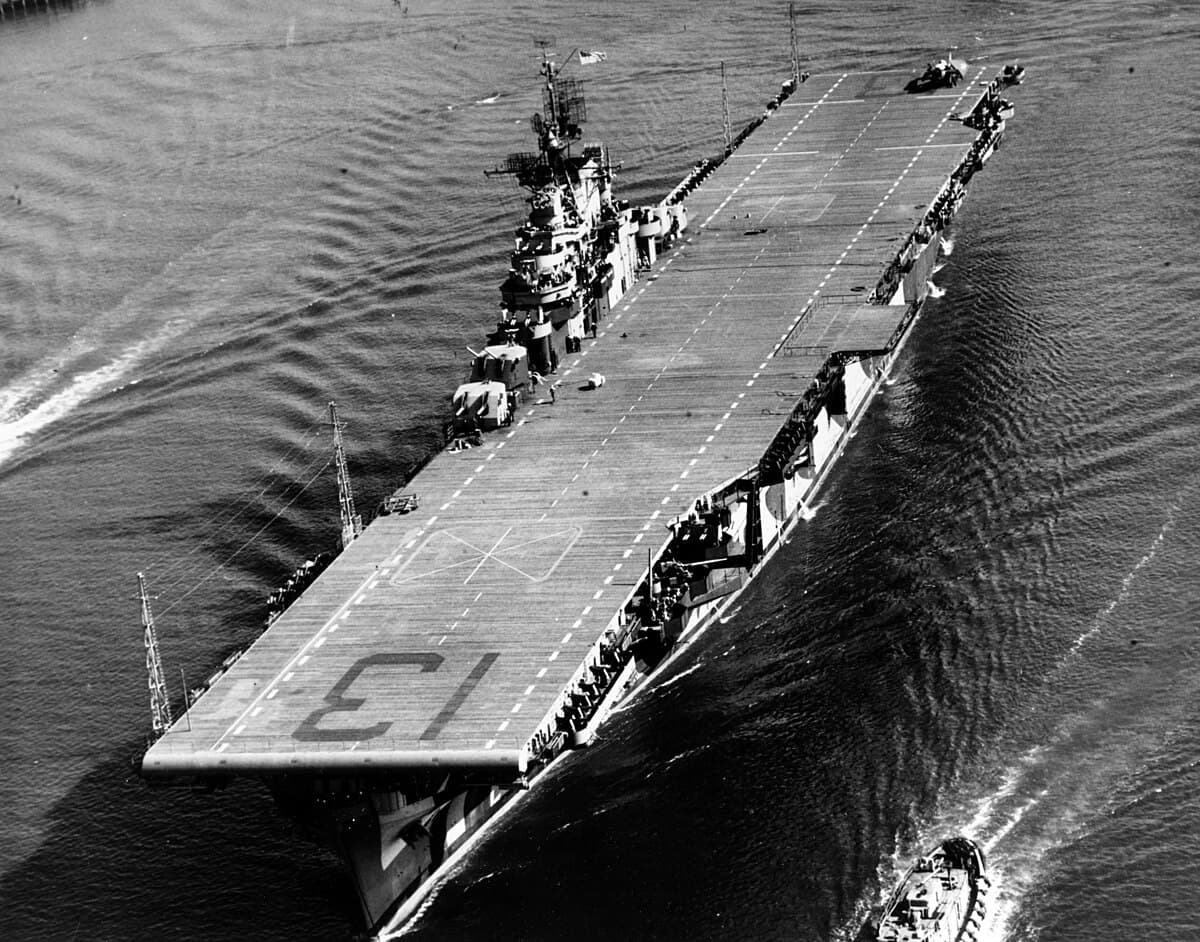
Operating 70 miles off the coast of Shikoku, Japan, the Essex-class aircraft carrier USS Franklin was struck by two 550-pound bombs from a lone Japanese dive bomber. The bombs detonated among 31 fully armed and fueled aircraft, igniting aviation fuel and ordnance in a catastrophic chain of secondary explosions. Between 724 and 807 crew members were killed, the single deadliest attack on a U.S. Navy ship that survived the war. The crew's extraordinary damage control effort saved the ship, which steamed 12,000 miles home under her own power.
Related articleFrench explorer René-Robert Cavelier, Sieur de La Salle, was murdered by mutinous members of his expedition near present-day Navasota, Texas. La Salle had been attempting to establish a French colony at the mouth of the Mississippi River but missed it by 400 miles, landing in Texas instead. His death effectively ended French efforts to colonize the Gulf Coast from the west.
Confederate General Joseph E. Johnston assembled approximately 20,000 troops, the tattered remnants of multiple commands, and launched a surprise attack against the left wing of General Sherman's army near Bentonville, North Carolina. Johnston initially drove the Federals back before reinforcements halted the advance. The battle continued through March 21 before Johnston withdrew. He surrendered his entire army at Bennett Place on April 26, the largest Confederate surrender of the war.
Related articleEight Curtiss JN-3 "Jenny" biplanes of the 1st Aero Squadron took off from Columbus, New Mexico, on the first combat air mission in U.S. military history, supporting Brigadier General Pershing's Punitive Expedition into Mexico to capture Pancho Villa. The planes served as aerial observers, they carried no machine guns, only pistols and .22 rifles. The mission encountered severe difficulties, but it marked the birth of American combat aviation.
The U.S. War Department constituted the 99th Pursuit Squadron, the first African American fighter squadron in U.S. military history. Activated three days later at Chanute Field, Illinois, the unit became the foundation of the legendary Tuskegee Airmen, who compiled a distinguished combat record in North Africa, Sicily, and Europe. Their service was instrumental in President Truman's 1948 Executive Order 9981 desegregating the armed forces.
Related articleGerman Wehrmacht forces executed Operation Margarethe, the military occupation of their own Axis ally Hungary, after Hitler learned that Regent Admiral Horthy was secretly negotiating a separate peace with the Allies. The occupation was swift and bloodless. Its most devastating consequence was the arrival of Adolf Eichmann, who organized the deportation of approximately 437,000 Hungarian Jews to Auschwitz-Birkenau between May and July 1944, one of the most rapid mass deportations of the Holocaust.
Related articleOperating 70 miles off the coast of Shikoku, Japan, the Essex-class aircraft carrier USS Franklin was struck by two 550-pound bombs from a lone Japanese dive bomber. The bombs detonated among 31 fully armed and fueled aircraft, igniting aviation fuel and ordnance in a catastrophic chain of secondary explosions. Between 724 and 807 crew members were killed, the single deadliest attack on a U.S. Navy ship that survived the war. The crew's extraordinary damage control effort saved the ship, which steamed 12,000 miles home under her own power.
Related articleWith Allied and Soviet forces penetrating deep into Germany, Adolf Hitler issued the "Destructive Measures on Reich Territory" order, the Nero Decree, calling for the destruction of all German factories, farms, power plants, railroads, bridges, and communications to prevent their capture. Albert Speer, Minister of Armaments, systematically sabotaged the order, convincing generals and regional leaders to preserve infrastructure that enabled Germany's postwar recovery.
Related articleCoalition forces launched the invasion of Iraq with a "decapitation strike" targeting a bunker where intelligence suggested Saddam Hussein was hiding. The ground invasion followed within hours, with U.S. and British forces advancing from Kuwait into southern Iraq. Baghdad fell on April 9, but the occupation that followed descended into insurgency and sectarian violence that lasted eight years.
French Rafale jets struck Libyan military vehicles approaching Benghazi, followed by a barrage of 110 Tomahawk cruise missiles from American and British warships targeting Libyan air defenses. The strikes marked the beginning of Operation Odyssey Dawn, the international military intervention authorized by UN Resolution 1973 two days earlier.
Related article
General (four-star), U.S. Army
One of the most controversial American commanders of World War II. Stilwell commanded U.S. forces in the China-Burma-India theater, served as chief of staff to Chiang Kai-shek, and earned his nickname "Vinegar Joe" for his acerbic bluntness. His clashes with Chiang over strategy and corruption led to his recall in 1944 at Chiang's insistence. He later commanded the Tenth Army on Okinawa.

General (four-star), U.S. Army
A combat leader in three wars who lived to be 100 years old. On D-Day, Van Fleet led the 8th Infantry Regiment ashore at Utah Beach. He directed the U.S. military advisory mission that defeated the communist insurgency in Greece (1948-1950), then commanded the Eighth Army in Korea. He became the oldest living general officer in U.S. history.

Grossadmiral, Imperial German Navy
The architect of the Imperial German Navy's transformation from a coastal defense force into a world-class blue-water fleet. His aggressive naval building program launched the Anglo-German arms race that was a key cause of World War I. Germany's most powerful battleship of WWII was named in his honor.

Hospital Corpsman Second Class, U.S. Navy
Medal of Honor recipient who gave his life shielding a wounded Marine from a grenade during a North Vietnamese assault near An Hoa on March 19, 1969. Despite being seriously wounded, Ray moved through heavy fire treating casualties, killed one enemy soldier, and threw himself on a wounded comrade to absorb the blast. The destroyer USS David R. Ray (DD-971) was named in his honor.
Wear the Timeline
10 military events occurred on March 19, spanning multiple centuries. Key events include: The Bombing of USS Franklin (CV-13) (1945), Battle of Bentonville: Last Major Battle of the Civil War (1865), Hitler Issues the Nero Decree (1945), Operation Margarethe: Germany Occupies Hungary (1944), 99th Pursuit Squadron Constituted: Birth of the Tuskegee Airmen (1941).
The most significant military event on March 19 is The Bombing of USS Franklin (CV-13) (1945). Operating 70 miles off the coast of Shikoku, Japan, the Essex-class aircraft carrier USS Franklin was struck by two 550-pound bombs from a lone Japanese dive bomber. The bombs detonated among 31 fully armed and fueled aircraft, igniting aviation fuel and ordnance in a catastrophic chain of secondary explosions. Between 724 and 807 crew members were killed, the single deadliest attack on a U.S. Navy ship that survived the war. The crew's extraordinary damage control effort saved the ship, which steamed 12,000 miles home under her own power.
Notable military figures born on March 19 include General Joseph W. "Vinegar Joe" Stilwell (1883–1946), General James A. Van Fleet (1892–1992), Grand Admiral Alfred von Tirpitz (1849–1930).
Events on March 19 span World War II, the Civil War, the Interwar Period, the Modern Era, the Colonial & Revolutionary era, covering 10 events across 5 centuries of military history.
Events on March 19 involve 5 branches of the U.S. and allied armed forces, reflecting the global scope of military operations throughout history.
Explore military history from the day you were born.
June 6
The Allied invasion of Normandy, the largest amphibious assault in history.
December 7
Japan attacks the U.S. Pacific Fleet, bringing America into World War II.
September 11
The deadliest terrorist attack in history transforms U.S. national security.
August 6
The first atomic bomb is dropped on a city, ushering in the nuclear age.
May 8
Nazi Germany surrenders unconditionally, ending World War II in Europe.
November 11
Armistice Day marks the end of World War I and honors all who served.
June 4
The turning point of the Pacific War as the U.S. Navy destroys four Japanese carriers.
July 4
The Declaration of Independence is adopted, sparking the American Revolution.
A gallery of images showcasing U.S. Navy aircraft carriers, the massive floating airbases that project American military power across the world's oceans.

From wrong turns to unlocked gates - real mistakes that shaped the course of history.
Calvin Graham Was Youngest Decorated US Soldier at 12 Pearl Harbor Visitors Bureau “Green Boys” was a term given to soldiers who…

1. The Tuskegee Airmen were the first African American military aviators in the United States armed forces during World War II. 2. In December 1939 they became…