Skip to content
May 1:Operation Neptune Spear: U.S. Navy SEALs Kill Osama bin Laden15yr ago

The Tomahawk Cruise Missile: 40 Years of Precision Engineering

Michael Trent · · 12 min read
Save
Share:
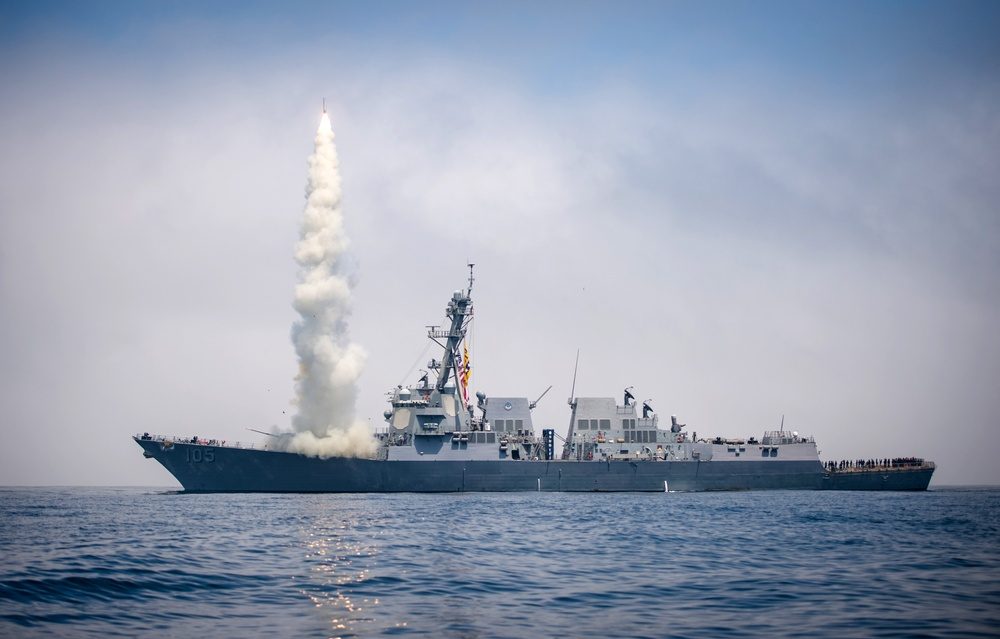
Tomahawk cruise missile launching from a warship's vertical launch system with booster ignition visible
Michael Trent
Michael Trent

Defense Systems Analyst

Michael Trent covers military aircraft, weapons systems, and defense technology with an emphasis on cost, maintenance, and real-world performance. He focuses less on specifications and more on how systems hold up once they are deployed, maintained, and operated at scale.

When the United States goes to war, the Tomahawk goes first. On the opening night of Operation Desert Storm in January 1991, USS Wisconsin and USS Missouri launched the first combat Tomahawks at Iraqi air defense sites and command bunkers, cruise missiles that had flown autonomously for hundreds of miles at low altitude, following terrain contours stored in their onboard computers, to strike targets with a precision that stunned the world. In the three decades since, the Tomahawk has been fired in combat more than 2,300 times across seven conflicts. No other weapon in the American arsenal has been used as consistently, as reliably, or with as much strategic impact.
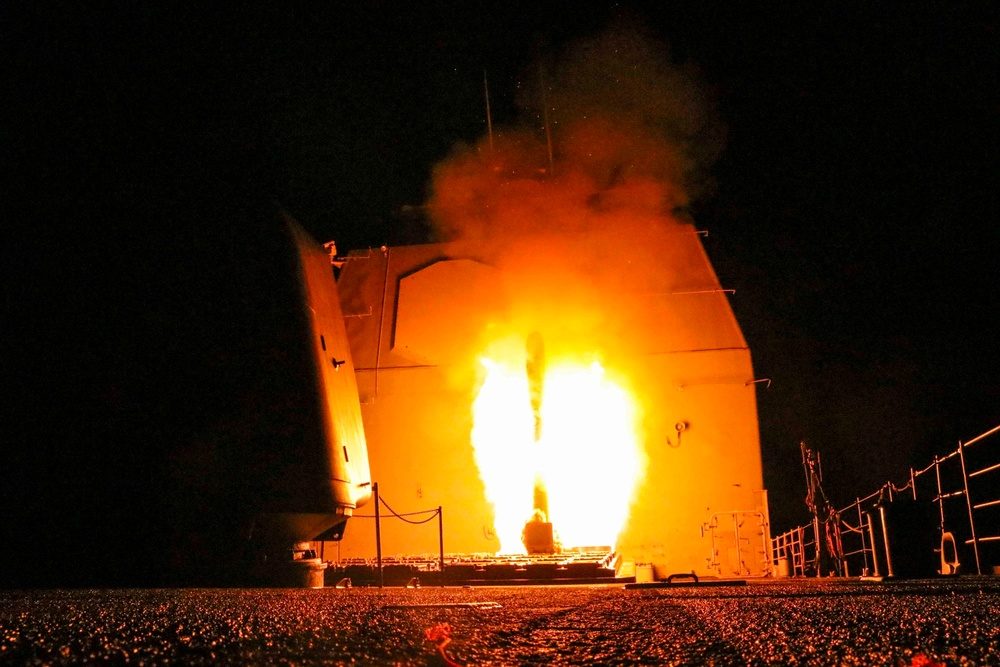
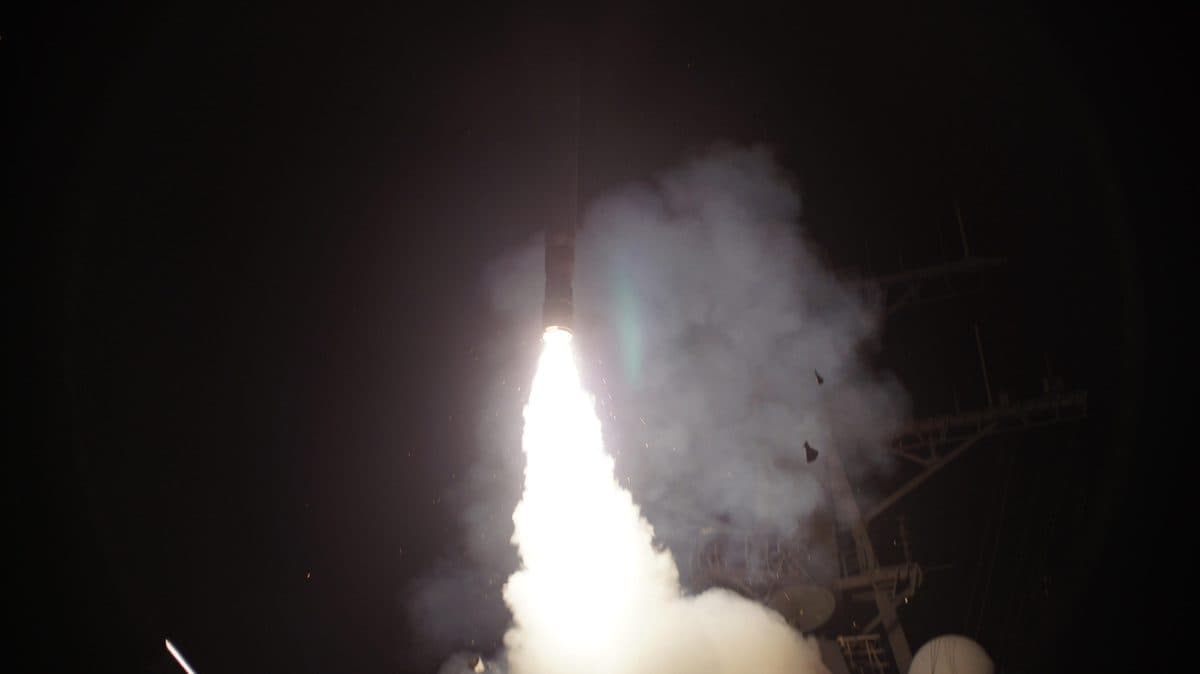
Tomahawk cruise missile launching from a warship's vertical launch system at night
(U.S. Navy photo via DVIDS)

Origins: A Cold War Response

The Tomahawk's origins trace to the early 1970s, when the Applied Physics Laboratory at Johns Hopkins University began developing a long-range cruise missile under the direction of James H. Walker. Initial tests in 1974 proved the concept viable, and by 1976 General Dynamics had been selected as the prime contractor. The missile entered service in 1983, initially in both nuclear and conventional variants.

The original vision was dual-purpose. The TLAM-N (BGM-109A) carried a W80 nuclear warhead with a selectable yield up to 200 kilotons and a range of 2,500 kilometers, a sea-based nuclear strike option that could reach targets deep inside the Soviet Union from submarines and surface ships. The ground-launched BGM-109G Gryphon carried the W84 nuclear warhead and was stationed in Western Europe as a counter to Soviet SS-20 missiles. All Gryphon missiles were destroyed by 1991 under the Intermediate-Range Nuclear Forces Treaty. The sea-based nuclear variant was withdrawn from surface ships in 1992 and fully retired between 2010 and 2013.

What survived, and thrived, was the conventional variant. The Tomahawk's transformation from a nuclear deterrent into the world's most-used precision strike weapon is one of the defining stories of modern military technology.

How It Navigates

The Tomahawk finds its target through a layered guidance system that was revolutionary when introduced and has been refined across four decades of development.

Inertial Navigation System (INS): From the moment of launch, gyroscopes and accelerometers track the missile's position. Over open water, where there are no terrain features to reference, the INS (supplemented by GPS in later variants) keeps the Tomahawk on course.

Tomahawk cruise missile launching from USS Dewey at sea during a live-fire exercise
(U.S. Navy photo via DVIDS)

TERCOM (Terrain Contour Matching): Once the missile crosses over land, an onboard radar altimeter continuously measures the terrain elevation below and compares it against pre-loaded digital terrain maps. The system matches the actual contour profile to the stored map and corrects the INS accordingly. This allows the Tomahawk to fly at extremely low altitude, 50 to 100 feet, following valleys, hugging ridgelines, and threading between terrain features that would hide it from enemy radar.

DSMAC (Digital Scene Matching Area Correlation): In the terminal phase, an onboard camera captures real-time images of the target area and compares them against pre-computed contrast maps derived from satellite imagery. The missile literally recognizes what it sees and steers toward the matching scene. During Desert Storm, DSMAC-guided Tomahawks achieved accuracy that exceeded GPS-guided weapons because the system visually identified the target rather than attacking estimated coordinates.

Block III added GPS capability, enabling three mission planning modes: GPS-only for rapid targeting, DSMAC-only for maximum terminal accuracy, or combined GPS and DSMAC for the greatest precision, a circular error probable of approximately 10 meters.

The Machine Itself

The Tomahawk is 18.3 feet long without its solid-fuel booster, weighs 2,900 pounds, and cruises at approximately 550 miles per hour, subsonic, but deliberately so. Speed is not the point. The point is range, precision, and the ability to fly below radar coverage for over 1,000 miles.

Power comes from a Williams International F107 turbofan, a remarkably small engine weighing just 146 pounds that produces 600 to 715 pounds of thrust depending on the variant. The F107 is optimized for fuel efficiency at low altitude and low speed, giving the missile a range of 1,000 to 1,550 statute miles on conventional variants. The Block V extends this to over 1,100 miles. After launch, the missile's wings and tail fins deploy from the fuselage, the solid-fuel booster falls away, and the turbofan ignites, transforming the missile from a cylinder in a launch tube to an autonomous, terrain-following aircraft.

The standard warhead is a 1,000-pound-class unitary blast-fragmentation weapon. The TLAM-D submunitions variant dispensed 166 combined-effects bomblets for area targets like airfields and vehicle parks. The Block Vb adds the Joint Multiple Effects Warhead System (JMEWS), designed to penetrate hardened and buried targets that the standard warhead cannot defeat.

Launch Platforms

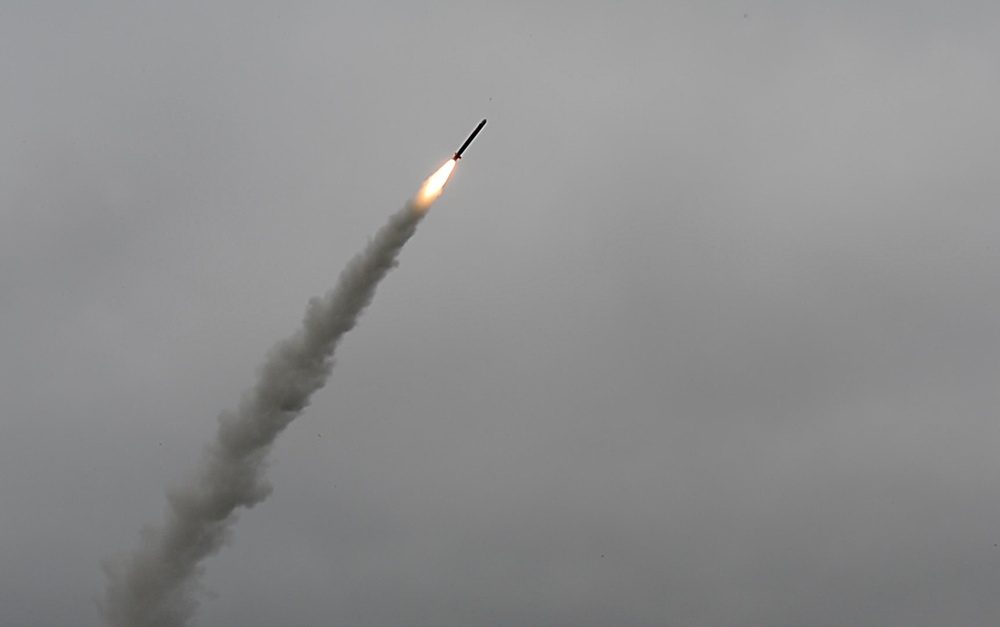
Tomahawk cruise missile ascending through clouds after launching from a submarine
(U.S. Navy photo)

The Tomahawk launches from the Mark 41 Vertical Launch System (VLS) on Arleigh Burke-class destroyers and Ticonderoga-class cruisers, and from torpedo tubes on Los Angeles-class, Virginia-class, and Ohio-class submarines. The four Ohio-class guided missile submarines (SSGNs), converted from ballistic missile duty, can each carry up to 154 Tomahawks, making them the most heavily armed conventional strike platforms in the U.S. Navy.

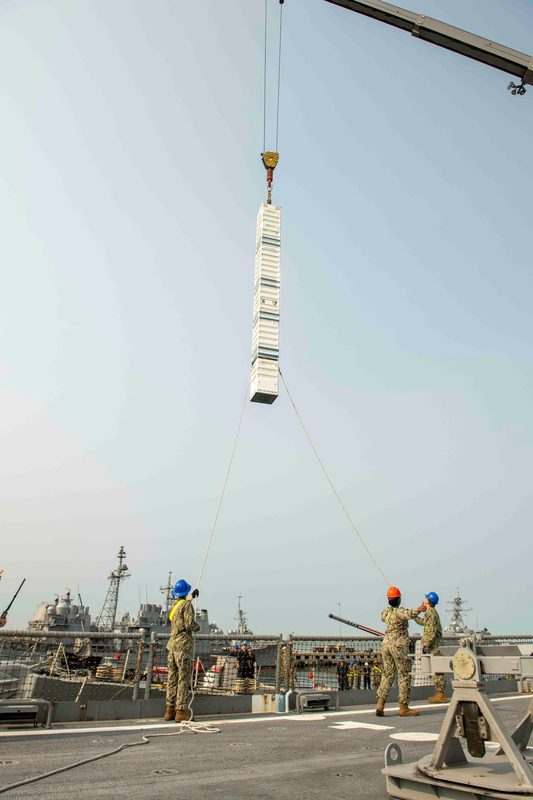
Sailors loading a Tomahawk missile canister into Mark 41 vertical launch system cells
(U.S. Navy photo via DVIDS)

The ground-launched variant was eliminated under the INF Treaty, but the concept was tested again on August 18, 2019, when the Navy launched a Tomahawk from a land-based Mark 41 VLS, the first acknowledged ground launch since the treaty's termination. Japan has ordered up to 400 Tomahawks, and Australia is also procuring the missile, expanding the weapon's operator base for the first time in decades.

Block IV: The Tactical Revolution

The Block IV Tactical Tomahawk, which entered the fleet in 2004, fundamentally changed what the missile could do. Previous Tomahawks were fire-and-forget weapons, once launched, their flight plan was fixed. The Block IV added a two-way satellite data link that allowed operators to retarget the missile in flight, sending it to any of 15 pre-programmed alternate targets or any GPS coordinates transmitted after launch. If intelligence changed, if the target moved, or a higher-priority target emerged, the missile could be redirected mid-flight.

Block IV also added a loiter capability. The missile could orbit a designated area, waiting for a target to present itself or for updated targeting information. An onboard camera could transmit battle damage assessment imagery back through the data link, allowing commanders to verify whether a target had been destroyed and decide whether follow-up strikes were needed, all without risking a manned reconnaissance aircraft.

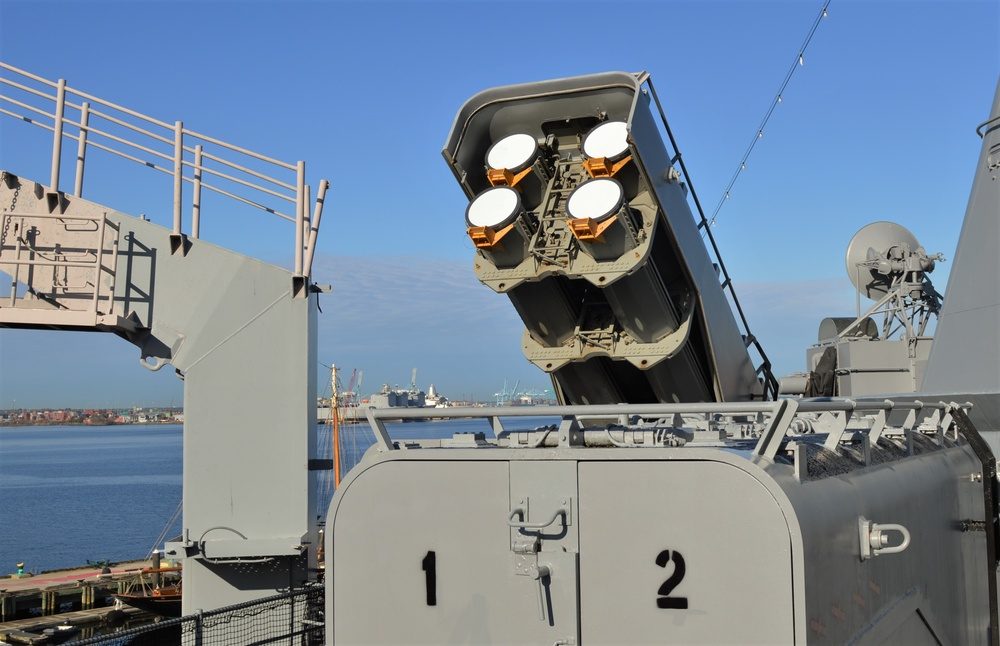
Tomahawk Armored Box Launcher on a battleship showing four missile launch caps
(U.S. Navy photo via Wikimedia Commons)

Combat History

The Tomahawk's combat record spans three decades and seven conflicts:

Desert Storm (1991): 297 Tomahawks launched against Iraqi targets, the weapon's combat debut. The precision strikes on Baghdad, broadcast live on television, introduced the world to the concept of precision warfare.

Iraq, Desert Strike (1996): 44 missiles struck Iraqi air defense targets.

Afghanistan and Sudan, Operation Infinite Reach (1998): Approximately 79 Tomahawks targeted al-Qaeda training camps and a pharmaceutical plant in retaliation for the U.S. embassy bombings.

Kosovo, Allied Force (1999): 218 Tomahawks destroyed over half of Serbia's military headquarters and power infrastructure, with a reported 90-percent success rate.

Iraq, Operation Iraqi Freedom (2003): Over 802 Tomahawks in the opening salvos, the largest single use of cruise missiles in history.

Libya, Odyssey Dawn (2011): 159 Tomahawks neutralized Libyan air defenses around Tripoli and Misrata.

Syria, Shayrat (2017): 59 Tomahawks launched from USS Ross and USS Porter at Shayrat Airbase in response to a chemical weapons attack. A second combined strike in 2018 used Tomahawks as part of a 105-missile salvo.

Yemen, Houthi operations (2016–2024): Multiple strikes against Houthi radar sites and military infrastructure, including over 80 missiles during Operation Poseidon Archer in 2024.

In total, over 2,300 Tomahawks have been expended in combat, and the weapon has performed with a consistency that no other cruise missile can match.

Block V: The Current Standard

The Block V modernization addresses two critical gaps. The baseline Block V upgrades navigation and communications systems, extends range beyond 1,800 kilometers, and hardens the electronics against electronic warfare. But the transformational upgrade is the Block Va Maritime Strike Tomahawk, which adds an anti-ship seeker that allows the missile to engage moving ships at sea.

For decades, the Tomahawk was exclusively a land-attack weapon. Hitting a ship required a different missile, the LRASM or the aging Harpoon. The Maritime Strike Tomahawk changes that calculation. A destroyer or submarine carrying Tomahawks can now threaten surface ships at ranges exceeding 1,000 miles, far beyond the reach of most anti-ship missiles.

The Block Vb adds the JMEWS warhead for improved effects against hardened and buried targets, bunkers, underground command centers, and reinforced structures that the standard warhead cannot penetrate.

Production and Cost

Raytheon (now RTX) has manufactured over 9,000 Tomahawks since production began. The current operational stockpile is estimated at 4,000 to 4,150 missiles, though sustained combat operations in recent years have drawn down that number significantly. The unit cost for a Block V averages approximately $2.0 to $2.2 million, with recent large-order pricing bringing it closer to $1.75 million per missile.

Production rates had fallen to fewer than 100 missiles per year, a pace that could not sustain the weapon's usage rate in active conflict. In February 2026, RTX announced a seven-year agreement to increase production to over 1,000 Tomahawks per year, reflecting a recognition that the weapon remains indispensable and that current stockpiles are not adequate for a potential peer conflict.

Why It Endures

The Pentagon is developing hypersonic weapons, missiles that fly at Mach 5 or faster, and some analysts have predicted the Tomahawk's retirement. But the Tomahawk and a hypersonic weapon solve different problems. A hypersonic missile is built for speed-critical targets: mobile launchers, ships at sea, time-sensitive leadership targets. The Tomahawk is built for volume. At roughly $2 million per missile, it is cheap enough to fire in salvos of dozens or hundreds. It is simple enough to launch from any surface combatant or attack submarine in the fleet. And it is proven, with a combat record spanning three decades and seven wars that no other weapon in any nation's arsenal can match.

The Tomahawk was designed in the 1970s, entered service in the 1980s, fought its first war in the 1990s, and remains in production in the 2020s with capabilities its original designers never imagined. It can strike land targets. It can hit ships. It can loiter, retarget, and send back imagery. Over 2,300 have been fired in combat, and the production line is scaling up, not winding down. The Tomahawk endures because the mission it serves, long-range precision strike without risking a pilot, never goes out of style.

Share this article

Share:

Recommended

Ace of The Skies: Can You Identify These Military Aircraft Throughout The Years?
Test Yourself

Ace of The Skies: Can You Identify These Military Aircraft Throughout The Years?

Can you identify these aircraft?

Take the Quiz

On This Day in Military History

March 30

Easter Offensive Begins (1972)

North Vietnam launched the Easter Offensive, a massive conventional invasion of South Vietnam with 14 divisions and hundreds of tanks, the largest military operation since the Chinese intervention in Korea.

1814, Battle of Paris

1856, Treaty of Paris Ends the Crimean War

1941, Rommel Launches First North Africa Offensive

See all 10 events on March 30

Get Military News & History in Your Inbox

Join thousands of readers receiving our weekly digest of military technology, history, and analysis.

Test Your Knowledge