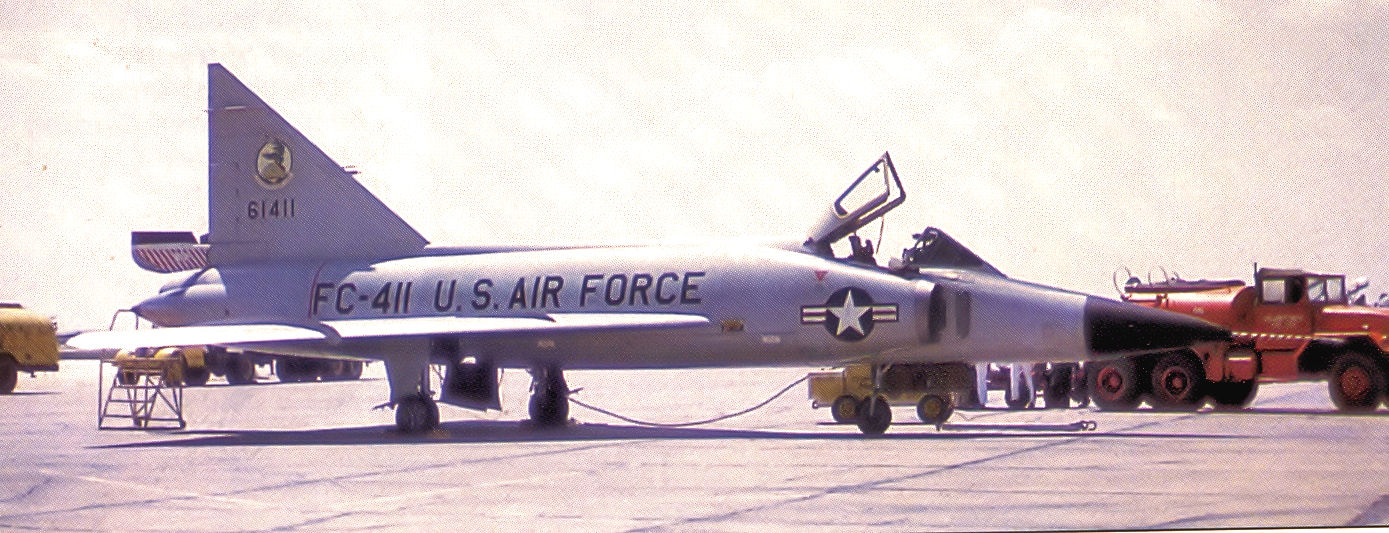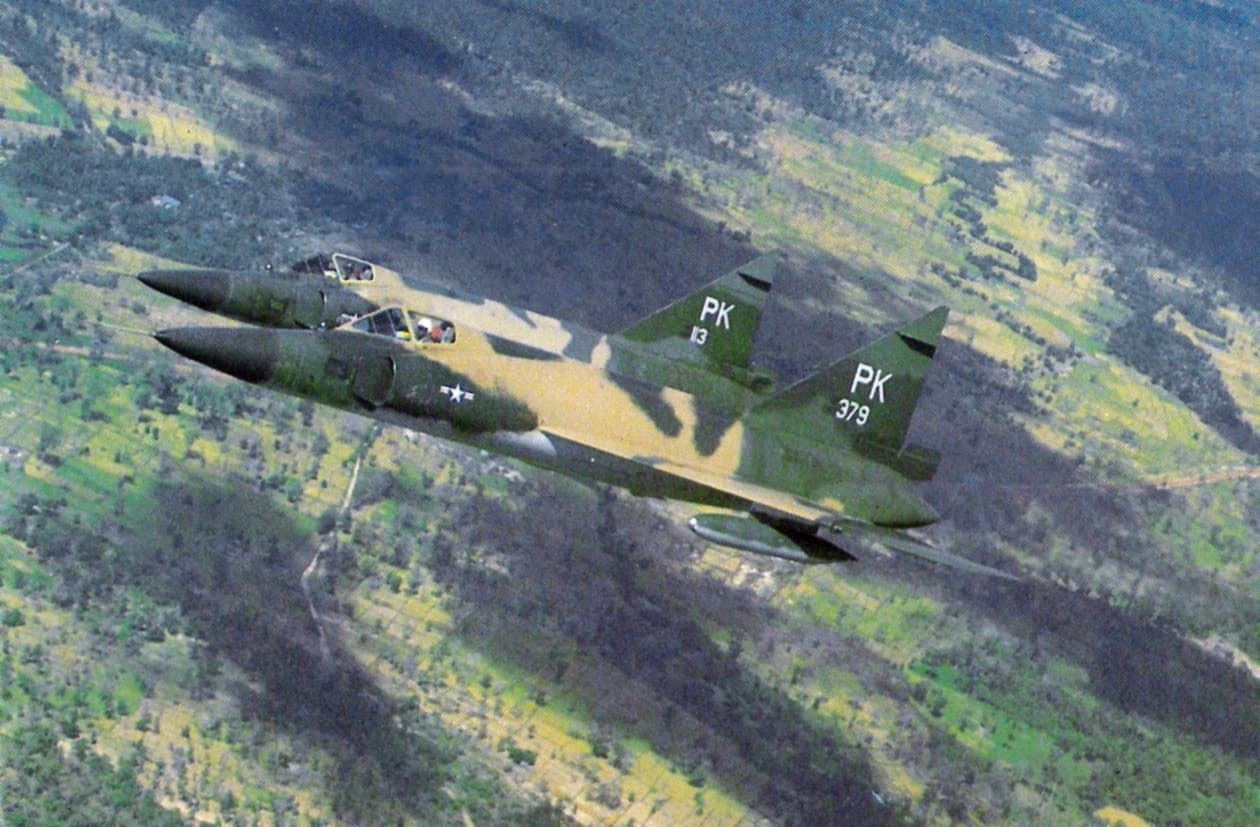

In the early 1950s, the United States lived under the shadow of a threat that shaped an entire generation of military technology: Soviet nuclear bombers crossing the Arctic to strike American cities. The F-102 Delta Dagger was built to stop them. Designed by Convair as the first operational supersonic all-weather interceptor, the F-102 was part of an integrated air defense system that linked ground-based radar, centralized computers, and missile-armed fighters into a single automated network. It carried no gun. Its entire weapons suite, including radar-guided missiles, infrared missiles, and unguided rockets, was housed in an internal weapons bay. And before it could do any of that, it had to survive the engineering crisis that nearly killed it before a single production aircraft flew.
The Area Rule Crisis
When the first YF-102 prototype flew on October 24, 1953, Convair discovered a problem that threatened to destroy the entire program: the aircraft could not break the sound barrier in level flight. For an interceptor that needed supersonic speed to catch Soviet bombers, this was catastrophic.
The solution came from NACA aerodynamicist Richard Whitcomb, who had developed a principle called the area rule. Whitcomb demonstrated that transonic drag was determined not by the shape of any individual component such as wing, fuselage, or tail, but by the total cross-sectional area of the aircraft at any given point along its length. Where the wing added cross-sectional area, the fuselage needed to narrow to compensate. The result was the distinctive "Coke bottle" or "wasp waist" shape that would become a defining feature of supersonic aircraft design.
Convair redesigned the F-102 from nose to tail. The fuselage was lengthened by 11 feet. The midsection was pinched inward. Fairings were added near the engine nozzle. The canopy was narrowed. The revised aircraft, essentially a new airplane, broke the sound barrier with ease, reaching Mach 1.25 at altitude. The area rule had saved the F-102 and, in the process, provided a design principle that would influence every supersonic aircraft built afterward.