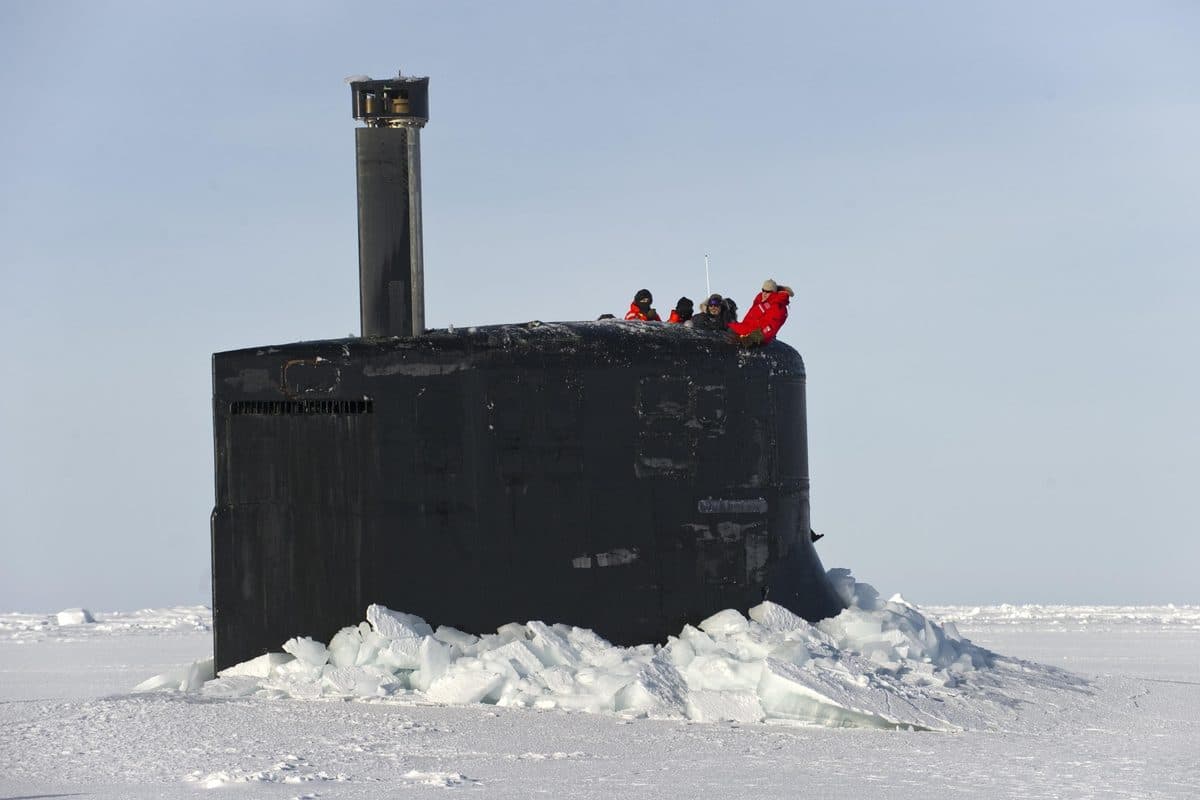

On January 17, 1955, USS Nautilus transmitted the message that changed naval warfare: "Underway on nuclear power." Nautilus was the world's first nuclear-powered submarine, and its reactor, developed under the relentless supervision of Captain Hyman Rickover, proved that a submarine could operate submerged indefinitely, limited only by the food supply and the endurance of its crew. Every nuclear submarine built since has used the same fundamental technology that Rickover's team pioneered: a pressurized water reactor that splits uranium atoms to generate heat, converts that heat to steam, and drives turbines that turn the propeller. The engineering is elegant in concept and brutally demanding in execution. Only six nations have mastered it.
The Reactor: Controlled Fission
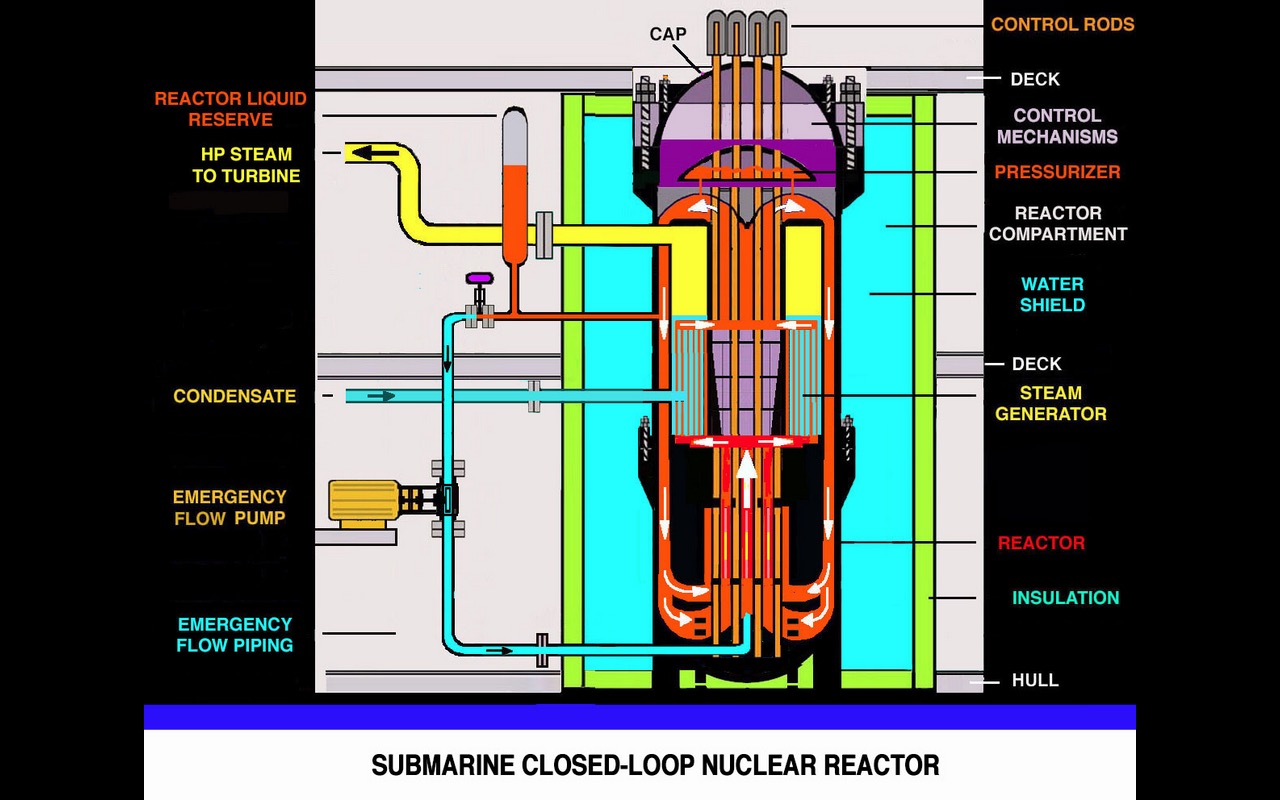
At the heart of every nuclear submarine is a pressurized water reactor, a compact nuclear power plant that fits inside the submarine's pressure hull. The reactor core contains fuel elements made from highly enriched uranium. When a uranium-235 atom absorbs a neutron, it splits, releasing enormous energy as heat plus two or three additional neutrons that go on to split other uranium atoms. This is a controlled chain reaction: the rate of fission is managed by control rods made of neutron-absorbing material that can be inserted into or withdrawn from the core.
The fuel enrichment level is a critical design choice. U.S. Navy reactors use weapons-grade uranium enriched to approximately 93-97 percent U-235. This extremely high enrichment allows the reactor core to be physically small while containing enough fuel to operate for decades. The S9G reactor on the Virginia-class submarine is designed to run for the entire 33-year life of the boat without refueling, eliminating the costly years-long mid-life refueling overhaul that older submarine classes required. French submarines use lower enrichment fuel, which necessitates mid-life refueling for some classes. Russian reactors use enrichment levels between 20 and 45 percent.
Two Loops, No Mixing
The reactor heats water in the primary coolant loop to approximately 250-300 degrees Celsius. This water does not boil, despite being well above its normal boiling point, because it is held under approximately 2,250 pounds per square inch of pressure. The pressurized water circulates through the reactor core, absorbing heat from the fission process, and then flows through a steam generator, a heat exchanger that transfers the heat to a completely separate secondary water loop.