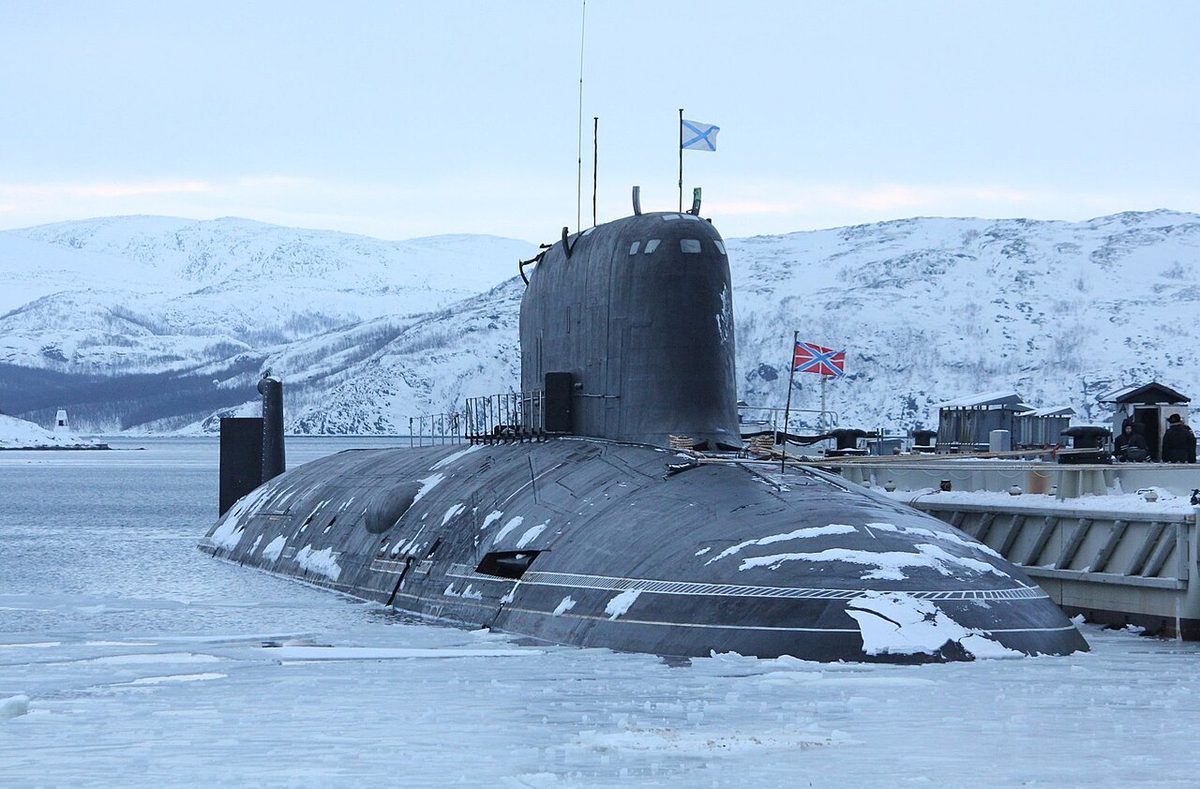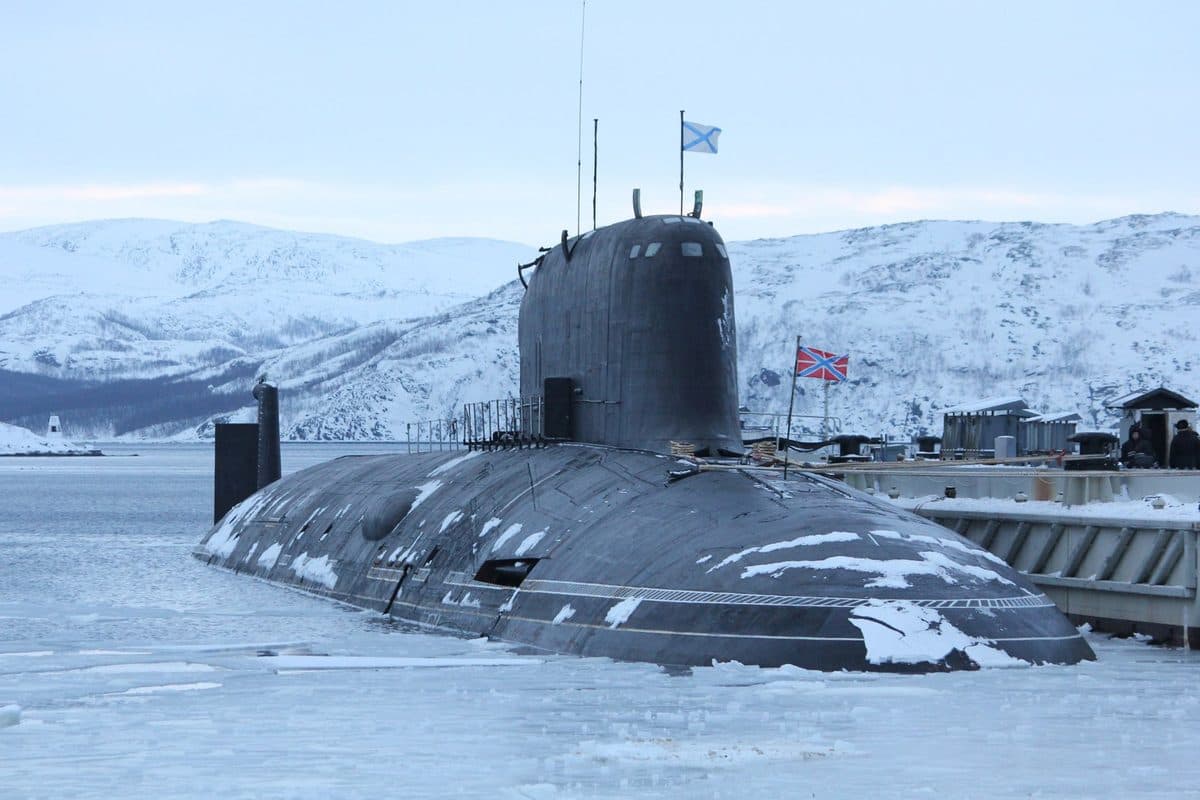

K-560 Severodvinsk, the lead boat of Russia's Yasen-class, was laid down in December 1993 and commissioned in June 2014, over twenty years from keel to commissioning, a timeline that reflects both the ambition of the design and the collapse of the Soviet industrial base that was supposed to build it. The Yasen-class was conceived to replace two entire classes of Soviet submarine, the Oscar-class cruise missile carriers and the Akula-class attack boats, with a single multi-role platform that could hunt enemy submarines, strike land targets with cruise missiles, and sink surface ships with supersonic and hypersonic weapons. It is the most capable submarine Russia has ever produced, and its capabilities have fundamentally changed how the U.S. Navy thinks about undersea warfare.
Design: The Bow That Changed Everything
The Yasen's most significant design feature is invisible from the outside. The Malakhit Marine Engineering Bureau, which designed the class, placed a massive spherical sonar array in the submarine's bow, so large that it occupies the entire forward section of the hull. This meant the torpedo tubes could not go in their traditional location in the bow. Instead, the Yasen's ten 533mm torpedo tubes are mounted amidships, angled outward from the hull.
This arrangement, borrowed conceptually from the American Seawolf-class, gives the Yasen the largest bow-mounted sonar array of any Russian submarine. The Irtysh-Amfora integrated sonar system combines the spherical bow array with flank arrays, a towed array, and additional conformal sensors to provide a comprehensive acoustic picture of the underwater environment. For a navy that has historically lagged behind the West in submarine sonar technology, the Irtysh-Amfora represents a generational leap, narrowing a gap that American submariners had relied on for decades.
Armament: Three Kinds of Strike
The Yasen carries eight vertical launch silos amidships, each capable of firing multiple cruise missiles. The weapons mix is what makes the class so dangerous: