Skip to content
April 18:The Doolittle Raid on Tokyo84yr ago

The Type 99: China's Main Battle Tank

Marcus Webb · · 11 min read
Save
Share:
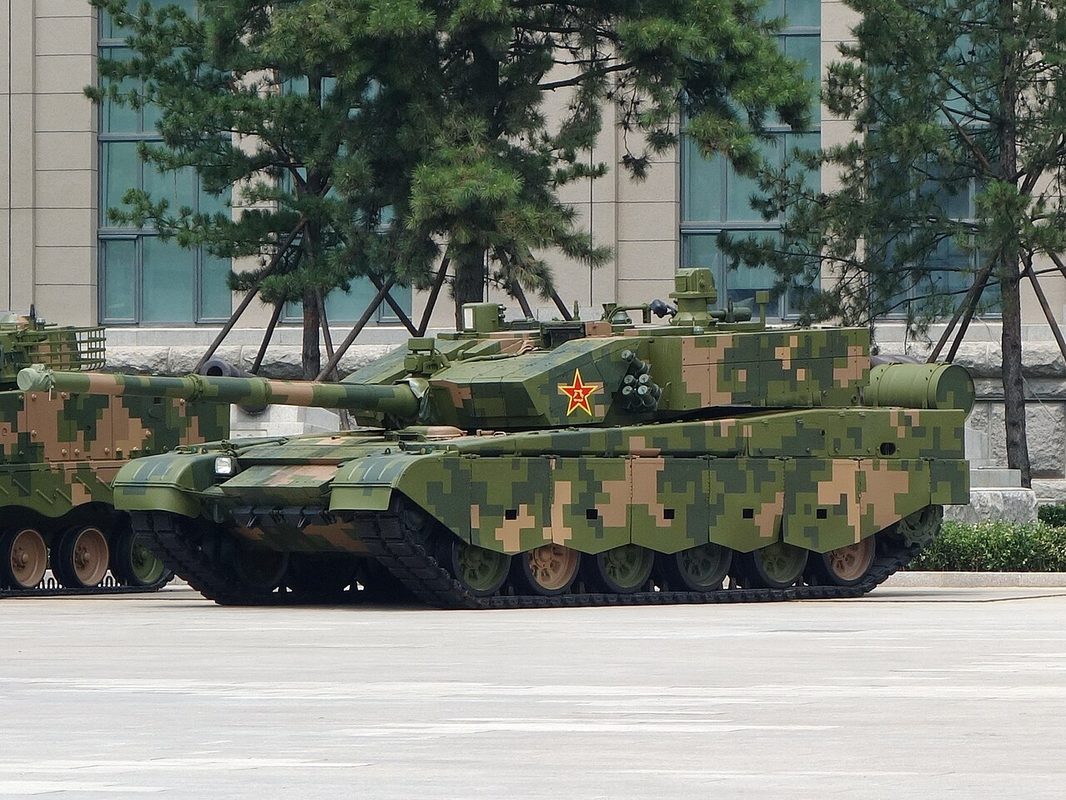
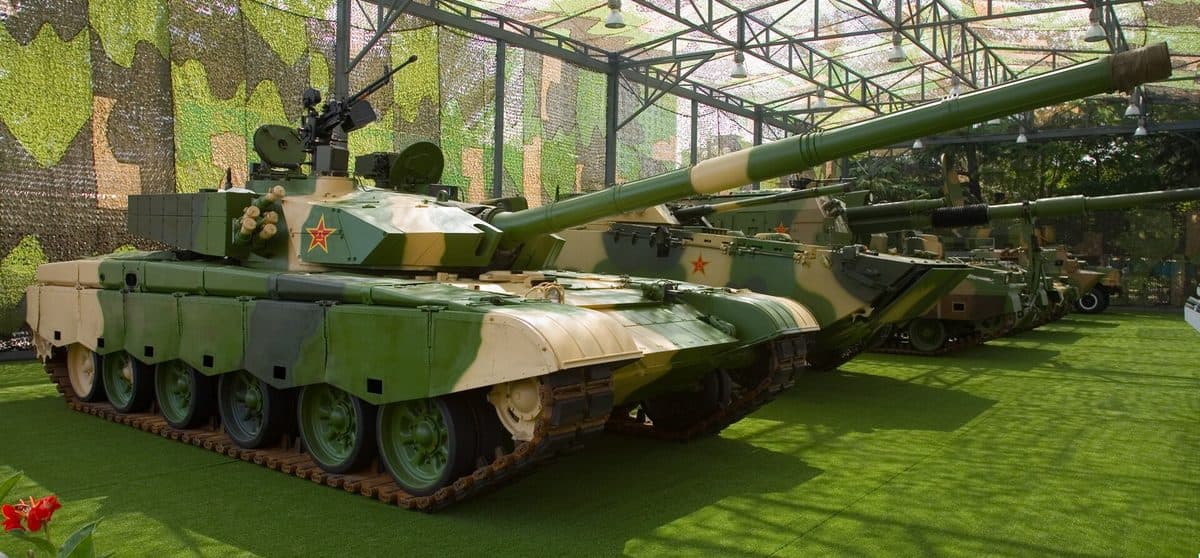
Type 99A main battle tank showing its distinctive arrowhead turret and ERA package
Marcus Webb
Marcus Webb

Military Vehicles & Ground Systems Contributor

Marcus Webb writes about military ground vehicles, armored platforms, and the logistics of land warfare. His work covers everything from MRAPs and infantry carriers to the training pipelines that keep ground forces operational in contested environments.

The Type 99A — designated ZTZ-99A by the People's Liberation Army — is China's most capable main battle tank and one of the most heavily equipped armored vehicles in the world on paper. It carries a 125mm smoothbore gun with an autoloader, composite armor augmented by explosive reactive armor, a GL-5 hard-kill active protection system, a laser dazzler designed to blind enemy optics and missile seekers, and a digital fire control system with hunter-killer capability. At approximately 55 to 58 tonnes, it fights in the same weight class as the Leopard 2A7 and approaches the M1A2 Abrams in size and ambition. But the Type 99A has never been exported. It has never been used in combat. And unlike every other tank on this list, its capabilities have never been independently verified.

From Soviet Roots to Chinese Design

The Type 99 traces its lineage to the Soviet T-72 through China's Type 80 and Type 90 programs. China obtained T-72 technology through multiple channels during the 1980s, and the hull layout, autoloader concept, and 125mm gun design all reflect that Soviet heritage. But the Type 99A that entered service around 2011 has diverged significantly from its Soviet-inspired origins. The turret is a new Chinese design with a distinctive arrowhead-shaped front that integrates ERA into the turret profile. The engine, fire control system, and electronic warfare suite are Chinese-developed. The Type 99A is not a T-72 derivative in the way that the T-90M is — it is a Chinese tank that grew from Soviet roots into something substantially different.

The Gun and Autoloader

The Type 99A is armed with the ZPT-98 125mm smoothbore cannon — manufactured domestically but derived from the Soviet 2A46 design. Like Russian tanks, the Type 99A uses a carousel autoloader that feeds rounds from a magazine beneath the turret floor, maintaining a three-man crew of commander, gunner, and driver.

The gun fires APFSDS armor-piercing rounds, HEAT shaped-charge rounds, and high-explosive fragmentation rounds. It can also fire laser-guided anti-tank missiles through the barrel — a capability shared with Russian tanks that gives the Type 99A engagement ranges exceeding the effective range of conventional tank ammunition.

The carousel autoloader carries the same fundamental vulnerability as Russian designs: ammunition stored in the crew compartment. If the carousel is penetrated, the results can be catastrophic — the same turret-ejecting detonations that have characterized Russian tank losses in Ukraine. Whether the Type 99A's armor and active protection can prevent penetration in combat is a question that has never been tested.

Protection: What China Claims

The Type 99A's protection system includes multiple layers. The base armor is a composite of steel, ceramic, and other materials — the exact composition classified and unknown to outside analysts. Over the composite base, ERA blocks cover the turret front and sides and the hull glacis, providing additional resistance to both shaped-charge warheads and kinetic energy penetrators.

The GL-5 active protection system is a hard-kill APS reportedly capable of detecting and intercepting incoming anti-tank missiles and rockets using millimeter-wave radar. If the system works as described, it would place the Type 99A alongside the Israeli Merkava (with Trophy) and the M1A2 Abrams (now receiving Trophy) as one of the few tanks in the world with a proven-class active protection capability.

The most unusual feature of the Type 99A's protection suite is the JD-3 laser self-defense weapon — a laser dazzler designed to blind the optics of enemy tanks, rangefinders, and missile seekers at distances of several kilometers. No Western main battle tank carries an equivalent system. If the JD-3 works as claimed, it would provide a unique soft-kill defensive capability that could degrade an enemy's ability to accurately engage the Type 99A before it can fire.

The operative phrase in every sentence above is "if it works as claimed." The GL-5 has never been used in combat. The JD-3 has never been independently tested. The composite armor composition is unknown. China does not publish test data. Everything the outside world knows about the Type 99A's protection comes from Chinese state media, military parades, and analysis of photographs — not from combat or independent evaluation.

Type 99A tanks during a military parade showing the arrowhead turret design and integrated ERA
Type 99A tanks on display. China keeps the Type 99A exclusively for domestic use — it has never been exported or used in combat, leaving its capabilities unverified outside Chinese military exercises. (PLA Daily)

Mobility and Power

The Type 99A is powered by a 150HB liquid-cooled turbocharged diesel engine producing 1,500 horsepower. At approximately 55 to 58 tonnes, this gives a power-to-weight ratio of roughly 27 hp/tonne — competitive with the Leclerc and significantly better than the Abrams. The official top speed is 80 km/h on roads, which if accurate would make the Type 99A one of the fastest main battle tanks in the world.

Chinese state media has published footage of Type 99A tanks performing at high speed in exercises across varied terrain, and the tank's mobility appears genuine. The engine — a Chinese design — provides adequate power, and the suspension and drivetrain appear to handle the tank's weight competently. Mobility is the easiest capability to verify from external observation, and the Type 99A appears to perform well.

No Export, No Combat

China does not export the Type 99A. For international customers, NORINCO offers the VT-4 (MBT-3000) — a lighter, less capable export tank that shares some technology with the Type 99 family but is specifically designed for the export market. The Type 99A is reserved for elite PLA armored units, particularly those concentrated in military regions oriented toward the Taiwan Strait and China's northern borders.

Estimated production numbers range from 500 to 1,200 Type 99 and Type 99A tanks — the uncertainty reflects China's policy of not publishing defense production data. The Type 99A is not widely distributed across all PLA ground forces; it is concentrated in the units that would be first to fight in a major conflict.

The Verification Problem

Every other major main battle tank on Earth has either been used in combat, been exported to armies that test it independently, or both. The Abrams fought in Iraq. The Leopard 2 has been used in Afghanistan, Syria, and Ukraine. The T-90M has been tested — and found wanting in some respects — in Ukraine. The Merkava has fought continuously for decades. Even the Leclerc has seen combat in Yemen with the UAE.

The Type 99A has done none of these things. Its capabilities exist entirely in the realm of manufacturer claims, military exercises with controlled conditions, and state media reporting. This does not mean the Type 99A is not a good tank — its specifications are impressive, its technology is sophisticated, and China's defense industry has demonstrated the ability to produce capable military equipment across multiple domains. But it means that any assessment of the Type 99A must carry an asterisk that no assessment of the Abrams or Leopard 2 requires.

The Type 99A may be approaching the capability of the best Western main battle tanks. It may have already reached it. It may fall short in ways that only combat would reveal. Until the Type 99A fights — or until China allows independent evaluation — the answer is a matter of estimation, not evidence. In armored warfare, the difference between those two things is measured in crew lives.

Share this article

Share:

Recommended

Ace of The Skies: Can You Identify These Military Aircraft Throughout The Years?
Test Yourself

Ace of The Skies: Can You Identify These Military Aircraft Throughout The Years?

Can you identify these aircraft?

Take the Quiz

On This Day in Military History

March 29

Last U.S. Combat Troops Leave Vietnam (1973)

The final American combat soldiers departed South Vietnam, ending direct U.S. military involvement in the Vietnam War after more than eight years of ground operations.

1461Battle of Towton

1847Siege of Veracruz Ends

1865Appomattox Campaign Begins

See all 10 events on March 29

Get Military News & History in Your Inbox

Join thousands of readers receiving our weekly digest of military technology, history, and analysis.

Test Your Knowledge