Skip to content
April 17:Bay of Pigs Invasion Begins65yr ago

10 Best Infantry Fighting Vehicles in the World

Marcus Webb · · 14 min read
Save
Share:
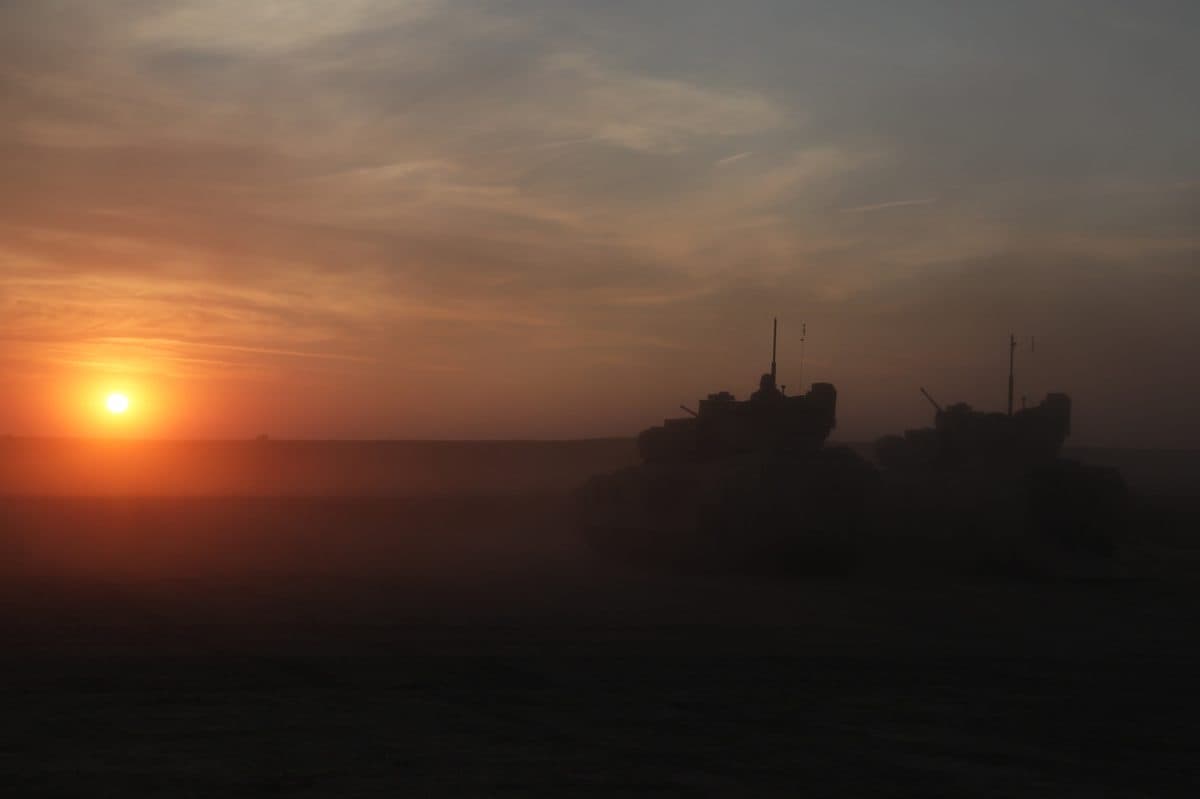
Modern infantry fighting vehicle representing the best armored combat vehicles protecting infantry in battle
Marcus Webb
Marcus Webb

Military Vehicles & Ground Systems Contributor

Marcus Webb writes about military ground vehicles, armored platforms, and the logistics of land warfare. His work covers everything from MRAPs and infantry carriers to the training pipelines that keep ground forces operational in contested environments.

An infantry fighting vehicle does two things that no other military vehicle combines: it carries infantry to the fight, and it fights alongside them when they get there. Unlike an armored personnel carrier — which is designed to deliver troops and withdraw — an IFV stays in the battle, engaging enemy armor, fortifications, and infantry with an autocannon, anti-tank missiles, and increasingly lethal secondary weapons. The best modern IFVs weigh as much as a World War II medium tank, carry armor that can defeat large-caliber autocannon rounds, and mount weapons systems that can kill main battle tanks. These are the 10 most capable infantry fighting vehicles in the world, ranked by combat effectiveness, protection, and the ability to keep both the crew and the infantry in the back alive.

10. Kurganets-25 (Russia)

Russia's next-generation IFV exists primarily on parade grounds and in manufacturer's brochures. The Kurganets-25 features a remote Bumerang-BM turret with a 30mm 2A42 autocannon and Kornet-EM anti-tank missiles, a front-mounted engine for improved crew protection, and modular armor. At 25 tonnes, it is designed to be amphibious and air-transportable. The problem: after more than 15 years of development, serial production has not materialized, and the Kurganets-25 has not been deployed to Ukraine — where it would have been immediately useful. It ranks last because it exists primarily as a promise rather than a proven weapon.

9. Ajax (United Kingdom)

The Ajax uses the 40mm CTA International cannon — a telescoped ammunition weapon that fires compact, high-velocity rounds with excellent range and penetration. At 38 tonnes, it is heavily protected, and the 589-vehicle order for the British Army would provide a significant armored reconnaissance and strike capability. But the Ajax program has been plagued by vibration and noise problems that have delayed full operational capability for years. The 40mm CTA cannon is genuinely excellent technology — but a vehicle that shakes its crew at operational speeds is not yet a vehicle that can fight. When the problems are fixed, the Ajax will be a formidable machine. Until then, it sits at ninth.

8. BMP-2 (Russia)

The BMP-2 is not the most advanced IFV on this list, but it may be the most consequential. With approximately 35,000 built and service in over 30 countries, the BMP-2 has seen more combat than any other IFV in history — Afghanistan, the Gulf War, Chechnya, Iraq, and Ukraine. Its 2A42 30mm autocannon is accurate and reliable, and it can mount AT-5 Spandrel anti-tank missiles for heavier threats. At just 14.3 tonnes and fully amphibious, it is lightweight and deployable to environments where heavier Western IFVs cannot operate. The BMP-2's protection is minimal by modern standards — its armor is vulnerable to heavy machine gun fire at close range — but its combination of firepower, mobility, and sheer global proliferation makes it impossible to ignore.

7. Warrior FV510 (United Kingdom)

The Warrior has been the British Army's primary IFV since 1988, serving in the Gulf War, Bosnia, Kosovo, Iraq, and Afghanistan. Its 30mm RARDEN cannon and 550-horsepower engine give it adequate firepower and mobility, and its armor — supplemented with appliqué packages for Iraq and Afghanistan — has protected crews through decades of combat operations. The Warrior's limitation is its age: the vehicle lacks an anti-tank missile system, and its electronics are a generation behind newer competitors. It is being replaced by the Boxer wheeled vehicle. The Warrior ranks here on its proven combat record rather than its current capability.

6. K21 (South Korea)

South Korea's K21 is the most heavily armed lightweight IFV in the world. Its S&T Dynamics 40mm autocannon fires at 300 rounds per minute with a muzzle velocity exceeding 1,000 meters per second — performance that exceeds most Western 30mm and 35mm weapons. Composite armor incorporating ceramics and alloys provides protection against large-caliber autocannon rounds at a combat weight of just 25 tonnes. The K21 is fully amphibious using waterjets and an inflatable pontoon system. It carries nine dismounts — more than most Western IFVs. The K21 has not yet seen combat, which limits how highly it can rank, but its specifications are impressive on paper and in testing.

M2A4 Bradley infantry fighting vehicle during combat operations representing the proven American IFV
The Bradley IFV has served in every major American ground operation since 1991 — and destroyed more Iraqi armored vehicles with TOW missiles during Desert Storm than the M1 Abrams did with its main gun. (U.S. Army)

5. BMP-3 (Russia)

The BMP-3 carries the most diverse weapons suite of any IFV in the world: a 100mm 2A70 gun that doubles as a missile launcher for AT-10 Stabber anti-tank guided missiles, a coaxial 30mm 2A72 autocannon, and three 7.62mm machine guns — including two mounted in the bow. This combination gives the BMP-3 a multi-layered engagement capability that no other IFV matches. The 100mm gun fires high-explosive rounds effective against fortifications, vehicles, and infantry, while the 30mm autocannon handles lighter armored targets and the ATGMs engage main battle tanks. At 18.7 tonnes and fully amphibious, the BMP-3 is light and mobile. Its armor is thin, but its firepower density is unmatched.

4. M2A4 Bradley (United States)

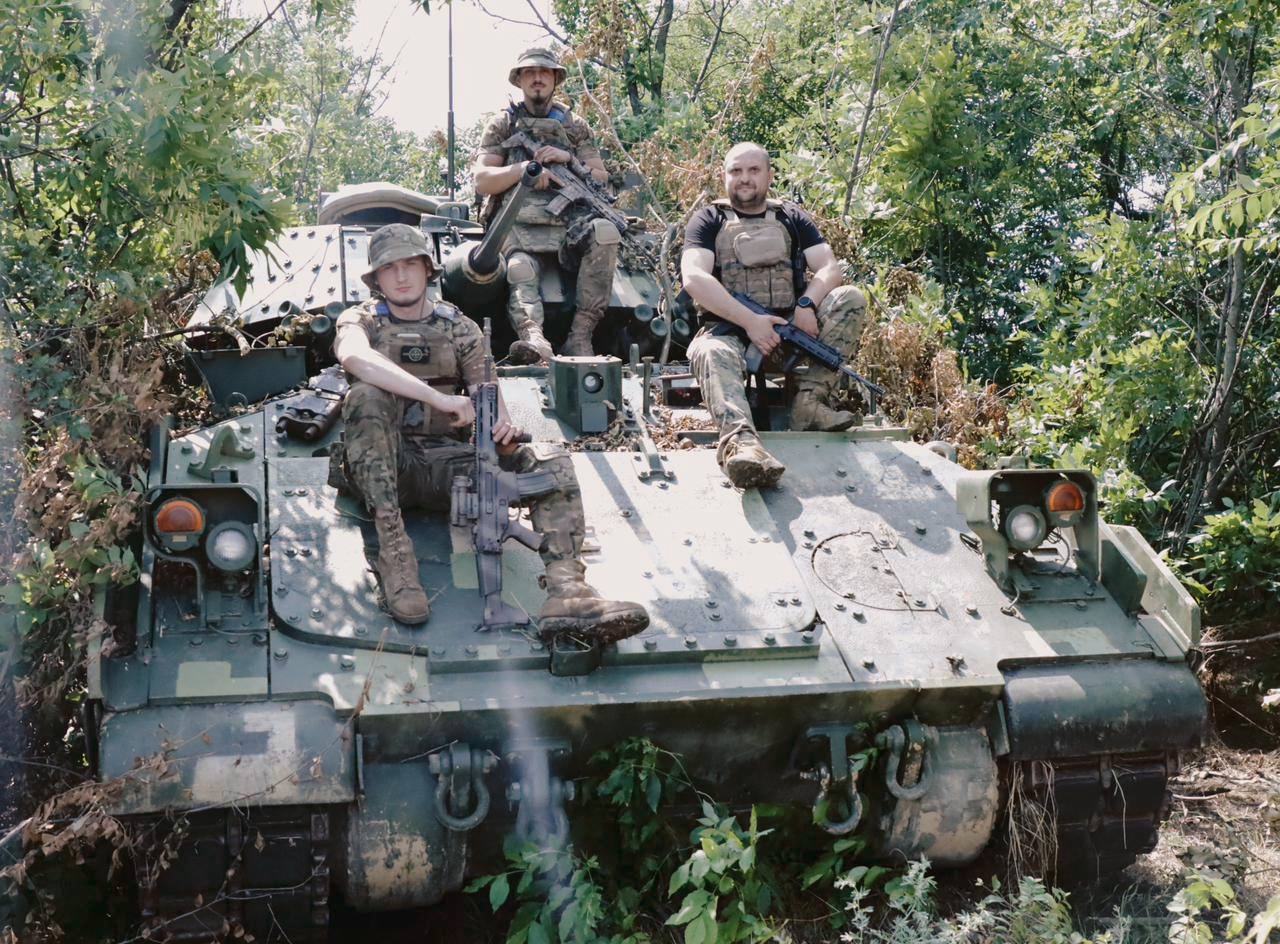
The Bradley is the most combat-proven Western IFV. During Desert Storm in 1991, Bradleys destroyed more Iraqi armored vehicles with TOW missiles than M1 Abrams tanks did with their main guns — a statistic that surprised everyone, including the Army. The M2A4 variant carries the M242 Bushmaster 25mm chain gun, a dual TOW launcher with seven missiles, and a 7.62mm coaxial machine gun. It carries three crew and six dismounts at 36.3 tonnes. The M2A4 upgrade adds digital electronics, an enhanced drivetrain, and IED jamming. Bradleys provided to Ukraine in 2023 have performed effectively in combat. The Bradley's 25mm gun is now considered undersized compared to 30mm and 40mm weapons on newer competitors, but its TOW missile system gives it a tank-killing capability that remains lethal.

3. Puma (Germany)

The Puma is arguably the most technologically advanced IFV in the world — and also the most troubled. Its 30mm MK 30-2/ABM autocannon fires AHEAD programmable airburst ammunition that can engage helicopters, drones, and dismounted infantry with devastating effectiveness. The MELLS launcher fires SPIKE LR anti-tank missiles to 5.5 kilometers. The unmanned LANCE turret keeps the crew below the turret ring. Modular armor scales from 31.5 tonnes to 43 tonnes. On paper, the Puma is exceptional. In practice, reliability problems — culminating in a December 2022 NATO exercise where all 18 deployed Pumas broke down — have undermined confidence. When the Puma works, it is one of the best IFVs ever built. That "when" remains the issue.

2. CV90 (Sweden/BAE Systems)

The CV90 is the most export-successful Western IFV, serving with nine nations: Sweden, Denmark, Estonia, Finland, the Netherlands, Norway, Switzerland, the Czech Republic, and Slovakia. Its success reflects a design philosophy that prioritizes adaptability — the CV90 family accommodates cannons from 30mm to 40mm, with armor packages that scale the vehicle from 26 to 37 tonnes depending on the customer's requirements. Norwegian CV90s deployed to Afghanistan, and Ukrainian forces have used CV90s in active combat during the war with Russia. The CV90's combination of proven combat performance, export success, and continuous modernization makes it the most reliable IFV program in the Western world.

1. Namer (Israel)

The Namer is not just the best IFV in the world — it is in a class of one. Built on the chassis of the Merkava Mk4 main battle tank, the Namer weighs approximately 60 tonnes in its IFV configuration — heavier than most main battle tanks. It carries the same composite armor and Trophy active protection system as the Merkava, providing a level of protection that no other IFV comes close to matching. The IFV variant mounts an unmanned turret with a 30mm autocannon, SPIKE-MR anti-tank missiles, a 7.62mm machine gun, and a 60mm mortar.

The Namer's philosophy is simple: infantry deserve the same protection as tank crews. Israel, which fights in dense urban environments where anti-tank weapons are abundant and every vehicle is a target, decided that the traditional IFV tradeoff — lighter armor in exchange for speed and deployability — was unacceptable. The Namer sacrifices strategic mobility and amphibious capability for survivability that has been proven in combat through extensive operations in Gaza. No other nation has committed to building an IFV this heavy, this expensive, or this well-protected. For the infantry inside it, that commitment is the difference between survival and catastrophe.

Share this article

Share:

Recommended

Ace of The Skies: Can You Identify These Military Aircraft Throughout The Years?
Test Yourself

Ace of The Skies: Can You Identify These Military Aircraft Throughout The Years?

Can you identify these aircraft?

Take the Quiz

On This Day in Military History

March 28

Operation Chariot — The St Nazaire Raid (1942)

A force of 611 British sailors and Commandos launched the "Greatest Raid of All" against the port of St Nazaire in occupied France. The obsolete destroyer HMS Campbeltown, packed with 4.5 tons of hidden explosives, rammed the Normandie dry dock — the only Atlantic dry dock capable of servicing Germany's battleship Tirpitz. The explosives detonated the next day, killing 360 Germans and rendering the dock unusable until 1948. Of 611 raiders, 169 were killed and 215 captured. Five Victoria Crosses were awarded — the most for any single British operation.

1854Britain Declares War on Russia — The Crimean War Begins

1862Battle of Glorieta Pass Concludes — Confederate Supply Train Destroyed

1969Dwight D. Eisenhower Dies

See all 10 events on March 28

Get Military News & History in Your Inbox

Join thousands of readers receiving our weekly digest of military technology, history, and analysis.

Test Your Knowledge