Skip to content
April 17:Bay of Pigs Invasion Begins65yr ago

The Puma IFV: Germany's High-Tech Infantry Vehicle

Marcus Webb · · 11 min read
Save
Share:
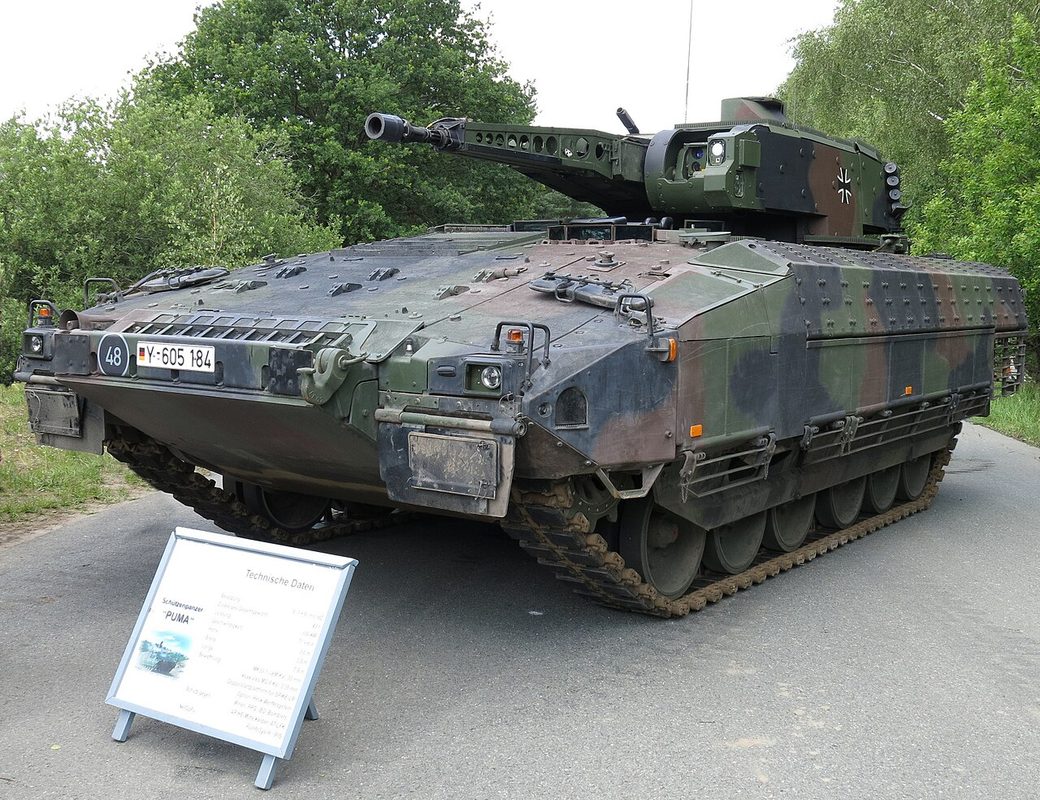
Puma infantry fighting vehicle showing its unmanned turret with 30mm autocannon and modular armor
Marcus Webb
Marcus Webb

Military Vehicles & Ground Systems Contributor

Marcus Webb writes about military ground vehicles, armored platforms, and the logistics of land warfare. His work covers everything from MRAPs and infantry carriers to the training pipelines that keep ground forces operational in contested environments.

When the German Army began replacing the Marder infantry fighting vehicle — which had served since 1971 — it decided not to simply build a better Marder. Instead, PSM (a joint venture between Krauss-Maffei Wegmann and Rheinmetall) designed the Puma from a clean sheet as the most survivable infantry fighting vehicle in the world. The result is a 43-ton armored vehicle at its heaviest protection level — heavier than many Cold War-era main battle tanks — with an unmanned turret mounting a stabilized 30mm autocannon, modular armor that can be scaled to the threat, and enough technology packed into its hull to make it one of the most expensive IFVs ever built. The Puma is Germany's answer to the question of how infantry should ride into a modern battle and survive.
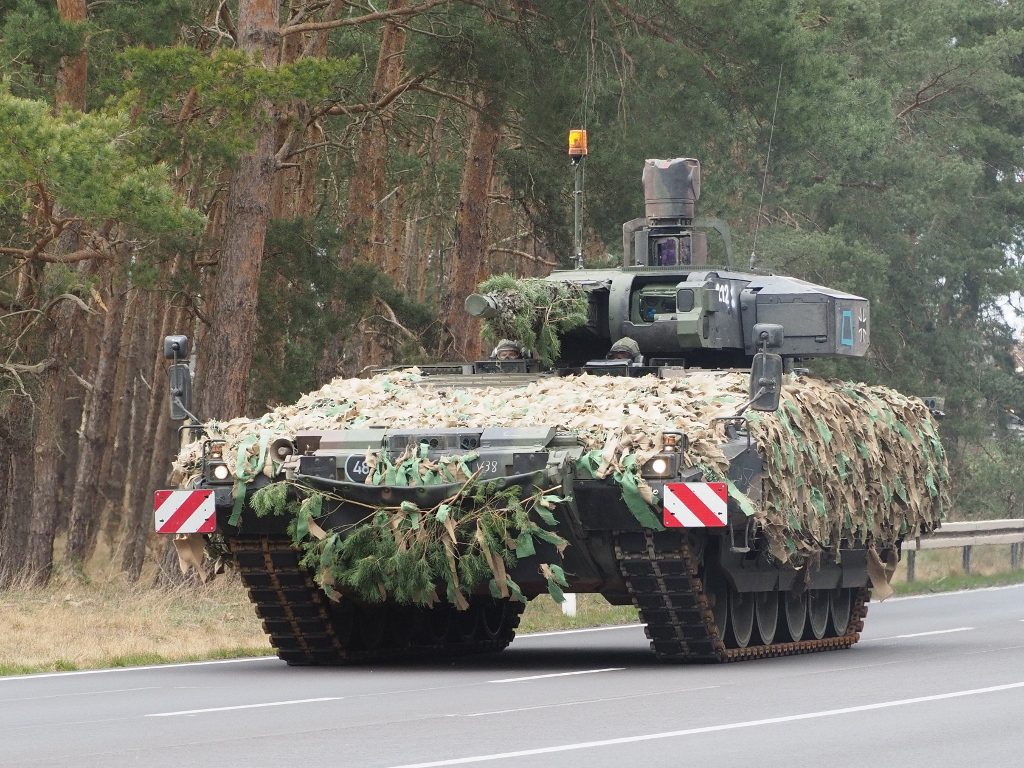
Puma infantry fighting vehicle advancing on a road with Bundeswehr iron cross marking
A Puma IFV on the move, displaying the Bundeswehr iron cross. At up to 43 tonnes in full armor configuration, it is the heaviest IFV in NATO service. Photo via Bundeswehr.

Why So Heavy?

The Puma's weight — up to 43 tonnes at the highest protection level — is extraordinary for an IFV. The American M2 Bradley weighs approximately 33 tonnes. The British Warrior weighs 28 tonnes. The Russian BMP-3 weighs 19 tonnes. The Puma at Level C protection weighs more than a T-72 tank from the 1970s.

This weight is driven by a single design priority: crew and dismount survivability. The Puma was designed from the outset to survive on a battlefield where the threats to IFVs include not just small arms and artillery fragments (which any IFV can handle) but anti-tank missiles, IEDs, heavy autocannon fire, and mines — threats that have destroyed IFVs in every conflict since the 1990s. The German Army watched BMP-1s and BMP-2s burn in Grozny, Bradleys take RPG hits in Iraq, and Warriors struggle with IED damage in Afghanistan, and concluded that the next German IFV had to be protected at a level previously reserved for tanks.

Modular Armor System

The Puma's armor is configured in three protection levels, each using modular armor packages that can be added or removed in the field:

Level A: The base configuration, optimized for air transportability. At approximately 31.5 tonnes, the Puma at Level A can be transported by the A400M military transport aircraft. Protection at Level A defends against 14.5mm heavy machine gun fire and artillery fragments — the minimum acceptable for a modern IFV.

Level B: Additional armor modules are installed, increasing weight to approximately 37 tonnes. Level B provides protection against 30mm autocannon fire from the frontal arc — a critical capability, since the 30mm autocannon is the standard armament of most potential adversary IFVs (including the BMP-2 and BMP-3).

Level C: The maximum protection configuration at approximately 43 tonnes. Level C adds further armor modules and provides protection against medium anti-tank weapons (RPGs and similar shaped-charge weapons) and enhanced mine and IED protection. At Level C, the Puma's protection approaches that of some older main battle tanks.

The modular approach reflects the reality that no single protection level is appropriate for all situations. An IFV deploying for peacekeeping might need Level A for transportability. An IFV operating alongside Leopard 2 tanks in a high-intensity conventional war needs Level C for survivability. The Puma can be reconfigured between levels in the field, using containerized armor module kits.

The Unmanned Turret

The Puma's Lance turret is unmanned — the gunner operates it remotely from inside the hull. This design offers several advantages. The turret can be kept smaller and lower-profile, since it doesn't need to accommodate a human crew member. The crew — commander and gunner — sit in the hull behind composite armor, protected from turret penetrations that would injure or kill a crew member in a manned turret. And the turret's ammunition storage is isolated from the crew compartment, reducing the risk of a catastrophic ammunition cookoff reaching the crew.

Puma IFV with camouflage netting showing the Lance turret with 30mm cannon
The Puma's unmanned Lance turret with camouflage netting. The 30mm MK 30-2/ABM autocannon is stabilized for firing on the move against ground and air targets. Photo via Bundeswehr.

The turret mounts a Rheinmetall MK 30-2/ABM 30mm autocannon — a dual-feed weapon that can switch between ammunition types (typically APFSDS for armored targets and ABM/HE for soft targets and air defense) at the press of a button. The gun is stabilized for firing on the move and effective against both ground and air targets. The turret also mounts a coaxial 5.56mm machine gun and can be fitted with the MELLS launcher for Spike LR anti-tank guided missiles — giving the Puma the ability to engage main battle tanks at ranges exceeding 4 kilometers.

Mobility and Powerplant

The Puma is powered by an MTU V10 diesel engine producing 1,088 horsepower. At 43 tonnes (Level C), this gives a power-to-weight ratio of approximately 25 hp/ton — better than many main battle tanks and sufficient for a top speed of approximately 70 km/h (43 mph) on roads. The vehicle's suspension uses a hydropneumatic system that provides excellent cross-country mobility and allows the hull to be raised or lowered as needed.

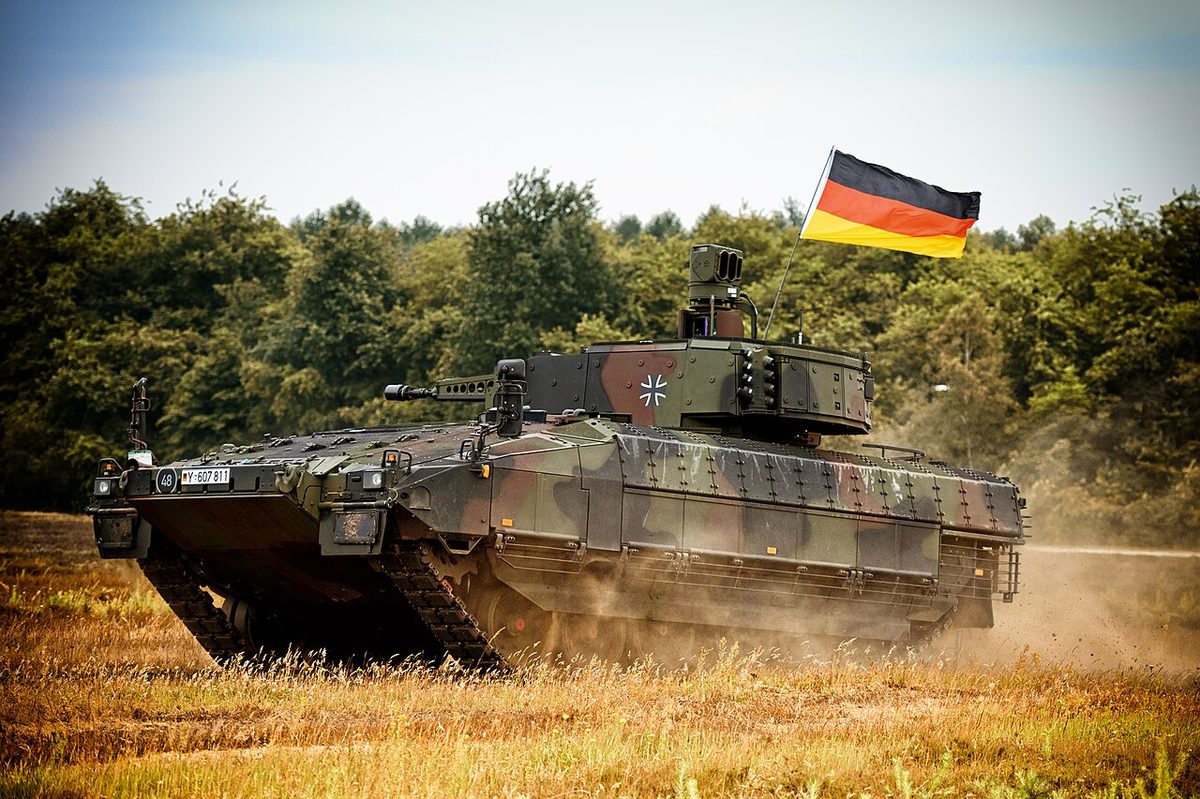
Puma IFV advancing through a field with German flag and dust cloud
A Puma IFV advancing through a field during operations. The troop compartment accommodates six dismounts in addition to the three-man crew. Photo via Bundeswehr.

The engine is positioned on the right front of the hull, with the driver on the left front — a conventional arrangement for Western IFVs that provides the dismount squad with a rear exit ramp. The troop compartment accommodates six dismounts in addition to the three-man crew (driver, commander, gunner). This dismount capacity is smaller than the Bradley's seven or the older Marder's seven, and has been criticized as insufficient for a full infantry squad. The German Army has addressed this by adjusting squad organization to fit the Puma's capacity.

Electronics and Situational Awareness

The Puma's electronics suite is comprehensive. The commander has a stabilized panoramic sight with thermal imaging and laser rangefinder, providing 360-degree situational awareness. The gunner has a dedicated sight with thermal imaging for target engagement. A battlefield management system integrates the Puma into the German Army's digital command network, allowing real-time sharing of position data, threat information, and targeting coordinates between vehicles and higher headquarters.

A camera system provides the crew with 360-degree external visibility without opening hatches — critical for urban operations where the threat can come from any direction. Dismounts in the troop compartment have access to screens showing the external camera feeds, allowing them to maintain situational awareness before dismounting.

Problems and Controversy

The Puma program has been plagued by development delays, cost overruns, and reliability problems that have generated significant political controversy in Germany. The vehicle's complexity — inevitable in a system designed to provide near-tank-level protection with an unmanned turret and comprehensive electronics — has resulted in lower readiness rates than the simpler vehicles it replaces.

In a particularly embarrassing episode in December 2022, all 18 Puma IFVs participating in a NATO readiness exercise broke down with various technical problems within days of the exercise beginning. The failures — ranging from turret electronics malfunctions to gun system issues — prompted the German Army's inspector general to write a letter reporting that "not a single Puma was available" for the exercise. The incident made international headlines and raised questions about the Puma's operational reliability.

Puma IFV parked in a field with dismounted troops alongside during an exercise
A Puma IFV during a NATO exercise with dismounted troops. The December 2022 readiness exercise failure prompted significant reliability improvements. Photo via Bundeswehr.

The manufacturers and the German Army have since implemented technical fixes and improved maintenance procedures, and more recent exercises have shown improved readiness. But the episode highlighted a recurring tension in modern military vehicle design: the most capable vehicles are also the most complex, and complexity is the enemy of reliability.

The Most Protected IFV

Despite its problems, the Puma represents a legitimate attempt to solve one of the hardest problems in armored vehicle design: how to build an infantry carrier that can survive on a battlefield dominated by anti-tank weapons, precision artillery, mines, and IEDs — while still being mobile, lethal, and transportable enough to be useful.

The answer, inevitably, is a vehicle that weighs as much as a tank, costs nearly as much as a tank, and requires maintenance infrastructure approaching that of a tank. Whether this is the right answer depends on what you value most. If the priority is getting infantry to the fight alive — if the worst outcome is a burning IFV with dead soldiers inside — then the Puma's weight and complexity are justified costs. If the priority is simplicity, reliability, and numbers, a lighter, less protected vehicle that can be fielded in greater quantity might be the better choice.

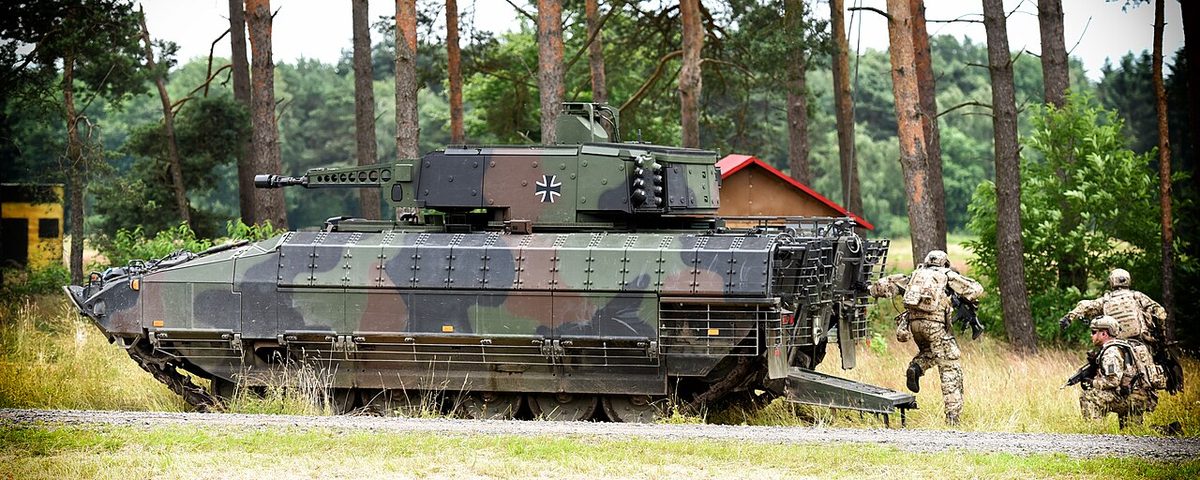
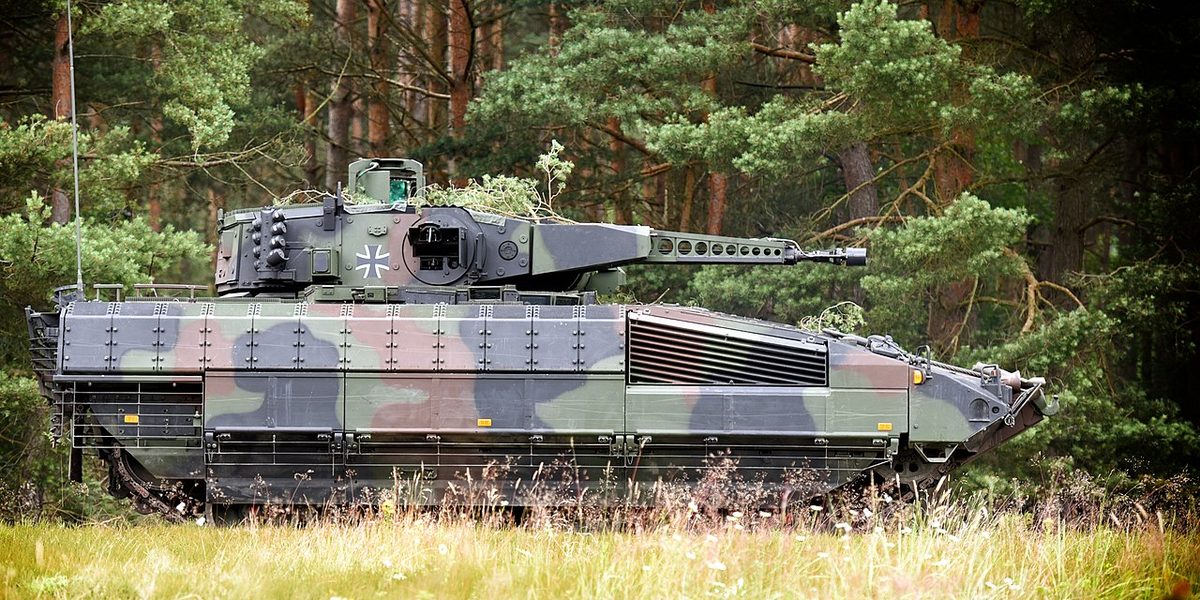
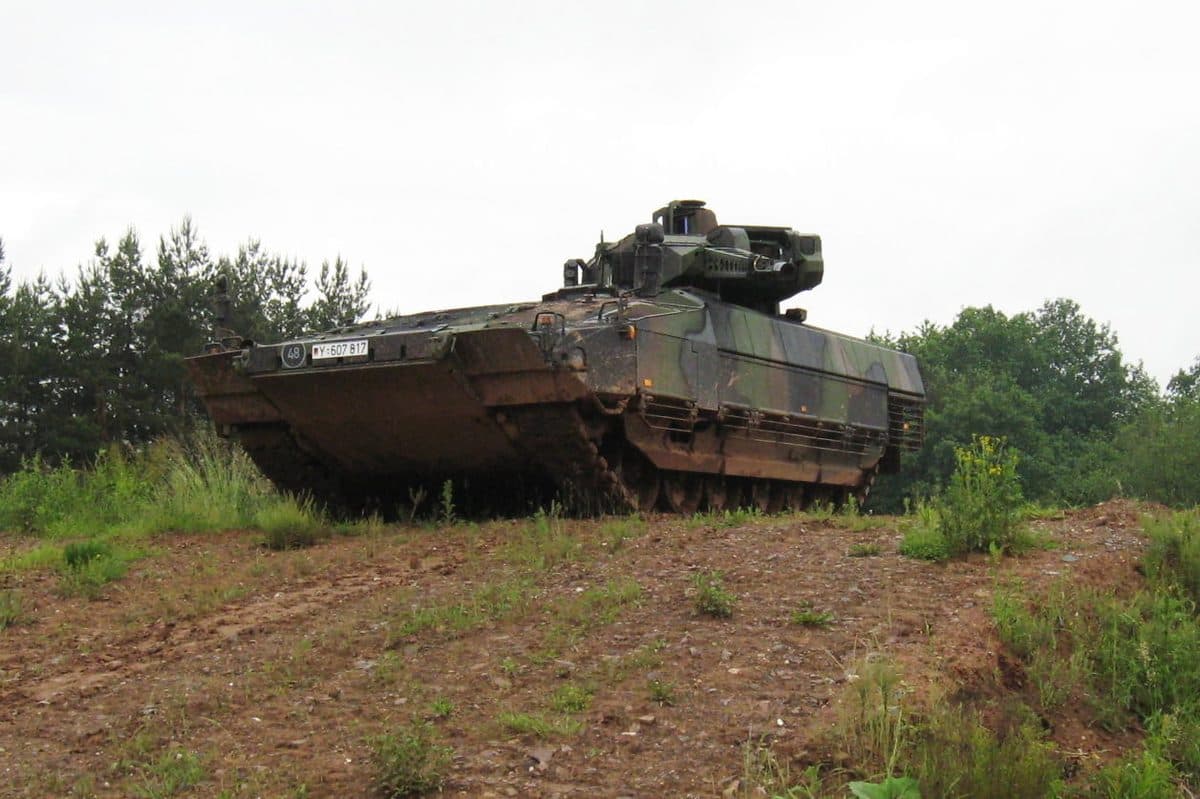
Puma IFV side profile in vegetation showing the full vehicle configuration
A Puma IFV in full configuration showing the modular armor, unmanned turret, and overall vehicle profile. Photo via Bundeswehr.

Germany chose protection. The Puma is the result — a vehicle that is simultaneously the most capable IFV in the world and the most troubled. Getting both of those things right at the same time is the challenge that the Puma program continues to work through.

Share this article

Share:

Recommended

Ace of The Skies: Can You Identify These Military Aircraft Throughout The Years?
Test Yourself

Ace of The Skies: Can You Identify These Military Aircraft Throughout The Years?

Can you identify these aircraft?

Take the Quiz

On This Day in Military History

March 26

Battle of Iwo Jima Declared Secure (1945)

After 36 days of the most brutal fighting in the Pacific War, the island of Iwo Jima was officially declared secure. The Marines had expected a five-day battle; Kuribayashi's revolutionary defense-in-depth using 11 miles of interconnected tunnels turned it into a nightmare. The battle cost 6,821 American dead and 19,217 wounded. Of approximately 21,000 Japanese defenders, only 216 were taken prisoner. Fleet Admiral Nimitz declared: "Among the Americans who served on Iwo Jima, uncommon valor was a common virtue."

1862Battle of Glorieta Pass Begins — "The Gettysburg of the West"

1917First Battle of Gaza — A Victory Thrown Away

1979Egypt-Israel Peace Treaty Signed at the White House

See all 10 events on March 26

Get Military News & History in Your Inbox

Join thousands of readers receiving our weekly digest of military technology, history, and analysis.

Test Your Knowledge