Skip to content
May 6:Fall of Corregidor: America's Last Philippine Stronghold Surrenders84yr ago

The Namer: Israel's Heavily Armored Personnel Carrier

Marcus Webb · · 10 min read
Save
Share:
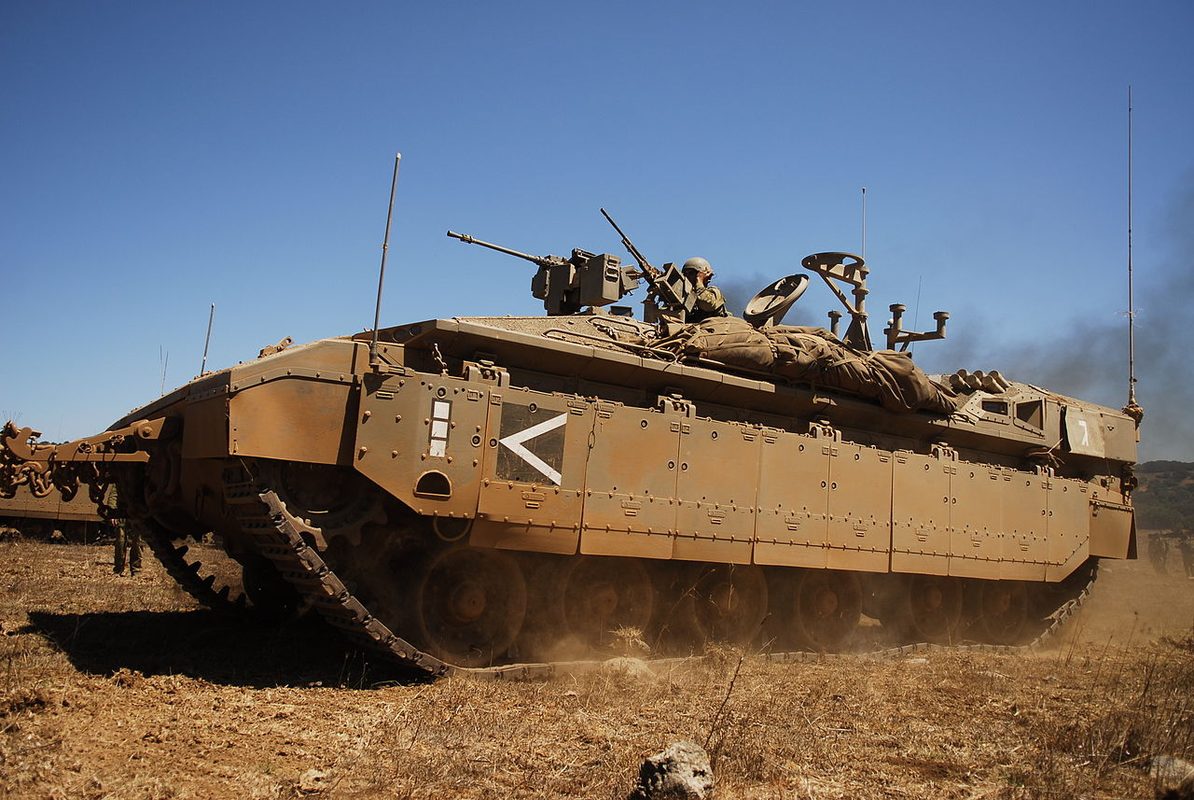
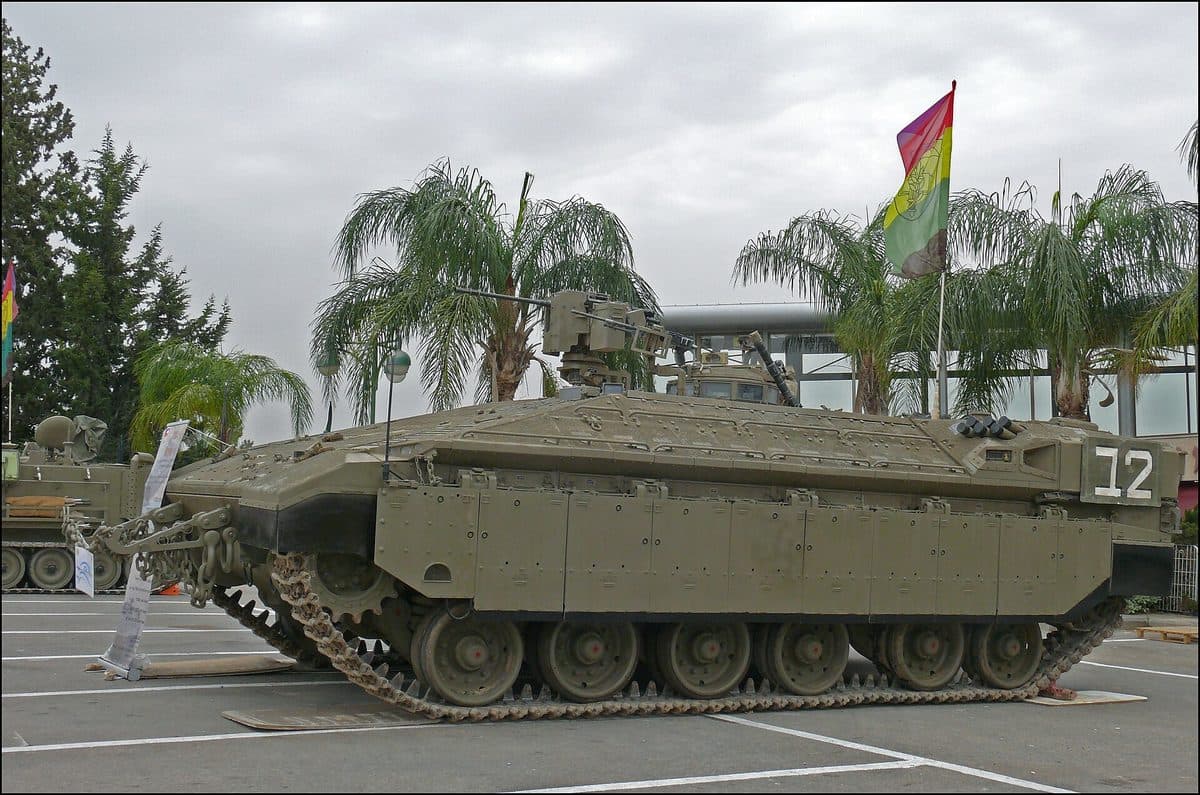
Namer heavy armored personnel carrier in urban terrain showing its Merkava-derived hull and Trophy active protection system
Marcus Webb
Marcus Webb

Military Vehicles & Ground Systems Contributor

Marcus Webb writes about military ground vehicles, armored platforms, and the logistics of land warfare. His work covers everything from MRAPs and infantry carriers to the training pipelines that keep ground forces operational in contested environments.

Israel learned the cost of light armor in blood. In every conflict from the Yom Kippur War to the Second Lebanon War, Israeli soldiers riding in M113 armored personnel carriers, aluminum-hulled vehicles designed in the 1960s, were killed when anti-tank missiles, RPGs, and IEDs penetrated the thin armor with ease. The M113 was adequate when it was designed to carry troops across open terrain behind a tank advance. It was fatally inadequate in the close-range, ambush-heavy combat that characterized Israel's wars in Lebanon and Gaza. The Namer was Israel's answer: an APC built on a Merkava tank hull, with tank-grade armor, a front-mounted engine that shields the crew, and eventually the same Trophy active protection system that has prevented any anti-tank missile from penetrating a Merkava Mk 4M.

Built Like a Tank, Because It Is One

The Namer's name is both a Hebrew word meaning "leopard" and an acronym for Nagmash Merkava, Merkava APC. The description is literal. The Namer uses the hull and automotive components of the Merkava Mk 4 main battle tank, with the turret removed and replaced by an armored superstructure that creates a protected troop compartment.

Like the Merkava, the Namer places its engine, a General Dynamics GD883 diesel producing 1,500 horsepower (same family as the Merkava Mk 4's MTU MT883), in the front of the hull. This means the engine block, transmission, and associated components sit between the crew and any frontal threat, providing an additional layer of protection beyond the composite armor. If a round penetrates the front armor, it must still pass through the engine before reaching anyone inside.

The Namer weighs approximately 60 tonnes, making it heavier than many main battle tanks, including the Russian T-90M (46.5 tonnes) and the French Leclerc (57 tonnes). It is by a significant margin the heaviest APC in the world. This weight comes from the Merkava-grade composite armor that surrounds the vehicle, providing protection levels that no other APC approaches.

Best Modern US Tank

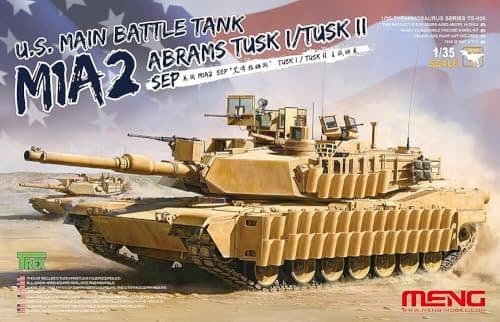
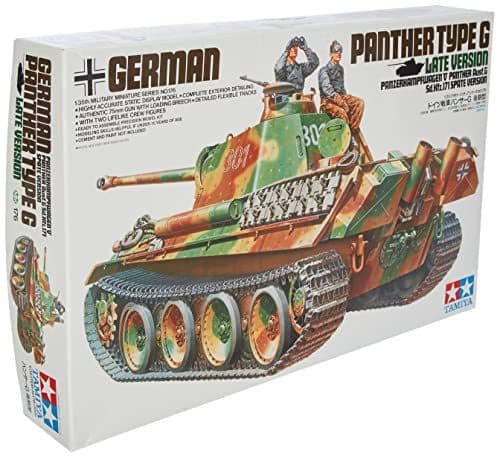
Meng 1/35 M1A2 SEP Abrams TUSK I/TUSK II

$72 on Amazon

Meng 1/35 M1A2 SEP Abrams TUSK I/TUSK II model kit

Meng's Abrams includes parts for both TUSK I and TUSK II configurations, which adds explosive reactive armor, a CROWS remote weapon station, and loader's armored gun shield. Sharper detail than Tamiya's version, with workable individual track links.

The vehicle carries a crew of three (commander, driver, and weapons operator) plus up to nine dismount infantry, who enter and exit through a large rear door, the same design feature that the Merkava uses for crew escape and casualty evacuation. The rear door allows troops to load and unload under the protection of the vehicle's armor, shielded from fire by the vehicle's mass.

Namer APC with rear door open showing the troop compartment and infantry dismounting during an exercise
The Namer's rear door, inherited from the Merkava, allows infantry to load and unload under the protection of the vehicle's armor. In urban combat, this capability has proven operationally critical. (Israel Defense Forces)

Trophy on an APC

Later Namer variants integrate the Rafael Trophy (Windbreaker) active protection system, the same system that has compiled a perfect combat record on the Merkava Mk 4M, intercepting every anti-tank missile fired at it in combat with no reported failures. Trophy uses radar to detect incoming anti-tank missiles and RPGs, then fires a directed blast of countermeasure projectiles to intercept and destroy the threat before impact.

Putting Trophy on an APC is uniquely Israeli. No other nation equips its personnel carriers with hard-kill active protection systems. The decision reflects Israel's calculation that the troops inside the Namer are at least as valuable as the soldiers inside a tank, and that protecting them with the same technology is worth the cost and weight penalty. The combination of Merkava-grade passive armor and Trophy active protection makes the Namer arguably the most survivable troop carrier ever built.

Armament

The Namer is not designed to fight like a tank. Its primary mission is delivering infantry to the point of contact under heavy armor protection. The standard armament is a Rafael Samson RCWS (Remote Controlled Weapon Station) mounting a 12.7mm heavy machine gun or a 7.62mm machine gun. The weapon station is operated remotely from inside the vehicle, so no crew member needs to expose themselves to fire.

An IFV variant, the Namer IFV, mounts a Rafael Samson Mk 2 turret with a 30mm Mk 44 Bushmaster II cannon, Spike anti-tank missiles, and a 7.62mm coaxial machine gun. This configuration transforms the Namer from a protected taxi into a fighting vehicle that can engage armored targets, suppress enemy positions, and provide direct fire support to its dismounts. The IFV variant trades some troop capacity for firepower but retains the same armor and protection systems.

Best Beginner Kit

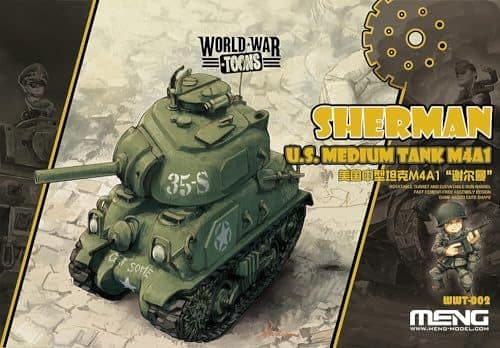
Meng WWT Sherman Snap-Fit Kit

$18 on Amazon

Meng WWT Sherman snap-fit model kit

Meng's World War Toons line takes real WW2 vehicles and reimagines them in a stylized, cartoonish proportion. This Sherman kit snaps together without glue and requires no painting, making it a zero-barrier entry point into armor modeling.

Why Israel Builds Heavy APCs

The Namer's 60-tonne weight is often cited as excessive, and by the standards of most armies, it is. The American M2 Bradley IFV weighs approximately 30 tonnes. The German Puma, at its heaviest, weighs 43 tonnes. Most armies prioritize strategic mobility (the ability to airlift or deploy vehicles rapidly over long distances) and operational mobility (the ability to cross bridges, navigate roads, and traverse soft ground). A 60-tonne APC is difficult to airlift, stresses bridges, and chews through fuel.

Israel's calculation is different. Israel is a small country that fights within or immediately adjacent to its own borders. It does not need to deploy APCs across oceans. Its road network and bridges are designed for heavy military traffic. The distance from any assembly area to any point of contact is measured in tens of kilometers, not hundreds. In this operational context, the Namer's weight is not a strategic liability, it is a tactical advantage, because every kilogram translates into armor that keeps soldiers alive.

The lesson that drove the Namer's development was paid for in casualties. Every time Israeli soldiers rode into combat in M113s or other light armored vehicles, losses from anti-tank weapons confirmed that thin aluminum armor was insufficient against the RPGs, ATGMs, and IEDs that proliferate in the operating environments Israel faces. The Namer's design requirement was simple: give the infantry riding inside the same level of protection that the tank crews fighting beside them receive.

The Weight of Survival

The Namer is not a vehicle that most armies would build. Its weight, cost, and limited strategic mobility make it impractical for expeditionary operations or rapid deployment. But Israel does not need an expeditionary APC. It needs a vehicle that can drive into the most dangerous urban environments on earth, narrow streets covered by anti-tank teams, buildings rigged with explosives, tunnels concealing fighters with RPGs, and bring its soldiers through to the other side. The Merkava philosophy of crew survival above all other considerations extends to the troops the Namer carries. Sixty tonnes of armor is heavy. The alternative, lighter vehicles and more casualties, is heavier still.

Share this article

Share:

From the Military Machine catalog

Gear We'd Buy on This Topic

Recommended

Ace of The Skies: Can You Identify These Military Aircraft Throughout The Years?
Test Yourself

Ace of The Skies: Can You Identify These Military Aircraft Throughout The Years?

Can you identify these aircraft?

Take the Quiz

On This Day in Military History

March 27

The Goliad Massacre (1836)

On Palm Sunday, between 425 and 445 Texian prisoners of war were executed by the Mexican Army at Goliad, Texas, on orders from General Santa Anna. Colonel Fannin had surrendered after the Battle of Coleto Creek under terms promising humane treatment, but Santa Anna invoked a decree classifying armed foreigners as pirates subject to execution. The massacre killed more Texians than the Alamo and became a catastrophic strategic blunder, "Remember Goliad!" joined "Remember the Alamo!" as the battle cry that drove Sam Houston's army to victory at San Jacinto less than a month later.

1794, Naval Act of 1794, Birth of the United States Navy

1814, Battle of Horseshoe Bend, Andrew Jackson Destroys the Red Sticks

1865, Lincoln, Grant, and Sherman Meet at City Point

See all 10 events on March 27

Test Your Knowledge