


15 Best World War II Books for History Enthusiasts (2026)
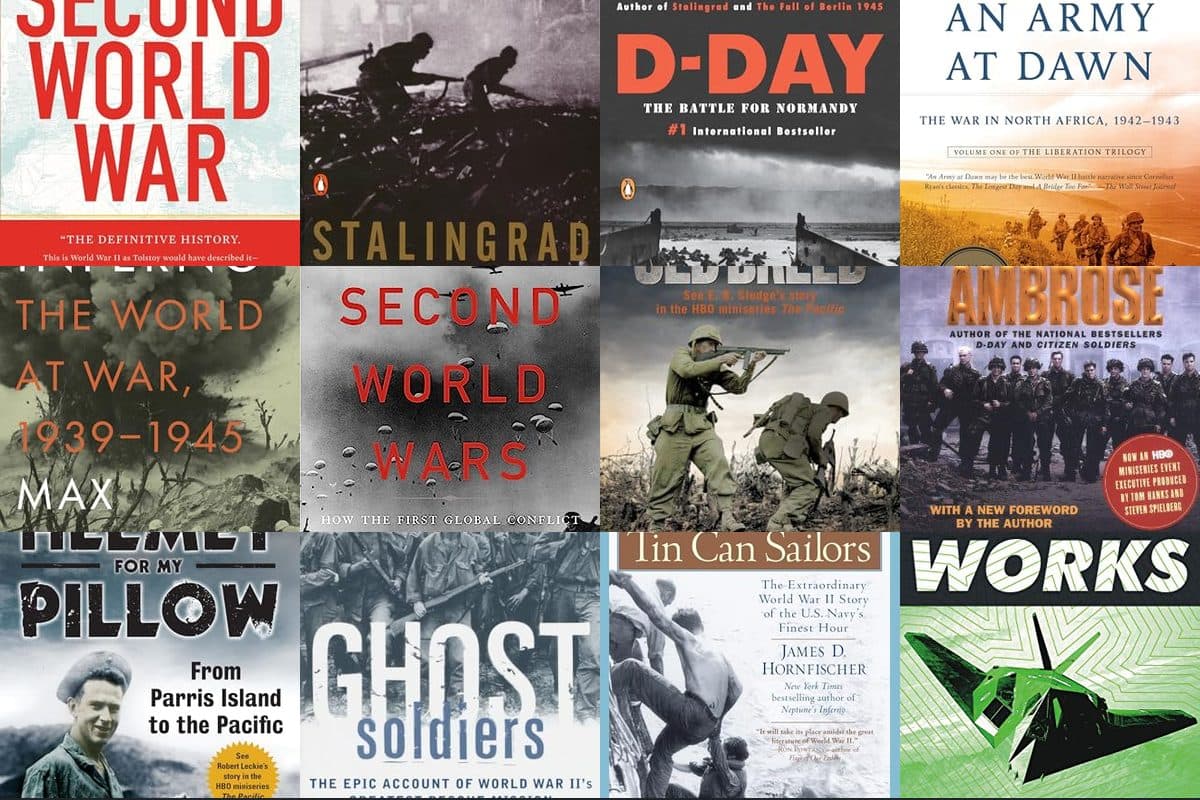
15 essential WW2 books covering every theater. Narrative histories, memoirs, and visual references ranked.
daniel-mercer··21 min read
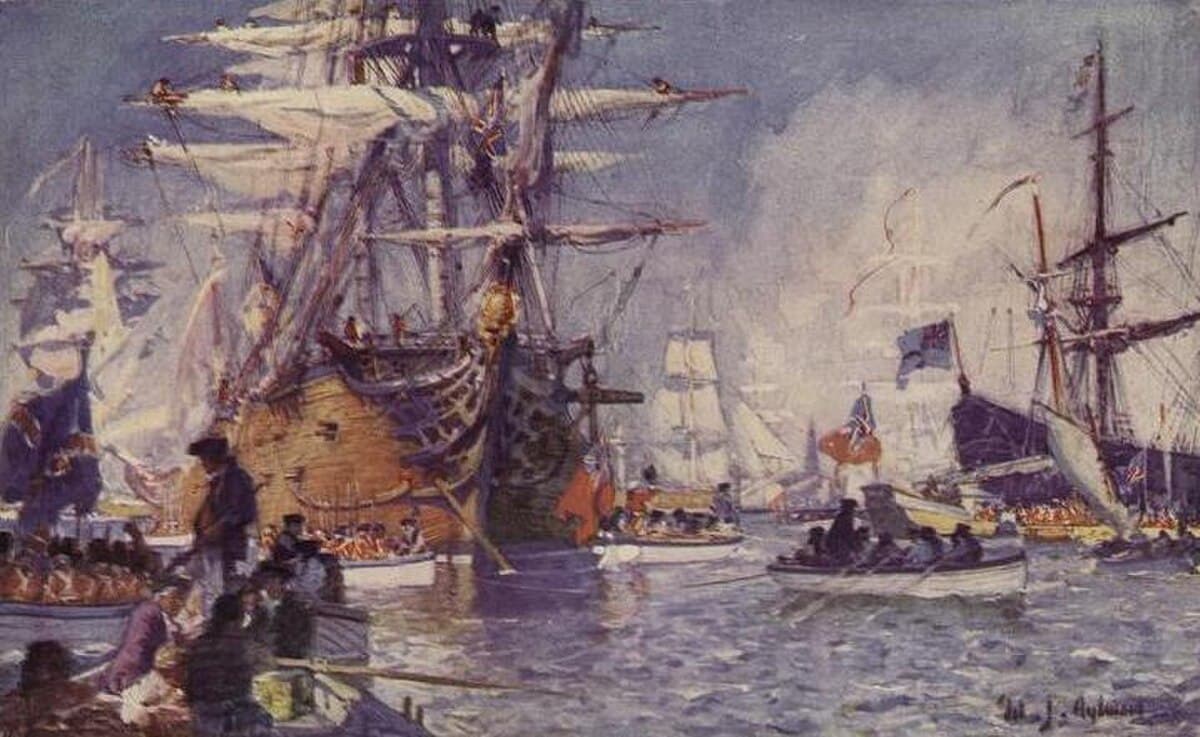
British General William Howe ordered the evacuation of approximately 11,000 troops and over 1,000 Loyalist civilians from Boston, ending an 11-month siege, the first major American victory of the Revolutionary War. The evacuation was precipitated by George Washington's daring overnight fortification of Dorchester Heights on March 4-5 using cannons that Colonel Henry Knox had hauled 300 miles overland from Fort Ticonderoga. The British fleet sailed for Halifax, Nova Scotia, leaving behind significant quantities of artillery and supplies.
British General William Howe ordered the evacuation of approximately 11,000 troops and over 1,000 Loyalist civilians from Boston, ending an 11-month siege, the first major American victory of the Revolutionary War. The evacuation was precipitated by George Washington's daring overnight fortification of Dorchester Heights on March 4-5 using cannons that Colonel Henry Knox had hauled 300 miles overland from Fort Ticonderoga. The British fleet sailed for Halifax, Nova Scotia, leaving behind significant quantities of artillery and supplies.
The Kingdom of Italy was formally proclaimed with Victor Emmanuel II as king, completing the military unification campaign that had defeated Austrian armies at Magenta and Solferino. The brutal Battle of Solferino in 1859, where 300,000 soldiers fought and 40,000 fell, had so horrified Swiss observer Henry Dunant that he founded the Red Cross, transforming military medicine forever.
The Army of the Potomac under Major General George B. McClellan began embarking from Alexandria, Virginia, for Fort Monroe on the Virginia Peninsula, the largest amphibious movement of the Civil War. Approximately 400 ships would transport 121,500 troops, 15,000 horses and mules, 1,100 wagons, and 44 batteries of artillery. McClellan's plan was to approach Richmond from the southeast rather than attacking overland from Washington.
Brigadier General William W. Averell's Union cavalry division crossed the Rappahannock River at Kelly's Ford, Virginia, engaging Confederate cavalry under Fitzhugh Lee. During the battle, Major John Pelham, the 24-year-old Confederate artillery prodigy whom Robert E. Lee had dubbed "The Gallant Pelham" at Fredericksburg, joined a cavalry charge as an observer and was struck in the head by a shell fragment. He never regained consciousness and died the following day.
General Douglas MacArthur arrived at Batchelor Field south of Darwin, Australia, completing his escape from the besieged Philippines. He had departed Corregidor on March 11 via PT boat, then flew by B-17 bomber from Mindanao. Upon arriving, MacArthur delivered his famous pledge: "I came through and I shall return." He was subsequently appointed Supreme Commander of Allied Forces in the Southwest Pacific Area.
The Ludendorff Bridge at Remagen, Germany, collapsed into the Rhine River ten days after its unexpected capture by U.S. forces on March 7, killing 28 American combat engineers and wounding 63 more. The bridge had been weakened by the original German demolition attempt, subsequent bombing raids, V-2 rocket attacks, and heavy military traffic. By this time, American engineers had already built several pontoon bridges, making the original structure strategically redundant.
The U.S. Navy successfully launched the Vanguard 1 satellite, the first solar-powered satellite and the oldest human-made object still in orbit. Though smaller than the Soviet Sputnik, Vanguard 1 proved the military potential of space-based surveillance by revealing that the Earth is slightly pear-shaped, data valuable for ballistic missile trajectory calculations.
President Dwight Eisenhower approved a CIA program to recruit and train Cuban exiles for a paramilitary invasion to overthrow Fidel Castro. The plan, inherited by President Kennedy, was executed as the Bay of Pigs invasion on April 17, 1961, one of the most spectacular military and intelligence failures in American history.
President George W. Bush addressed the nation from the White House, declaring an end to diplomacy and giving Iraqi President Saddam Hussein and his sons 48 hours to leave Iraq or face military action. Saddam refused. The invasion of Iraq, Operation Iraqi Freedom, began on March 20, 2003, launching the longest and most controversial American military engagement since Vietnam.

General (four-star), U.S. Air Force
The only person in U.S. history to have led both the National Security Agency (1999-2005) and the Central Intelligence Agency (2006-2009). Hayden oversaw the NSA during the September 11 attacks and directed the implementation of controversial surveillance programs that reshaped American intelligence capabilities in the War on Terror.

Colonel, U.S. Air Force
Apollo 15 Lunar Module Pilot who became the eighth person to walk on the Moon in July 1971. A Naval Academy graduate commissioned into the Air Force, Irwin logged over 7,000 hours of flight time as a test pilot before joining NASA. He and Commander David Scott conducted the longest lunar surface stay to that date and were the first to use the Lunar Roving Vehicle.

Roman Emperor and Commander-in-Chief
The last of the "Five Good Emperors" died at age 58 in his military quarters at Vindobona (modern Vienna) while campaigning against Germanic tribes on the Danube frontier. His philosophical work "Meditations," written during these military campaigns, became one of the most influential works on leadership ever produced, General James Mattis carried a copy during deployments in the Persian Gulf, Afghanistan, and Iraq.

Senior General, People's Army of Vietnam
Chief of Staff under Vo Nguyen Giap during Dien Bien Phu who later planned and commanded the 1975 Ho Chi Minh Campaign, the final offensive that captured Saigon and ended the Vietnam War. He also directed Vietnam's 1978 invasion of Cambodia that overthrew the Khmer Rouge and the subsequent border war with China.
Wear the Timeline
10 military events occurred on March 17, spanning multiple centuries. Key events include: British Evacuation of Boston (1776), McClellan's Peninsula Campaign Embarkation Begins (1862), MacArthur Arrives in Australia: "I Shall Return" (1942), Bush Issues 48-Hour Ultimatum to Saddam Hussein (2003).
The most significant military event on March 17 is British Evacuation of Boston (1776). British General William Howe ordered the evacuation of approximately 11,000 troops and over 1,000 Loyalist civilians from Boston, ending an 11-month siege, the first major American victory of the Revolutionary War. The evacuation was precipitated by George Washington's daring overnight fortification of Dorchester Heights on March 4-5 using cannons that Colonel Henry Knox had hauled 300 miles overland from Fort Ticonderoga. The British fleet sailed for Halifax, Nova Scotia, leaving behind significant quantities of artillery and supplies.
Notable military figures born on March 17 include General Michael V. Hayden (1945–present), Colonel James B. Irwin (1930–1991).
Events on March 17 span the Colonial & Revolutionary era, the Civil War, World War II, the Modern Era, the Cold War, covering 10 events across 4 centuries of military history.
Events on March 17 involve 5 branches of the U.S. and allied armed forces, reflecting the global scope of military operations throughout history.
Explore military history from the day you were born.
June 6
The Allied invasion of Normandy, the largest amphibious assault in history.
December 7
Japan attacks the U.S. Pacific Fleet, bringing America into World War II.
September 11
The deadliest terrorist attack in history transforms U.S. national security.
August 6
The first atomic bomb is dropped on a city, ushering in the nuclear age.
May 8
Nazi Germany surrenders unconditionally, ending World War II in Europe.
November 11
Armistice Day marks the end of World War I and honors all who served.
June 4
The turning point of the Pacific War as the U.S. Navy destroys four Japanese carriers.
July 4
The Declaration of Independence is adopted, sparking the American Revolution.
15 essential WW2 books covering every theater. Narrative histories, memoirs, and visual references ranked.
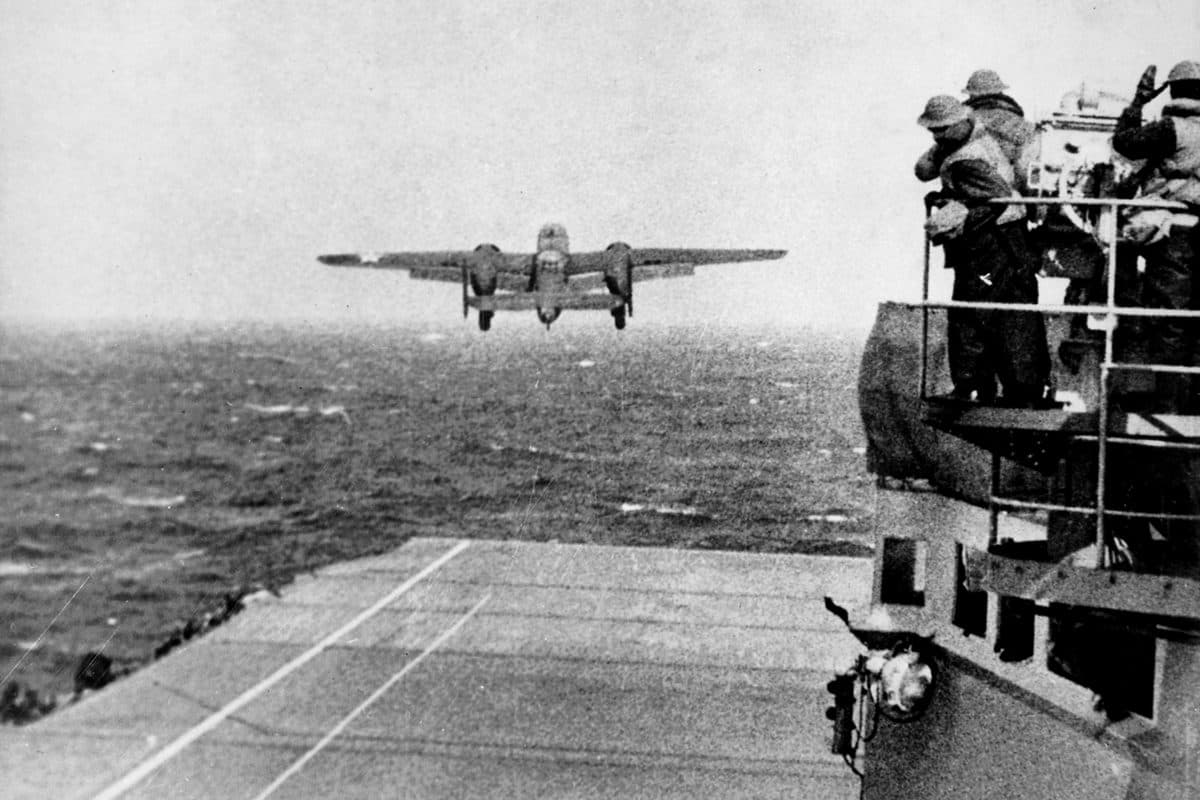
On April 18, 1942, sixteen B-25 Mitchell bombers did something no one thought possible: they launched from the deck of an aircraft carrier, flew 650 miles to Japan, and bombed Tokyo. Every aircraft was lost. The damage was negligible. The consequences changed the war.
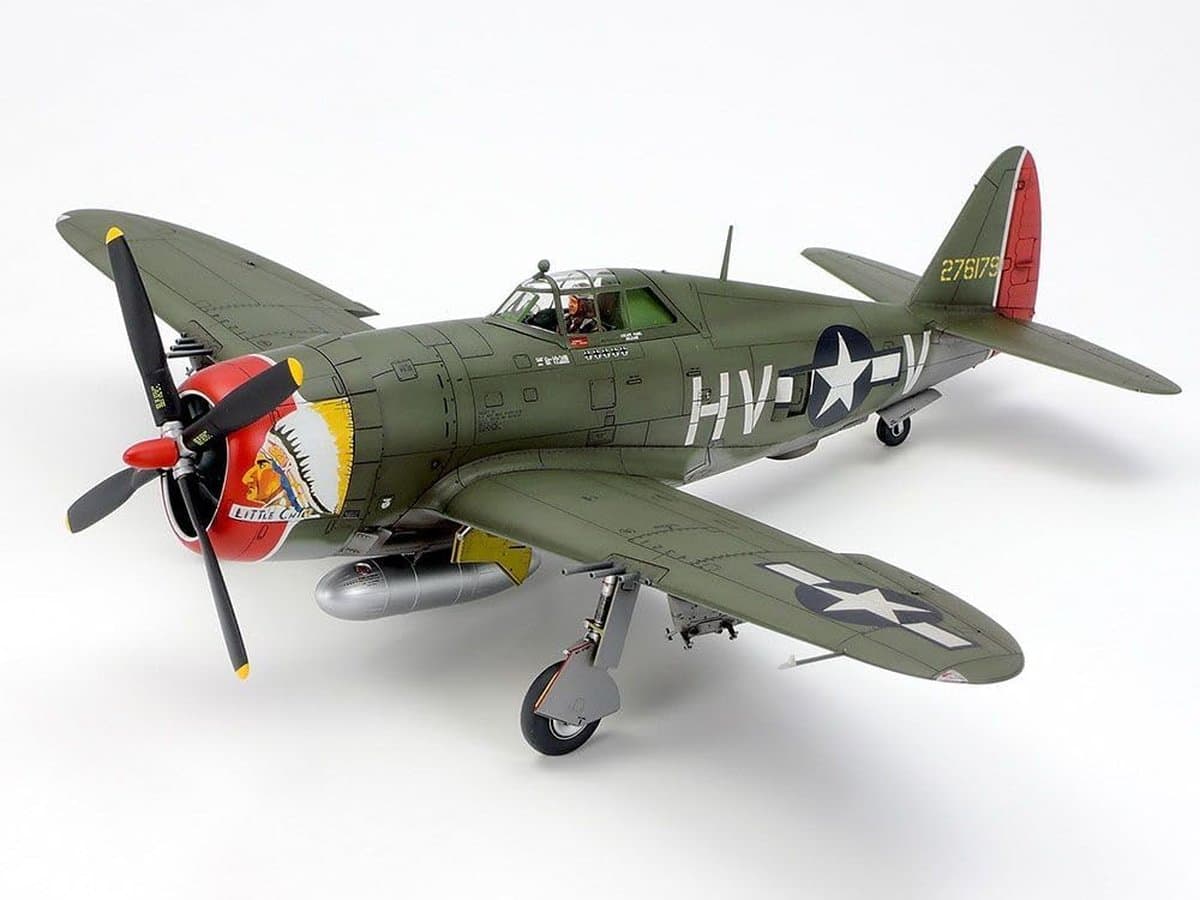
Compare 85+ WW2 scale model kits across aircraft, tanks, and ships. Beginner builds from $9 to museum-grade showpieces at $580. Covers Tamiya, Eduard, HK Models, Trumpeter, and more with honest reviews, trade-offs, and pricing.

On April 7, 1945, the Imperial Japanese Navy sent the largest battleship ever built on a one-way suicide mission to Okinawa. She never arrived. 386 American aircraft found her first, and sank her in under two hours.