

15 Best World War II Books for History Enthusiasts (2026)
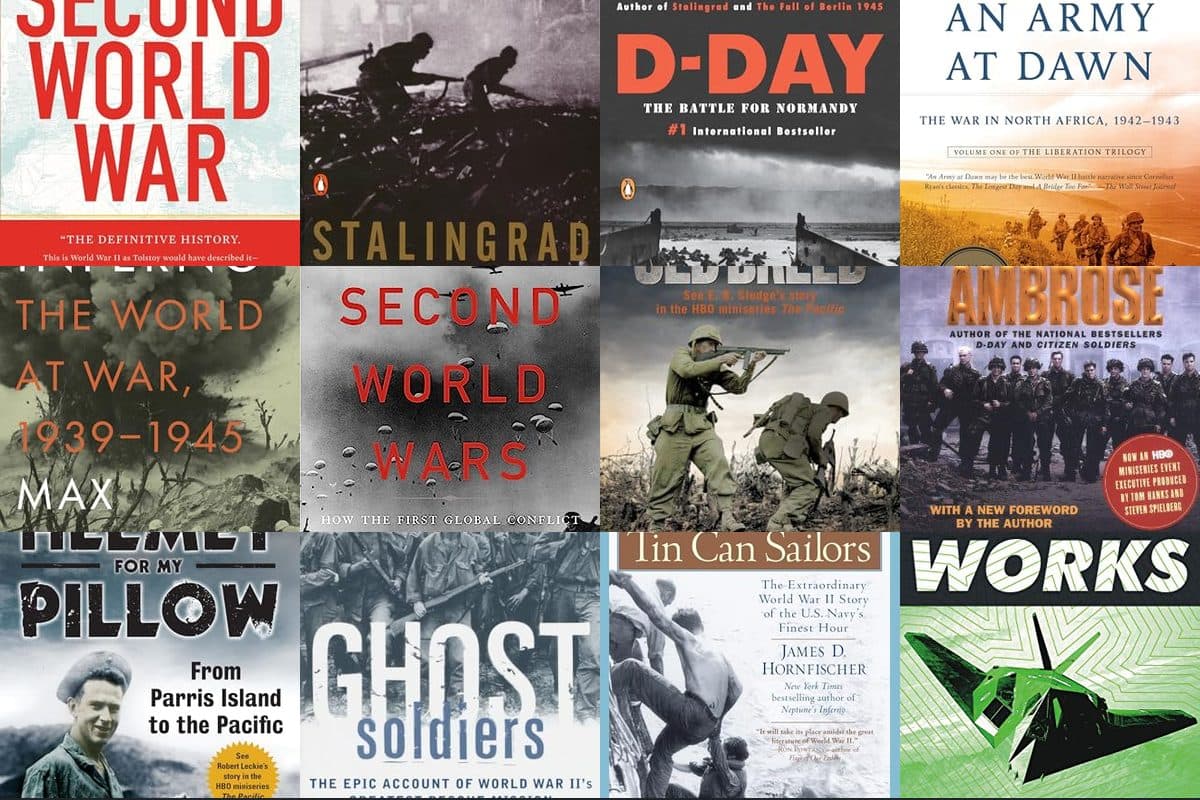
15 essential WW2 books covering every theater. Narrative histories, memoirs, and visual references ranked.
daniel-mercer··21 min read

At dawn on September 1, 1939, the German Wehrmacht launched Fall Weiss (Case White), a massive invasion of Poland from three directions. Over 1.5 million German troops, supported by nearly 2,000 aircraft of the Luftwaffe and six armored divisions, crossed the Polish frontier. The invasion triggered declarations of war from Britain and France two days later, beginning the Second World War, the deadliest conflict in human history.
The Royal Navy began a devastating four-day bombardment of Copenhagen to prevent the Danish fleet from falling into Napoleon's hands. British forces fired over 14,000 shells, destroying much of the city and killing approximately 2,000 civilians. Denmark surrendered its entire fleet of 70 warships, but the attack turned neutral Denmark into a bitter enemy and ally of France.
Confederate forces under Stonewall Jackson clashed with Union troops in a violent thunderstorm near Chantilly, Virginia, at the conclusion of the Second Bull Run Campaign. The Union lost two talented generals, Philip Kearny and Isaac Stevens, both killed while personally leading counterattacks. The battle ended the Confederate advance toward Washington and convinced Lee to launch his first invasion of the North.
Union forces under William T. Sherman defeated Confederate troops under William J. Hardee at Jonesboro, Georgia, cutting the last rail line into Atlanta. The Confederate Army of Tennessee under John Bell Hood evacuated the city that night, burning munitions trains and ordnance stores. Sherman telegraphed Washington the next day with the famous message that Atlanta was his.
At dawn on September 1, 1939, the German Wehrmacht launched Fall Weiss (Case White), a massive invasion of Poland from three directions. Over 1.5 million German troops, supported by nearly 2,000 aircraft of the Luftwaffe and six armored divisions, crossed the Polish frontier.
A Polish garrison of approximately 200 soldiers under Major Henryk Sucharski held the military transit depot at Westerplatte against repeated German assaults for seven days. Despite bombardment from the battleship Schleswig-Holstein, aerial attacks, and infantry assaults by forces outnumbering them ten to one, the garrison held out until September 7. Westerplatte became an enduring symbol of Polish resistance.
Rommel launched his last offensive in North Africa, attempting to outflank the British Eighth Army at El Alamein by sweeping through the desert south of Alam el Halfa ridge. General Bernard Montgomery, who had taken command only weeks earlier, had anticipated the attack and positioned his forces accordingly. British armor and anti-tank guns, supported by the Desert Air Force, halted Rommel's advance. The failed offensive exhausted Rommel's fuel reserves and set the stage for the decisive British victory at the Second Battle of El Alamein in October.
North Korean forces launched their largest coordinated assault against the Pusan Perimeter, the 140-mile defensive line protecting the last United Nations foothold in South Korea. Thirteen North Korean divisions attacked simultaneously along the Naktong River, at Masan, and near Pohang, creating multiple crises. The defenders held through weeks of desperate fighting, buying time for MacArthur's planned counterstroke at Inchon.
Australia, New Zealand, and the United States signed the ANZUS Security Treaty in San Francisco, creating a mutual defense pact for the Pacific region. The agreement committed each signatory to regard an armed attack on any of the others as a threat to its own peace and safety. ANZUS became the cornerstone of Pacific security architecture during the Cold War and remains in force between the US and Australia.
A Soviet Su-15 interceptor shot down Korean Air Lines Flight 007, a Boeing 747 carrying 269 passengers and crew, after it strayed into prohibited Soviet airspace near Sakhalin Island. All 269 aboard were killed, including U.S. Congressman Larry McDonald. The Soviet Union initially denied the shootdown, then claimed the aircraft was on a spy mission. The incident deepened Cold War tensions and accelerated President Reagan's advocacy for making GPS technology available to civilian aviation.
A joint US-French expedition led by Robert Ballard located the wreck of RMS Titanic 12,500 feet below the surface of the North Atlantic. The discovery was made using the deep-sea camera sled Argo, towed behind the research vessel Knorr. The mission was partly funded and cover for a classified US Navy survey of the lost nuclear submarines USS Thresher and USS Scorpion.

Private
Author of Tarzan and John Carter of Mars who served in the 7th U.S. Cavalry at Fort Grant, Arizona. During World War II, at age 67, he became the oldest American war correspondent in the Pacific theater, covering the Battle of Midway and flying combat missions with bomber crews.

General of Cavalry
German Army officer who served as chief of staff to Rommel in North Africa and later to Kesselring and Rundstedt on the Western Front. One of the most capable staff officers of the Wehrmacht, he played a key role in coordinating Axis operations across multiple theaters.

Admiral of the Fleet
Supreme Allied Commander of South East Asia Command during World War II and last Viceroy of India. As Chief of the Defence Staff (1959-1965), he oversaw the reorganization of Britain's armed forces. He was assassinated by the IRA on August 27, 1979.
Wear the Timeline
10 military events occurred on September 1, spanning multiple centuries. Key events include: Germany Invades Poland (1939), Defense of Westerplatte (1939), Battle of Alam el Halfa (1942), Soviet Shootdown of Korean Air Lines Flight 007 (1983), Battle of Jonesboro Ends, Atlanta Falls (1864).
The most significant military event on September 1 is Germany Invades Poland (1939). At dawn on September 1, 1939, the German Wehrmacht launched Fall Weiss (Case White), a massive invasion of Poland from three directions. Over 1.5 million German troops, supported by nearly 2,000 aircraft of the Luftwaffe and six armored divisions, crossed the Polish frontier. The invasion triggered declarations of war from Britain and France two days later, beginning the Second World War, the deadliest conflict in human history.
Notable military figures born on September 1 include Edgar Rice Burroughs (1875–1950), Siegfried Westphal (1902–1982).
Events on September 1 span World War II, the Colonial & Revolutionary era, the Civil War, the Korean War, the Cold War, covering 10 events across 2 centuries of military history.
Events on September 1 involve 4 branches of the U.S. and allied armed forces, reflecting the global scope of military operations throughout history.
Explore military history from the day you were born.
June 6
The Allied invasion of Normandy, the largest amphibious assault in history.
December 7
Japan attacks the U.S. Pacific Fleet, bringing America into World War II.
September 11
The deadliest terrorist attack in history transforms U.S. national security.
August 6
The first atomic bomb is dropped on a city, ushering in the nuclear age.
May 8
Nazi Germany surrenders unconditionally, ending World War II in Europe.
November 11
Armistice Day marks the end of World War I and honors all who served.
June 4
The turning point of the Pacific War as the U.S. Navy destroys four Japanese carriers.
July 4
The Declaration of Independence is adopted, sparking the American Revolution.
15 essential WW2 books covering every theater. Narrative histories, memoirs, and visual references ranked.
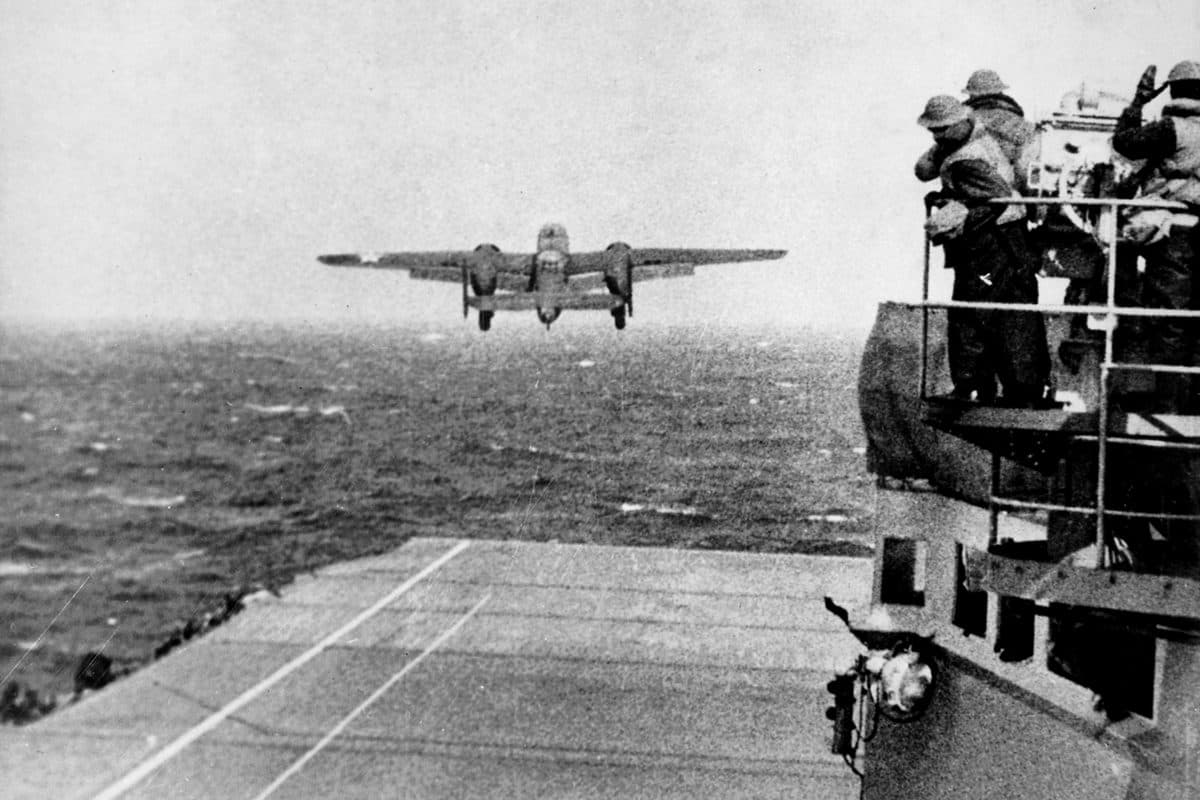
On April 18, 1942, sixteen B-25 Mitchell bombers did something no one thought possible: they launched from the deck of an aircraft carrier, flew 650 miles to Japan, and bombed Tokyo. Every aircraft was lost. The damage was negligible. The consequences changed the war.
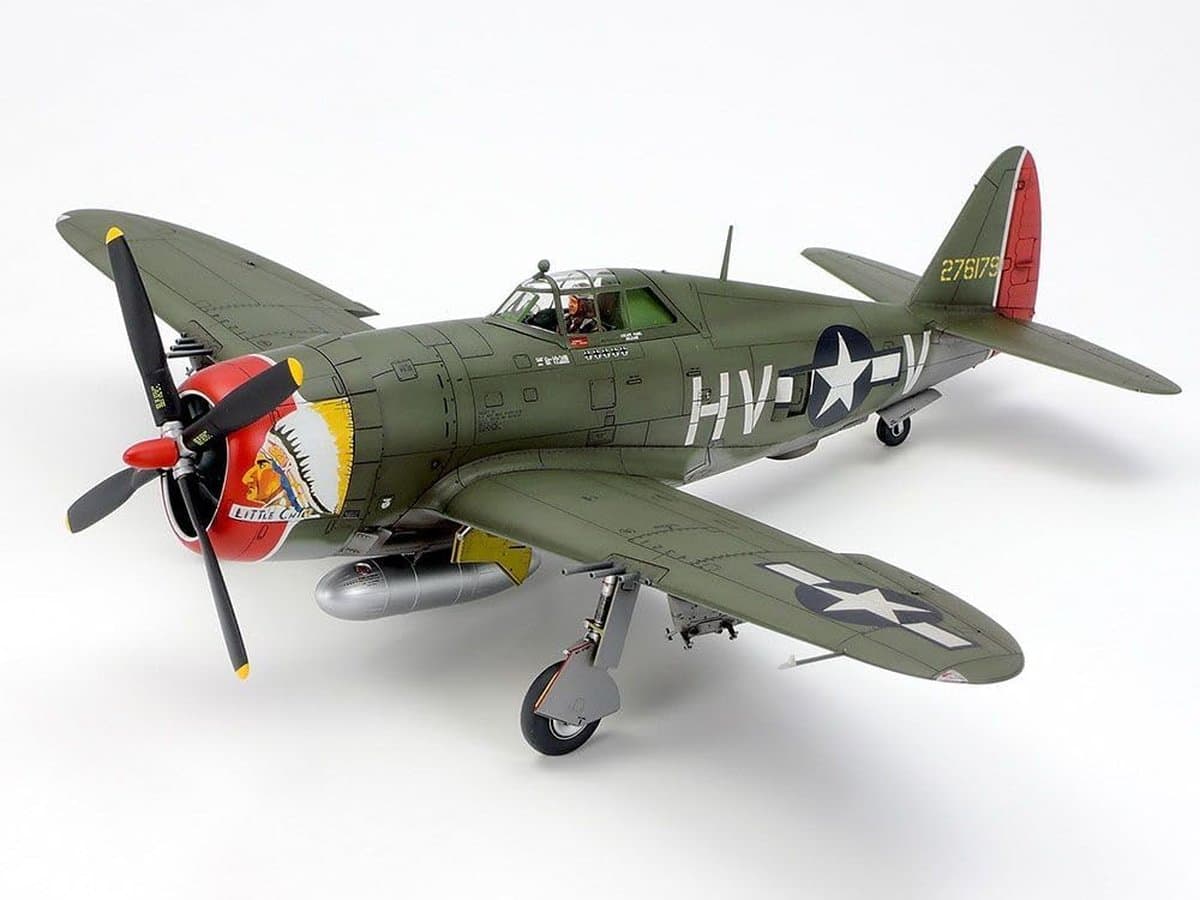
Compare 85+ WW2 scale model kits across aircraft, tanks, and ships. Beginner builds from $9 to museum-grade showpieces at $580. Covers Tamiya, Eduard, HK Models, Trumpeter, and more with honest reviews, trade-offs, and pricing.

On April 7, 1945, the Imperial Japanese Navy sent the largest battleship ever built on a one-way suicide mission to Okinawa. She never arrived. 386 American aircraft found her first, and sank her in under two hours.