Skip to content
April 26:The Bombing of Guernica89yr ago

Why the F-105 Thunderchief Is One of the Most Badass Planes Ever Made

James Holloway · Updated January 15, 2024 · 3 min read
Save
Share:
F-105 Thunderchief fighter-bomber
James Holloway
James Holloway

Military Logistics & Sustainment Analyst

James Holloway writes about military readiness, logistics, and the practical limits of modern forces. His work focuses on how training, sustainment, and organizational decisions shape what militaries can actually do -- not just what they are designed to do on paper.

The F-105 Thunderchief was the largest single-engine fighter ever built and became the workhorse of the Vietnam War air campaign. Known as the "Thud" to its pilots, this massive fighter-bomber delivered more ordnance over North Vietnam than any other aircraft while suffering staggering losses against the most sophisticated air defenses of the era.
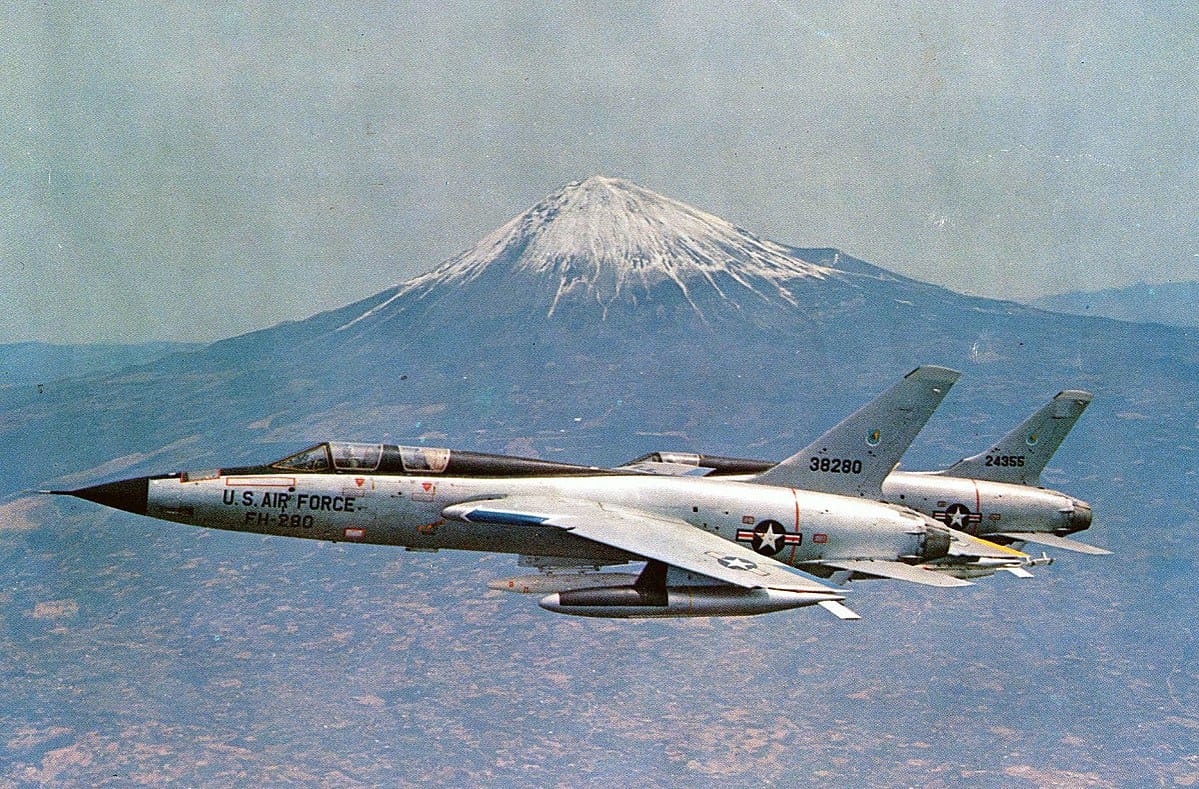
F-105 Thunderchiefs in formation
F-105 Thunderchiefs fly past Mount Fuji during the Vietnam War era (U.S. Air Force photo)

From Nuclear Bomber to Strike Aircraft

Republic Aviation designed the F-105 in the 1950s as a supersonic nuclear bomber capable of penetrating Soviet defenses. The aircraft could carry a nuclear weapon internally while reaching speeds over Mach 2. However, the development of surface-to-air missiles made the low-level nuclear penetration mission increasingly dangerous.

The Air Force reassigned the F-105 to the conventional strike role, where its massive payload capacity and high speed made it ideal for attacking targets in North Vietnam. The Thunderchief could carry more bombs than a World War II B-17 Flying Fortress while flying at supersonic speeds.

Impressive Specifications

The F-105 pushed the boundaries of single-engine fighter design:

  • Engine: Pratt & Whitney J75-P-19W producing 26,500 lbs of thrust with afterburner
  • Speed: Mach 2.1 (1,390 mph) at altitude
  • Payload: Up to 14,000 lbs of ordnance
  • Internal weapons bay: Could carry a nuclear weapon or conventional bombs
  • Range: 2,390 miles with external fuel tanks
  • Armament: One M61 Vulcan 20mm cannon with 1,029 rounds
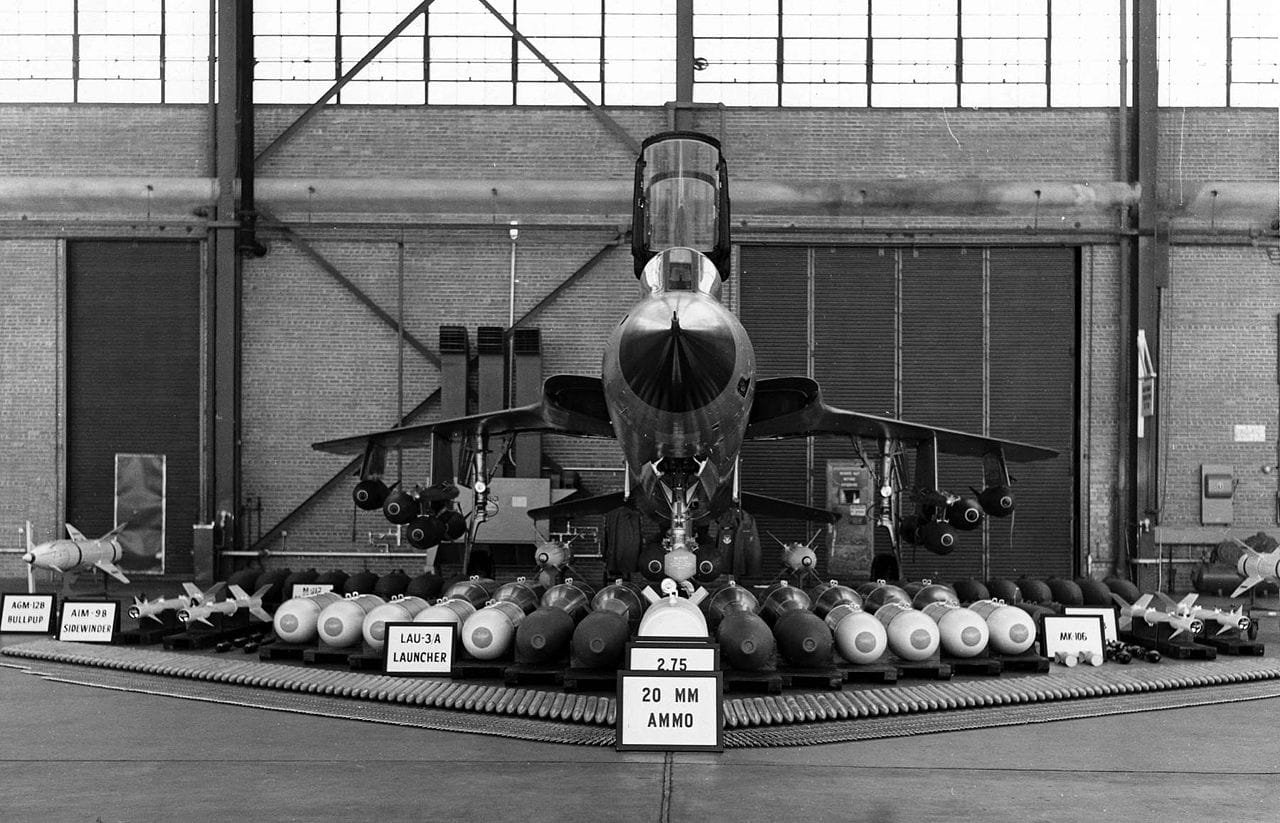
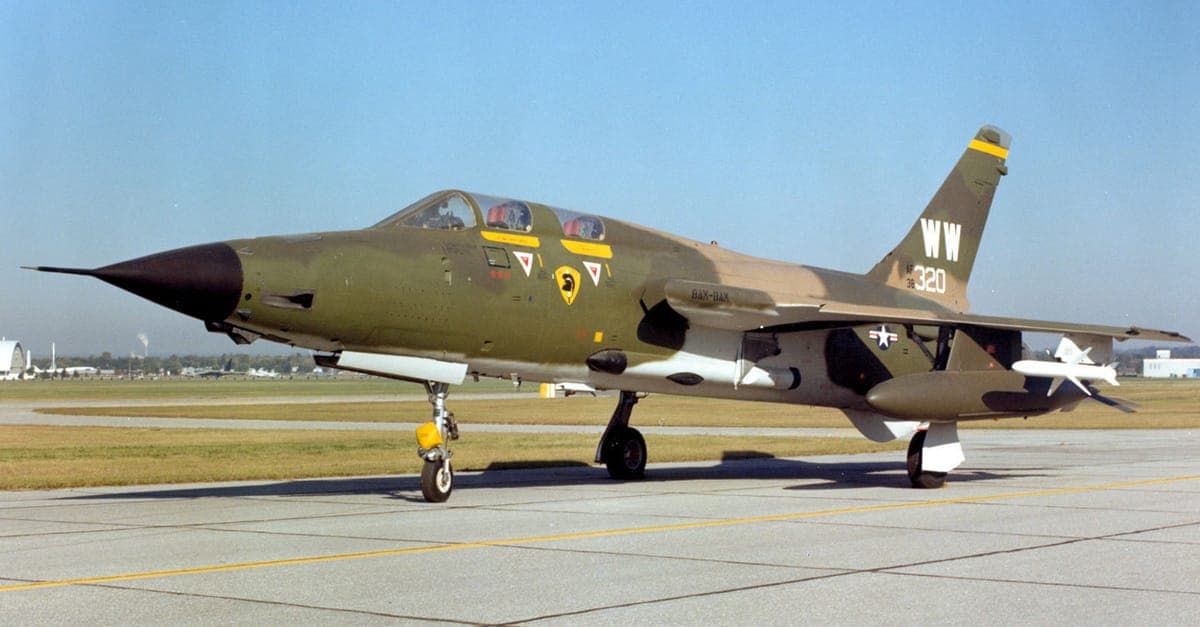
F-105 Thunderchief weapons loadout
The F-105 could carry a massive weapons loadout on its five external hardpoints (U.S. Government photo)

The "Thud" in Combat

F-105 pilots flew into the most heavily defended airspace in history. North Vietnam's air defense network, supplied by the Soviet Union, included:

  • SA-2 Guideline surface-to-air missiles
  • MiG-17 and MiG-21 interceptors
  • Thousands of anti-aircraft guns of all calibers
  • Sophisticated early warning radar networks

Despite these threats, F-105 pilots flew mission after mission against targets like the Paul Doumer Bridge, Thai Nguyen steel works, and the Hanoi-Haiphong rail lines. The aircraft's speed allowed it to outrun many threats, and its rugged construction brought damaged aircraft home that other fighters couldn't survive.

The Wild Weasel Mission

The two-seat F-105F and F-105G variants pioneered the "Wild Weasel" mission: hunting and destroying enemy SAM sites. These aircraft carried specialized radar detection equipment and AGM-45 Shrike anti-radiation missiles. Wild Weasel crews would deliberately draw SAM launches, then attack the radar sites. The motto "First In, Last Out" reflected their dangerous role leading strike packages into enemy territory.

Devastating Losses

The F-105 paid a heavy price for its role in the air war. Of the 833 Thunderchiefs built, 382 were lost in combat. This represents the highest loss rate of any American aircraft in Vietnam. Most losses came from anti-aircraft fire and SAMs rather than air-to-air combat.

Despite these losses, F-105 pilots shot down 27.5 MiG fighters, demonstrating that even a bomber could hold its own in air combat when necessary.

Legacy

The F-105 Thunderchief proved that a single-engine aircraft could carry strategic-bomber payload capacities at fighter speeds. Its Vietnam service, though costly, demonstrated the viability of precision tactical airpower. The lessons learned influenced the development of later strike aircraft like the F-111 and F-15E Strike Eagle.

For more Vietnam-era military aircraft, explore our aviation section.

Share this article

Share:

Recommended

Ace of The Skies: Can You Identify These Military Aircraft Throughout The Years?
Test Yourself

Ace of The Skies: Can You Identify These Military Aircraft Throughout The Years?

Can you identify these aircraft?

Take the Quiz

Get Military News & History in Your Inbox

Join thousands of readers receiving our weekly digest of military technology, history, and analysis.

Test Your Knowledge