Charles Bash covers military culture, global defense forces, and the human side of armed services around the world. His work explores how militaries shape the lives of the men and women who serve in them.
More service members are injured in training than in most deployments. These 10 exercises are why.
The modern military operates on a paradox: the more realistic the training, the better prepared the troops, but the more realistic the training, the higher the risk that someone gets hurt or killed. The exercises on this list have all produced serious injuries. Several have killed participants. All of them continue to operate because the military has determined that the cost of not training this hard is higher than the cost of the training itself.
This isn't a ranking of "toughness." It's a look at the training programs where the gap between exercise and reality narrows to almost nothing, where the danger is not simulated, and the consequences are not theoretical.
1. SERE School, Survival, Evasion, Resistance, and Escape
SERE school teaches aircrew, special operators, and other high-risk personnel how to survive behind enemy lines and resist interrogation if captured. The final phase is the most psychologically intense training in the U.S. military: a simulated prisoner-of-war experience where students are subjected to sleep deprivation, stress positions, noise bombardment, isolation, and aggressive interrogation techniques.
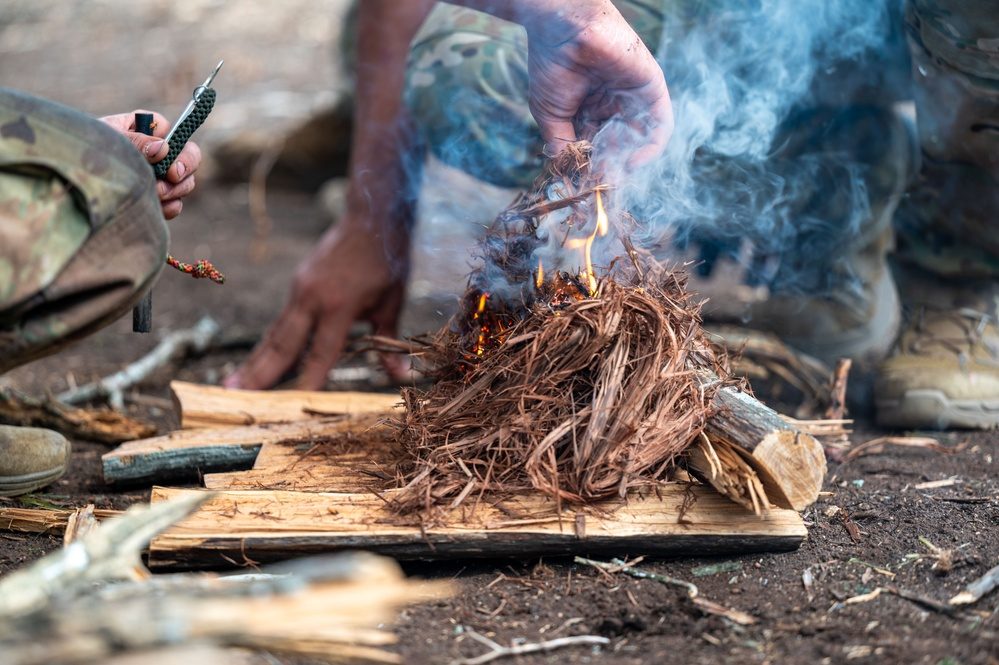
A SERE student practices survival skills during field training, where candidates must demonstrate the ability to survive in hostile environments with minimal equipment (U.S. Air Force photo)
The details of SERE's resistance training are classified, but participants universally describe it as the worst experience of their military careers. The training draws from actual debriefs of returned POWs, particularly Vietnam-era prisoners, and is designed to inoculate students against the psychological shock of captivity. Medical monitors observe continuously, but the experience is deliberately pushed to the edge of what humans can tolerate.
What makes it dangerous: SERE doesn't produce dramatic physical injuries. It produces psychological trauma. Students have experienced panic attacks, dissociative episodes, and lasting anxiety. The military considers this an acceptable cost because the alternative, sending personnel into high-risk environments without resistance training, has historically produced broken prisoners and compromised intelligence.
2. BUD/S, Basic Underwater Demolition/SEAL Training
The Navy's 24-week SEAL selection course is the most physically punishing training pipeline in the U.S. military. The centerpiece is Hell Week: five and a half days of continuous physical activity with a maximum of four hours of total sleep. Candidates run, swim, paddle inflatable boats, carry logs, and perform calisthenics in the cold Pacific surf, around the clock, for 132 straight hours.
Attrition rates typically exceed 75-80 percent. The brass bell at the BUD/S compound, which candidates ring to voluntarily drop out, becomes the dominant sound of Hell Week. Most who quit do so not from physical inability but from hypothermia-induced cognitive shutdown, the body's core temperature drops so low that rational decision-making collapses.
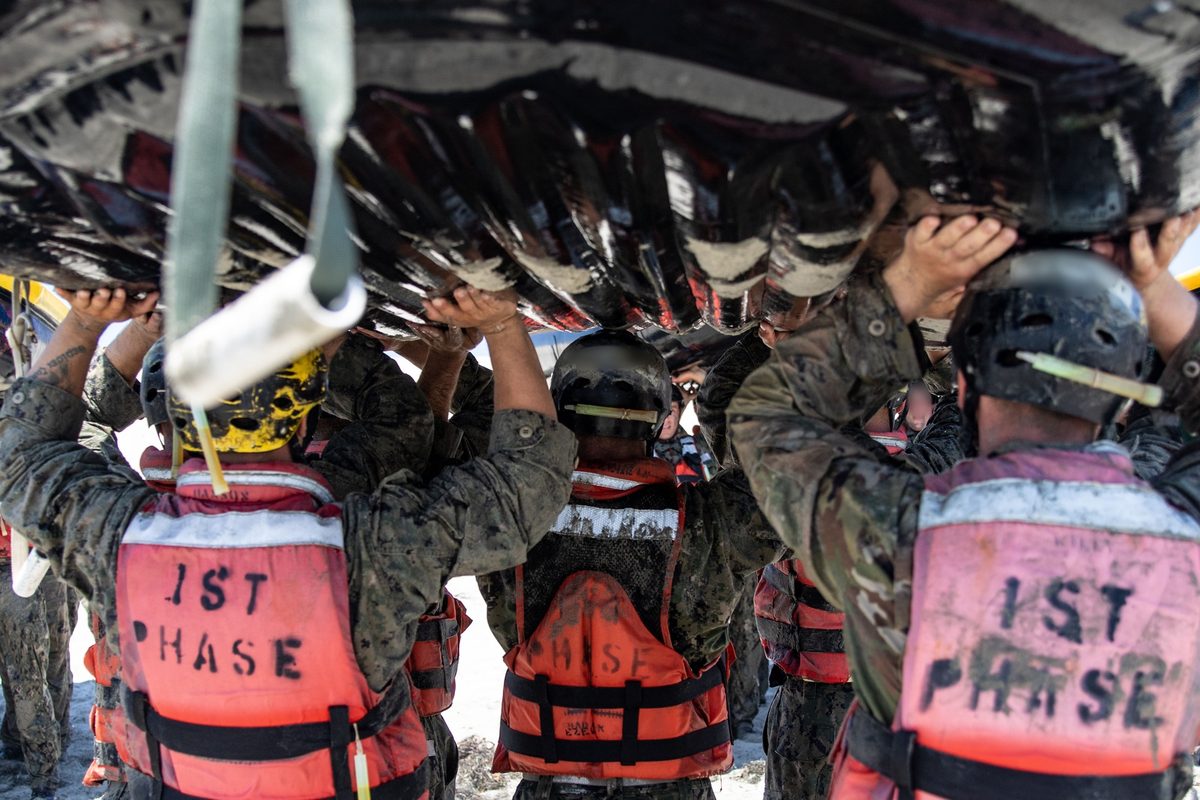
Navy SEAL candidates lift an inflatable boat during the Hell Week crucible of BUD/S training at Naval Amphibious Base Coronado, where only 20-25 percent of each class typically graduates (U.S. Navy photo)
Following the death of SEAL candidate Kyle Mullen in February 2022, hours after completing Hell Week, the Navy implemented reforms including increased medical monitoring, mandatory rest periods, and new screening protocols. The training remains brutally difficult, but with additional safety guardrails.
3. Ranger School, 62 Days of Controlled Starvation
The U.S. Army's Ranger School is a 62-day leadership course conducted across three phases: Benning (Georgia), Mountain (Dahlonega, Georgia), and Swamp (Eglin Air Force Base, Florida). It has a historical graduation rate of approximately 40 percent.
What makes Ranger School uniquely dangerous is the caloric deficit. Students consume roughly 2,500 calories per day while expending 5,000 to 7,000, a deliberate design choice to simulate the stress of sustained combat operations without adequate supply. By the Mountain Phase, students have lost 20-30 pounds. Decision-making deteriorates. Tempers fray. The course evaluates how well leaders perform when they're physically and mentally depleted.
Heat casualties at Fort Moore (formerly Fort Benning) during the Benning Phase are common. Hypothermia cases during the Mountain Phase are frequent. The Swamp Phase at Eglin produces exhaustion-related injuries as students navigate Florida's swamps carrying heavy loads on bodies already running on empty. In 2024, the Army implemented a new fitness test for Ranger School candidates, replacing the old individual-event format with a continuous functional fitness assessment.
The National Training Center at Fort Irwin, California, is where brigade combat teams go to fight a simulated war against the 11th Armored Cavalry Regiment ("Blackhorse"), the Army's dedicated opposing force. Two-week rotations involve combined arms operations across thousands of square miles of Mojave Desert, with live ammunition, real vehicles, and an enemy force that knows the terrain better than you do.
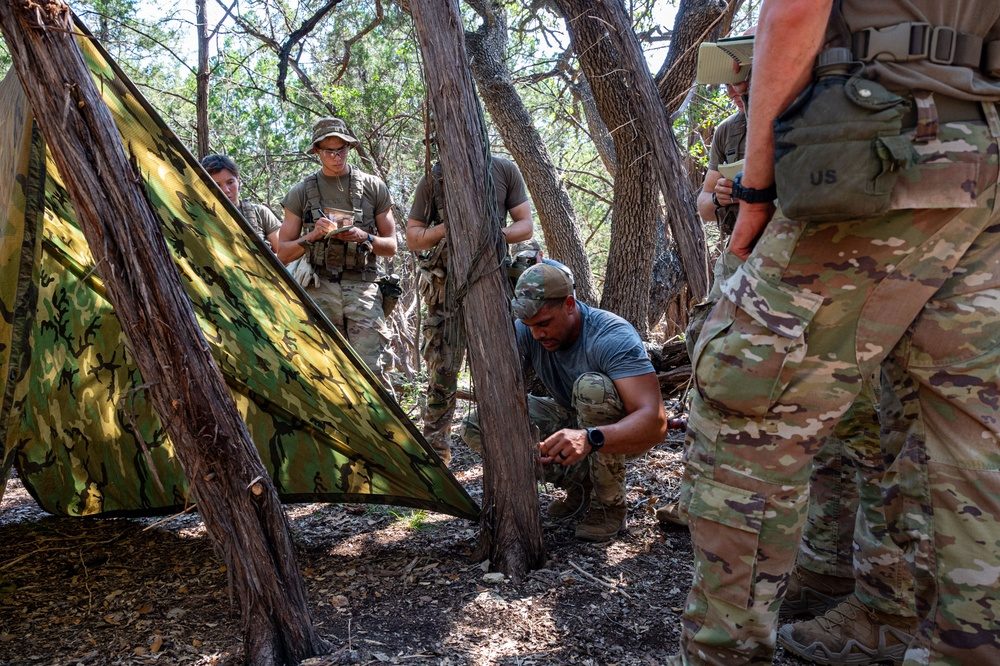
Soldiers navigate challenging terrain during a field exercise, where extreme environmental conditions create training dangers that mirror real operational threats (U.S. Air Force photo)
The Mojave Desert in summer pushes temperatures above 120 degrees Fahrenheit. Heat casualties are a constant threat. Vehicle accidents, involving 70-ton Abrams tanks, Bradley fighting vehicles, and Humvees operating in dust and darkness, produce injuries and occasional fatalities. The pace is relentless: 72-hour operations with minimal sleep, simulating the tempo of high-intensity combat.
Veterans who have both deployed to combat zones and rotated through NTC consistently say the same thing: NTC is harder. In a deployment, you might go days or weeks between engagements. At NTC, the fight never stops.
5. Carrier Flight Deck Operations, The Most Dangerous Workplace in the Military
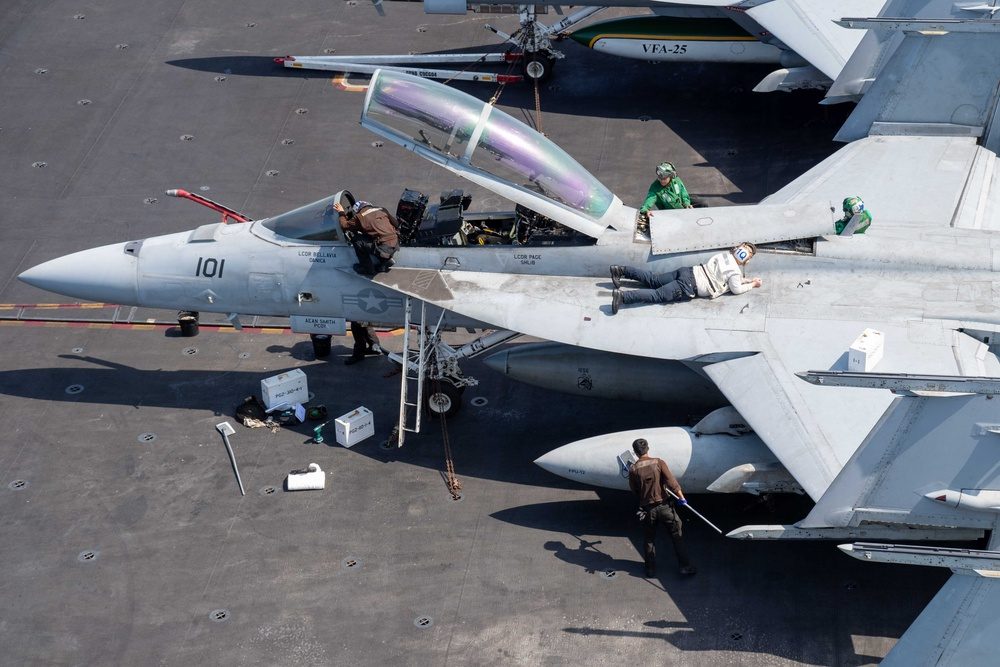
A nuclear aircraft carrier's flight deck is 4.5 acres of organized chaos: 80+ aircraft launching and recovering in rapid cycles, jet engines producing exhaust hot enough to kill, arresting wires under enough tension to cut a person in half, and a crew with an average age of 22 running the entire operation.
Sailors conduct flight deck operations aboard a U.S. Navy carrier, where jet blast, spinning propellers, and moving aircraft create one of the most hazardous work environments in the military (U.S. Navy photo)
The dangers are not theoretical. Jet blast has swept people overboard. Propellers have struck deck crew. Arresting gear cables have snapped and whipped across the deck. Aircraft have rolled over deck edge nets. Night operations, launching and recovering aircraft in complete darkness on a pitching deck, multiply every risk.
The flight deck color-coded jersey system (brown for plane captains, yellow for directors, red for ordnance, green for catapult and arresting gear, purple for fuel, white for safety and medical) exists because verbal communication is impossible over the noise of jet engines. Miscommunication can be fatal. Every landing cycle is a training exercise in managing life-threatening risk.
6. HALO/HAHO Jumps, Free Fall from the Edge of Space
High Altitude Low Opening (HALO) and High Altitude High Opening (HAHO) jumps are the most dangerous routine parachute operations in the military. HALO jumpers exit aircraft at altitudes up to 35,000 feet, where the temperature is -60 degrees Fahrenheit and the atmosphere is too thin to breathe, and free-fall for up to two minutes before deploying their parachutes at low altitude.
The risks are severe and immediate: hypoxia (oxygen deprivation) from equipment failure, loss of consciousness during free fall, mid-air collisions in formation jumps, parachute malfunctions, and landing injuries on unfamiliar terrain in darkness. HAHO jumps add the complexity of extended canopy flight, gliding under parachute for 20+ miles to reach a distant target, navigating by GPS in total darkness.
The Military Free Fall course at Yuma Proving Ground, Arizona, has one of the highest injury rates of any standard training pipeline. Even experienced jumpers suffer broken ankles, spinal compression fractures, and equipment entanglements. Fatal accidents, while rare, have occurred during both training and operational HALO/HAHO jumps.
7. Combat Diver Qualification Course, Drowning by Design
The Army's Combat Diver Qualification Course (CDQC) at the Special Forces Underwater Operations School in Key West, Florida, is designed to weed out soldiers who can't function underwater while panicking. The "drown-proofing" exercises, where students must perform tasks with their hands and feet bound, are specifically engineered to trigger panic responses and then evaluate whether the student can override them.
Pool competency testing involves instructors deliberately creating underwater emergencies: turning off air supply, tangling equipment, pulling off masks, and disrupting breathing rhythm. Students who surface in panic fail. Students who remain calm and follow procedures pass. The margin between "challenging training" and "actual drowning" is measured by the vigilance of safety divers watching from below.
The attrition rate exceeds 60 percent. Most failures occur in the pool, not in open-water operations. The military's position is straightforward: if a soldier panics in a training pool with safety divers present, they will panic on a combat dive with no one to save them.
8. Mountain Warfare Training Center, Bridgeport, California
Located in the Sierra Nevada at elevations above 9,000 feet, the Marine Corps Mountain Warfare Training Center at Bridgeport teaches cold-weather and high-altitude operations in terrain that is actively trying to kill you. Winter temperatures drop to -30 degrees Fahrenheit. Avalanche risk is constant. The altitude produces acute mountain sickness in personnel arriving from sea level.
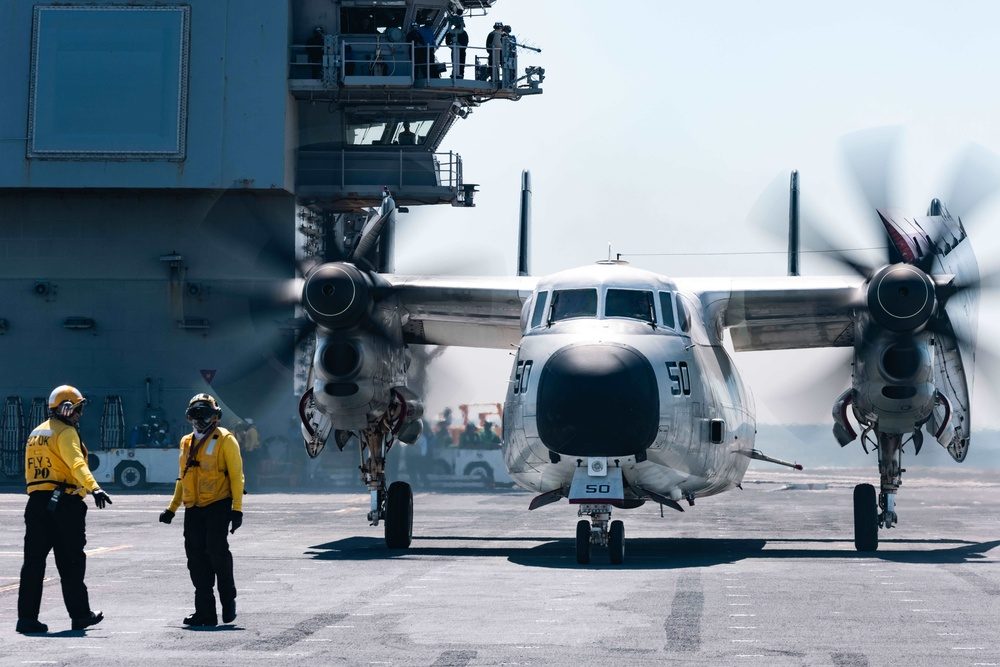
Night operations aboard a U.S. Navy carrier require absolute precision from the deck crew, as reduced visibility dramatically increases the already extreme dangers of flight deck work (U.S. Navy photo)
Students learn technical rope work, cliff assault, cold-weather survival, and high-altitude movement while carrying combat loads. Falls during cliff operations, hypothermia during bivouac exercises, and frostbite during extended patrols are common injuries. The training deliberately forces Marines to operate beyond their comfort zones in environments where a single mistake, a missed anchor point, a wrong turn in a whiteout, failure to recognize frostbite symptoms, can be fatal.
9. Jungle Warfare Training Center, Fort Sherman, Panama
Known as the "Lightning Academy," the Jungle Operations Training Center in Panama puts soldiers through three weeks of operations in triple-canopy jungle where the threats are as much biological as tactical. Venomous snakes (fer-de-lance, bushmaster), disease-carrying insects, parasites in every water source, and heat indexes exceeding 115 degrees create an environment where the jungle itself is the primary adversary.
Students learn jungle navigation (GPS signals are unreliable under dense canopy), water crossing techniques, improvised shelter construction, and small-unit tactics in terrain where visibility is measured in feet rather than meters. Heat casualties and gastrointestinal illness are near-universal experiences. Snakebites, while uncommon, require immediate evacuation to medical facilities that may be hours away by helicopter.
The military considers jungle training essential precisely because the environment is so hostile. Most service members have never operated in a jungle. Those who have to fight in one, in Southeast Asia, Central Africa, or the Pacific Islands, need to have already survived the shock of the environment before adding combat stress on top.
10. Red Flag, Realistic Air Combat at the Speed of Sound
Red Flag is the Air Force's premier air combat training exercise, conducted at Nellis Air Force Base, Nevada. For two weeks, U.S. and allied air forces fly 100+ sorties per day in complex, large-force scenarios against a dedicated aggressor squadron that employs enemy tactics and flies aircraft painted in adversary paint schemes.
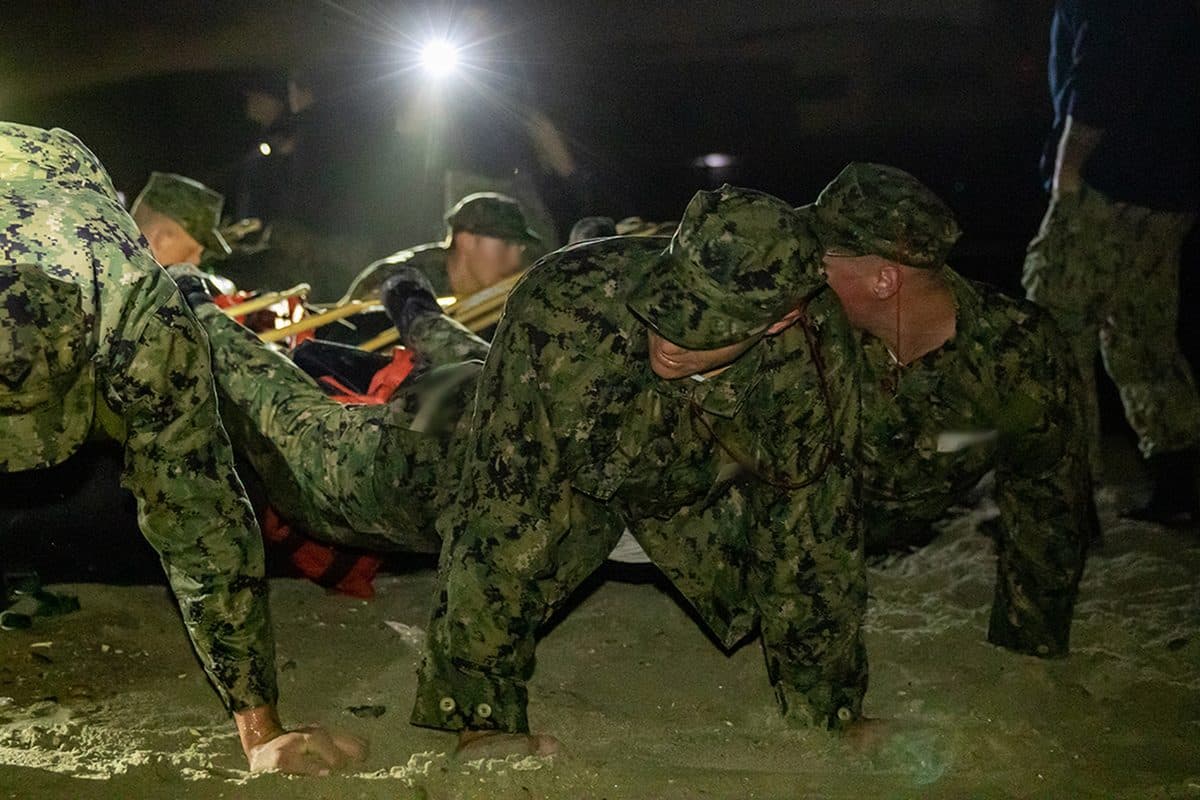
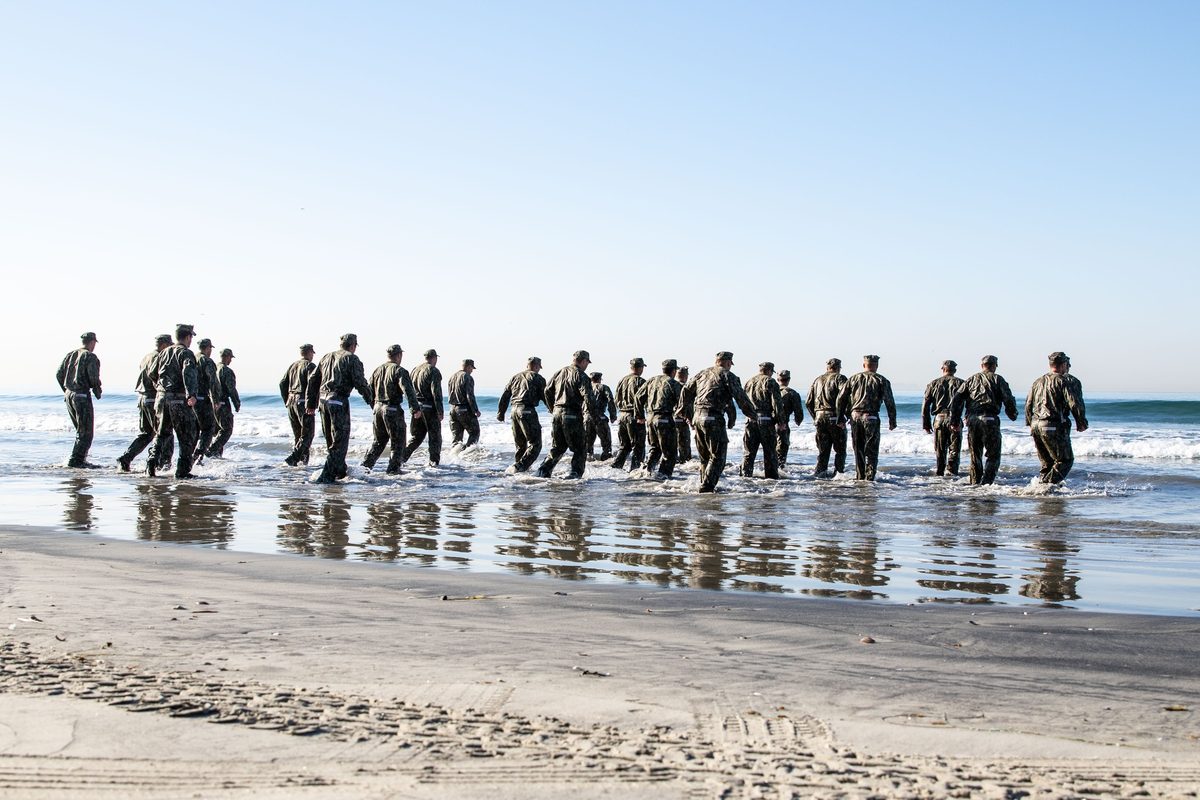
SEAL candidates charge into the surf during BUD/S training at Naval Amphibious Base Coronado, the cold Pacific waters are a constant presence throughout the grueling selection course (U.S. Navy photo)
The danger in Red Flag is speed. Fighters maneuvering at 500+ knots in confined airspace during simulated combat create genuine mid-air collision risk. Low-altitude ingress routes, where aircraft fly at 100-200 feet above the desert floor, leave zero margin for error. G-force-induced loss of consciousness (G-LOC) during aggressive maneuvering has caused crashes.
Red Flag was created in 1975 after studies showed that a pilot's likelihood of being shot down dropped dramatically after their tenth combat mission. Red Flag gives pilots those critical first ten "missions" in an environment where mistakes result in debriefs rather than funerals, though the exercise has produced fatal accidents throughout its history. The data is clear: pilots who complete Red Flag are significantly more likely to survive their first real combat engagement.
Why the Military Accepts the Risk
Every exercise on this list has been questioned by civilians, investigated by Congress, and scrutinized by the media following injuries or deaths. And every one of them continues to operate because the military has a simple calculation: the risk of untrained troops in combat is greater than the risk of dangerous training.
The lesson of Red Flag, that survival rates improve dramatically after the tenth simulated mission, applies across the board. SERE graduates resist interrogation better than untrained personnel. BUD/S survivors function under conditions that would break most people. Ranger School graduates lead effectively when exhausted and starving. The training is dangerous because war is more dangerous, and the gap between the two is where lives are saved.