Michael Trent covers military aircraft, weapons systems, and defense technology with an emphasis on cost, maintenance, and real-world performance. He focuses less on specifications and more on how systems hold up once they are deployed, maintained, and operated at scale.
Eighteen inches. At 400 mph. The margin for error is less than the length of your forearm. One flinch, one gust, one moment of distraction, and two jets become a fireball.
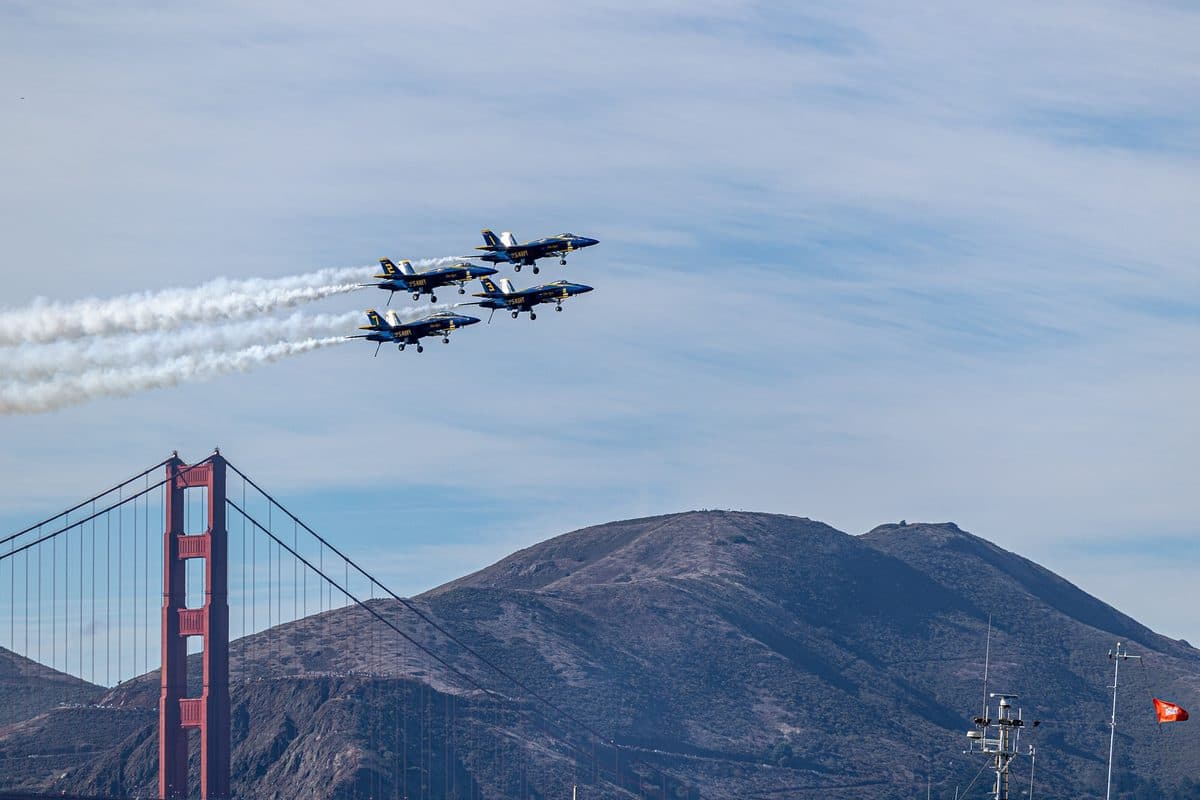
The Blue Angels and Thunderbirds are the most recognized military demonstration teams in the world. The Navy's Blue Angels fly F/A-18E/F Super Hornets. The Air Force's Thunderbirds fly F-16C/D Fighting Falcons. Between them, they perform at roughly 70 air shows per year across the United States, drawing crowds measured in the millions.
What most spectators don't realize is that these pilots are not doing tricks. They are demonstrating, at an extreme level, the same formation flying skills that every tactical aviator needs in combat. The precision is real. The physics are unforgiving. And the system that allows human beings to fly 40,000-pound fighter jets within touching distance of each other at speeds that leave no time for conscious decision-making is one of the most impressive training achievements in aviation.
The Physics of 18 Inches
At 400 mph, an aircraft covers 587 feet per second. Human reaction time, the interval between perceiving a stimulus and initiating a physical response, is approximately 0.2 to 0.25 seconds. In that time, a jet has traveled 120 to 147 feet.
This means that by the time a wingman sees something wrong and begins to react, both aircraft have already traveled the length of half a football field. At 18 inches of separation, there is no time to react to a surprise. The entire system is built on something more fundamental: predictability.
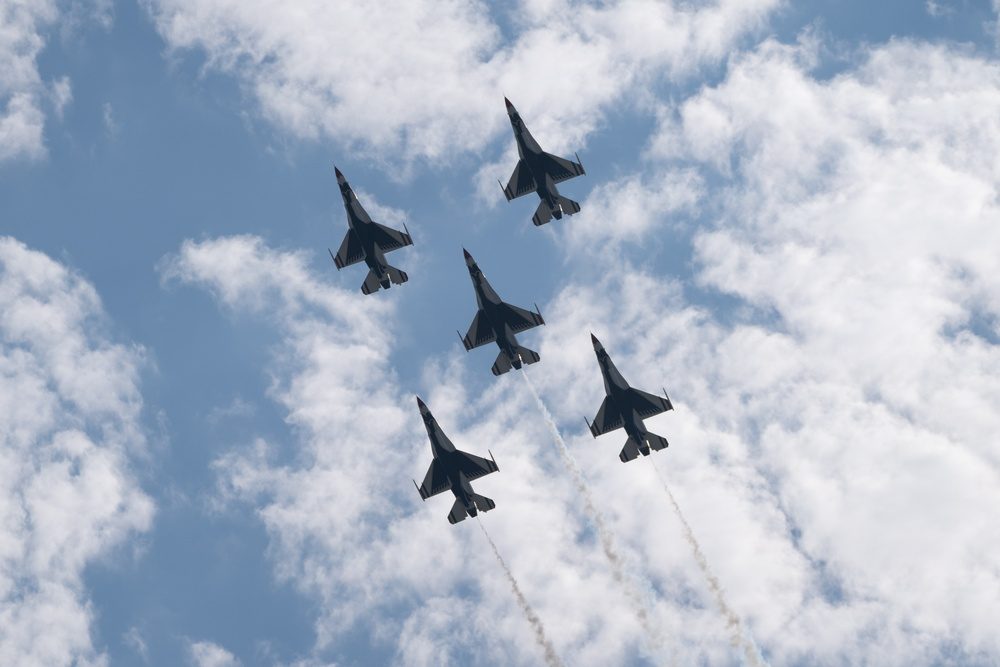
Five F-16 Fighting Falcons from the Thunderbirds fly in tight formation during the Oregon International Air Show, August 2024. The wingmen use reference points on the lead aircraft to maintain precise separation (U.S. Air Force photo by Tech. Sgt. Alexander Frank)
The lead pilot controls everything. Every maneuver, every speed change, every altitude adjustment originates with the lead. Wingmen do not make independent decisions. They fix their eyes on specific reference points on the lead aircraft (a panel line, a paint mark, a bolt pattern) and maintain those visual references through every maneuver. If the reference point doesn't move relative to their canopy, they are in position.
The wingmen aren't "following" the leader in any normal sense. They are matching the leader's aircraft through a continuous, unconscious feedback loop of tiny corrections, imperceptible stick and throttle adjustments that happen dozens of times per second. The skill isn't speed or daring. It's motor control refined to a level that most people would associate with concert-level musical performance rather than military aviation.
How You Train for 18-Inch Formation
New demonstration pilots don't start at 18 inches. The training progression is methodical and deliberate, built over months of gradually decreasing separation.
Initial formation work begins at 36 feet of separation, a comfortable distance for experienced tactical aviators. Over several weeks, the spacing decreases: 36 feet to 20 feet, 20 feet to 10 feet, 10 feet to 6 feet, 6 feet to 3 feet, and finally to the 18-inch separation used in show formation. At each stage, pilots must demonstrate complete comfort and consistency before moving closer.
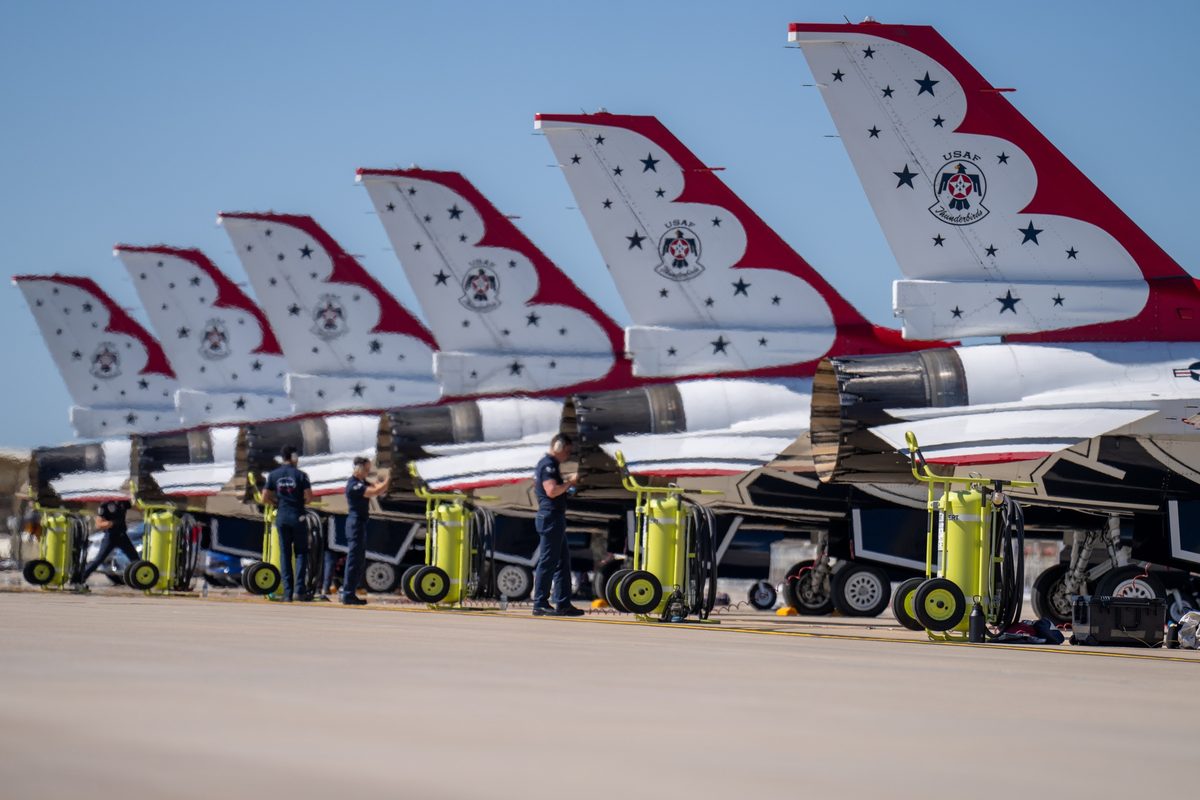
Thunderbirds perform at the 2024 Great Texas Airshow. Each maneuver has been briefed, walked through on the ground, and practiced dozens of times before being performed for the public (U.S. Air Force photo)
The transition from 3 feet to 18 inches is the most psychologically demanding. At 3 feet, a pilot can still process the gap visually. At 18 inches, the gap essentially disappears. You can't see daylight between the aircraft. The wingman is looking at paint and rivets on the lead's aircraft, not at sky between the two planes. The first time a pilot flies at show-distance separation, most describe it as terrifying. By the end of training, it feels normal.
Every show maneuver is briefed in exacting detail before every flight. Pilots walk through the routine on the ground, physically pointing and narrating every turn, every speed change, every transition. The brief can last two hours for a 45-minute show. Nothing in the demonstration is improvised. Nothing is left to judgment calls. The routine is identical every time because consistency is what keeps everyone alive.
Blue Angels vs. Thunderbirds: Different Aircraft, Different Styles
The Blue Angels and Thunderbirds fly different aircraft, and the differences shape their flying styles.
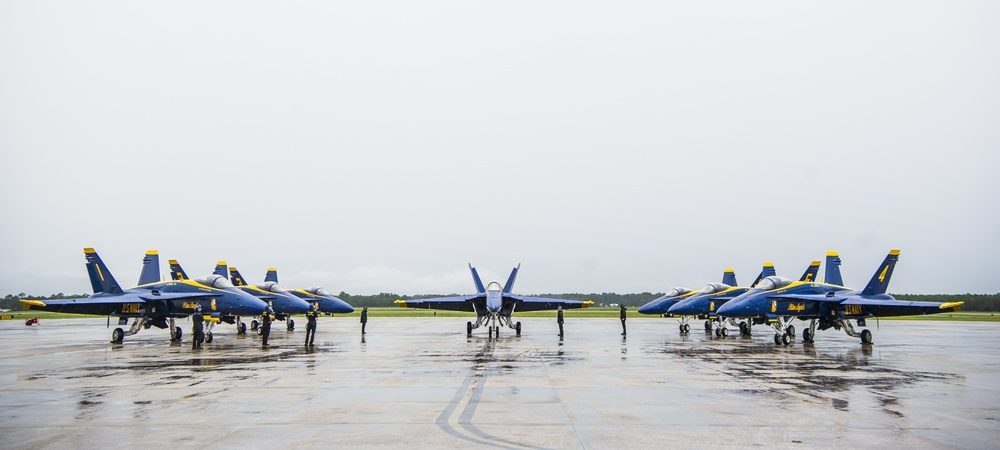
The Blue Angels transitioned from the legacy F/A-18C/D Hornet to the F/A-18E/F Super Hornet in 2021, the first aircraft change for the team in over 30 years. The Super Hornet is larger, heavier, and more powerful than the legacy Hornet, requiring modifications to the show routine to account for different handling characteristics. The Blue Angels fly without G-suits, a tradition dating to the team's founding, because the inflating suit could cause involuntary control inputs during close formation.
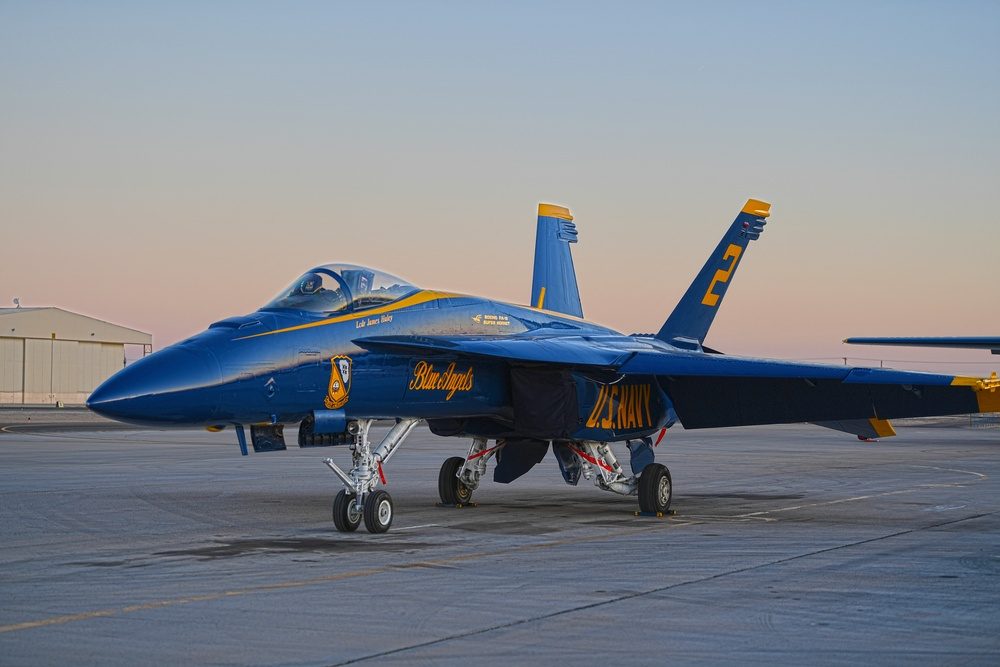
A Blue Angels F/A-18 Super Hornet during training at NAF El Centro, California. The solo pilots execute high-speed passes and opposing maneuvers that complement the formation section's precision flying (U.S. Navy photo)
The Thunderbirds fly the F-16C/D Fighting Falcon, a lighter and more agile aircraft that allows tighter turns and more aggressive vertical maneuvers. The F-16's fly-by-wire system provides precise control inputs that are well-suited to formation demonstration flying. The Thunderbirds use smoke generators more extensively than the Blue Angels, creating dramatic visual trails that make the formation geometry visible from the ground.
Both teams operate with six demonstration pilots. The first four fly the Diamond formation, the signature tight grouping that showcases close formation skills. The remaining two are Solo pilots (Blue Angels) or Opposing Solo pilots (Thunderbirds), who fly separate high-speed maneuvers, knife-edge passes, and opposing crosses that contrast with the Diamond's synchronized precision.
The Selection Process
Becoming a Blue Angel or Thunderbird requires more than exceptional flying skills. Candidates must be experienced tactical aviators with combat deployments. Blue Angel candidates typically have 1,250+ tactical jet flight hours. Thunderbird candidates need a minimum of 1,000 hours in a fighter or fighter-trainer aircraft.
The application process includes extensive peer review. Returning team members evaluate candidates not just on flying ability but on personality, work ethic, communication skills, and the ability to represent the service publicly. Demonstration team members are as much ambassadors as they are aviators. They spend as much time at meet-and-greets, school visits, and media appearances as they do in the cockpit.
Captain Eric Doyle delivers the first Blue Angels F/A-18 Super Hornet to Naval Air Station Pensacola in July 2020, marking the beginning of the team's transition from the legacy Hornet (U.S. Navy photo)
Officers serve on the teams for two to three years before returning to operational squadrons. This rotation ensures that demonstration team experience feeds back into the fleet. Pilots who have mastered 18-inch formation flying bring an extraordinary level of airmanship to their tactical squadrons.
The Fatality Record
Both teams have experienced fatal accidents throughout their histories. The Blue Angels have lost 27 pilots since their founding in 1946. The Thunderbirds have lost 21 since 1953. The most recent Blue Angel fatality occurred in 2016, when Captain Jeff Kuss was killed during a practice session at Smyrna, Tennessee.
Each accident investigation has led to safety improvements. Modern demonstration teams benefit from decades of accumulated knowledge about what goes wrong and why. Digital flight recorders, improved G-awareness training, stricter weather minimums, and more conservative show altitudes have all reduced risk. But the fundamental reality remains: flying fighter jets in extremely close proximity at high speed carries inherent risk that can be managed but never eliminated.
Why the Military Bothers
Critics periodically question why the military spends money on air show teams during budget constraints. The answer is straightforward: the Blue Angels and Thunderbirds are the most effective recruiting tools in the Department of Defense.
Studies consistently show that exposure to demonstration team performances correlates with increased interest in military service, particularly among 17-to-24-year-olds, the primary recruiting demographic. An air show reaches millions of spectators per season at a fraction of the cost of equivalent advertising. The Thunderbirds estimate their cost at roughly $2.50 per spectator reached, cheaper than any traditional media campaign.
But recruiting alone doesn't justify the program. The demonstration teams also serve as a public demonstration of military capability and professionalism. In a democracy, maintaining public support for the military requires that citizens see, directly and viscerally, what their armed forces can do. An F/A-18 Super Hornet screaming past at 500 knots, 200 feet off the deck, communicates something about American military power that no press release can match.
Eighteen inches. Four hundred miles per hour. Six pilots, one heartbeat. The Blue Angels and Thunderbirds make it look effortless, which is how you know how hard it actually is.