Skip to content
April 24:Operation Eagle Claw Fails in Iran46yr ago

10 Special Operations Vehicles You've Never Heard Of but SOF Teams Use Every Day

Marcus Webb · · 14 min read
Save
Share:
Marine Raiders loading a Polaris MRZR ultra-light tactical vehicle onto a V-22 Osprey during a special operations exercise
Marcus Webb
Marcus Webb

Military Vehicles & Ground Systems Contributor

Marcus Webb writes about military ground vehicles, armored platforms, and the logistics of land warfare. His work covers everything from MRAPs and infantry carriers to the training pipelines that keep ground forces operational in contested environments.

Special operations teams do not drive what you think they drive. The conventional Army rolls in Abrams tanks and Bradley fighting vehicles, massive, armored, unmistakable. Special operations forces need vehicles that can fit inside a helicopter, fly beneath radar on an inflatable boat, submerge beneath the ocean surface, or disappear into a foreign city's traffic. The platforms on this list are not household names, but they are the workhorses of special operations, the vehicles that carry operators to targets the conventional military cannot reach.

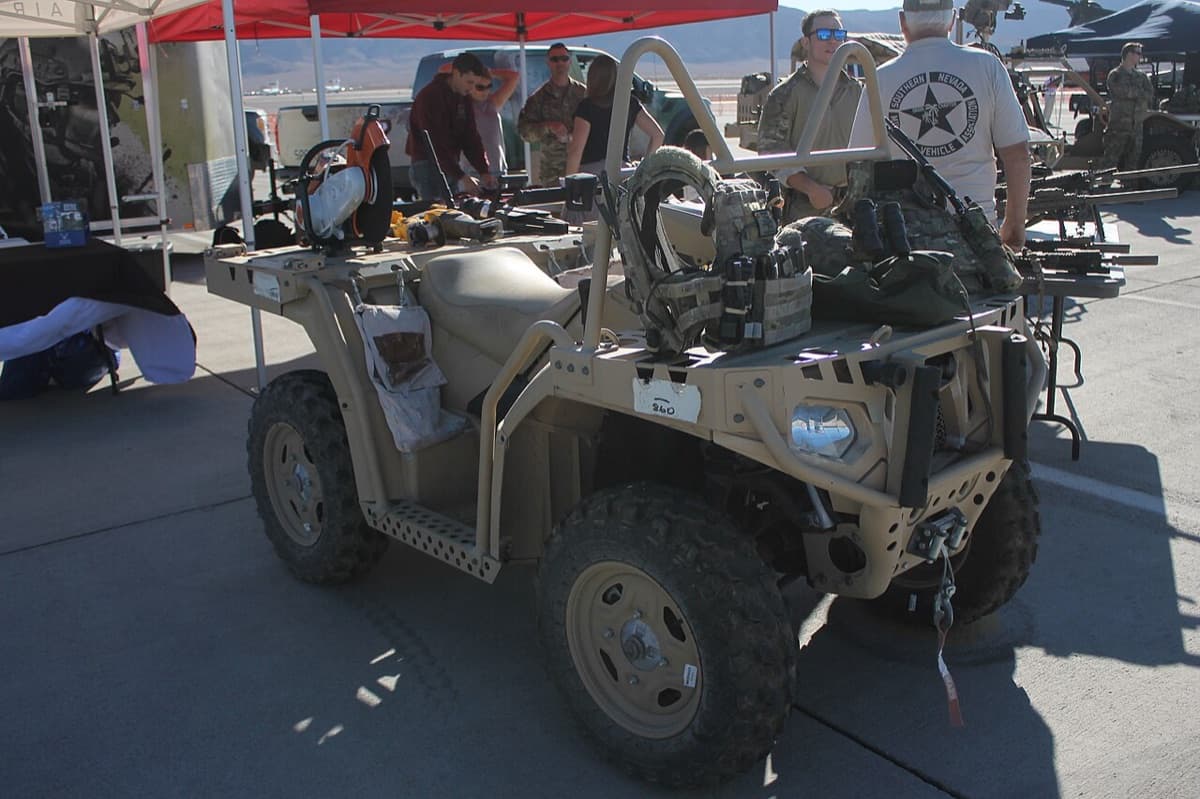
1. Polaris MRZR, The Ultralight That Fits Inside a V-22 Osprey
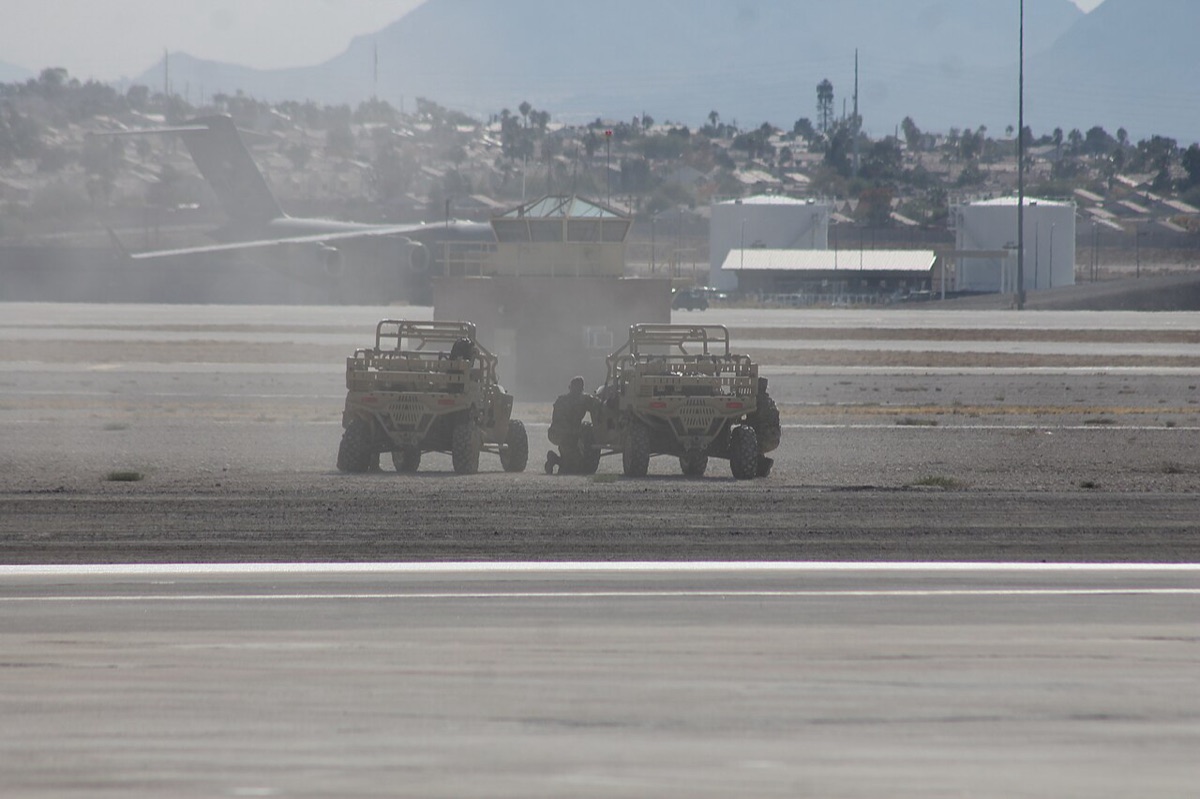
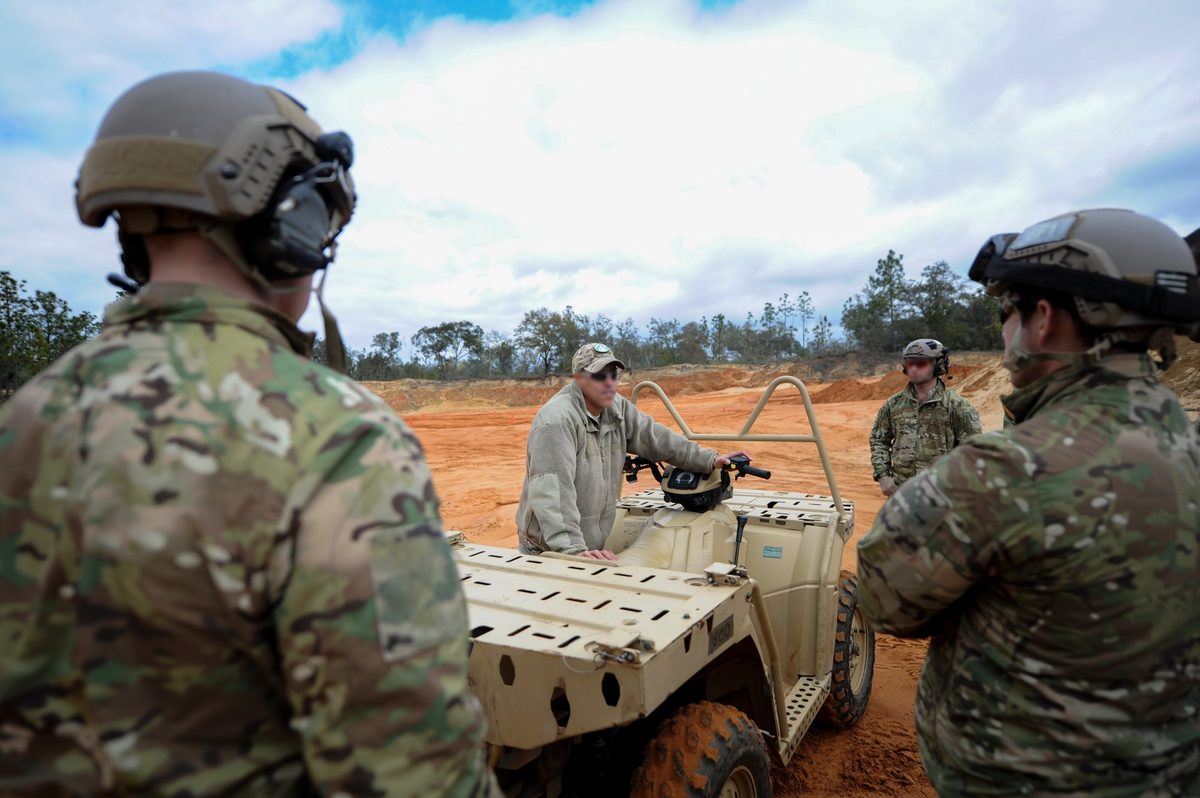
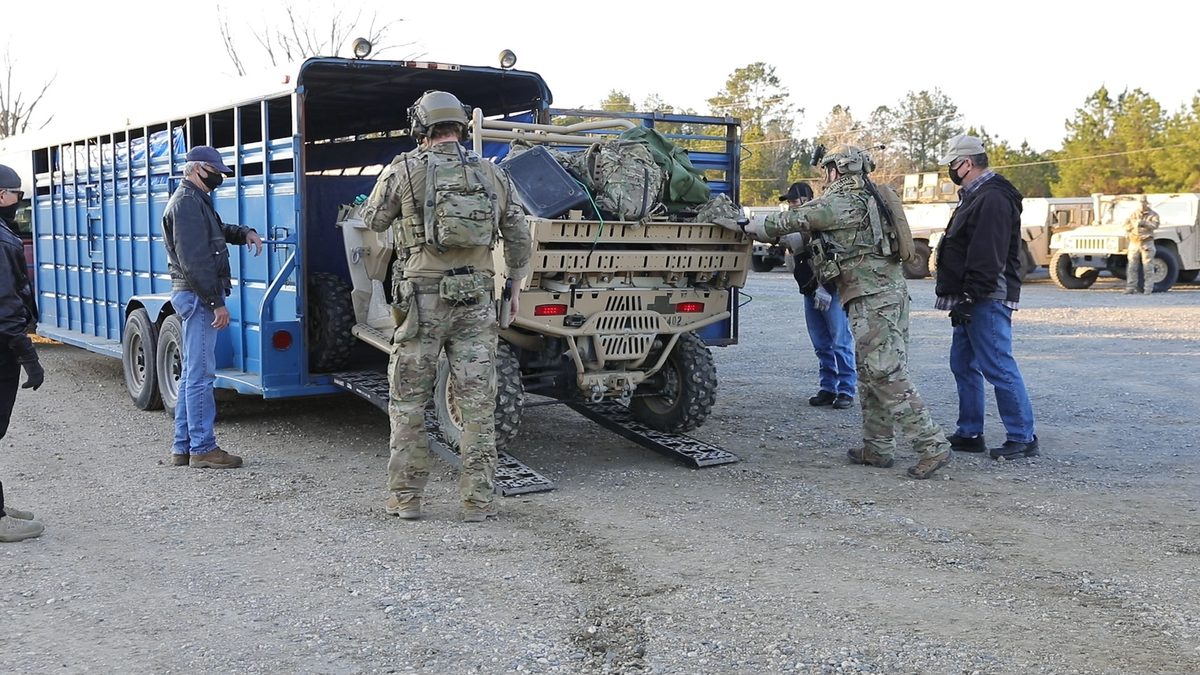
Polaris MRZR ultralight tactical vehicle being prepared for loading into a tiltrotor aircraft during a special operations exercise
The Polaris MRZR ultralight tactical vehicle during a special operations exercise. The vehicle is small enough to fit inside a V-22 Osprey or be slung beneath a CH-47 Chinook. (U.S. Marine Corps photo)

The Polaris MRZR (Multi-Mission Reconnaissance and Zone Reconnaissance) is an ultralight tactical vehicle that weighs approximately 1,500 pounds, about the same as a large motorcycle with a sidecar. The MRZR-D4, the four-seat variant used by SOCOM, is powered by a turbocharged three-cylinder diesel engine that produces roughly 100 horsepower. It fits inside a V-22 Osprey, can be slung beneath a CH-47 Chinook, and can be airdropped by parachute from a C-130.

The MRZR's value is its ability to extend the reach of a special operations team after insertion. A helicopter can drop a four-man team with an MRZR in remote terrain, and the team can then cover 50 to 100 miles of ground quickly and quietly. The vehicle's low noise signature and small visual profile make it significantly harder to detect than a Humvee or JLTV. SOCOM uses the MRZR across all services, Army Special Forces, Marine Raiders, Navy SEALs, and Air Force Special Tactics all operate variants.

2. Ground Mobility Vehicle (GMV) 1.1, The Modified Toyota
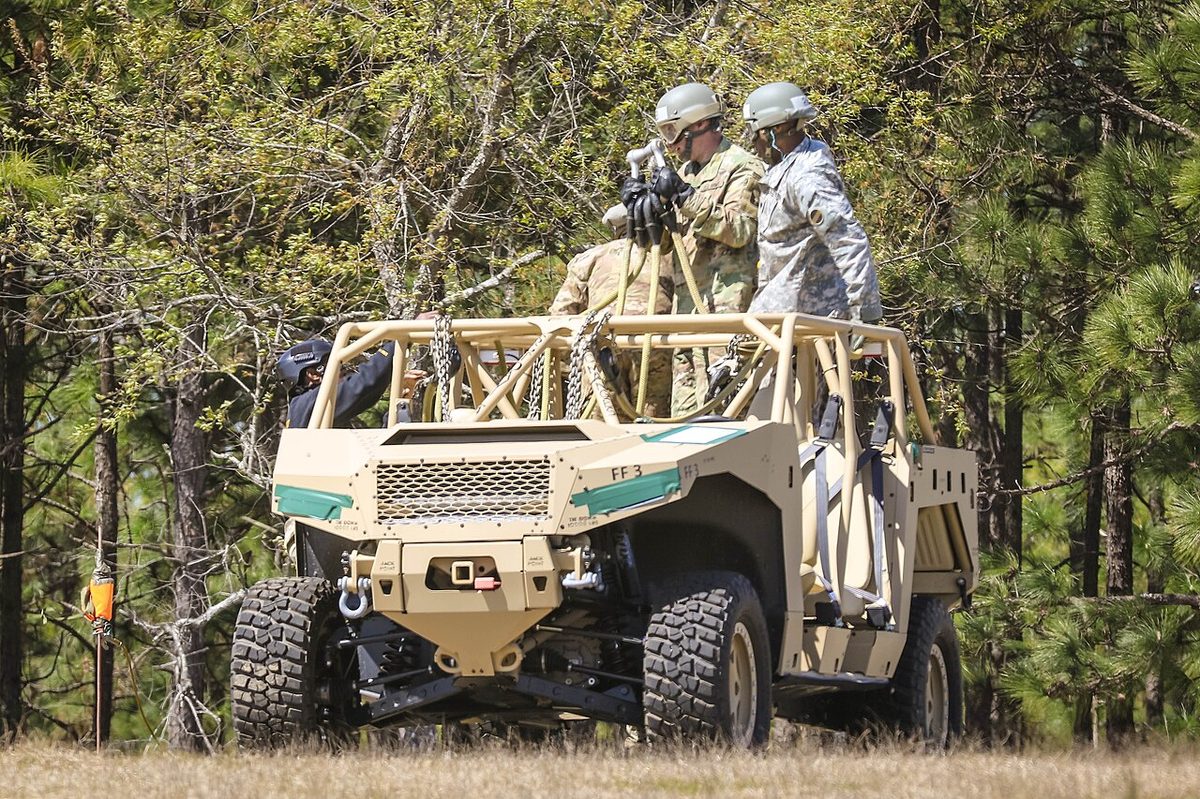
Special Forces Ground Mobility Vehicle with mounted weapons and equipment during a training exercise
A Ground Mobility Vehicle during a training exercise. The GMV platform is designed for rapid deployment and long-range ground mobility in denied environments. (U.S. Army photo)

The Ground Mobility Vehicle 1.1 is SOCOM's light tactical vehicle for unconventional warfare and special reconnaissance missions. Built on a commercial off-road chassis, the GMV provides special operations teams with a platform that can be rapidly deployed via aircraft and operated in environments where heavier military vehicles would be impractical or draw too much attention.

The GMV is configured with multiple weapon mount points for M2 .50-caliber machine guns, Mk 19 grenade launchers, or M240 medium machine guns. It carries enough fuel for extended-range operations and includes communications equipment compatible with special operations networks. The vehicle's relatively civilian appearance, compared to an MRAP or JLTV, makes it suitable for operations where blending into the environment matters more than armor protection.

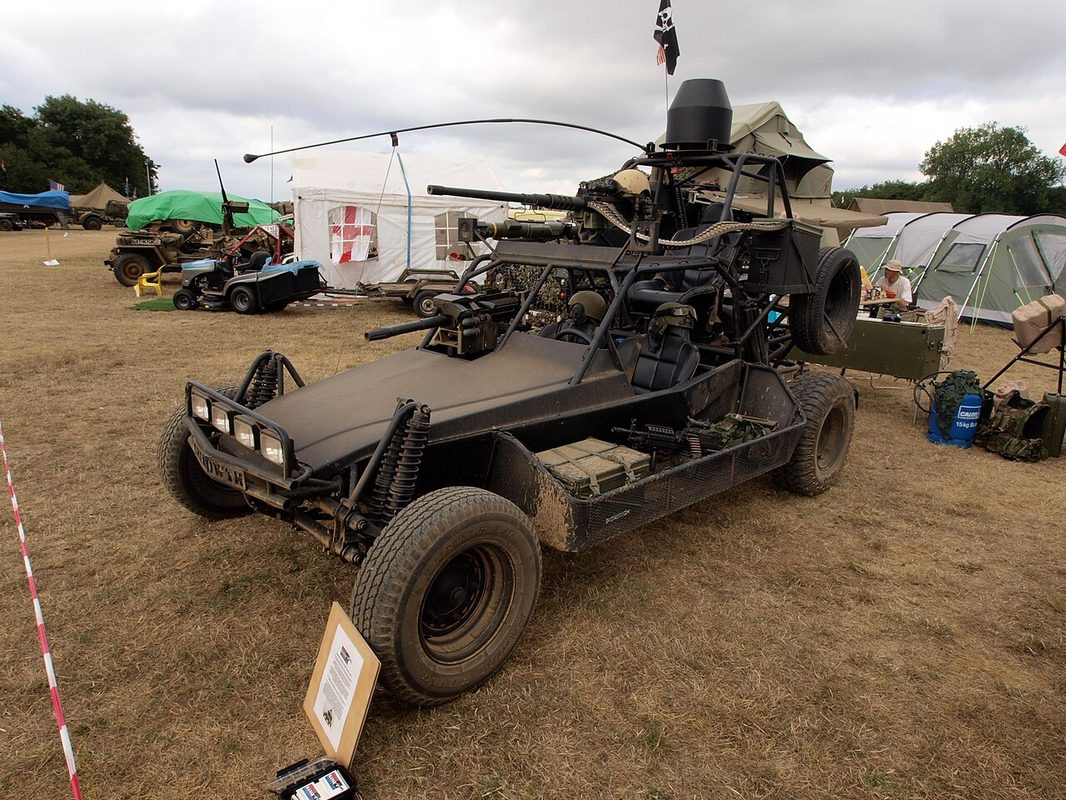
3. Desert Patrol Vehicle (DPV), The Combat Sandrail

Chenowth Desert Patrol Vehicle with mounted weapons in a desert setting
The Chenowth Desert Patrol Vehicle, an open-frame, high-speed attack vehicle used by Navy SEALs and Army Special Forces in desert operations. (Photo via Wikimedia Commons)

The Chenowth Desert Patrol Vehicle looks like something built for Baja racing, because it essentially was. The DPV is a lightweight, open-frame vehicle with a Volkswagen-derived air-cooled engine, long-travel suspension, and weapon mounts for a .50-caliber machine gun, a Mk 19 grenade launcher, and two M60 medium machine guns. It weighs approximately 1,750 pounds and can reach speeds over 60 mph on sand.

Navy SEALs made the DPV famous during the Gulf War, using them for deep reconnaissance missions behind Iraqi lines. The vehicle's extreme speed across open desert, combined with its low profile and minimal heat signature, made it nearly impossible to detect with the surveillance technology of the early 1990s. While largely replaced by newer platforms, the DPV established the concept of the high-speed SOF ground vehicle that the MRZR and DAGOR have since inherited.

4. M-ATV Special Forces Variant, When SOF Needs Armor

M-ATV MRAP All-Terrain Vehicle in action during a military exercise
An M-ATV during a field exercise. The Special Forces variant includes modified communications, additional weapon mounts, and reduced visual signature features. (U.S. Army photo)

Not every SOF mission is a covert insertion behind enemy lines. Some require armor. The M-ATV (MRAP All-Terrain Vehicle) Special Forces variant provides special operations teams with mine-resistant protection when operating in IED-heavy environments, particularly in Afghanistan and Iraq, where the threat from buried explosives made unarmored vehicles a death trap.

The SF variant of the Oshkosh M-ATV includes modifications specific to special operations requirements: upgraded communications suites compatible with SOF satellite links, additional weapon mount points, and a lower visual profile through matte paint schemes and reduced external markings. The V-shaped hull deflects blast energy from mines and IEDs, providing crew protection comparable to larger MRAP vehicles in a package that is significantly more maneuverable on rough terrain.

5. MH-6 Little Bird, The Helicopter SOF Calls a Vehicle

MH-6 Little Bird helicopter in flight during a special operations training mission
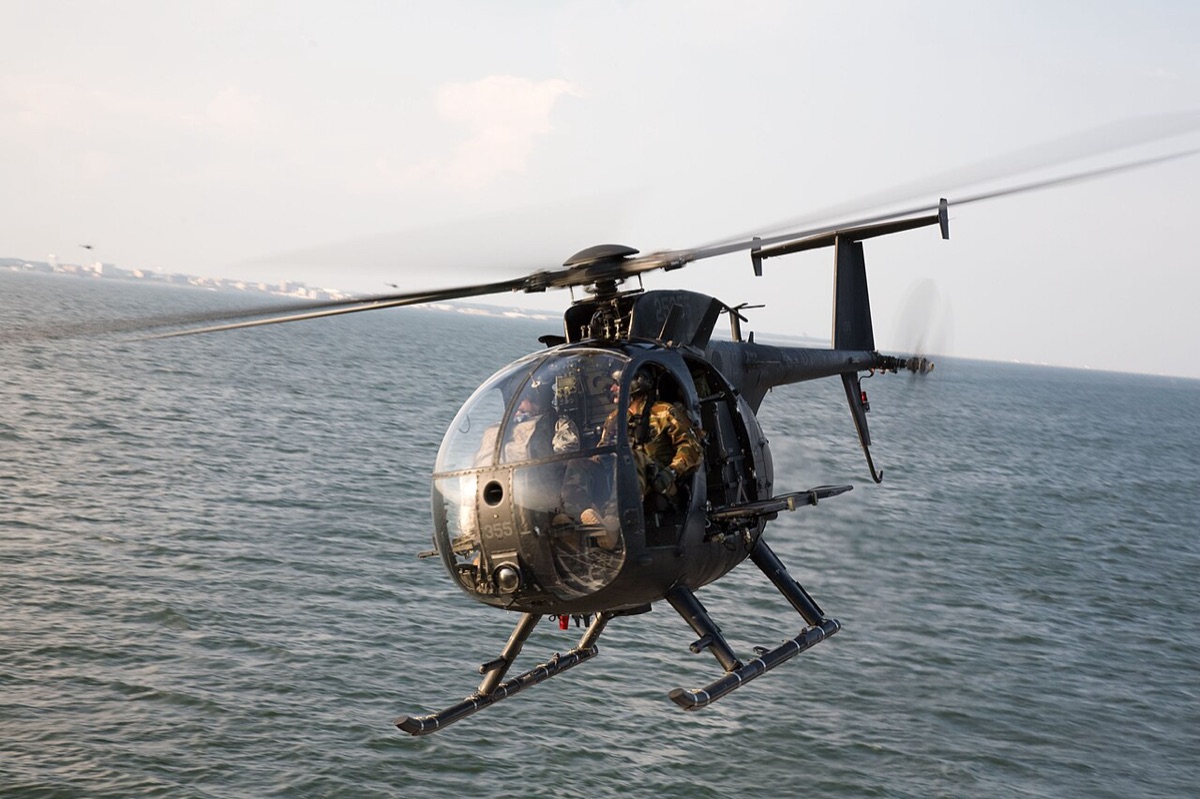
An MH-6 Little Bird in flight. The 160th Special Operations Aviation Regiment operates the Little Bird as a direct-action platform and rapid insertion vehicle. (U.S. Army photo)

The MH-6 Little Bird is technically a helicopter, but in special operations doctrine it functions as a vehicle, a high-speed insertion and extraction platform that delivers operators directly onto the objective. The 160th Special Operations Aviation Regiment (SOAR), the "Night Stalkers", operates both the MH-6 transport variant and the AH-6 attack variant.

The Little Bird's defining feature is its size. At roughly 32 feet long and weighing 1,600 pounds empty, it can operate from rooftops, parking lots, ships, and any other flat surface large enough for its skids. Six operators can ride on external bench seats, three per side, and exit the aircraft in under two seconds. The 160th SOAR pioneered this technique for urban direct-action missions, most famously during the 1993 Battle of Mogadishu, where Little Birds provided both insertion and close air support throughout the 18-hour engagement.

6. SEAL Delivery Vehicle (SDV), The Mini-Submarine

SEAL Delivery Vehicle being loaded or prepared for operations
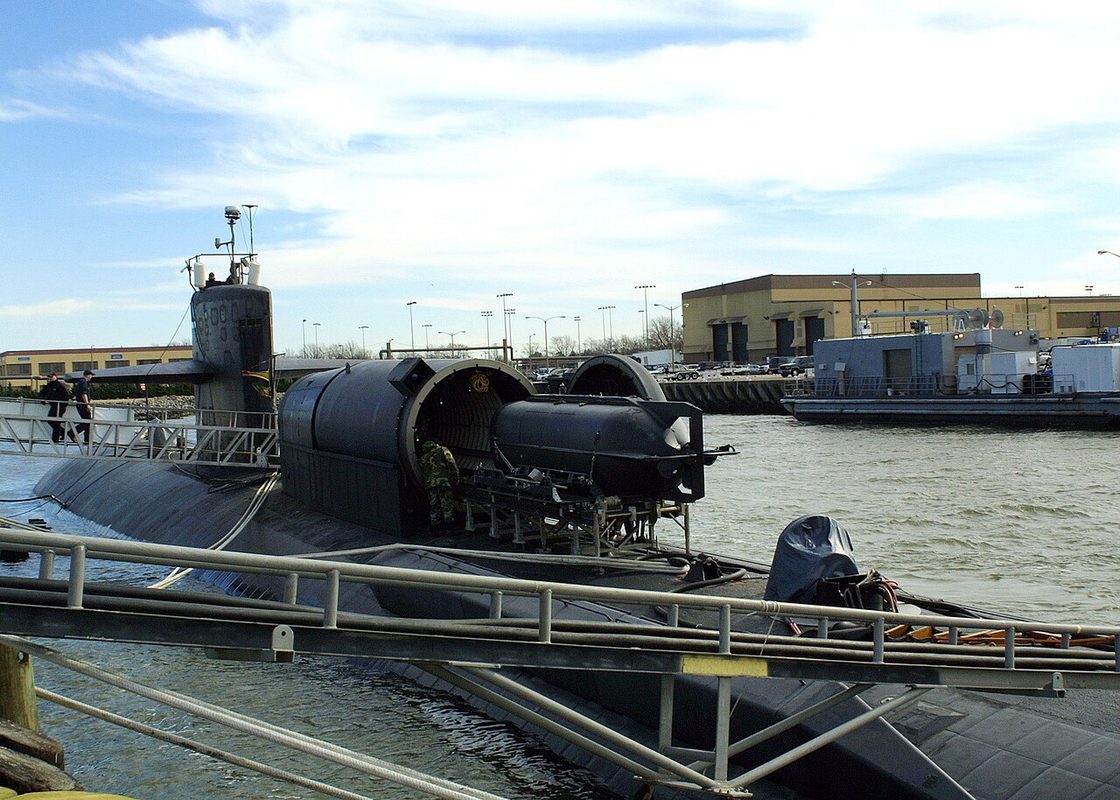
A SEAL Delivery Vehicle. The SDV is a wet submersible, its operators are exposed to the water and breathe from the vehicle's air supply or their own scuba gear. (U.S. Navy photo via Wikimedia Commons)

The SEAL Delivery Vehicle is a "wet" submersible, a battery-powered mini-submarine that carries Navy SEALs while they are fully submerged in seawater. The Mk 8 Mod 1 SDV carries a crew of two (pilot and navigator) and four combat swimmers, with a range of approximately 36 nautical miles at speeds up to 6 knots. The operators wear wetsuits or drysuits and breathe from the vehicle's onboard air supply, supplemented by their own scuba rigs.

SDVs deploy from host submarines, typically Los Angeles-class or Virginia-class attack submarines, through a Dry Deck Shelter (DDS) mounted on the submarine's hull. The SEALs enter the DDS while the submarine is submerged, flood the shelter, and launch the SDV underwater. The entire insertion from submarine to shore is conducted beneath the surface, making it virtually undetectable. SEAL Delivery Vehicle Team One (Pearl Harbor) and Team Two (Little Creek, Virginia) are the two SDV units in the Navy.

7. Mark V Special Operations Craft, The Fast Attack Boat

Mark V Special Operations Craft at high speed on open water
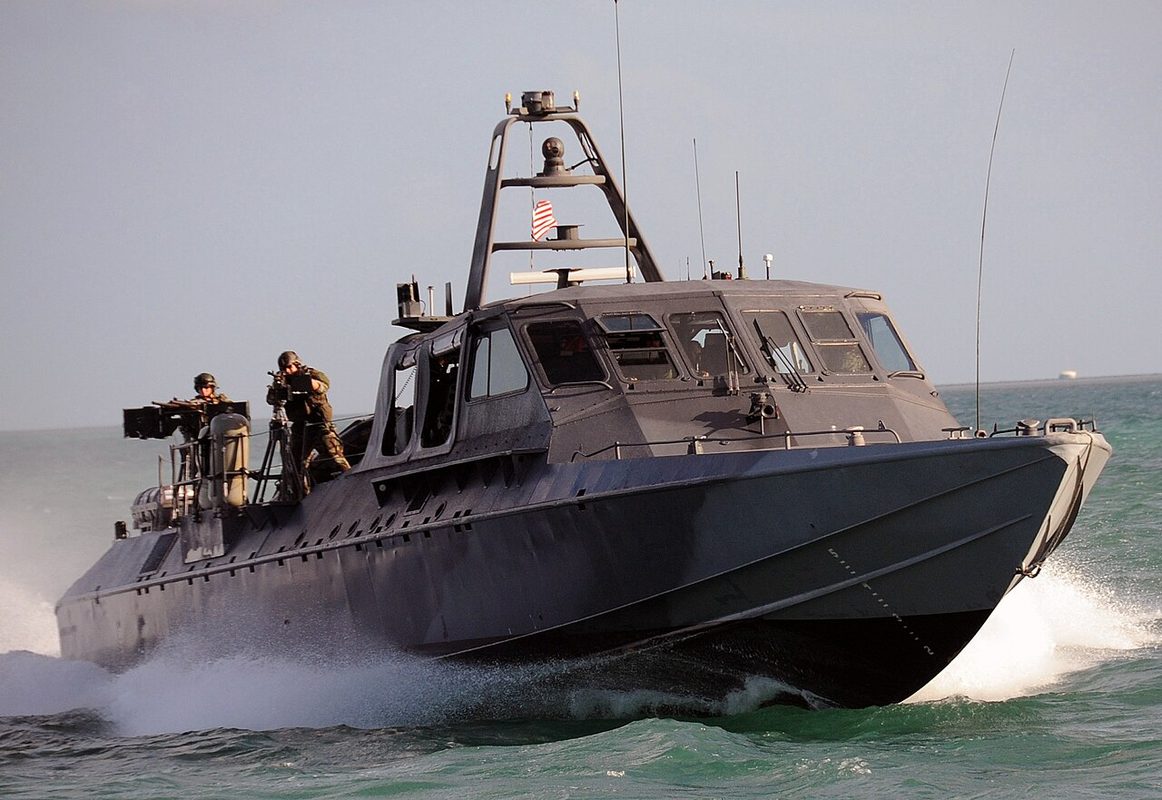
A Mark V Special Operations Craft at speed. The 82-foot craft can carry 16 combat-equipped SEALs at speeds exceeding 50 knots. (U.S. Navy photo via Wikimedia Commons)

The Mark V Special Operations Craft (SOC) is an 82-foot, high-speed combatant craft operated by Special Boat Teams. Powered by twin MTU diesel engines driving water jets, the Mark V can exceed 50 knots (roughly 58 mph) and carry 16 combat-equipped SEALs or other SOF personnel. Its armament includes a combination of .50-caliber machine guns, Mk 19 grenade launchers, GAU-17 miniguns, and Stinger surface-to-air missiles.

The Mark V's most remarkable capability is its transportability: the 82-foot craft can be transported inside a C-5 Galaxy. This allows the Navy to deploy special operations watercraft to any theater in the world within 48 hours, arriving with a full-capability coastal insertion platform that can operate independently for extended periods.

8. Rigid Hull Inflatable Boat (RHIB), The Workhorse of Maritime SOF

Rigid hull inflatable boat RHIB at high speed during naval special warfare operations
A rigid-hull inflatable boat (RHIB) during operations. RHIBs are the most commonly used watercraft in special operations, fast, stable, and nearly unsinkable. (U.S. Navy photo)

The RHIB is not glamorous, but it is the single most-used watercraft in special operations. Naval Special Warfare Combat Crewmen (SWCC) operate 11-meter RHIBs as the primary insertion and extraction platform for SEAL teams conducting waterborne missions. The 11-meter RHIB can carry eight combat swimmers, reach speeds over 40 knots, and operate in sea states that would stop most boats cold, the inflatable collar provides extreme stability and makes the craft nearly unsinkable.

SWCC operators train for years to master RHIB operations in high-sea states, at night, and under fire. The craft typically mounts M2 .50-caliber machine guns and GAU-17 miniguns for fire support during insertion and extraction. Their low radar cross-section and minimal wake signature make them difficult to detect, particularly at night.

9. Polaris DAGOR, The Airborne-Deployable Off-Road Platform

Polaris DAGOR ultra-light combat vehicle being prepared for loading onto a Black Hawk helicopter
A Polaris DAGOR being prepared for loading onto a UH-60 Black Hawk helicopter. The vehicle weighs under 3,500 pounds and can carry nine operators with equipment. (Photo via Wikimedia Commons)

The Polaris DAGOR (Deployable Advanced Ground Off-Road) fills the gap between the ultralight MRZR and the heavier GMV. Weighing under 3,500 pounds, the DAGOR can carry up to nine personnel and 3,200 pounds of payload. It can be slung beneath a UH-60 Black Hawk, loaded into a CH-47 Chinook, or airdropped from a C-130. The vehicle features a turbocharged diesel engine, independent suspension, and weapon mounts for crew-served weapons.

DAGOR was developed for the Army's Ground Mobility Vehicle Increment 1.1 program, which sought a vehicle capable of carrying an entire special operations team (typically 6 to 12 operators) and their equipment after aerial insertion. The vehicle can traverse terrain that would stop conventional trucks, including rocky mountain trails, sand dunes, and muddy jungle tracks. Canadian and Australian special operations forces also operate the DAGOR.

10. Non-Standard Vehicle (NSV), The Invisible Truck

Special operations soldiers with equipment during training operations using various tactical vehicles
Special operations personnel during training. Non-Standard Vehicles use civilian platforms modified for military use, designed to be invisible in the local traffic environment. (U.S. Army photo)

The Non-Standard Vehicle is not a vehicle type, it is a doctrine. When special operations teams need to move through areas where any military vehicle would draw attention, they use civilian trucks and SUVs modified for military operations. Toyota Land Cruisers, Hilux pickups, and similar commercially available vehicles are equipped with hidden weapon mounts, encrypted communications equipment, run-flat tires, and reinforced suspension, but externally, they look identical to the civilian vehicles driven by the local population.

NSVs are critical for unconventional warfare, foreign internal defense, and clandestine operations. Army Special Forces (Green Berets) and CIA paramilitary teams have used modified Toyota pickups extensively in Afghanistan, Syria, Libya, and across sub-Saharan Africa. The vehicles are sourced locally whenever possible to match the exact makes and models common in the operating area. A team driving a Toyota Hilux through a North African city is invisible. The same team driving a Humvee is compromised the moment they turn the first corner.

The Common Thread

Every vehicle on this list shares a single design philosophy: get the operators to the objective in a way that conventional forces cannot. The conventional military optimizes for protection and firepower. Special operations optimize for speed, stealth, and flexibility. A ten-ton MRAP can survive an IED blast, but it cannot fit inside a helicopter, blend into foreign traffic, or submerge beneath the ocean surface. These ten platforms can, and that is what makes them indispensable to every special operations mission the United States conducts.

Share this article

Share:

Recommended

Ace of The Skies: Can You Identify These Military Aircraft Throughout The Years?
Test Yourself

Ace of The Skies: Can You Identify These Military Aircraft Throughout The Years?

Can you identify these aircraft?

Take the Quiz

On This Day in Military History

April 24

Operation Eagle Claw Fails in Iran (1980)

President Carter's mission to rescue 52 American hostages from the US Embassy in Tehran was aborted at Desert One staging area after three helicopters became inoperable. During withdrawal, a helicopter collided with a C-130, killing eight servicemen. The disaster led to the creation of US Special Operations Command.

1915, Armenian Genocide Begins

1916, Easter Rising in Dublin

See all 11 events on April 24

Get Military News & History in Your Inbox

Join thousands of readers receiving our weekly digest of military technology, history, and analysis.

Test Your Knowledge