Skip to content
April 25:The Gallipoli Landings, ANZAC Day111yr ago

The Forgotten Siege of Khe Sanh: How 6,000 Marines Held a Base for 77 Days Against 20,000 NVA

Daniel Mercer · · 11 min read
Save
Share:
US Marines in foxholes at Khe Sanh combat base during the 1968 siege with fog-shrouded hills in the background
Daniel Mercer
Daniel Mercer

Military History Editor

Daniel Mercer writes about military history with a focus on the 20th century, including World War II, the Cold War, and Vietnam. His work looks at how decisions made decades ago still influence doctrine, planning, and assumptions today.

For 77 days, 6,000 Marines held a hilltop against 20,000 North Vietnamese soldiers. B-52 bombers dropped more ordnance around that single base than fell on all of Japan in 1945. Resupply planes landed on a runway that was under mortar fire so constantly the Marines called it "the Slot Machine", you pulled in, and whether you got blown up was pure chance. The siege of Khe Sanh, from January 21 to April 8, 1968, became the most intensely fought fixed battle of the Vietnam War. It was a tactical victory for the Marines. Whether it was a strategic victory is a question the Pentagon has been arguing about for nearly sixty years.

Why Khe Sanh Mattered, Or Seemed To

Khe Sanh Combat Base sat on a plateau in northwestern South Vietnam, roughly 14 miles south of the DMZ and 6 miles from the Laotian border. Its original purpose was to serve as a patrol base for surveillance of the Ho Chi Minh Trail, the network of roads and paths through Laos and Cambodia that supplied the North Vietnamese Army (NVA) and Viet Cong in the South. By late 1967, intelligence indicated that the NVA was massing multiple divisions in the hills around Khe Sanh, and General William Westmoreland made the fateful decision to reinforce the base and fight.

Westmoreland saw Khe Sanh as an opportunity. He believed the NVA was seeking a set-piece battle, and he wanted to give them one, on his terms. With overwhelming American air power available, a fixed NVA force in known positions was a target, not a threat. Westmoreland was thinking about Dien Bien Phu, the 1954 French disaster where a similar garrison was besieged and overrun. He was determined to prove that American firepower could succeed where French firepower had failed.
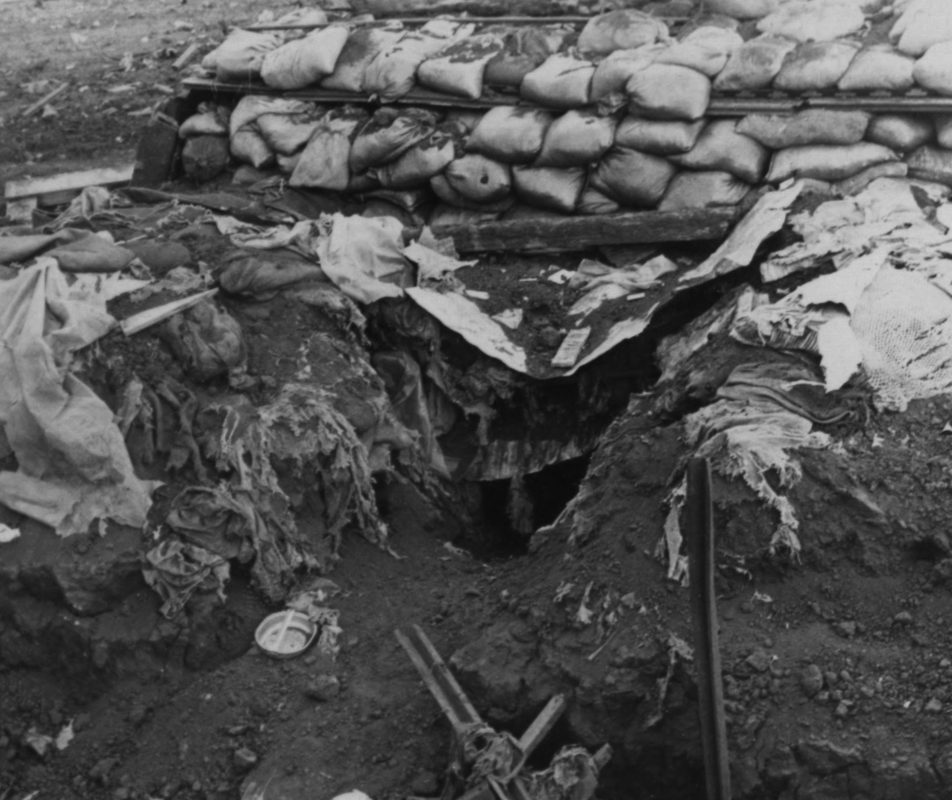
US Marines in a sandbagged bunker at Khe Sanh combat base looking out over the perimeter during the siege
Marines in a fortified bunker at Khe Sanh. The base's garrison lived underground for weeks as NVA artillery and rockets pounded the plateau daily. (U.S. Marine Corps photo)

The Siege Begins: January 21, 1968

At 5:30 AM on January 21, NVA forces hit Khe Sanh's ammunition dump with a barrage of 122mm rockets and 82mm mortars. The dump exploded, destroying 1,500 tons of ammunition, roughly 90 percent of the base's supply. The explosion was so massive it registered on seismic instruments. Within minutes, NVA infantry overran the nearby village of Khe Sanh and the adjacent outpost at the Special Forces camp in the village of Lang Vei, where NVA troops used PT-76 light tanks, the first confirmed use of armor by the NVA in the war.

The base garrison at this point consisted primarily of the 26th Marine Regiment under Colonel David Lownds, along with elements of the 1st Battalion, 9th Marines, and South Vietnamese Army (ARVN) Rangers, roughly 6,000 troops total. Surrounding them in the hills were an estimated 20,000 to 30,000 NVA soldiers from the 304th and 325C Divisions, both veteran units that had fought at Dien Bien Phu fourteen years earlier.

The parallel was not lost on anyone. President Lyndon Johnson was so anxious about Khe Sanh becoming an American Dien Bien Phu that he had a terrain model of the base built in the White House Situation Room and demanded daily briefings. He reportedly made his Joint Chiefs sign a written statement assuring him the base could be held.

Operation Niagara: Death From Above

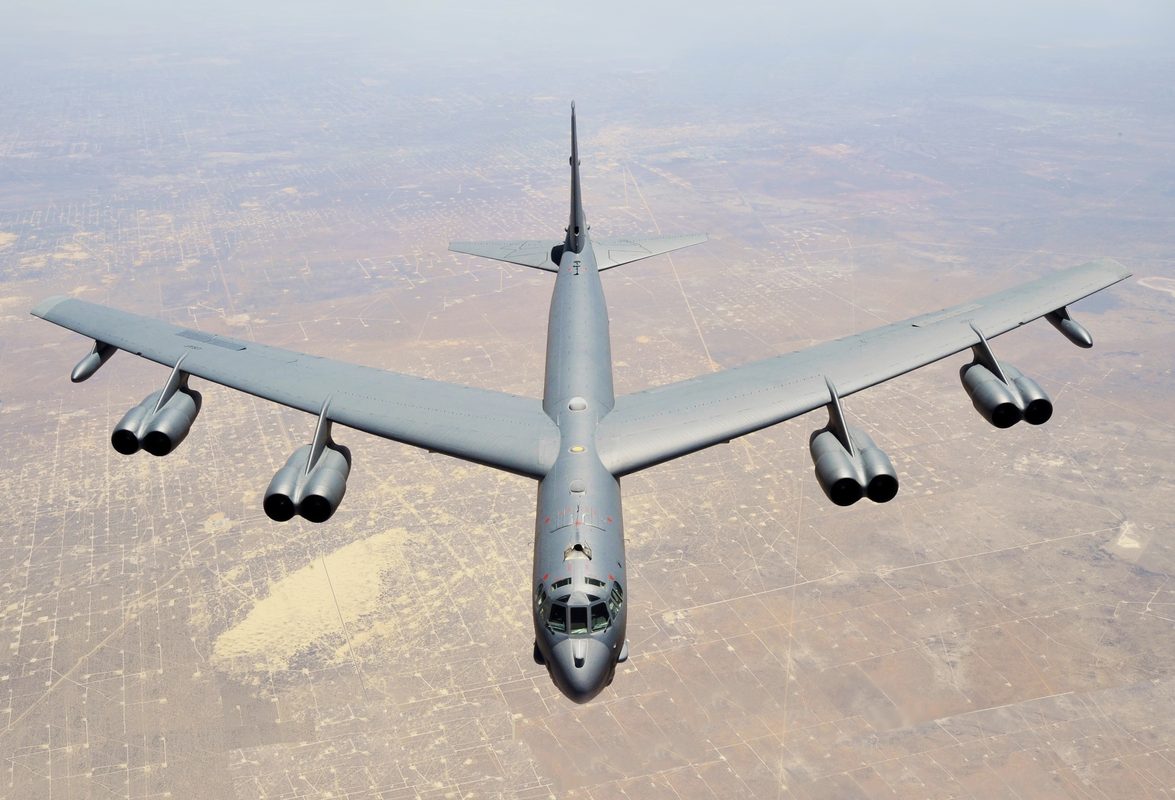
B-52 Stratofortress bombers dropping ordnance during Operation Niagara near Khe Sanh in 1968
B-52 bombers delivered massive Arc Light strikes around Khe Sanh during Operation Niagara, sometimes dropping ordnance within 1,000 meters of Marine positions. (U.S. Air Force photo)

Westmoreland's plan to avoid a Dien Bien Phu had a name: Operation Niagara. The concept was simple in theory and staggering in execution, use the full weight of American air power to destroy the NVA forces besieging the base faster than they could be replaced. Over the course of the siege, Niagara delivered 2,700 B-52 sorties, each bomber carrying up to 108 500-pound bombs. The total ordnance dropped exceeded 110,000 tons, an average of nearly 1,500 tons per day for 77 days.

The B-52s flew "Arc Light" missions, arriving at altitude and releasing their bombs in massive patterns that could obliterate an area the size of several football fields. Some strikes landed as close as 1,000 meters from Marine positions, dangerously close for weapons with blast radii measured in hundreds of meters. Marines reported that the ground shook so violently during Arc Light strikes that they thought they were under ground attack. NVA prisoners later described the B-52 strikes as the most terrifying experience of their lives, the bombers flew too high to see or hear before the bombs arrived.

In addition to the B-52 strikes, tactical aircraft, F-4 Phantoms, A-6 Intruders, A-4 Skyhawks, flew thousands of close air support sorties, some delivering ordnance within 200 meters of Marine lines. The concentrated fire support was the most intense of the entire war, and it was the primary reason Khe Sanh held. The Marines fought well, but it was the bombs that killed most of the besieging force.

Resupply Under Fire

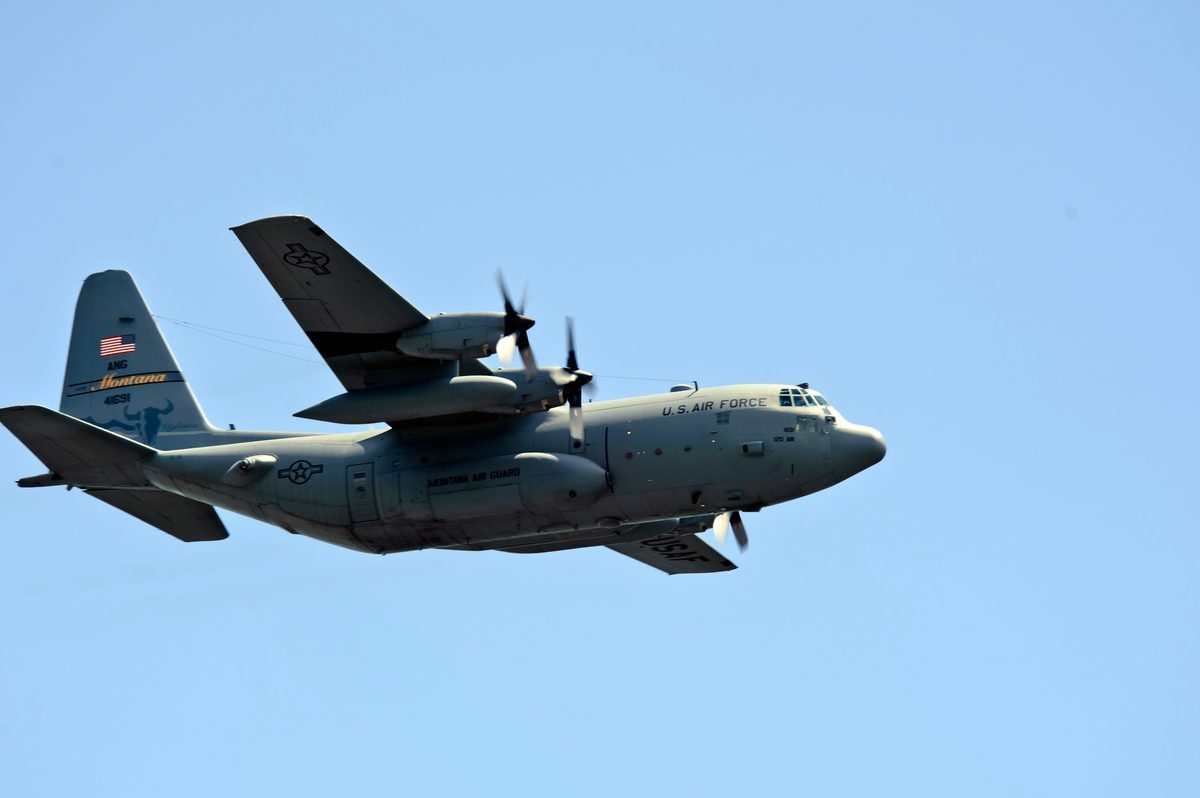
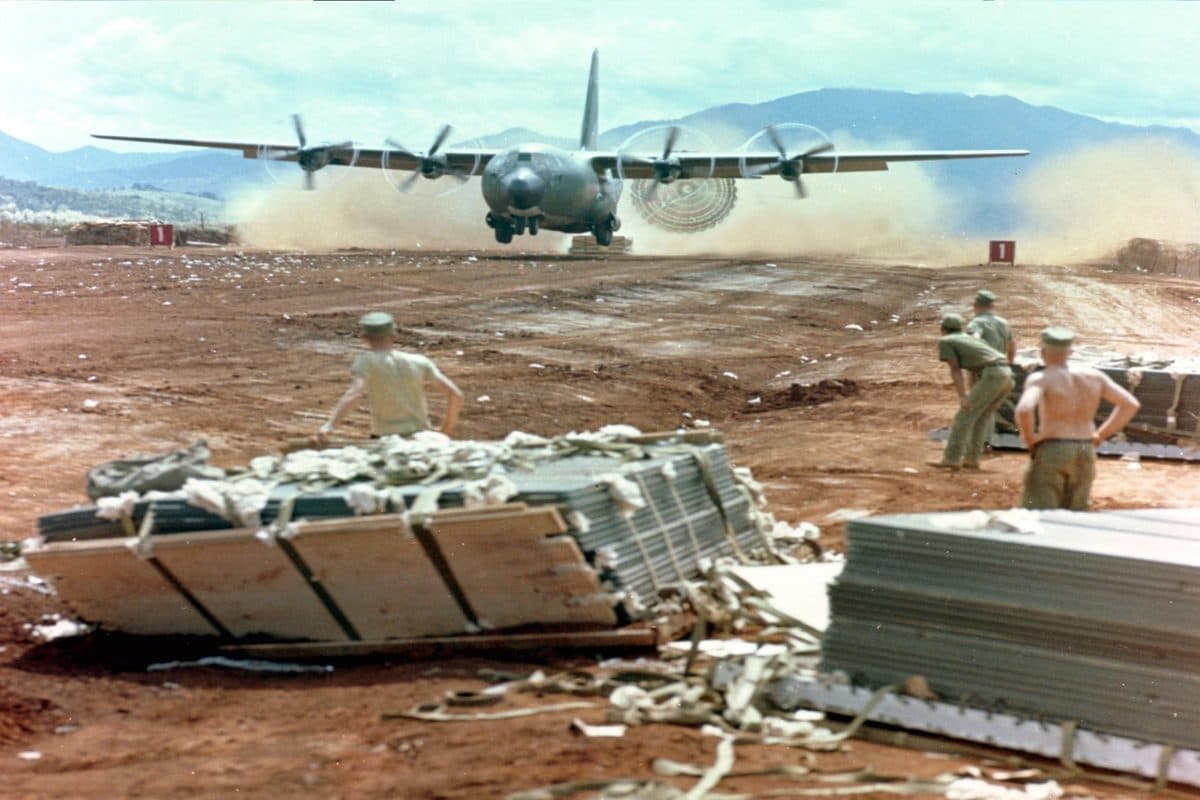
Khe Sanh's airstrip was a 3,900-foot aluminum-matting runway that became the base's lifeline, and its most dangerous workplace. NVA artillery had the runway zeroed in, and every aircraft that approached was subject to mortar and rocket fire. C-130 Hercules transports initially attempted conventional landings, but after several were hit and one was destroyed on the runway, the Air Force switched to a combination of parachute drops and the Low Altitude Parachute Extraction System (LAPES), in which a cargo pallet was pulled from a C-130 by parachute while the aircraft skimmed the runway at low altitude without actually landing.

Smaller C-123 Providers and Marine CH-46 helicopters continued to land when conditions permitted, but helicopter losses were severe. During the siege, NVA gunners destroyed or damaged more than a dozen helicopters and several fixed-wing aircraft on or near the runway. The Marines developed a macabre efficiency at unloading aircraft: supplies were pushed off and wounded loaded on in under three minutes, with the aircraft keeping its engines running the entire time.

C-130 Hercules aircraft approaching Khe Sanh combat base runway for a resupply drop with smoke from artillery impacts visible
A C-130 approaches Khe Sanh's embattled runway. Resupply aircraft faced constant mortar and rocket fire, and several were destroyed on the ground during the siege. (U.S. Marine Corps photo)

The Hill Fights

The siege wasn't confined to the main base. Marines held a series of outposts on the surrounding hills, Hills 881 South, 861, 861 Alpha, and 558, that served as observation points and fire support bases. Each hill was its own miniature siege, with Marine companies of 150-200 men holding positions against repeated NVA assaults. The fighting on the hills was intimate and brutal, with NVA sappers crawling through the wire at night and hand-to-hand combat in the trenches.

Hill 881 South, held by India Company, 3rd Battalion, 26th Marines, was attacked repeatedly throughout the siege. On February 5, NVA forces launched a battalion-strength assault that penetrated the wire before being repulsed in close combat. On Hill 861 Alpha, a predawn assault on February 5 breached the perimeter, and Marines fought room-to-room through their own positions before regaining control at dawn. These fights received less attention than the main base, but they were among the most intense small-unit actions of the war.

The End, and the Argument

Operation Pegasus, a combined ground and air assault launched on April 1, 1968, broke through to Khe Sanh and officially ended the siege on April 8. The Marines had held. American casualties were 274 killed in action and approximately 2,500 wounded, serious losses, but a fraction of the NVA's. Estimates of NVA killed range from 10,000 to 15,000, with some American estimates running higher. The disparity was almost entirely attributable to air power.

Then, in June 1968, the Marines demolished Khe Sanh Combat Base and abandoned it. The decision stunned many who had followed the siege. If the base was worth 77 days of fighting and 274 American lives, why was it abandoned two months later? The answer reveals the siege's deepest controversy.

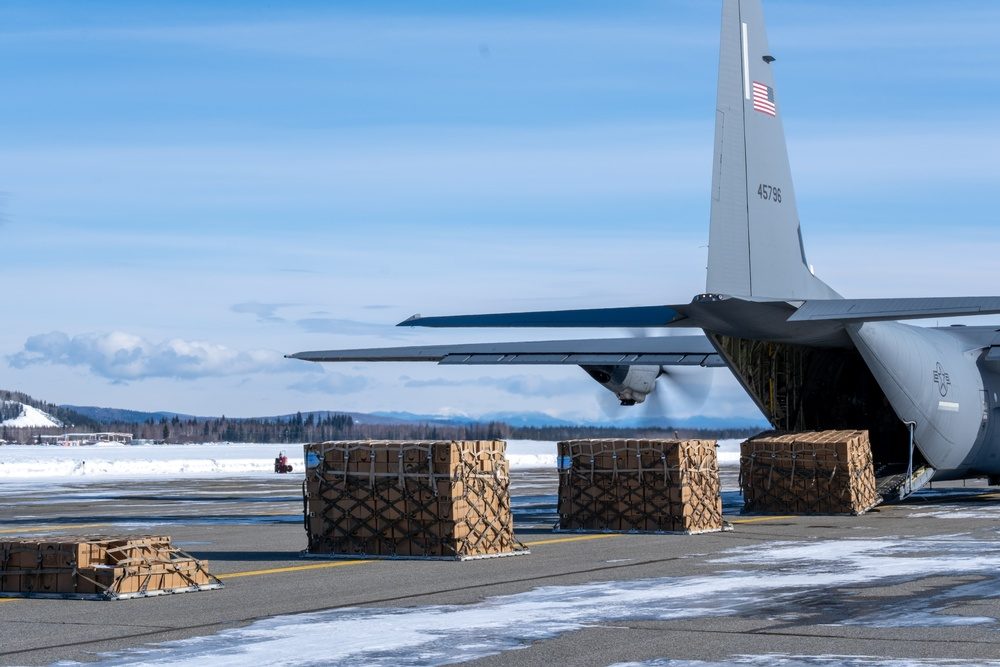
Military transport aircraft supporting ground operations during the Vietnam War era
Air resupply was the lifeline that kept Khe Sanh alive. Without constant deliveries of ammunition, food, and medical supplies, the garrison would have been overrun within weeks. (U.S. Air Force photo)

Diversion or Decisive Battle?

The siege of Khe Sanh began exactly nine days before the Tet Offensive, the massive, coordinated NVA and Viet Cong assault on cities and bases across South Vietnam that began on January 30, 1968. The timing has fueled decades of debate about whether Khe Sanh was the main effort or a diversionary one.

Westmoreland always insisted the NVA intended Khe Sanh as a decisive battle, a second Dien Bien Phu that would break American will. In this view, the Marines' successful defense was a major victory that killed thousands of elite NVA soldiers and prevented a symbolic catastrophe. North Vietnamese General Vo Nguyen Giap, the architect of Dien Bien Phu, gave contradictory statements after the war, at times claiming Khe Sanh was always a diversion designed to pull American forces away from the cities before Tet, and at other times suggesting it was an attempt at a decisive engagement that failed due to American air power.

The truth likely falls somewhere between. The NVA committed two full divisions and sustained enormous casualties at Khe Sanh, more than a typical diversion would justify. But the siege succeeded in pinning down significant American forces and commanding intense attention from Washington precisely when the NVA needed that attention diverted from the Tet preparations. Whether Khe Sanh was a diversion that cost too much or a main attack that failed, the NVA achieved its broader strategic objective: the Tet Offensive shattered American public confidence in the war, even though it was a military defeat for the NVA.

The Marines who fought at Khe Sanh knew none of this at the time. They knew the perimeter, the incoming, the bunkers, and the daily question of whether the next resupply bird would make it in. The strategic debate belonged to Westmoreland and Giap. The survival belonged to the 26th Marines, and for 77 days, they earned it.

Share this article

Share:

Recommended

Ace of The Skies: Can You Identify These Military Aircraft Throughout The Years?
Test Yourself

Ace of The Skies: Can You Identify These Military Aircraft Throughout The Years?

Can you identify these aircraft?

Take the Quiz

On This Day in Military History

April 25

The Gallipoli Landings, ANZAC Day (1915)

British, Australian, New Zealand, and French forces landed on the Gallipoli Peninsula in Ottoman Turkey, attempting to seize the Dardanelles straits. The ANZAC troops landed at what became known as Anzac Cove, facing fierce resistance from Ottoman defenders under Mustafa Kemal. The eight-month campaign cost over 250,000 Allied casualties.

1945, US and Soviet Forces Meet at the Elbe

1846, Thornton Affair, Mexican-American War Begins

1862, Fall of New Orleans

See all 11 events on April 25

Get Military News & History in Your Inbox

Join thousands of readers receiving our weekly digest of military technology, history, and analysis.

Test Your Knowledge