

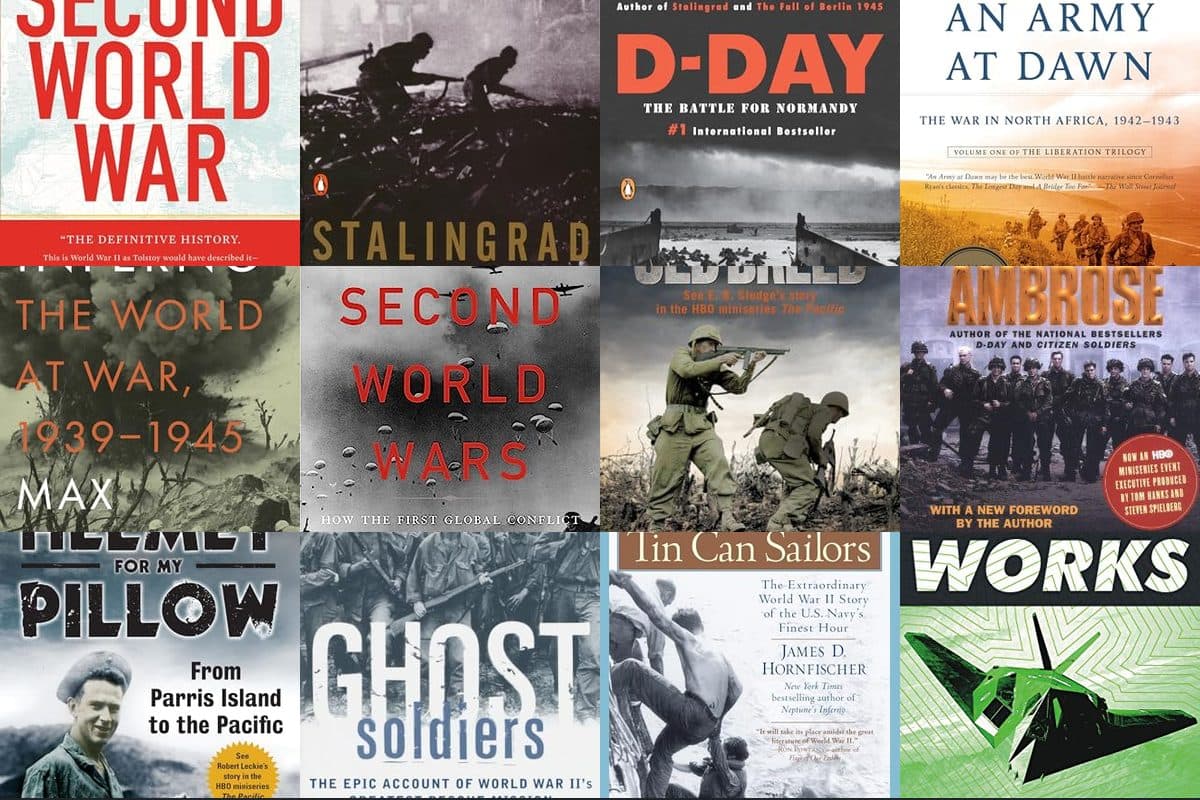
15 Best World War II Books for History Enthusiasts (2026)
15 essential WW2 books covering every theater. Narrative histories, memoirs, and visual references ranked.
daniel-mercer··21 min read
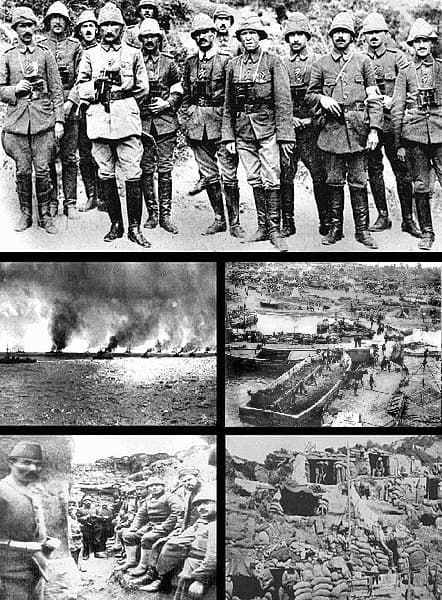
British, Australian, New Zealand, and French forces landed on the Gallipoli Peninsula in Ottoman Turkey, attempting to seize the Dardanelles straits. The ANZAC troops landed at what became known as Anzac Cove, facing fierce resistance from Ottoman defenders under Mustafa Kemal. The eight-month campaign cost over 250,000 Allied casualties.
A Mexican cavalry force attacked a US Army patrol under Captain Seth Thornton north of the Rio Grande, killing 11 American soldiers. President Polk used the incident to declare that Mexico had "shed American blood on American soil," leading Congress to declare war.
French diplomat Ferdinand de Lesseps broke ground at Port Said on the Suez Canal, a 120-mile waterway that would reshape global maritime trade and military logistics. Britain and France would fight to control the canal in 1956.
Flag Officer David Farragut's Union fleet passed the Confederate forts below New Orleans and compelled the surrender of the Confederacy's largest and most important city. The loss was a devastating blow to the Southern war effort and secured Union control of the lower Mississippi.
Allied forces landed on the Gallipoli Peninsula in Ottoman Turkey. The eight-month campaign cost over 250,000 Allied casualties and became the founding national myth for Australia and New Zealand.
Advance patrols of the US 69th Infantry Division met Soviet troops of the 58th Guards Division at Torgau on the Elbe River in Germany. The historic handshake effectively cut Nazi Germany in two and symbolized the Allied victory.
James Watson and Francis Crick published their paper on the double-helix structure of DNA in Nature, launching molecular biology. The work would eventually produce military forensic and biotechnology capabilities including forensic DNA identification used in later conflicts.
USS Nautilus (SSN-571), the world's first nuclear-powered submarine, began sea trials off Connecticut under Commander Eugene Wilkinson. The Nautilus would revolutionize submarine warfare and underpin US nuclear deterrence strategy.
Junior officers of the Portuguese Armed Forces Movement launched a military coup that overthrew the Estado Novo dictatorship in Lisbon. The nearly bloodless revolution ended 48 years of authoritarian rule and the Portuguese Colonial War.
British forces of Operation Paraquet recaptured the Falklands dependency of South Georgia from Argentine marines, including the capture of Argentine submarine ARA Santa Fe. The operation was the first territorial victory of the Falklands War.
US Army 3rd Infantry Division and 101st Airborne Division elements secured the Tuwaitha nuclear research facility outside Baghdad. Subsequent inspections revealed extensive looting of nuclear material containers that raised serious non-proliferation concerns.
US Pacific Command launched Joint Task Force 505 disaster relief operations after the 7.8-magnitude Gorkha earthquake devastated Nepal. C-17 Globemaster III, V-22 Osprey, and UH-60 Black Hawk aircraft flew into Tribhuvan International Airport within 72 hours.

Inventor
Pioneer of wireless radio communication that revolutionized naval and military communications. His technology was first used operationally by the Royal Navy and became essential to both world wars.

Lord Protector
English military leader who commanded the New Model Army's cavalry, won decisive victories at Marston Moor and Naseby in the English Civil War, and became Lord Protector of England. His military innovations created one of the first professional standing armies.

Various
Over 600 Australian and New Zealand soldiers were killed on April 25, 1915, during the Gallipoli landings. Their sacrifice is commemorated annually on ANZAC Day, the most significant day of remembrance in Australia and New Zealand.

Fleet Admiral
Aggressive US Navy commander who led carrier task forces across the Pacific. His slogan "Hit hard, hit fast, hit often" defined the American naval offensive. Though controversial for his decisions at Leyte Gulf, he was one of only four five-star admirals.
Wear the Timeline
11 military events occurred on April 25, spanning multiple centuries. Key events include: The Gallipoli Landings, ANZAC Day (1915), US and Soviet Forces Meet at the Elbe (1945), Thornton Affair, Mexican-American War Begins (1846), Fall of New Orleans (1862).
The most significant military event on April 25 is The Gallipoli Landings, ANZAC Day (1915). British, Australian, New Zealand, and French forces landed on the Gallipoli Peninsula in Ottoman Turkey, attempting to seize the Dardanelles straits. The ANZAC troops landed at what became known as Anzac Cove, facing fierce resistance from Ottoman defenders under Mustafa Kemal. The eight-month campaign cost over 250,000 Allied casualties.
Notable military figures born on April 25 include Guglielmo Marconi (1874–1937), Oliver Cromwell (1599–1658).
Events on April 25 span World War I, World War II, the Colonial & Revolutionary era, the Civil War, the Cold War, the Modern Era, covering 11 events across 3 centuries of military history.
Events on April 25 involve 4 branches of the U.S. and allied armed forces, reflecting the global scope of military operations throughout history.
Explore military history from the day you were born.
June 6
The Allied invasion of Normandy, the largest amphibious assault in history.
December 7
Japan attacks the U.S. Pacific Fleet, bringing America into World War II.
September 11
The deadliest terrorist attack in history transforms U.S. national security.
August 6
The first atomic bomb is dropped on a city, ushering in the nuclear age.
May 8
Nazi Germany surrenders unconditionally, ending World War II in Europe.
November 11
Armistice Day marks the end of World War I and honors all who served.
June 4
The turning point of the Pacific War as the U.S. Navy destroys four Japanese carriers.
July 4
The Declaration of Independence is adopted, sparking the American Revolution.
15 essential WW2 books covering every theater. Narrative histories, memoirs, and visual references ranked.
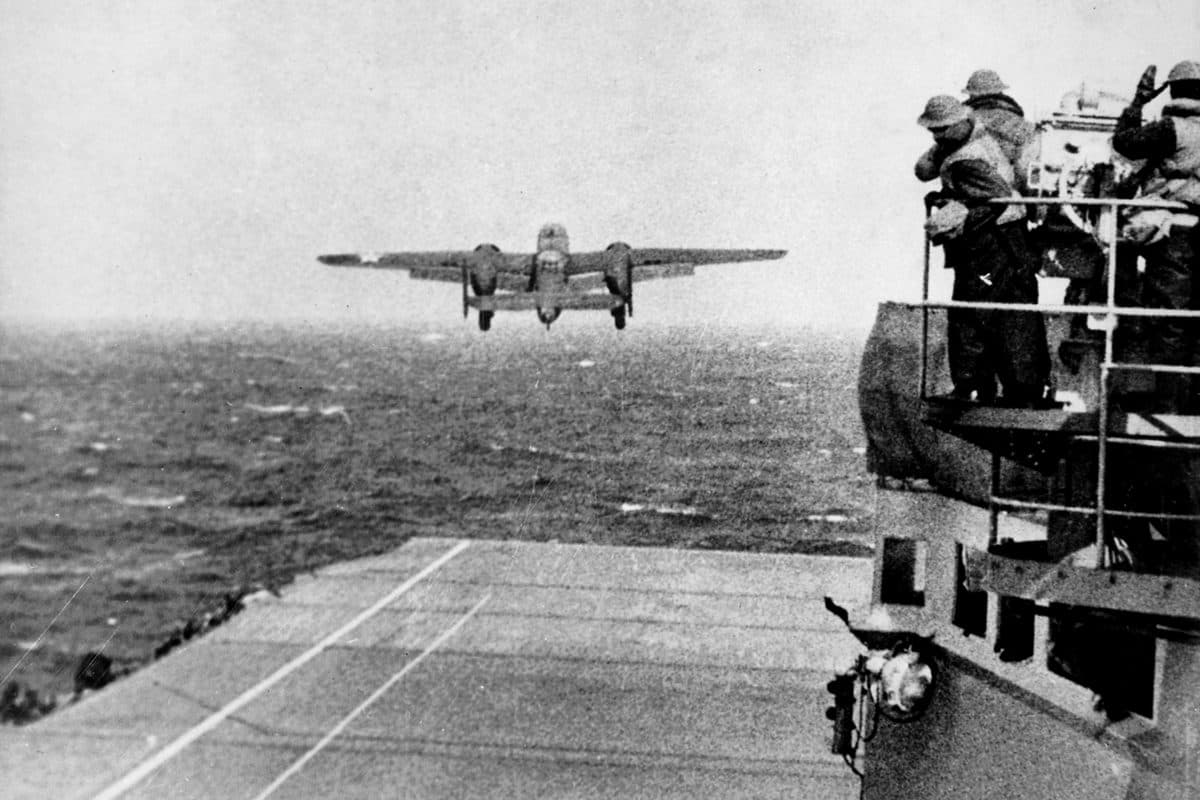
On April 18, 1942, sixteen B-25 Mitchell bombers did something no one thought possible: they launched from the deck of an aircraft carrier, flew 650 miles to Japan, and bombed Tokyo. Every aircraft was lost. The damage was negligible. The consequences changed the war.
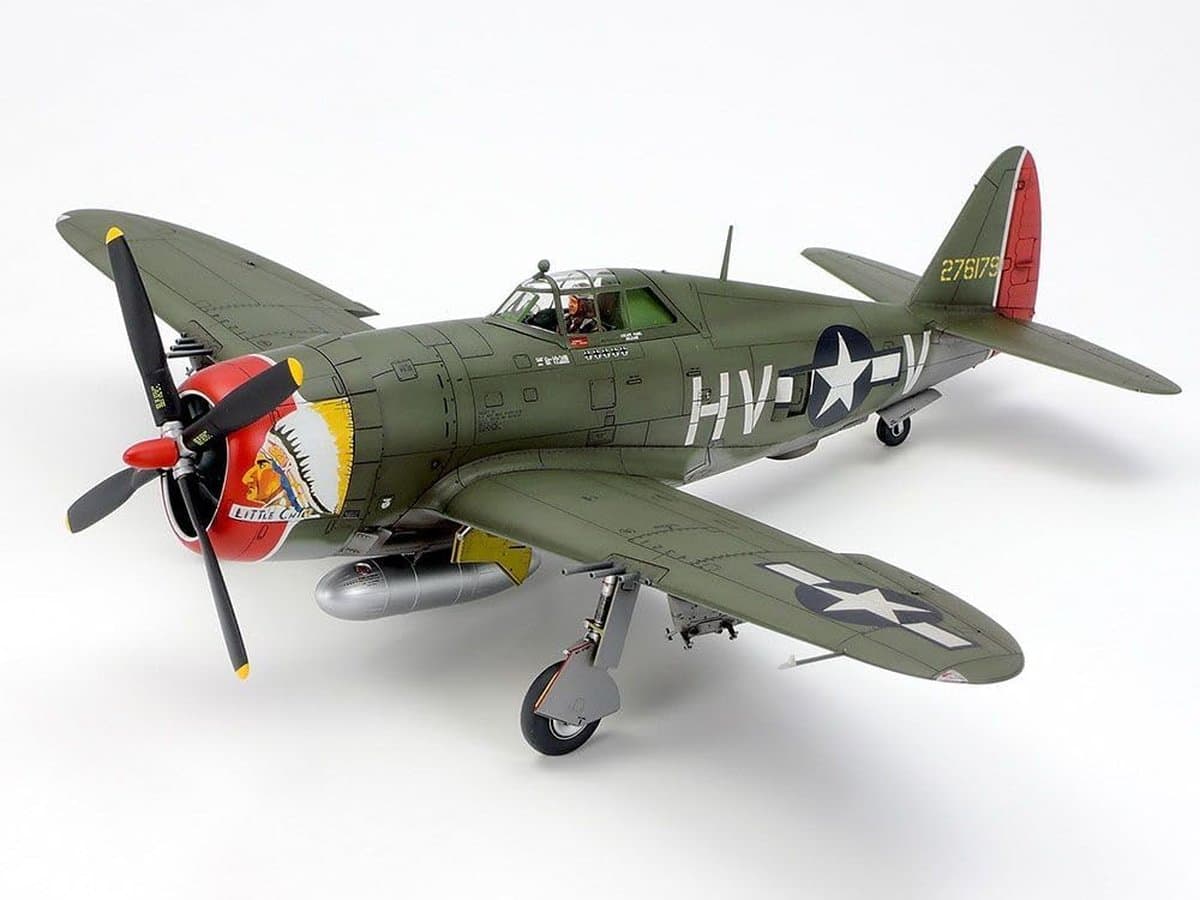
Compare 85+ WW2 scale model kits across aircraft, tanks, and ships. Beginner builds from $9 to museum-grade showpieces at $580. Covers Tamiya, Eduard, HK Models, Trumpeter, and more with honest reviews, trade-offs, and pricing.

On April 7, 1945, the Imperial Japanese Navy sent the largest battleship ever built on a one-way suicide mission to Okinawa. She never arrived. 386 American aircraft found her first, and sank her in under two hours.