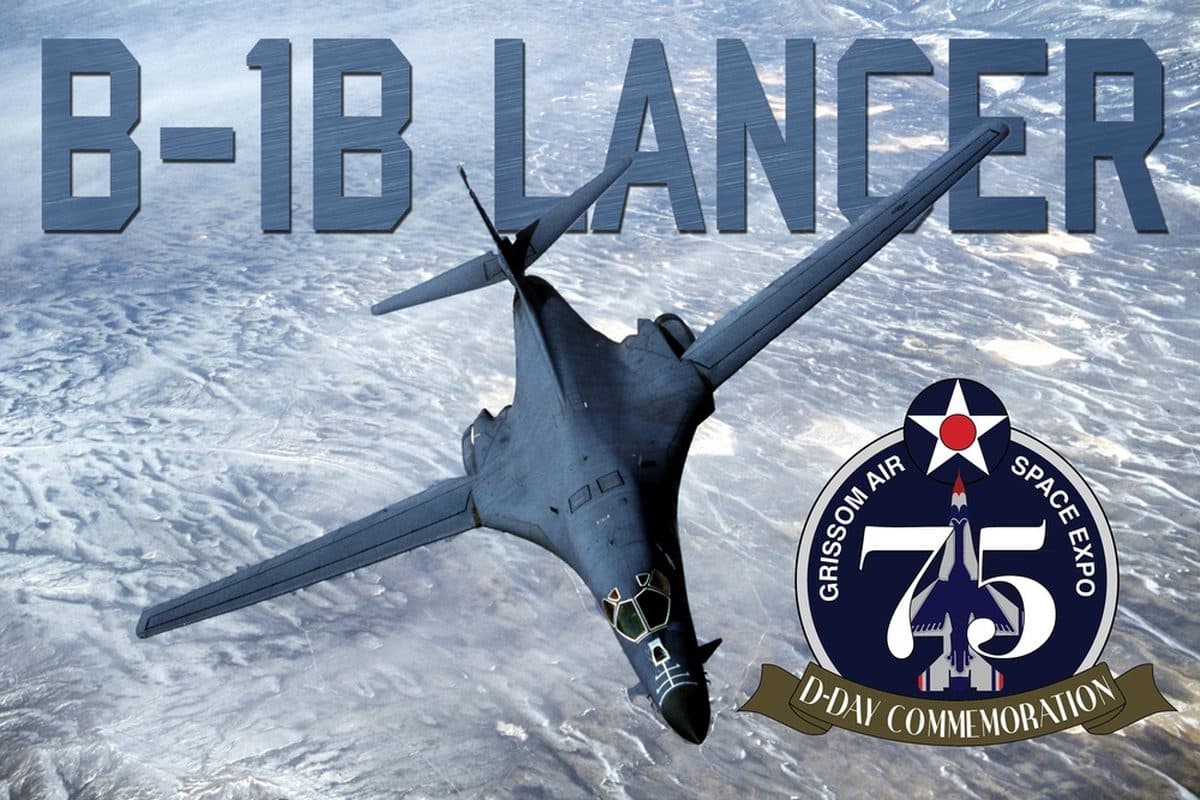

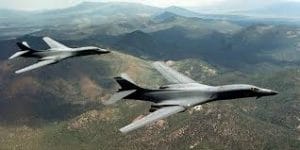
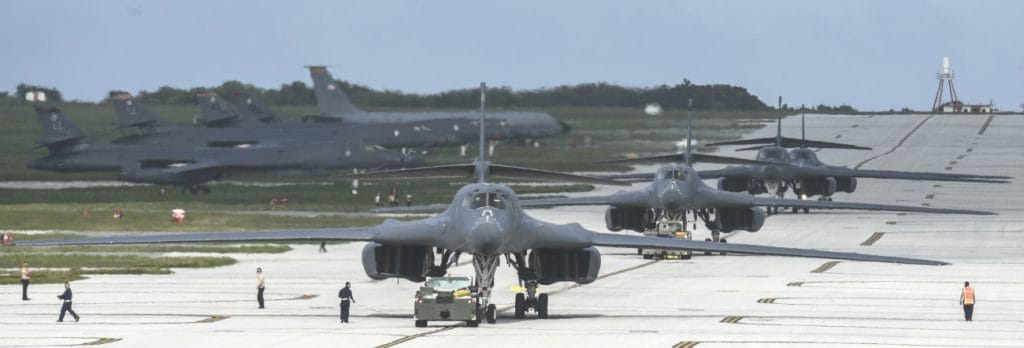
The B-1B Lancer, produced by Rockwell Industries, is a variable swept-wing, long-range strategic bomber aircraft. It was initially designed to take over for the B-52 Stratofortress but revised design transformed it into a strategic bomber capable of flying at low altitude to strike targets deep within contested territory. Only one hundred B-1B Lancers have been produced and 66 were still in service as of 2012.
Performance:
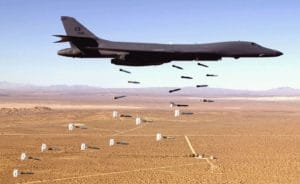
Lancers can reach cruise speeds over Mach 1 at 50,000 feet, and deliver 75,000 pounds of ordnance from just their internal payloads. External hardpoints can be used to equip the B-1B Lancer with additional fuel or nuclear ordnance. Upgrade proposals would see an engine upgrade to allow for speeds of over Mach 2 and air-to-air missile capability. The B-1B currently serves as a part of the United States’ strategic air command where it acts as a nuclear-capable bomber available at-will.
Cold War Design In Modern Service:
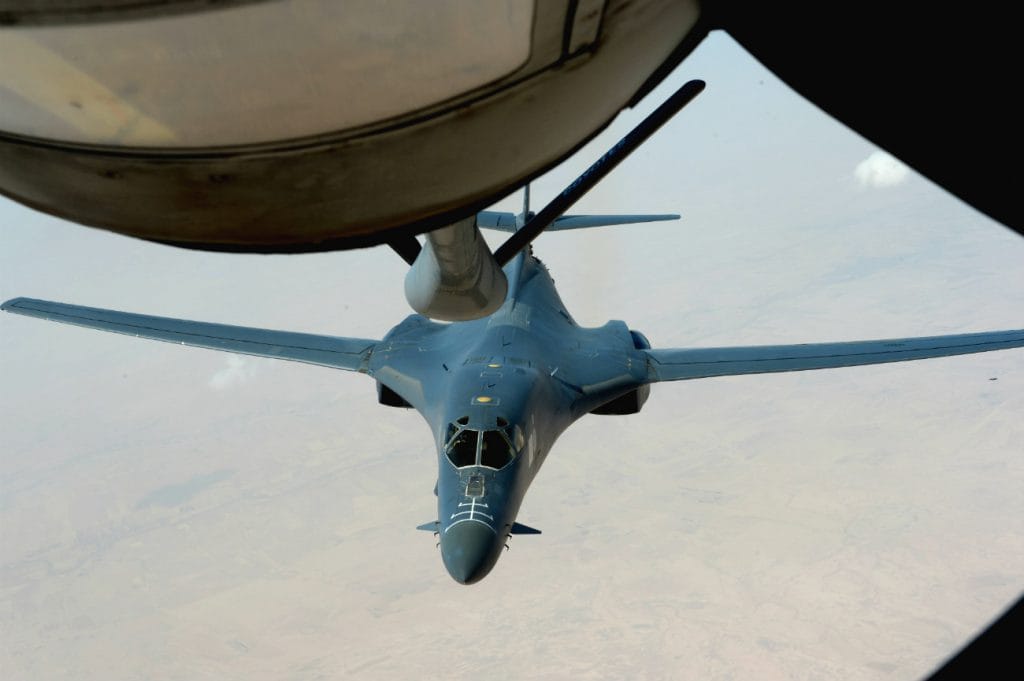
In October of 1986, the first B-1 entered service. The B-1B was supposed to be the replacement to the aging B-52s in service. Incorporating a swept wing design similar to F-14 Tomcat, the B-1 was particularly effective at unguided bombing runs at low altitude. Mission readiness was always an obstacle and it was held back from Operation Desert Shield in 1991. It would go on to serve in Kosovo, the Iraq War, and Operation Enduring Freedom in Afghanistan.
Interim Bomber Role:
The B-1B is an upgrade to the B-52 Stratofortress in that it was built to have a reduced radar cross section and could fly at extremely low altitudes. An enhanced suite of electronic countermeasures also increases its survivability. Despite its technological improvements over a bomber that was fielded in the 1950s, the B-1B Lancer is a hold-over until the United States Air Force can get its Long Range Strike Bomber active. The B-1B has many aspects of stealth technology incorporated into its design: reduced radar visibility, reduced communications array foot print.


 Engine Power: