Skip to content
May 1:Operation Neptune Spear: U.S. Navy SEALs Kill Osama bin Laden15yr ago

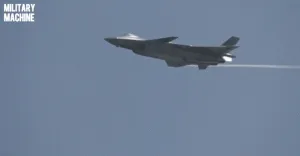
Chengdu J-20 Black Eagle Stealth Fighter

Michael Trent · Updated January 13, 2020 · 4 min read
Save
Share:
Chengdu J-20 Black Eagle Stealth Fighter
Michael Trent
Michael Trent

Defense Systems Analyst

Michael Trent covers military aircraft, weapons systems, and defense technology with an emphasis on cost, maintenance, and real-world performance. He focuses less on specifications and more on how systems hold up once they are deployed, maintained, and operated at scale.

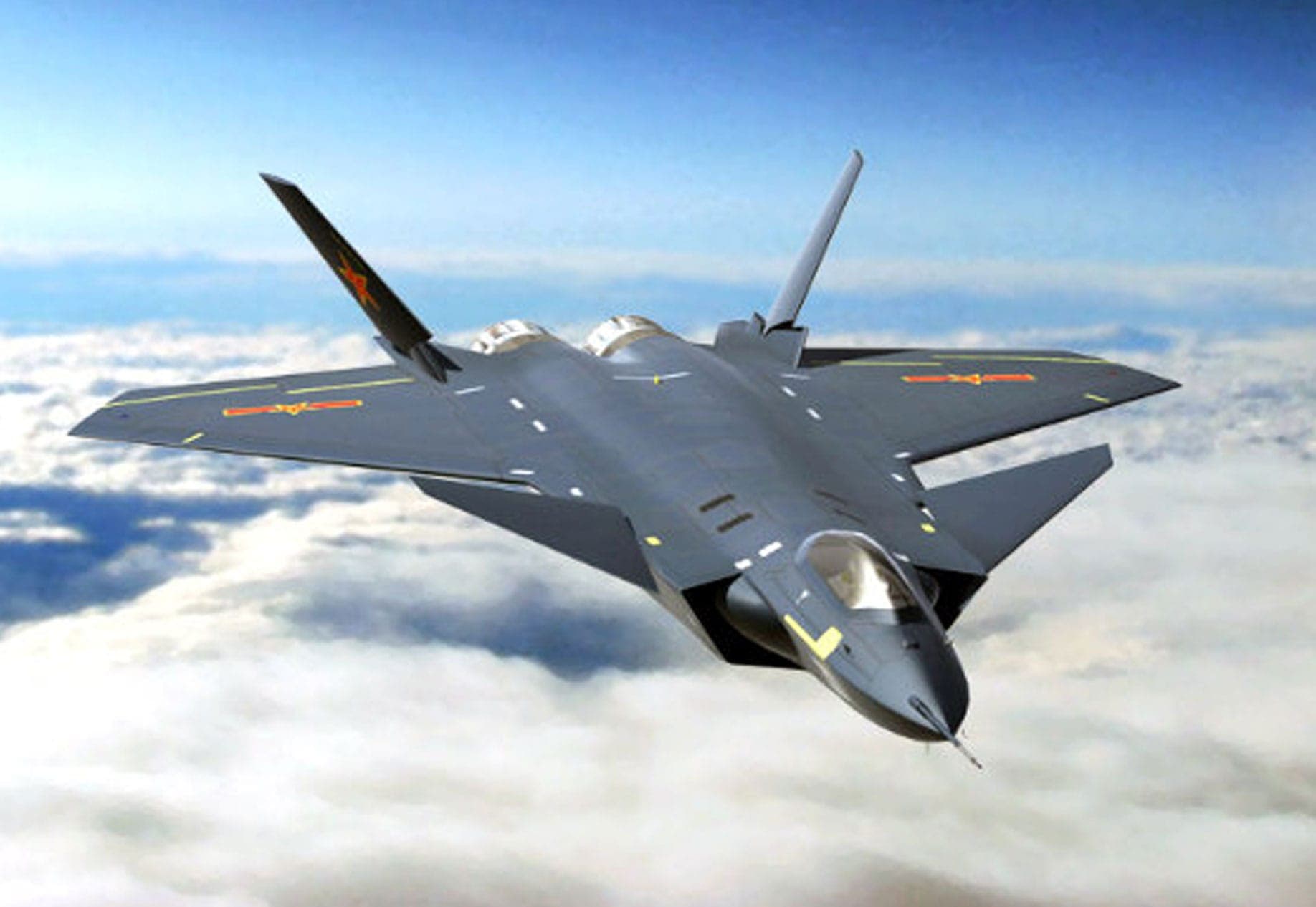
The Chinese Chengdu J-20 “Black Eagle” is a twin-engine, multi-role, fifth-generation strike fighter jet. Its main role is expected to be a long-range strike fighter against primarily ground targets but capable of engaging in air-to-air superiority contests. Although there were setbacks in production of its WS-15 engines, the J-20 entered service in late 2017. Aviation and military analysts have noted its striking similarity in appearance to the Lockheed-Martin F-35 Lightning II. Its anticipated role as a fifth-generation, multi-role aircraft will make it a primary contender to the F-22 Raptor.

Armament

One of the main defining capabilities of the J-20 is its internal bomb bay. It is exceptionally dangerous to conventional ground forces and ground-based fire control. Its main weapons bay can hold both short-range and long-range air-to-air missiles. The two, smaller lateral weapon bays, which open and close before and after firing missiles in order to enhance stealth, hold short-range air-to-air missiles.

Capabilites

The biggest threat posed by the J-20 will be its ability to approach and potentially strike naval assets. Internal bays allow the J-20 Black Eagle to keep its air-to-air and air-to-surface armament retracted until ready to use. The Chengdu J-20 Black Eagle can quickly move into strike range, fire payload and return to base before the ship is able to use counter-measures. And with more fuel than the F-35, it can stay in the air longer without requiring in-air refueling.
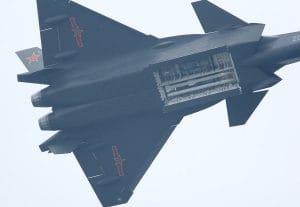
J-20
PRC People’s Air Force

In 1999, an American Lockheed-Martin F117A Nighthawk was allegedly shot down over Serbian airspace during the Kosovo conflict. While the pilot managed to eject to safety, the Russian and Chinese intelligence wasted no time in weeding through the wreckage to discover how the F-117A managed to evade most radar technology so well.

Multiple sources allege that both China and Russia used information obtained through this and other illicit sources to develop their fifth-generation multi-role stealth fighters like the Chengdu J-20 and the PAK FA T-50. Between the F-117A crash and information obtained on the United States’ development of the F-35 Lightning II, aviation experts have noted the stunning similarities of the two aircraft.

J-20 vs F-22

In terms of capabilities, the Chengdu J-20 appears to match some things the F-22 Raptor delivers. Similarities include, but are not limited to:

  • Location of engines.
  • Stealth design that reduces sharp or obtuse angles.
  • Actively Electronically Scanned Array (AESA) radar located in the nose.

The only aspect where the J-20 outshines the F-22, and even the F-35, is range and weapons bays. Chendu’s J-20 fuel capacity and larger internal weapons capabilities are greater than those of the US fighters. For a detailed look at how America’s two fifth-generation jets differ from each other, see our F-22 Raptor vs F-35 Lightning II comparison.


chengdu-j20-military-machine

Chengdu J-20 Engine

This is where the design similarities begin and end between the Chengdu J-20 and the F-35. When it comes to engine power, the Chinese anticipate the use of an upcoming WS-15 jet turbine engine but currently rely on Russian-made Saturn AL-31F engines. The Saturn AL-31F engine is presently used in Su-27 Flanker. It’s an older engine but still capable of amazing aerodynamic features for a strike aircraft. At present, the J-20 current prototypes rely on either two Shenyang WS-10G afterburning turbofans or Russian-made AL-31F turbofans. When equipped with the Russian-made Saturn AL-31F engines, they produce a dry thrust of 17,125 lb-ft each or 27,500 with afterburner.

See Specifications

Length: 66 ft 9 in (20 m)
Height: 14 ft 7 in (4.45 m)
Wingspan: 44 ft 2 in v(13 m)
Speed: 1,305 mph (2,100 km/h, 1,134 kn)
Range: 2,113 miles (3,400 km)
Ceiling: +45,000 ft
Maximum Takeoff Weight: (estimated) 80,001 lbs. (36,288 kg)
Crew: 1
Unit Cost: $110 million USD.

The J-20 is part of a broader military transformation. See how it ranks among the best fighter jets in the world in 2026, and for the full scope of China's modernization, read our analysis of China's military buildup by the numbers.

Share this article

Share:

Recommended

Ace of The Skies: Can You Identify These Military Aircraft Throughout The Years?
Test Yourself

Ace of The Skies: Can You Identify These Military Aircraft Throughout The Years?

Can you identify these aircraft?

Take the Quiz

Get Military News & History in Your Inbox

Join thousands of readers receiving our weekly digest of military technology, history, and analysis.

Test Your Knowledge