Michael Trent covers military aircraft, weapons systems, and defense technology with an emphasis on cost, maintenance, and real-world performance. He focuses less on specifications and more on how systems hold up once they are deployed, maintained, and operated at scale.
April 2026 Update
This article has been updated with the latest developments on the F-47 NGAD, KF-21 Boramae production, J-20 fleet expansion, F-35 Block 4 delays, and J-35 carrier operations.
2026 Update: F-47 and KF-21 Enter the Rankings
Since this ranking was first published, two major developments have reshaped the global fighter landscape. The United States has officially designated its Next Generation Air Dominance platform as the F-47, and South Korea's KF-21 Boramae has transitioned from flight testing to production. Meanwhile, China continues expanding its 5th-generation fleet at a pace that demands attention. Here is what has changed and what it means for these rankings going forward.
On March 21, 2025, Secretary of the Air Force Frank Kendall announced that Boeing had won the $20 billion Engineering and Manufacturing Development (EMD) contract for the Next Generation Air Dominance program. The aircraft was designated F-47, a designation that carries triple significance, honoring the legendary P-47 Thunderbolt of World War II, the founding of the United States Air Force as an independent service in 1947, and the 47th President of the United States.
The F-47 represents a generational leap beyond the F-22 Raptor. While specific performance parameters remain classified, what has been publicly confirmed paints a picture of an aircraft designed for a fundamentally different threat environment than any current fighter. The combat radius exceeds 1,000 nautical miles, roughly double the F-22's unrefueled combat range, making it purpose-built for the vast distances of the Pacific theater. It is capable of speeds exceeding Mach 2, and its stealth characteristics are described as more advanced than any existing 5th-generation platform. The unit cost is approximately $300 million, and the Air Force plans to procure at least 185 aircraft.
First flight is expected in 2028, with operational capability targeted for 2029, an aggressive timeline by historical standards. The F-47 will deploy alongside the F-35 and B-21 Raider as part of an integrated strike package, carrying the Stand-in Attack Weapon (SiAW), a fast-reaction air-to-ground missile designed to destroy enemy air defenses from inside contested airspace. The F-47 does not replace the F-22 or F-35. It creates a new tier of capability above them.
KF-21 Boramae: From Prototype to Production Fighter
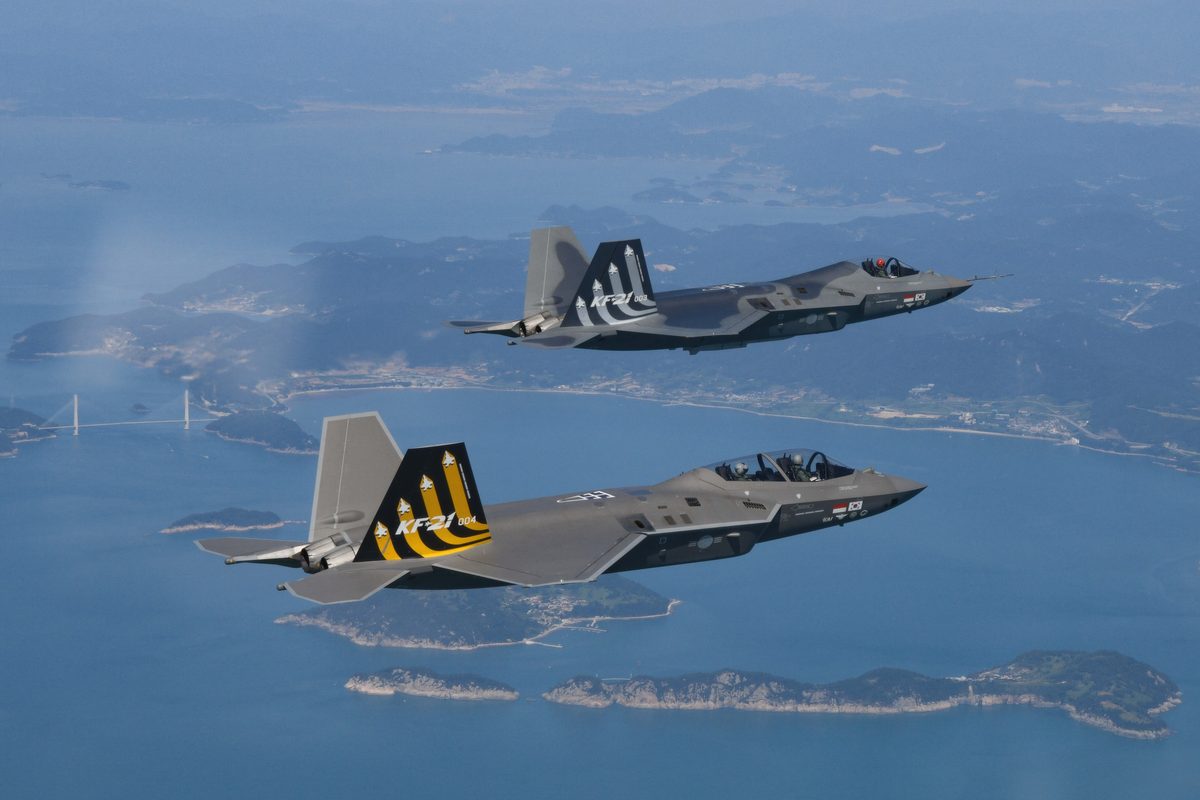
South Korea's KF-21 Boramae has completed one of the most efficient fighter development programs in modern aviation history. Flight testing concluded on January 13, 2026, after approximately 1,600 accident-free flights that verified over 13,000 individual test conditions. That safety record is remarkable for any fighter program, let alone one from a nation building its first indigenous advanced combat aircraft.
The KF-21 Boramae completed nearly 1,600 accident-free test flights before entering production in March 2026.
The first production KF-21 rolled off the Korea Aerospace Industries (KAI) assembly line on March 25, 2026, and initial deliveries to the Republic of Korea Air Force are scheduled for September 2026. The production plan calls for 40 Block I aircraft in the first batch, followed by 31 in 2027 and 47 in 2028. Block I is a 4.5-generation platform with semi-recessed weapons carriage, advanced AESA radar, and an infrared search-and-track system. Future Block II and III variants are expected to incorporate internal weapons bays, further reducing the radar cross-section.
What makes the KF-21 strategically significant is export demand. Indonesia is a development partner with a committed order. Poland, the Philippines, the UAE, Peru, Malaysia, and Saudi Arabia have all expressed interest. At an estimated unit cost well below the F-35, the KF-21 fills a market gap for nations that want 4.5-generation capability without 5th-generation price tags.
Other Developments Worth Watching
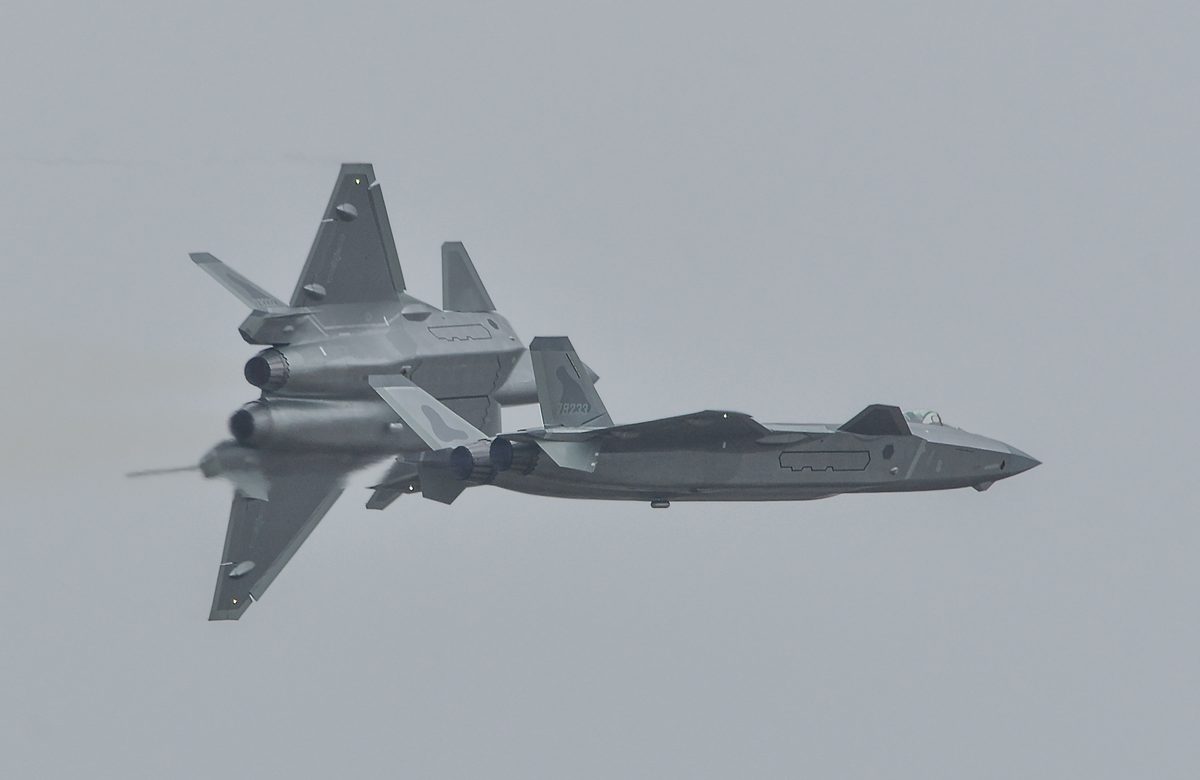
China's J-20 Mighty Dragon continues its rapid fleet expansion. Current estimates place the number in service at 270 to 300 aircraft, making the J-20 fleet numerically comparable to the entire U.S. F-22 fleet many times over. More critically, China is integrating the indigenous WS-15 engine, which will replace the interim Russian-derived powerplants and give the J-20 true supercruise capability. When that integration is complete, the J-20 becomes a significantly more dangerous aircraft than the one that entered service.
China now operates an estimated 270–300 J-20 Mighty Dragons, with WS-15 engines being integrated for true supercruise capability.
The F-35 Block 4/TR-3 upgrade continues to face serious challenges. The Government Accountability Office reported the program "predominantly unusable" in early 2026, with the software upgrade running more than $6 billion over budget. TR-3 was supposed to deliver the processing power needed for Block 4's advanced capabilities, including new weapons integration, electronic warfare improvements, and enhanced sensor fusion. Instead, aircraft delivered with TR-3 hardware have been limited to basic flight operations while software issues are resolved. This matters because Block 4 is not an incremental improvement; it is the version of the F-35 that was supposed to deliver on many of the platform's original promises.
China's J-35 made history in September 2025 as the first 5th-generation stealth fighter to launch from an aircraft carrier using an electromagnetic aircraft launch system (EMALS). Operating from the Fujian, China's newest and most advanced carrier, the J-35 gives the People's Liberation Army Navy a carrier-based stealth capability that only the United States previously possessed with the F-35C. The combination of the J-35, the Fujian's EMALS catapults, and China's expanding carrier fleet represents a fundamental shift in Indo-Pacific naval aviation.
These developments do not change the current top-10 rankings. The F-47 is not yet flying, the KF-21 Block I has not entered operational service, and the J-35's carrier capabilities remain unproven in contested environments. But they signal clearly where the next revision of this ranking is headed.
Ranking the world's best fighter jets is an exercise in trade-offs. There is no single metric that determines which aircraft is "best." A jet that dominates in air-to-air combat may be mediocre in the strike role. A platform with the best avionics on the planet may be too expensive to field in meaningful numbers. An aircraft with a spotless combat record may never have faced a peer adversary. Any honest ranking has to weigh multiple factors: raw performance, sensor and weapons integration, stealth characteristics, combat record, versatility, reliability, and the ability to operate within a broader force structure.
This ranking evaluates fighter jets currently in active military service as of early 2026. We are not ranking prototypes, paper designs, or aircraft that exist only in limited pre-production testing. The exception is aircraft that have entered operational service in small numbers and are actively deployed. We also focus on the latest operational variants of each platform, because a Block III Super Hornet is a fundamentally different machine than the original F/A-18E that first flew in 1995. Specifications referenced throughout are drawn from manufacturer data, U.S. Department of Defense reports, and publicly available assessments from Jane's and the International Institute for Strategic Studies (IISS).
One more note before we begin: this list will inevitably generate disagreement. That is the point. If ranking fighter jets were straightforward, there would be no debate, and no reason to write this article. With that said, here are the 10 best fighter jets in the world in 2026, ranked from 10 to 1.
The Saab JAS 39 Gripen E represents Sweden's philosophy of building a highly capable fighter that small air forces can actually afford to operate (Saab photo)
The Gripen earns a spot on this list not by trying to be the biggest or the fastest, but by being arguably the smartest fighter program in the world. Sweden designed the Gripen around a deceptively simple idea: build an aircraft that a small, non-superpower air force can afford to buy, maintain, and operate at high readiness rates without going bankrupt.
The Gripen E, which entered Swedish Air Force service in 2023, is a substantial leap over the earlier C/D variants. It features the Leonardo/Saab Raven ES-05 active electronically scanned array (AESA) radar with a repositioner that gives it a wider field of regard than most competing systems. It carries the MBDA Meteor beyond-visual-range missile, widely regarded as the most capable air-to-air missile in Western service. Its electronic warfare suite is reportedly among the most advanced fitted to any fighter in production.
Where the Gripen truly excels is in operational efficiency. It can be turned around by a team of six conscripts in under ten minutes. It is designed to operate from dispersed road bases, a critical capability for Sweden's defensive strategy. Its operating cost per flight hour is estimated at roughly $4,700, a fraction of what an F-35 or Typhoon costs to fly. For nations like Brazil, South Africa, and Hungary that operate or have ordered the Gripen, it provides a credible modern fighter without the financial burden of maintaining a top-tier platform.
The Gripen's limitations are real: it is a single-engine light fighter with less payload capacity and shorter range than larger platforms. It lacks stealth characteristics. But Saab has never pretended otherwise. The Gripen E is designed to be good enough across the full mission set while being exceptional in affordability and availability, and that combination earns it a place among the world's top 10.
9. Boeing F-15EX Eagle II (USA)
Country: United States | Manufacturer: Boeing | Role: Multirole strike fighter Key specs: Max speed Mach 2.5 | Combat radius ~1,000 nm | AN/APG-82(V)1 AESA radar | 29,500 lb payload capacity | Carries AIM-120D, AIM-9X, JDAM, SDB, hypersonic weapons
The F-15EX Eagle II is proof that a great airframe never truly gets old, it just gets better avionics. The latest iteration of the F-15, which first flew in 1972, is arguably the most capable non-stealth fighter ever built. The U.S. Air Force began receiving F-15EX deliveries in 2021, and the aircraft has been steadily entering service at Eglin and Kingsley Field.
On paper, the F-15EX's specifications are staggering. It can carry more ordnance than any other fighter in the U.S. inventory: up to 29,500 pounds across 23 weapons stations, including 12 air-to-air missiles simultaneously. Its AN/APG-82(V)1 AESA radar is a direct descendant of the system that made the F-15E Strike Eagle lethal for decades, now with significantly improved range and electronic protection. The Eagle II also features the Eagle Passive/Active Warning Survivability System (EPAWSS), a cutting-edge electronic warfare suite that gives the non-stealth airframe a degree of survivability in contested environments.
The F-15EX's greatest asset is its role as a missile truck. In the Air Force's evolving concept of operations, stealthy fighters like the F-22 and F-35 detect targets and pass targeting data to F-15EXs, which then launch large salvos of weapons from safer distances. The aircraft's payload capacity makes it ideal for this role. It is also being prepared to carry hypersonic weapons that are too large for internal weapons bays.
The Eagle II's weakness is obvious: it is not stealthy. In a high-threat, peer-adversary environment, it would need to operate behind the forward line established by fifth-generation fighters. But for the vast majority of real-world scenarios the U.S. Air Force faces, the F-15EX provides enormous capability at a unit cost roughly half that of an F-35A. The F-15's undefeated air-to-air record of 104-0 doesn't hurt its reputation either.
8. Chengdu J-20 Mighty Dragon (China)
Country: China | Manufacturer: Chengdu Aerospace Corporation | Role: Air superiority / strike fighter Key specs: Max speed estimated Mach 2.0+ | Combat radius reportedly ~1,100 nm | Type 1475 (KLJ-5) AESA radar (estimated) | Carries PL-15, PL-10, PL-21 (reported)
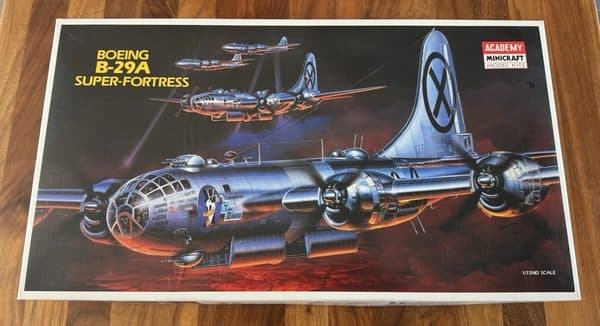
The most technologically advanced aircraft of WW2: pressurized compartments, remote-controlled gun turrets, and fire-control computers. Academy's 1/48 kit builds into a 35-inch model, the largest in this guide by a wide margin.
The Chengdu J-20 is the most significant challenge to Western air dominance to emerge in decades. China's first operational fifth-generation stealth fighter entered People's Liberation Army Air Force (PLAAF) service in 2017 and has been produced in steadily increasing numbers. By early 2026, open-source estimates suggest approximately 250 or more J-20s are in service, making it the second-largest fifth-generation fleet in the world after the F-35.
Assessing the J-20 honestly requires acknowledging what we do not know. China does not publish detailed specifications, and much of what appears in Western analysis is estimated from satellite imagery, airshow appearances, and intelligence assessments. What is known is that the J-20 is a large, twin-engine, canard-delta design optimized for long range, a critical requirement for operations across the vast distances of the Pacific. Its frontal radar cross-section is reportedly very low, though most analysts believe its all-aspect stealth is not at the level of the F-22 or F-35.
The J-20 initially entered service powered by Russian-derived AL-31F engines, which limited its performance. More recent production aircraft reportedly feature the indigenous WS-15 turbofan, which is expected to provide supercruise capability. The aircraft's weapons include the PL-15 long-range air-to-air missile, which reportedly has a range exceeding 120 miles, and the PL-10 short-range infrared missile, comparable to the AIM-9X.
The J-20 ranks at number 8 because, despite its impressive design and rapid production numbers, it has no combat record, its actual performance envelope remains uncertain, and questions persist about the reliability and capability of its engines and sensors compared to mature Western systems. That said, any ranking of the world's best fighters that excludes the J-20 is not a serious list. It is a formidable aircraft that is reshaping the balance of air power in the Indo-Pacific.
The Eurofighter Typhoon was born from European ambition to build a fighter that could match anything the Soviet Union could field, and the result is a genuinely impressive air superiority platform that has matured into a capable multirole fighter. It is the backbone of four European air forces and has been exported to Austria, Saudi Arabia, Kuwait, Qatar, and Oman.
The Typhoon's aerodynamic performance is exceptional. Its delta-canard configuration and twin EJ200 engines give it outstanding sustained turn rate, energy recovery, and high-altitude performance. In NATO exercises and Red Flag events, Typhoons have consistently performed well in the air superiority role, with pilots praising its kinematic performance and human-machine interface. The aircraft is supercruise-capable, able to sustain speeds around Mach 1.2 without afterburner depending on configuration.
The Typhoon's main evolution in recent years has been the integration of the Captor-E AESA radar on Tranche 3 and retrofit aircraft. This radar, with its mechanical repositioner providing a wider field of regard, brings the Typhoon's sensor capability closer to parity with American AESA-equipped fighters. Combined with the Meteor missile, the Typhoon now has a beyond-visual-range capability that is world-class.
Where the Typhoon falls short is in the strike role, where it has historically lagged behind the F-15E and Rafale in terms of sensor integration for ground attack. The Typhoon also lacks any stealth characteristics, and its four-nation industrial base creates maintenance and upgrade complexities. Its operating costs, estimated at roughly $18,000 per flight hour, are high for a non-stealth platform. Still, as a pure air combat machine, the Eurofighter Typhoon remains one of the most capable fighters on the planet.
The Su-57 Felon is Russia's bid for fifth-generation air power, and it is perhaps the most controversial aircraft on this list. On paper, the Su-57 is impressive: it features an all-aspect stealth design, internal weapons bays, a sophisticated multi-band radar complex with X-band and L-band arrays, supercruise capability, and extreme maneuverability thanks to three-dimensional thrust vectoring and advanced aerodynamic controls.
Russia has demonstrated some of the Su-57's capabilities in Syria, where a small number of aircraft reportedly conducted combat sorties beginning in 2018, making it the only fifth-generation fighter besides the F-22 and F-35 with any form of combat deployment. The aircraft's Sh121 radar complex is unique in its approach, combining a main AESA array with side-facing and L-band wing-mounted radars for enhanced situational awareness.
The Su-57's challenge is production volume and engine maturity. As of early 2026, Russia has reportedly produced roughly 30 Su-57s, far fewer than initially planned. Sanctions and the financial strain of the war in Ukraine have constrained production rates. Early-production Su-57s use the interim AL-41F1 (Product 117) engines rather than the planned Izdeliye 30 (Product 30) engines that would provide full supercruise and performance specifications. Reports vary on whether the newer engine has entered production service.
Western analysts generally assess the Su-57's stealth as inferior to the F-22 and F-35, particularly from the rear aspect. Questions also remain about the maturity of its avionics and data fusion capabilities. The Su-57 ranks at number 6 because its design ambition and demonstrated capabilities are real, but its small fleet size, uncertain engine status, and limited operational track record prevent it from ranking higher.
5. Dassault Rafale F4 (France)
The Dassault Rafale has proven itself in more real-world combat operations than almost any other fighter on this list, from Libya to Mali to Iraq (French Ministry of Defense photo)
The Dassault Rafale is the fighter that does everything, and does everything well. France uses the term "omnirole" rather than "multirole" to describe the Rafale, and that distinction is warranted. On a single mission, a Rafale can carry air-to-air missiles, precision ground attack weapons, and a targeting pod simultaneously, switching between roles in flight. No other fighter in production offers this level of genuine multi-mission flexibility as a core design feature rather than an afterthought.
The Rafale's combat record is extensive and diverse. French Rafales have conducted combat operations in Afghanistan, Libya (Operation Harmattan), Mali (Operation Serval/Barkhane), Iraq and Syria (Operation Chammal), and most recently in support of operations in the Sahel. In Libya, Rafales were the first Western fighters to engage Libyan government forces, striking armored columns with AASM precision munitions. The Rafale has delivered virtually every weapon type in its inventory during actual combat operations, a distinction very few fighters can claim.
The F4 standard, entering service from 2024, adds significant capability: the MICA NG (New Generation) missile with improved range and seeker performance, enhanced connectivity for networked warfare, a new helmet-mounted display, improved SPECTRA electronic warfare suite, and integration of the Meteor BVRAAM. The Rafale is also the only Western fighter currently certified to deliver both conventional and nuclear weapons, carrying the ASMP-A nuclear cruise missile for France's airborne deterrent.
The Rafale's export success has accelerated dramatically, with orders from India, Egypt, Qatar, Greece, the UAE, Indonesia, and Croatia. Its main limitation is its lack of stealth, though Dassault has invested heavily in the SPECTRA system's ability to reduce the aircraft's detectability through active and passive electronic countermeasures. The Rafale F4 earns the number 5 spot for its proven combat versatility, mature systems integration, and the sheer breadth of missions it can perform.
The Block III Super Hornet is the U.S. Navy's primary strike fighter, and the upgrades Boeing has delivered over the past several years make it meaningfully more capable than the Block II aircraft it replaces. The Block III package includes conformal fuel tanks that add range without occupying weapons stations, a reduced radar signature through physical modifications and radar-absorbing coatings, an advanced cockpit system with a large-area touchscreen display, and the Infrared Search and Track (IRST) Block II system that allows the Super Hornet to detect and track targets passively.
The Super Hornet's value proposition has always been about carrier operations. It is specifically designed for the brutal environment of carrier aviation: saltwater corrosion, catapult launches, arrested landings, and extended deployments at sea. The airframe is built to withstand 10,000 flight hours, and the Block III modifications extend the service life of existing aircraft. For the U.S. Navy, which will operate the Super Hornet alongside the F-35C for decades to come, the Block III provides a cost-effective complement to the more expensive Lightning II.
In combat, the Super Hornet has been a workhorse. It has conducted strike missions in Iraq, Afghanistan, Syria, and Libya, delivering precision munitions with high reliability. The AN/APG-79 AESA radar is a proven system with excellent air-to-air and air-to-ground capability. The addition of the IRST system gives Block III Hornets a passive detection capability that is especially valuable against stealth threats, where radar emissions could give away the Hornet's position.
The Super Hornet's main weakness is its speed. With a max speed of Mach 1.8, it is slower than most of its competitors on this list, and its acceleration performance with a full combat load is merely adequate. It is also not stealthy, though the Block III improvements have reduced its radar cross-section. Despite these limitations, the Block III Super Hornet's combination of carrier capability, combat-proven reliability, sensor fusion, and cost-effectiveness make it one of the best operational fighters in the world.
The Su-35S Flanker-E is the most capable fourth-generation fighter ever built, and placing it at number 3 will be the most debated choice on this list. Here is the case for it. The Su-35S takes the already formidable Flanker airframe, which has been the benchmark for air combat maneuverability for decades, and upgrades it with avionics and propulsion that push it to the very edge of what a non-stealth fighter can achieve.
The aircraft's Saturn AL-41F1S engines produce approximately 31,900 pounds of thrust each with afterburner and feature three-dimensional thrust vectoring, enabling post-stall maneuverability that no Western fourth-generation fighter can match. The Su-35S can perform maneuvers like the Pugachev Cobra, the Kulbit (360-degree loop at near-zero speed), and flat spins while maintaining controlled flight. Whether these maneuvers are tactically useful in an era of beyond-visual-range missiles is debated, but they demonstrate the aircraft's extraordinary aerodynamic control.
The Irbis-E radar, while a PESA rather than AESA design, is enormously powerful. It can reportedly detect a 3-square-meter target at 215 nautical miles and track 30 targets while engaging eight simultaneously. The Su-35S also features a comprehensive electronic warfare suite and an infrared search and track system that has long been a Flanker-family strength.
The Su-35S has seen combat in Syria and extensively in Ukraine. In Ukraine, Su-35S aircraft have conducted both air superiority and ground attack missions, though their effectiveness has been constrained by the threat of Ukrainian air defenses. Reports from the conflict indicate that Su-35S pilots have scored air-to-air kills but have also suffered losses, primarily from surface-to-air missiles. This real-world combat data is both an asset and a complication for ranking the aircraft: it has proven combat experience that most fighters on this list lack, but that experience has revealed limitations as well as strengths.
The Su-35S ranks this high because it is, kinematically, the most impressive fighter in active service. In a pure dogfight with no beyond-visual-range missiles involved, it would be extremely difficult for any aircraft to beat. Its radar range and weapons load are formidable. But it lacks stealth, its avionics are likely a generation behind the latest Western AESA and fusion systems, and its combat record in Ukraine, while real, is mixed.
2. Lockheed Martin F-35 Lightning II (USA)
Country: United States | Manufacturer: Lockheed Martin | Role: Multirole stealth fighter Key specs: Max speed Mach 1.6 | Combat radius ~670 nm (F-35A, internal fuel) | AN/APG-81 AESA radar | AN/AAQ-37 DAS (Distributed Aperture System) | Internal weapons bays | Carries AIM-120D, AIM-9X, GBU-31/32 JDAM, GBU-53 SDB II, B61-12 nuclear bomb (F-35A)
The F-35 Lightning II has been the most criticized and the most successful fighter program of the 21st century, and both descriptions are accurate simultaneously. As of early 2026, more than 1,000 F-35s have been delivered across three variants (F-35A, F-35B, F-35C) to the United States and allied nations. It is the backbone of Western air power for the foreseeable future, and nothing on the export market comes close to matching its combination of stealth, sensors, and networked capability.
The F-35's greatest strength is not any single specification, it is how all of its systems work together. The AN/APG-81 AESA radar, the AN/AAQ-37 Distributed Aperture System (six infrared sensors providing 360-degree coverage around the aircraft), the AN/ASQ-239 electronic warfare suite, and the Electro-Optical Targeting System (EOTS) all feed data into a fused picture that is displayed on the pilot's helmet-mounted display. The pilot does not manage individual sensors. The aircraft manages itself and presents a single, integrated view of the battlespace. This sensor fusion concept is what truly separates the F-35 from fourth-generation fighters.
The F-35 has seen combat with the Israeli Air Force, which has employed its F-35I "Adir" variant in strikes across the Middle East. Reports indicate that the F-35 has operated in contested airspace where fourth-generation fighters would have been at significantly greater risk. The aircraft's stealth, combined with its sensor suite, allows it to detect and engage threats while remaining undetected, fundamentally changing the dynamics of air combat.
The F-35's limitations are well-documented: its sustained turn rate and top speed are inferior to dedicated air superiority fighters like the F-22, Su-35, and Typhoon. Its operating cost, while falling, remains high at roughly $36,000 per flight hour for the F-35A. Software updates and sustainment issues have plagued the program. The Technology Refresh 3 (TR-3) upgrade has faced delays. But the F-35's combination of stealth, situational awareness, and interoperability with allied forces makes it the most important tactical aircraft in the world today. For a deeper look at how it compares to the aircraft ranked above it, see our F-22 vs F-35 complete comparison.
1. Lockheed Martin F-22 Raptor (USA)
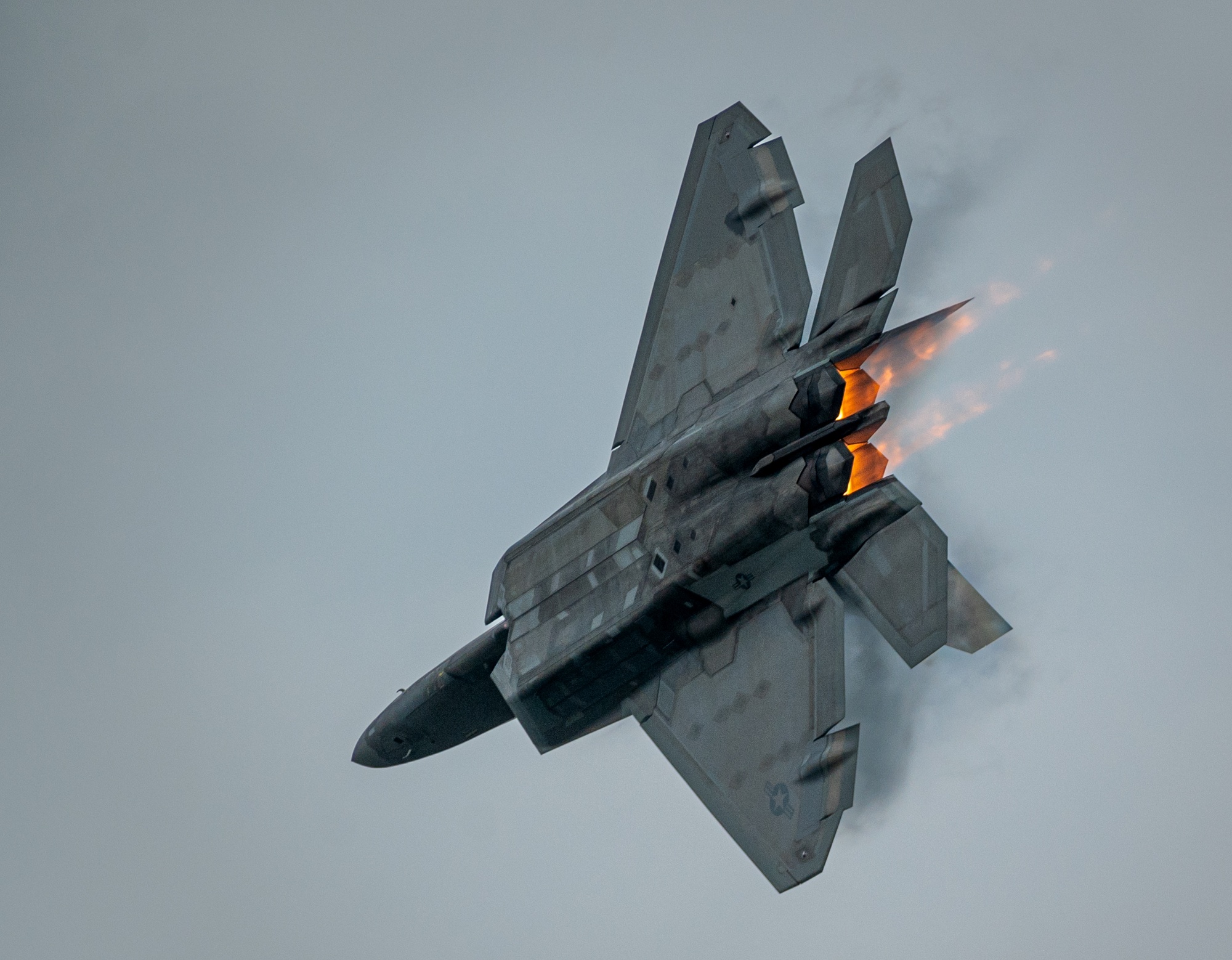
The Lockheed Martin F-22 Raptor remains the world's most capable air superiority fighter nearly two decades after entering service (U.S. Air Force photo)
Country: United States | Manufacturer: Lockheed Martin | Role: Air superiority / multirole stealth fighter Key specs: Max speed Mach 2.25 | Supercruise at Mach 1.5+ (without afterburner) | Combat radius ~530 nm | AN/APG-77(V)1 AESA radar | Internal weapons bays | Carries AIM-120D, AIM-9X, GBU-32 JDAM, GBU-39 SDB
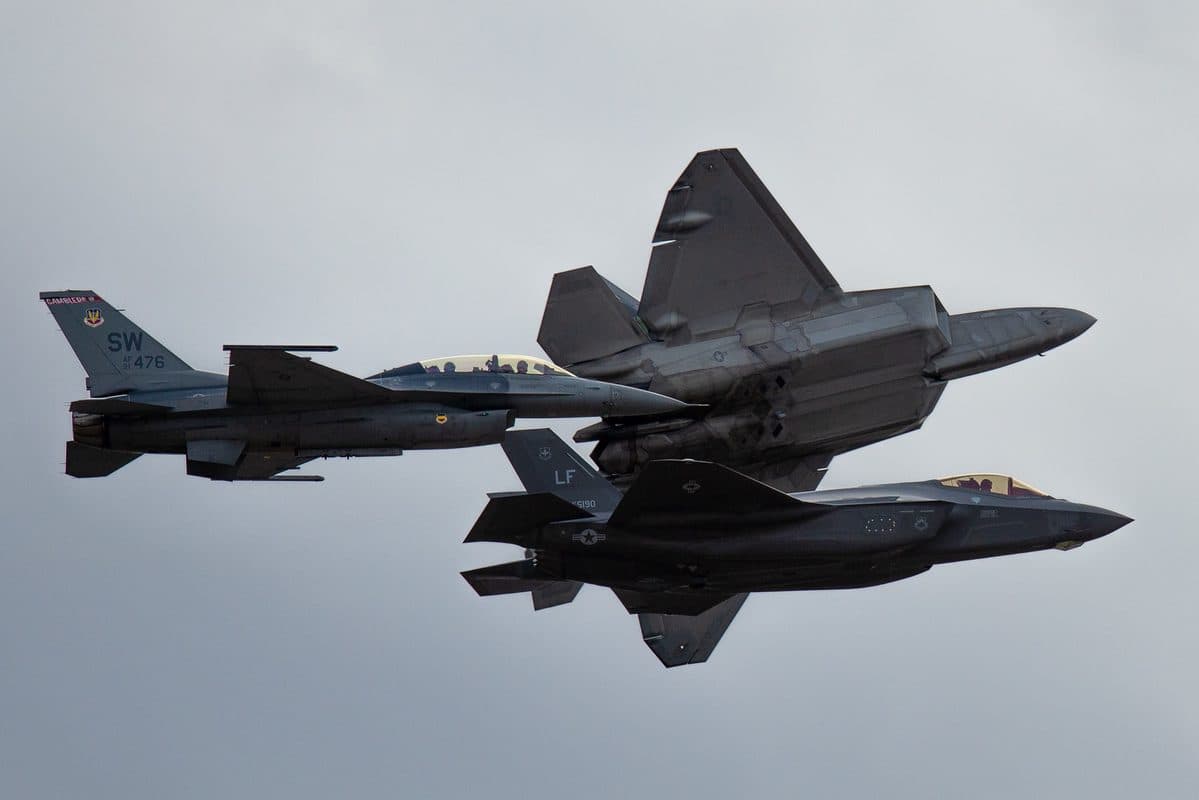
The F-22 Raptor is still the best fighter jet in the world. That statement would have been controversial when the aircraft entered service in 2005. Twenty-one years later, it is not. No other fighter in active service combines stealth, supercruise, super-maneuverability, and sensor capability at the level the F-22 achieves. It was designed to dominate any adversary in the air, and nothing has emerged to challenge that position.
The F-22's stealth is the most mature of any operational fighter. Its radar cross-section from the frontal aspect is estimated at approximately 0.0001 to 0.001 square meters, roughly the size of a marble to a bumblebee on radar. This is achieved through careful shaping, radar-absorbing materials, and design features like serrated edges on all panels and doors, S-shaped engine inlets that hide the compressor face, and internal weapons bays that eliminate the radar reflection of externally carried ordnance.
But stealth alone does not make the F-22 number one. Its Pratt & Whitney F119-PW-100 engines produce 35,000 pounds of thrust each and enable sustained supersonic flight at approximately Mach 1.5 without afterburner, a capability known as supercruise. This means the F-22 can close distance to an engagement or disengage faster than any adversary while consuming less fuel than an afterburner-dependent fighter. The engines also feature two-dimensional thrust vectoring nozzles that, combined with the aircraft's aerodynamic design, give it post-stall maneuverability rivaling the Su-35S.
The AN/APG-77(V)1 AESA radar can track multiple targets at ranges reportedly exceeding 125 nautical miles and can operate in a low-probability-of-intercept mode that makes it extremely difficult for adversaries to detect the radar emissions. The F-22's avionics suite fuses data from its radar, electronic warfare systems, and communication links to provide pilots with unprecedented situational awareness.
In exercises, the F-22's kill ratio against fourth-generation fighters is regularly cited at 108-to-1 or higher. During Red Flag exercises, F-22 pilots have described scenarios where they engaged and "killed" multiple adversaries who never knew the Raptor was there. The aircraft has also conducted real-world combat operations, striking ISIS targets in Syria in 2014 with precision munitions, though this hardly tested its air-to-air capabilities.
The F-22's greatest weakness is its limited production run of 187 aircraft and its aging avionics, which have not received the same level of continuous upgrade that the F-35 benefits from. The Air Force has struggled to maintain readiness rates, and the aircraft's maintenance demands are significant. Its eventual replacement, the Boeing F-47, was selected in 2025 as the sixth-generation fighter under the NGAD program. For a detailed comparison of how the next generation stacks up, see our F-47 vs F-22 vs F-35 breakdown.
But until the F-47 reaches operational capability, which is not expected until approximately 2029 at the earliest, the F-22 Raptor remains the undisputed king of the sky. No fighter currently in service can match its combination of stealth, speed, maneuverability, and sensor fusion. It is the benchmark against which every other fighter jet in the world is measured.
What Didn't Make the List
Any top-10 list requires leaving out capable aircraft, and several notable fighters deserve mention.
The Boeing F-47, selected in March 2025 as the U.S. Air Force's next-generation air dominance fighter, could well top this list by the end of the decade. But as of early 2026, it has not yet flown in its production configuration, and we are ranking fighters in active service, not prototypes. The F-47 is being designed to operate alongside autonomous CCA drone wingmen, which could redefine what air superiority looks like in the 2030s.
China's J-36, reportedly a twin-tail, tailless flying-wing stealth fighter, was photographed in late 2025 conducting what appeared to be taxi or flight tests. Details remain extremely limited, and the aircraft is almost certainly years from operational service. If it performs as speculated, it would represent a major leap in Chinese aerospace capability.
South Korea's KAI KF-21 Boramae completed its first flight in 2022 and is progressing through test flights, with series production expected to begin in 2026. It is a 4.5-generation design that bridges the gap between fourth and fifth generation, carrying weapons semi-recessed rather than internally. It is a promising program, but it needs to mature before it can compete with the established fighters on this list.
Other fighters that narrowly missed the cut include the F-16V Viper, the most widely operated Western fighter in the world with continuously upgraded avionics; the MiG-35, which offers improved capability over the MiG-29 but has seen minimal production; and the HAL Tejas Mk1A, India's indigenous light fighter that is just beginning to enter service.
Frequently Asked Questions
What is the fastest fighter jet in the world in 2026?
Among fighters currently in active front-line service, the F-15EX Eagle II and the F-22 Raptor share the distinction with maximum speeds of approximately Mach 2.5 and Mach 2.25, respectively. The Su-35S Flanker-E is also among the fastest at approximately Mach 2.25. However, raw top speed is rarely the most important performance metric in modern air combat. Factors like supercruise capability (sustained supersonic speed without afterburner), acceleration, and sustained turn rate matter more in real engagements. The F-22 is the only fighter on this list that can supercruise at approximately Mach 1.5, giving it a practical speed advantage over faster-on-paper competitors.
Could the F-35 beat the F-22 in a dogfight?
In a close-range, within-visual-range dogfight, the F-22 would have a significant advantage over the F-35. The Raptor has superior thrust-to-weight ratio, better sustained and instantaneous turn rates, and thrust vectoring that gives it exceptional nose-pointing authority. However, this framing misses the point of how modern air combat works. The F-35 is designed to detect and engage threats before a dogfight ever develops, using its stealth and sensor fusion to shoot first from beyond visual range. In a realistic combat scenario with both aircraft using their full sensor suites, the outcome would depend heavily on the tactical situation, rules of engagement, and supporting assets. For a full analysis, see our complete F-22 vs F-35 comparison.
Why isn't the F-16 on this list?
The F-16 Fighting Falcon is the most widely operated fighter jet in the Western world, with over 4,500 built and operators in more than 25 countries. The latest variant, the F-16V (Viper), features an AN/APG-83 AESA radar, modern avionics, and the ability to carry a full range of Western weapons. It is a highly capable and combat-proven aircraft. However, it is a single-engine light fighter that falls short of the aircraft on this list in terms of range, payload, sensor integration, and raw performance. The F-16 is an outstanding value proposition and remains lethal in the right hands, but in a ranking of the 10 best, it is edged out by more capable platforms.
How does Russia's Su-57 compare to the F-22?
On paper, the Su-57 Felon and the F-22 Raptor compete for the same mission: air superiority with stealth capability. In practice, most Western analysts assess the F-22 as the superior platform. The F-22's stealth is considered more refined, particularly from the rear aspect, where the Su-57's exposed engine nozzles likely increase its radar signature. The F-22's avionics and data fusion are more mature, having been in service and refined since 2005. The Su-57 potentially holds advantages in weapons variety (including very long-range R-37M missiles) and its multi-band radar approach. However, with only roughly 30 Su-57s in service compared to 187 F-22s, the fleet size disparity is significant. For our full analysis of these two aircraft, see the F-22 vs Su-57 comparison.
What will the best fighter jet be in 2030?
By 2030, the landscape could look significantly different. The Boeing F-47 is expected to reach initial operational capability around 2029, and if it delivers on its design goals, it will likely claim the top spot as a sixth-generation fighter designed from the ground up to work with AI-controlled drone wingmen. China's J-36 could be in service, though timelines are uncertain. Europe's Future Combat Air System (FCAS) and the UK-Italy-Japan Global Combat Air Programme (GCAP) are both targeting the mid-2030s for operational fighters. The F-35 will continue to receive upgrades through its Block 4 program that will substantially increase its capability. What is clear is that the definition of "best fighter" is shifting from individual aircraft performance to the performance of integrated systems, where manned fighters coordinate with autonomous wingmen, space-based sensors, and networked command structures.