Skip to content
April 26:The Bombing of Guernica89yr ago

How $400 FPV Drones Are Destroying Tanks and Rewriting the Rules of War

Alex Carter · · 14 min read
Save
Share:
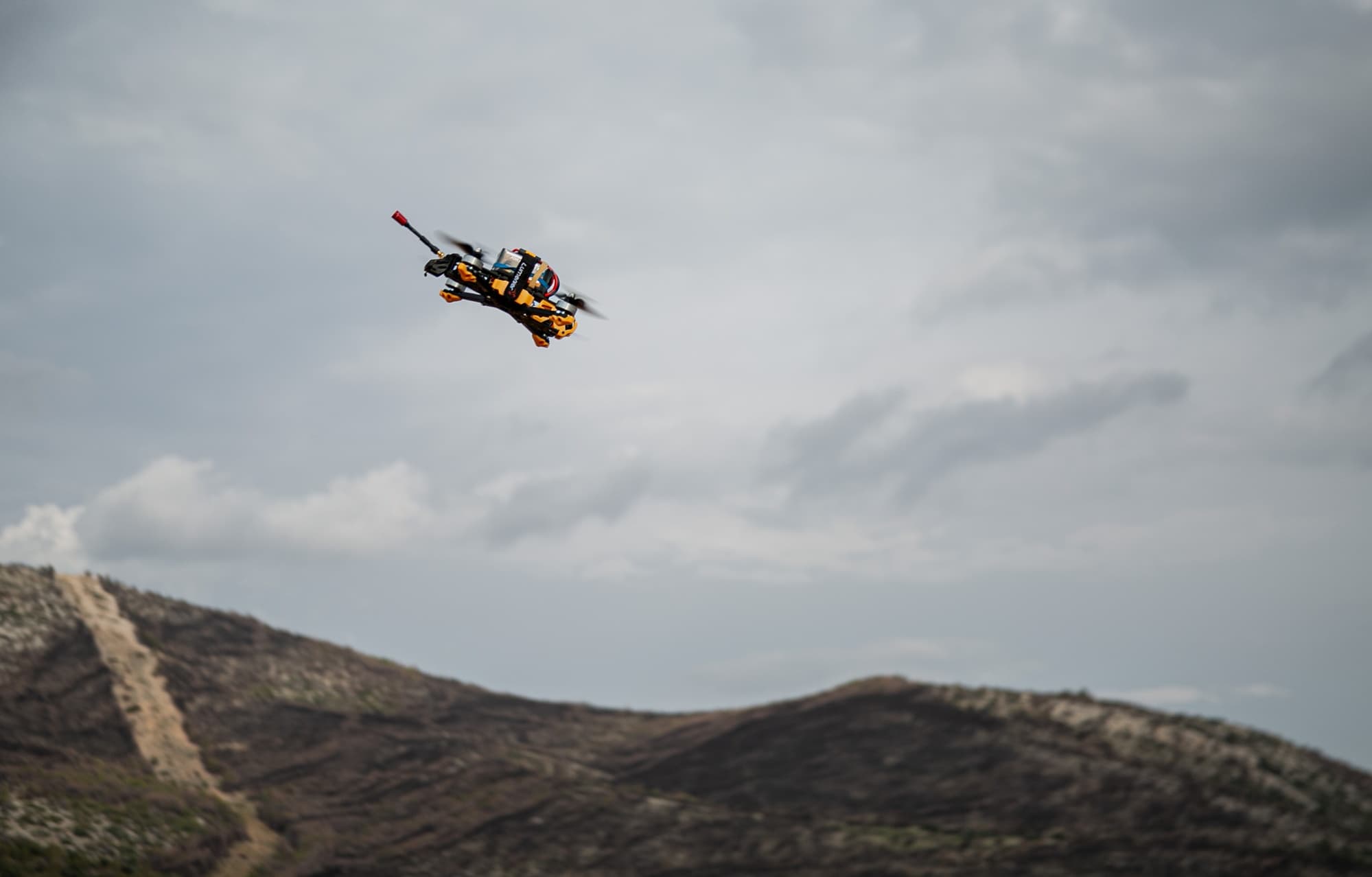
A first-person-view military drone in flight over a battlefield
Alex Carter
Alex Carter

Modern Warfare & Defense Technology Contributor

Alex Carter writes about modern warfare, emerging military technology, and how doctrine adapts to new tools. His work focuses on what changes in practice -- command, control, targeting, and risk -- when systems like drones and autonomous platforms become routine.

```

A first-person-view drone costs roughly $400 to build. An M1 Abrams tank costs $8 million. A Russian T-90M runs close to $4.5 million. When one destroys the other, and it happens dozens of times per day on the battlefields of Ukraine, the economics of modern warfare shatter. The age of the cheap, disposable, precision-guided munition has arrived, and it fits in a backpack.

The war in Ukraine has produced many firsts, but few developments have rattled military planners as profoundly as the rise of the first-person-view (FPV) drone as a tank killer. What began as a volunteer experiment in 2022 has grown into an industrial-scale weapons system that is forcing every major military on earth to rewrite its doctrine on armored warfare. This is the story of how it happened, why it matters, and what comes next.

What Is an FPV Drone?

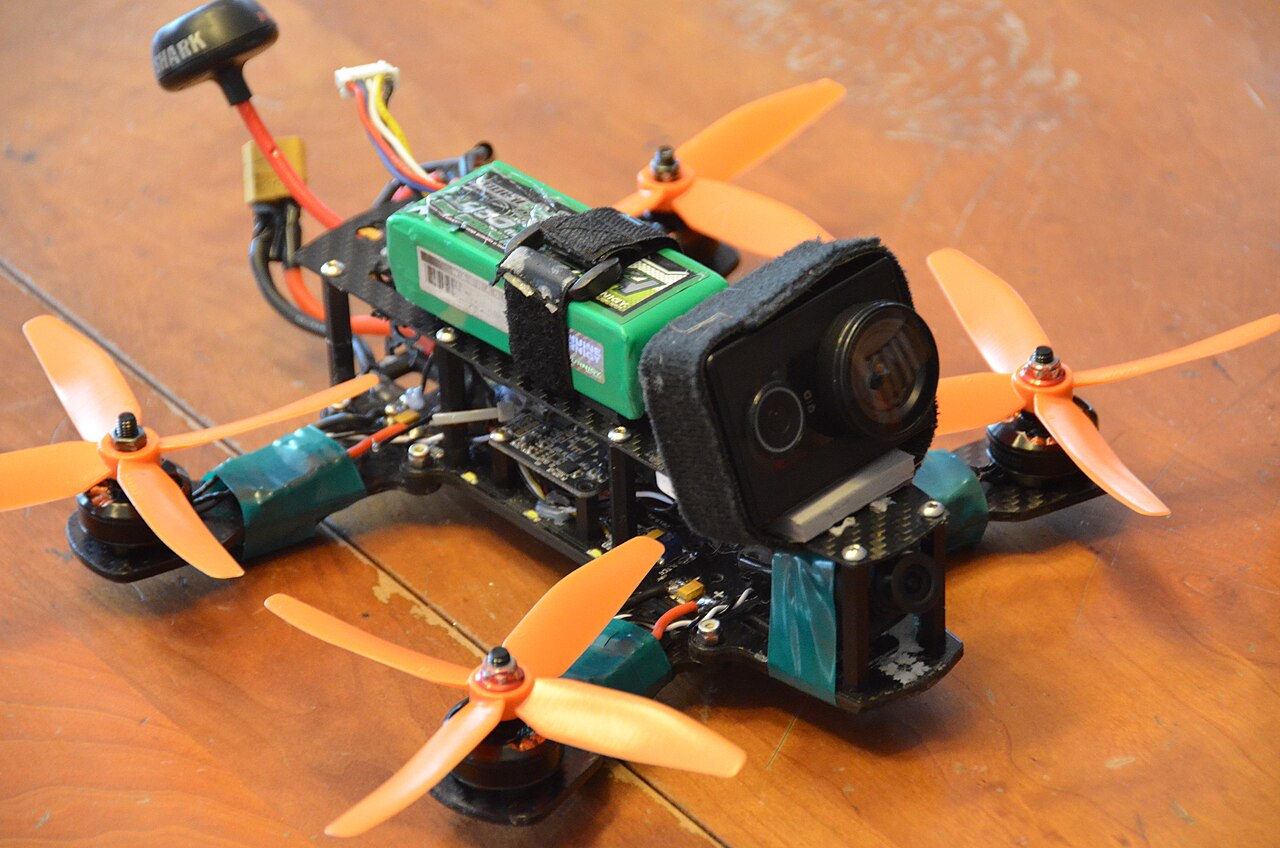
An FPV drone is, at its core, a racing quadcopter modified for war. The technology originated in the civilian drone-racing community, where pilots fly small, agile aircraft at high speed using goggles that display a live video feed from an onboard camera, hence "first-person view." The pilot sees what the drone sees, in real time, with minimal latency.

Military FPV drones typically weigh between 1 and 3 kilograms, including their payload. They fly at speeds of 100 to 150 kilometers per hour, with an operational range of roughly 5 to 15 kilometers depending on the radio link and battery capacity. Most use lithium-polymer batteries that provide 5 to 10 minutes of flight time, more than enough for a one-way mission.

The key components are commercially available: a flight controller, four brushless motors, a video transmitter, a camera, and a radio receiver. An operator on the ground wears FPV goggles and uses a handheld radio controller, the same equipment used in competitive drone racing. The critical military addition is the warhead, typically a shaped charge derived from an RPG-7 rocket or a similar anti-armor munition, strapped to the airframe with zip ties or 3D-printed mounts.

Close-up of a military FPV drone equipped with a shaped-charge warhead
A typical military FPV drone with a shaped-charge warhead attached. The entire assembly can be built from off-the-shelf components for a few hundred dollars.

The simplicity is the point. These are not precision-engineered missiles built in factories with years-long supply chains. They are assembled in workshops, garages, and volunteer centers, often by people who learned to solder less than a year ago. And they are devastatingly effective.

How Ukraine Pioneered FPV Warfare

When Russia launched its full-scale invasion of Ukraine in February 2022, the Ukrainian military had limited access to precision-guided munitions. Western aid would eventually include Javelin missiles, HIMARS rocket systems, and other advanced weapons, but in the war's early months, Ukrainian forces improvised aggressively with commercial drones, primarily DJI Mavic quadcopters used for reconnaissance and crude munition drops.

The Aerorozvidka unit, a volunteer-turned-military drone reconnaissance group that had been operating since 2014, was among the first to demonstrate what small drones could do against armored columns. Their modified commercial drones dropped small anti-tank grenades on Russian vehicles stalled in the infamous convoy north of Kyiv, producing some of the war's earliest viral combat footage.

But it was the introduction of purpose-built FPV attack drones in late 2022 and early 2023 that marked the true inflection point. Ukrainian operators, many drawn from the civilian drone-racing community, began flying FPV racing drones fitted with RPG warheads directly into Russian tanks, armored vehicles, and artillery positions. The first confirmed FPV tank kills circulated on social media in early 2023, and the tactic spread rapidly.

By mid-2023, both Ukrainian and Russian forces were fielding FPV drones in significant numbers. Ukrainian volunteer organizations like United24 and the "Army of Drones" initiative launched fundraising campaigns to mass-produce FPV systems. Drone-building courses proliferated. What had been an experiment became an industry.

The scale escalated dramatically. According to reporting by the Royal United Services Institute (RUSI), Ukrainian forces were producing an estimated 50,000 or more FPV drones per month by late 2025, a figure that may understate the true output, given the decentralized nature of production. Russia, too, ramped up its own FPV programs, with units like the "Sudoplatov" detachment pioneering Russian FPV tactics.

By 2026, FPV drones account for what military analysts estimate is the single largest category of armored vehicle kills on both sides of the conflict. The West Point Modern War Institute has described the development as "the most significant tactical innovation of the war."

The Economics That Changed Everything

The arithmetic is brutal, and it is the reason defense ministries around the world are paying attention.

A basic FPV attack drone costs between $400 and $2,000 to produce, depending on components, payload, and sophistication. The most common targets include:

  • T-72 main battle tank: approximately $1–2 million replacement cost
  • T-90M main battle tank: approximately $4.5 million
  • BMP-3 infantry fighting vehicle: approximately $700,000–$1 million
  • Self-propelled artillery (2S19 Msta): approximately $1.5 million
  • Logistics trucks and fuel tankers: $50,000–$200,000

Even accounting for the drones that miss (and many do; estimates of FPV hit rates vary widely from 30% to 60% depending on operator skill and electronic warfare conditions), the exchange ratio is overwhelmingly favorable to the attacker. If a $400 drone has a 30% chance of destroying a $2 million tank, the expected cost per kill is roughly $1,300. The target is worth more than a thousand times the weapon that destroyed it.

A destroyed Russian tank with visible damage from a top-attack drone strike in Ukraine
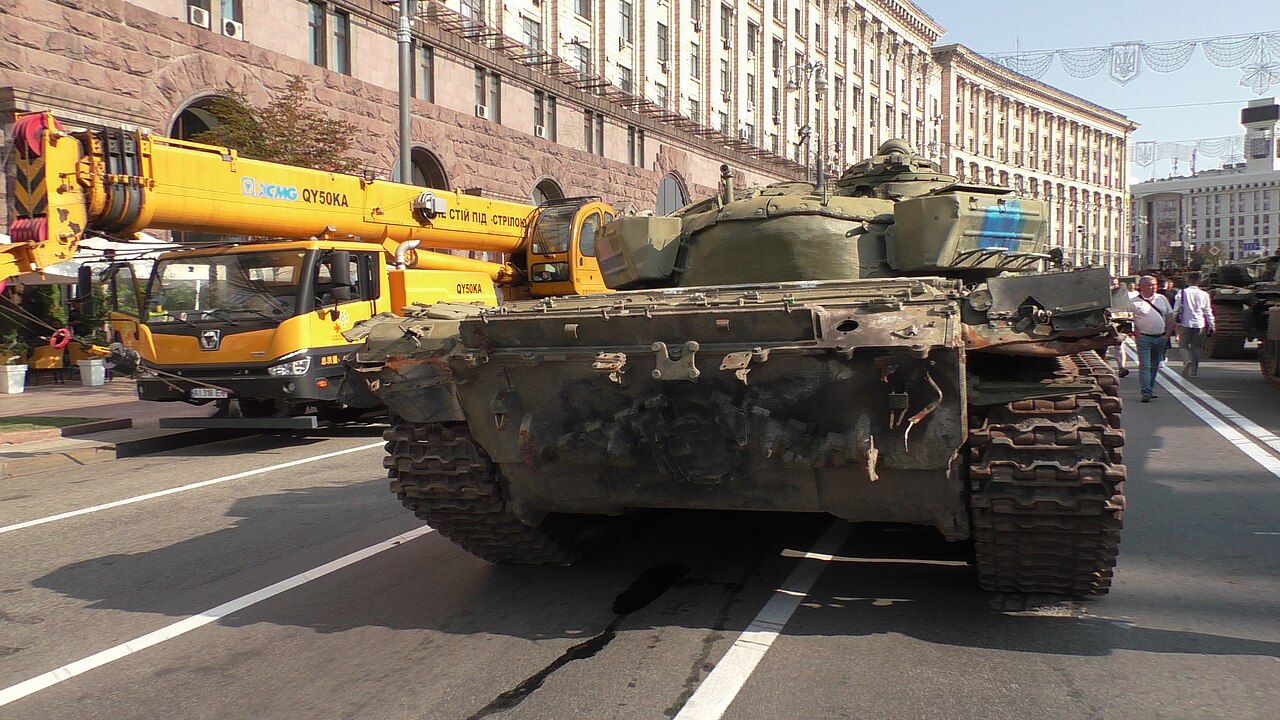
A Russian tank destroyed by a top-attack FPV drone strike. The thin armor on the turret roof is particularly vulnerable to shaped-charge warheads.

A 2024 report from RUSI estimated that Ukraine spent roughly $1–2 billion on drone programs (including reconnaissance and larger strike drones, not just FPV) over the first two and a half years of the full-scale war. In that same period, open-source intelligence tracking by groups like Oryx documented over 3,000 Russian tanks destroyed, damaged, or captured, representing tens of billions of dollars in equipment losses. While FPV drones were responsible for only a fraction of those kills early on, their share has grown steadily and is now believed to represent a plurality of anti-armor kills.

As the Foundation for Strategic Research noted in its "21 Lessons" report on the Ukraine war, the cost asymmetry introduced by FPV drones "undermines the fundamental economic logic of armored warfare as it has been practiced since 1940."

This is the point that keeps defense economists up at night. It is not just that FPV drones are effective. It is that they are cheap enough to be expendable at scale. A country that can produce tens of thousands per month can saturate a battlefield in a way that even the best air defenses struggle to counter.

How FPV Drones Actually Kill Tanks

The lethality of FPV drones against armored vehicles depends on three factors: the warhead, the angle of attack, and the skill of the operator.

The warhead. Most FPV attack drones carry shaped-charge warheads, the same principle used in RPG-7 rockets, Javelin missiles, and other anti-tank munitions. A shaped charge uses a cone-shaped metal liner (typically copper) backed by explosive. When detonated, the explosive collapses the cone into a superplastic jet of metal traveling at several kilometers per second, capable of penetrating steel armor far thicker than the warhead itself. An RPG-7 warhead, commonly adapted for FPV use, can penetrate approximately 300mm of rolled homogeneous armor (RHA) equivalent, more than enough to defeat the side, rear, or top armor of most main battle tanks.

The angle of attack. This is where FPV drones hold a decisive advantage over traditional anti-tank weapons fired from ground level. A tank's frontal armor is its thickest. On a modern M1 Abrams or T-90M, the turret front may offer 700mm or more of RHA equivalent protection. But turret roofs are typically 20-40mm thick, engine decks are thinner still, and the rear armor is significantly reduced compared to the front.

FPV drone operators routinely execute "top-attack" strikes, diving steeply onto the turret roof, the same vulnerability exploited by the Javelin missile's top-attack mode, but at a fraction of the cost. Skilled operators can also target specific weak points: hatches, optics, the junction between turret and hull, engine exhaust grilles, and exposed ERA (explosive reactive armor) panels.

Operator skill. Unlike a fire-and-forget missile, an FPV drone requires a human pilot to fly it into the target in real time. This is simultaneously the system's greatest strength and its most significant limitation. A skilled operator can adjust the drone's flight path to evade obstacles, compensate for wind, and select the optimal impact point on a moving vehicle. An unskilled operator will miss. Training programs for FPV pilots have become a major priority for both Ukrainian and Russian forces, with training pipelines measured in weeks rather than the months or years required for conventional weapons systems.

The combination of cheap shaped charges, top-attack geometry, and human precision guidance has produced a weapon system that can defeat vehicles costing thousands of times more, and it can do so at ranges and angles that make traditional anti-tank defenses less effective.

The Tank Is Not Dead, But It Must Adapt

Every time a new anti-tank weapon emerges, commentators declare the death of the tank. It happened with the anti-tank guided missile in 1973, with the Javelin in 2003, and it is happening again with FPV drones. But the historical pattern suggests caution: the tank has repeatedly adapted and survived. The question is how.

Several countermeasures are already being deployed or developed:

Electronic warfare (EW). The most immediate defense against FPV drones is jamming their radio control link or video feed. Both Russian and Ukrainian forces deploy vehicle-mounted and area electronic warfare systems that can disrupt drone operations within a radius of several hundred meters to several kilometers. Russian systems like the "Volnorez" vehicle-mounted jammer have reportedly forced Ukrainian FPV operators to develop more resistant radio links and adopt frequency-hopping techniques. The EW battle is an ongoing arms race, with each side iterating rapidly.

Cage armor and improvised protection. The now-iconic "cope cages," welded steel cage structures mounted on turret roofs, were among the first visible countermeasures. Their effectiveness is debatable. While a cage may cause a shaped-charge warhead to detonate prematurely (reducing penetration by increasing standoff distance beyond the warhead's optimal point), many FPV strikes have penetrated cage armor with apparent ease. Subsequent iterations have added mesh screens, slat armor, and layers of ERA to improve protection, with mixed results.

Active Protection Systems (APS). Systems like Israel's Trophy APS, which uses radar to detect incoming projectiles and fires an interceptor to destroy them before impact, represent a more sophisticated defense. Trophy has proven highly effective against RPGs and anti-tank missiles in combat. However, current APS systems face challenges against FPV drones: the drones' small radar cross-section, variable approach speeds, and steep dive angles can complicate detection and intercept. Next-generation APS systems are being developed with FPV drone threats specifically in mind, but fielding them at scale will take years.

Counter-drone weapons. Dedicated counter-drone systems, including small-caliber air defense guns, directed-energy weapons, and interceptor drones, are being deployed to protect armored formations. The challenge is volume: when an attacker can send dozens of FPV drones in a single wave, the defender must have enough counter-drone capacity to intercept all of them. A single miss can mean a destroyed vehicle.

Tactical adaptation. Perhaps the most effective countermeasure is doctrinal. Forces on both sides of the Ukraine conflict have learned to operate armor differently: using concealment more aggressively, dispersing vehicles to avoid presenting concentrated targets, timing movements to exploit gaps in drone coverage (bad weather, darkness, active EW windows), and integrating organic drone defense into every armored unit. The days of massed armored charges across open terrain may be over, not because the tank itself is obsolete, but because the tactics of the last 80 years no longer work against persistent aerial surveillance and cheap precision strike.

As one U.S. Army officer told Breaking Defense, "The tank is not dead. The tank that sits still in the open is dead. The tank that moves, hides, and fights as part of an integrated system still has a future."

Every Military Is Watching

The lessons of Ukraine's FPV drone revolution have not been lost on the world's major militaries. The speed of adaptation varies, but the direction is clear: every serious military power is rethinking its approach to both drones and armored warfare.

A military drone operator wearing FPV goggles and holding a radio controller
An FPV drone operator during training. The goggles provide a live video feed from the drone's camera, allowing precise control during the final approach to a target.

United States. The U.S. Marine Corps' Force Design 2030 initiative, which began divesting the Marines of their main battle tanks entirely in 2020, looks increasingly prescient in light of Ukraine's experience. The Army, which retains large armored formations, has been conducting extensive drone warfare experiments at the National Training Center at Fort Irwin, California, where opposing force (OPFOR) units now employ FPV-style drones against rotating brigade combat teams. According to Defense News, the Army's Rapid Capabilities and Critical Technologies Office has been evaluating multiple counter-FPV solutions, including AI-assisted detection and engagement systems.

The Pentagon's Replicator initiative, announced in 2023, aims to field thousands of small autonomous systems, including attack drones, to counter Chinese military mass in a potential Indo-Pacific conflict. While the program's scope extends well beyond FPV drones, the underlying logic is identical: mass, affordability, and expendability.

NATO allies. Several NATO members have begun incorporating FPV drone training into their armored force exercises. The United Kingdom's Defence Science and Technology Laboratory (DSTL) has funded research into both FPV attack drones and countermeasures. Poland, which shares a border with Ukraine and has been among the most aggressive NATO members in modernizing its forces, has begun procuring FPV drone systems for its army. The Modern War Institute at West Point has published multiple analyses urging NATO forces to train for a battlefield saturated with small drones.

China. The People's Liberation Army has conducted drone swarm exercises that, while distinct from Ukraine's FPV model, reflect a similar interest in using large numbers of cheap autonomous systems to overwhelm defenses. Chinese defense firms have displayed FPV-style attack drones at international arms exhibitions, and PLA doctrine publications have discussed the implications of Ukraine's drone warfare for Taiwan contingency planning.

Russia. Russia's military, despite being on the receiving end of Ukrainian FPV innovation, has adapted faster than many Western analysts expected. Russian forces now field their own substantial FPV drone capability, with units conducting hundreds of FPV strikes per day across the front. The Russian defense industrial base has scaled production of FPV drones, often using components sourced through third countries to circumvent Western sanctions, a pattern documented extensively by RUSI's "Silicon Lifeline" report.

What Comes Next

The current generation of FPV attack drones, for all their effectiveness, still requires a skilled human pilot to fly each one into its target. That limitation constrains their scalability: you can only fly as many simultaneous attacks as you have trained pilots. The next generation of the technology aims to remove that bottleneck.

AI-guided autonomous FPV drones. Both Ukrainian and Western defense firms are developing FPV drones with onboard machine vision that can identify and track targets autonomously during the terminal phase of flight. The operator would designate a target area or target type, launch the drone, and the AI would handle the final approach and strike. This capability, sometimes called "semi-autonomous" or "human-on-the-loop," would allow a single operator to manage multiple drones simultaneously and would make the system resilient to radio jamming, since the drone would not need a continuous control link during its final approach.

Several Ukrainian startups demonstrated prototype autonomous targeting systems in 2025, and the U.S. Defense Advanced Research Projects Agency (DARPA) has funded similar research under multiple programs. The ethical and legal implications of autonomous lethal systems remain deeply contested, but the military logic driving their development is powerful: an FPV drone that cannot be jammed is far more dangerous than one that can.

Swarm tactics. The logical extension of autonomous FPV drones is the coordinated swarm: dozens or hundreds of cheap drones launched simultaneously, sharing targeting data, and overwhelming defenses through sheer numbers. While true swarm autonomy, in which drones communicate and coordinate without human direction, remains largely in the research phase, cruder versions are already being attempted. Ukrainian units have conducted simultaneous multi-drone attacks on single targets, with one drone suppressing defenses while others strike from different angles.

The counter-drone arms race. For every advance in drone capability, counter-drone technology is evolving in parallel. Directed-energy weapons (lasers and high-powered microwaves), AI-driven detection and tracking systems, electronic warfare suites integrated into armored vehicles, and interceptor drones designed to hunt FPV attackers are all under active development. The U.S. Army's DE M-SHORAD (Directed Energy Maneuver Short-Range Air Defense) program aims to field a laser weapon on a Stryker vehicle capable of defeating small drones at low cost per shot, potentially breaking the economic asymmetry that makes FPV drones so dangerous.

The outcome of this arms race will shape the character of ground warfare for decades. If cheap drones maintain their current advantage over expensive armored vehicles, militaries will shift toward smaller, more dispersed, more expendable ground platforms, perhaps eventually toward unmanned ground vehicles paired with drone swarms. If counter-drone technology catches up, the tank may find a new lease on life, protected by an integrated web of electronic and kinetic defenses.

What seems certain is that the genie is out of the bottle. The FPV drone has demonstrated that a few hundred dollars' worth of commercial technology, guided by a skilled operator, can destroy the most heavily armored vehicles on earth. That reality will not be unlearned. Every military doctrine, every procurement program, and every tactical manual written from this point forward must account for a world in which the sky is full of cheap, lethal, disposable precision munitions, and the old certainties of armored warfare no longer hold.

Frequently Asked Questions

How much does a military FPV drone cost?

A basic FPV attack drone can be assembled for $400 to $2,000, depending on components and warhead type. More advanced models with enhanced radio links, better cameras, or larger payloads can cost somewhat more, but they remain orders of magnitude cheaper than the armored vehicles they target.

Can an FPV drone really destroy a main battle tank?

Yes. FPV drones equipped with shaped-charge warheads, typically adapted from RPG-7 rockets, can penetrate the thinner top, side, and rear armor of main battle tanks. Hundreds of confirmed tank kills by FPV drones have been documented through open-source video from the Ukraine conflict. However, they are most effective when striking weaker armor zones, and frontal armor on modern tanks generally provides sufficient protection.

What is the effective range of a military FPV drone?

Most FPV attack drones have an effective range of 5 to 15 kilometers, limited primarily by the video transmission link and battery capacity. Some extended-range variants using relay drones or more powerful transmitters have reportedly achieved greater distances, though precise ranges for military systems are often not publicly disclosed.

How do militaries defend against FPV drones?

Current defenses include electronic warfare (jamming the drone's control and video links), improvised armor additions (cage armor and slat armor on turret roofs), active protection systems designed to intercept incoming projectiles, dedicated counter-drone weapons, and tactical measures like dispersal, concealment, and timing movements to avoid drone-favorable conditions. No single countermeasure has proven fully effective, and the defense against FPV drones remains an active area of development.

Will FPV drones make tanks obsolete?

Military analysts generally do not believe tanks will become obsolete, but they agree that tanks must adapt. Historically, the introduction of new anti-tank weapons, from anti-tank rifles to guided missiles, has prompted changes in armor, tactics, and doctrine rather than the abandonment of armored vehicles altogether. The most likely outcome is that future tanks will incorporate integrated counter-drone defenses, operate differently at the tactical level, and work as part of larger systems that include their own drone capabilities.

Share this article

Share:

Recommended

Ace of The Skies: Can You Identify These Military Aircraft Throughout The Years?
Test Yourself

Ace of The Skies: Can You Identify These Military Aircraft Throughout The Years?

Can you identify these aircraft?

Take the Quiz

Get Military News & History in Your Inbox

Join thousands of readers receiving our weekly digest of military technology, history, and analysis.

Test Your Knowledge